Discover how the tribal goat distribution programme Uttarakhand TSP goat farming initiative enhanced tribal livelihoods through sustainable goat rearing, nutritional security, and women’s empowerment.
Introduction
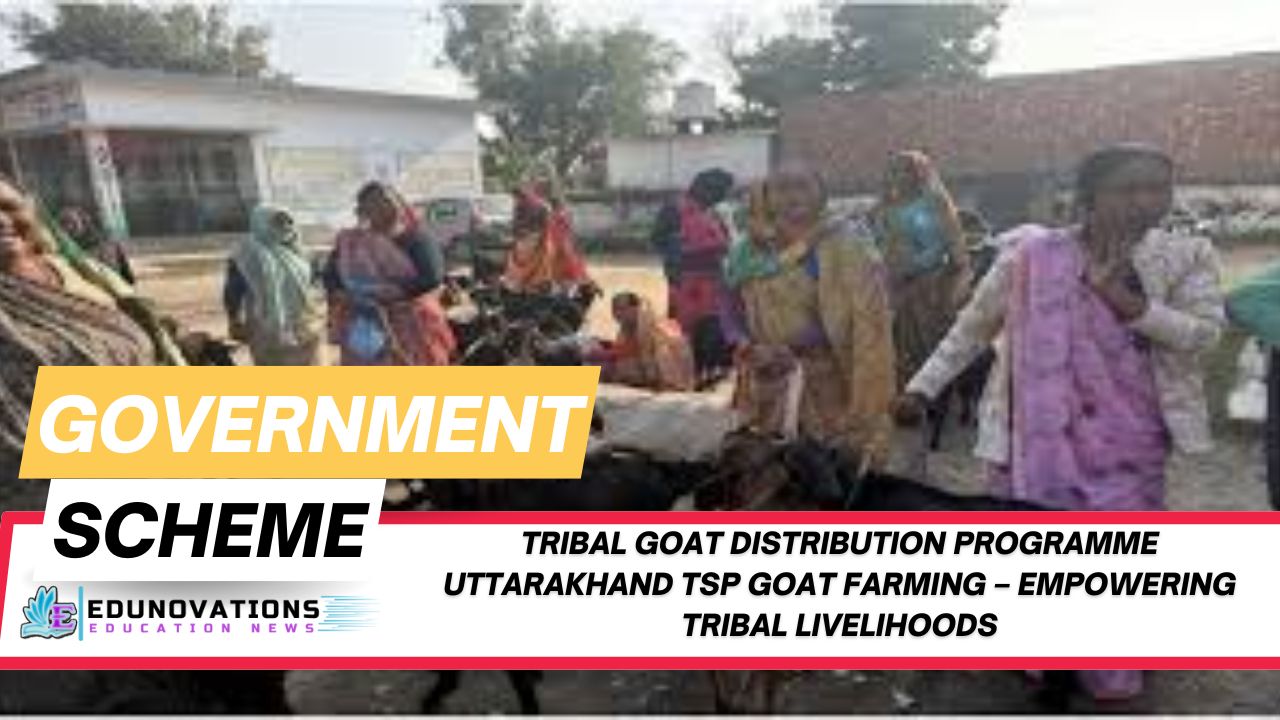
In a significant stride toward empowering tribal communities, the tribal goat distribution programme Uttarakhand TSP goat farming initiative was organised on 11th December 2025 under the Development Action Plan for Scheduled Tribes (DAPST) by ICAR–Indian Veterinary Research Institute (IVRI), Izatnagar. The programme focused on strengthening the economic resilience and livelihood opportunities of Below Poverty Line (BPL) tribal households from the Khatima block of Udham Singh Nagar, Uttarakhand through scientific goat rearing and livestock asset distribution. IVRI
By integrating animal husbandry with community empowerment, this initiative reflects the broader goals of the Tribal Sub-Plan (TSP) strategy — to bridge socio-economic gaps faced by tribal populations nationwide.
A Landmark Day for Tribal Farmers in Uttarakhand
Context and Objectives
The Tribal Sub-Plan (TSP) programme, a cornerstone of India’s tribal development policy, channels targeted resources to improve livelihoods in tribal areas. The tribal goat distribution programme Uttarakhand TSP goat farming event aimed to:
- Provide livestock assets to tribal households to generate sustainable income.
- Equip tribal farmers with scientific goat rearing practices to increase productivity and animal health.
- Enhance nutritional security and household resilience through diversified income streams.
According to official reports, such livestock-based interventions can dramatically transform rural economies, especially for communities with limited access to traditional agricultural resources.
The Event: Inputs, Outreach and Participation
Held in Naugawa Thago village, this noteworthy initiative brought together 30 tribal beneficiaries — including 27 women farmers, demonstrating remarkable involvement of women in goat farming and livelihood activities.
Distribution Highlights
- 100 goats were distributed to tribal farmers.
- 90 females
- 10 males
- This strategic sex ratio promotes herd growth and long-term sustainability, as female goats contribute to milk production and breeding potential
The high participation of women underscores the programme’s focus on women goat farmers livelihood support goat distribution initiative, creating avenues for financial inclusion and social empowerment.
Enhancing Skills: Scientific Goat Rearing Practices
Beyond distribution, the programme featured technical sessions aimed at building capacity in modern animal husbandry:
- Dr. Vikrant Chouhan delivered an insightful lecture on essential goat farming techniques, including nutrition, breeding, and housing management.
- Dr. H. R. Meena emphasised practical field aspects, such as disease control, parasite management, and sustainable husbandry approaches.
These sessions were geared toward enabling beneficiaries to adopt scientific goat rearing practices workshop for tribal farmers India, helping to minimize losses and maximize returns.
Why Scientific Rearing Matters
Scientific approaches in livestock management directly influence productivity and household income. For example, goat farmers who adopt structured breeding and health-care protocols can see improvements in:
- Growth rates
- Reproduction efficiency
- Disease resistance
Experts believe that technical know-how is just as crucial as livestock distribution for achieving long-term success in goat farming.
Real Impact: Women at the Heart of Change
The goat distribution for BPL tribal farmers Khatima block Uttarakhand witnessed an inspiring level of participation among women. Out of 30 beneficiaries, a remarkable 27 were women farmers — indicating a paradigm shift in rural livelihoods where women are embracing livestock management and economic activities beyond household care. IVRI
This aligns with broader socio-economic trends showing that involving women in livestock enterprises like goat rearing can significantly enhance household income and food security. Women’s leadership in such programmes often translates into better resource management and community engagement.
Broader Context: TSP and Livelihood Enhancement Through Livestock
What is Tribal Sub-Plan (TSP)?
The Tribal Sub-Plan (TSP) is a strategic framework initiated by the Government of India during the Fifth Five Year Plan (1974-79) to address economic and social disparities confronting tribal populations.
TSP works by:
- Allocating dedicated funds for infrastructure, education, healthcare, and livelihood projects.
- Empowering tribal households with enhanced access to technology, training, and market linkages.
- Promoting sustainable income opportunities in remote areas with limited industrial footprint.
Why Goat Farming?
Goat farming is particularly suited for tribal regions due to its:
- Low cost of investment
- High adaptability to diverse terrains
- Fast breeding cycle and high demand for meat and milk
Research has shown that tribal farmers involved in goat rearing often see substantial gains in income and food security over time.
Expert Perspective: Voices from the Field
Dr. S. K. Singh, an agricultural development specialist, says, “Livestock interventions such as the tribal goat distribution programme Uttarakhand TSP goat farming not only provide immediate economic resources but also build long-term resilience. With proper training and community engagement, these programmes can lift entire households out of poverty.”
Dr. Singh further emphasises that when women are directly involved, the multiplier effect on household welfare and education is profound.
Economic and Social Benefits
Boosting Household Income
Studies suggest that properly managed goat herds can contribute significantly to family income. In tribal areas where agricultural land is scarce, goats provide an alternative asset that generates revenue through:
- Meat sales
- Milk production
- Breeding and offspring sales
According to national data, livestock and allied activities contribute over 25% of the total agricultural output, engaging millions of small and marginal farmers.
Promoting Nutritional Security
Goat milk and meat add essential nutrients to rural diets, helping address malnutrition challenges in underserved areas. Adding livestock proteins into daily consumption can improve overall health outcomes.
Community Engagement and Long-Term Sustainability
The scientific goat rearing practices workshop for tribal farmers India component of the programme highlights a shift from traditional farming techniques to more evidence-based livestock husbandry. This approach fosters:
- Higher survival rates among goats
- Better growth performance
- Enhanced disease control
Such knowledge transfer is critical for sustainability, ensuring that tribal farmers continue to benefit well beyond the distribution event.
Integrating Digital and Educational Resources
To further support rural learners and farmers:
- Explore interactive content and current affairs updates to stay informed about agricultural initiatives.
- Access notes and MCQ’s on livestock and agriculture topics to supplement training.
- Check videos and syllabus resources for detailed tutorials on goat farming and animal health.
- Free NCERT PDF downloads and mind maps can offer foundational knowledge on broader agricultural science contexts.
These resources, hosted on educational platforms, help bridge knowledge gaps and empower learners of all ages.
Connecting with Partners and Tech Solutions
Partnerships with technology and information firms like Mart Ind Infotech help link tribal farmers with modern agri-solutions and marketplace access — expanding economic opportunities and improving access to advisory services.
Conclusion
The tribal goat distribution programme Uttarakhand TSP goat farming event in Khatima block marks a meaningful milestone in rural development. By integrating livestock distribution with hands-on training and community participation, especially among women farmers, this initiative paves the way for sustainable socio-economic improvements in tribal regions.
As India continues to implement targeted development schemes like TSP across its diverse landscape, programmes that emphasise both asset provision and capacity building will remain instrumental in uplifting tribal households and fostering long-term prosperity.
Toppers Use Mind Maps to score more than 95%
NCERT Class 11th Commerce Mind Maps
Add to cartOriginal price was: ₹999.00.₹199.00Current price is: ₹199.00.NCERT Class 12th Chemistry Mind Maps
Add to cartOriginal price was: ₹199.00.₹75.00Current price is: ₹75.00.NCERT Class 12th Commerce Mind Maps
Add to cartOriginal price was: ₹999.00.₹199.00Current price is: ₹199.00.NCERT Class 12th Science Mind Maps
Add to cartOriginal price was: ₹999.00.₹199.00Current price is: ₹199.00.NCERT Mind Maps For Class 10th
Add to cartOriginal price was: ₹999.00.₹199.00Current price is: ₹199.00.




Purchase Today
FAQs
1. What is the tribal goat distribution programme Uttarakhand TSP goat farming about?
It is a livestock distribution initiative under the Tribal Sub-Plan to support tribal farmers with goats and technical training to improve livelihoods.
2. Who benefited from the goat distribution for BPL tribal farmers Khatima block Uttarakhand?
Thirty tribal farmers — including a majority of women — received goats and training to enhance income and household food security.
3. How does scientific goat rearing practices workshop for tribal farmers India help participants?
It teaches modern husbandry techniques like health care, feeding, breeding, and disease management for higher productivity.
4. Why are women goat farmers livelihood support goat distribution initiative important?
Involving women boosts household decision-making, income management, and community participation.
5. What long-term economic benefits does goat farming bring to tribal households?
Goat farming contributes to sustainable income, improved nutrition, and potential market linkage opportunities for rural families.
6. How are tribal goat distribution programmes aligned with TSP goals?
They align by channeling targeted resources to economically uplift tribal populations and reduce socio-economic disparities.
7. What is the role of expert lectures in goat farming training events?
Experts provide guidance on animal health, sustainable practices, and management techniques that increase herd survival and profitability.
8. Where can tribal farmers access additional educational resources related to agriculture and livestock?
Tribal farmers and learners can access internal links like course materials, notes, MCQ’s, videos, and syllabus content on educational platforms.
9. How does goat distribution support nutritional security in tribal regions?
Goat milk and meat provide essential nutrition and protein, improving dietary diversity in rural households.
10. What future opportunities can arise from participating in goat-based livelihood programmes?
Participants may engage in breeding businesses, local markets, and community support networks that enhance economic resilience.