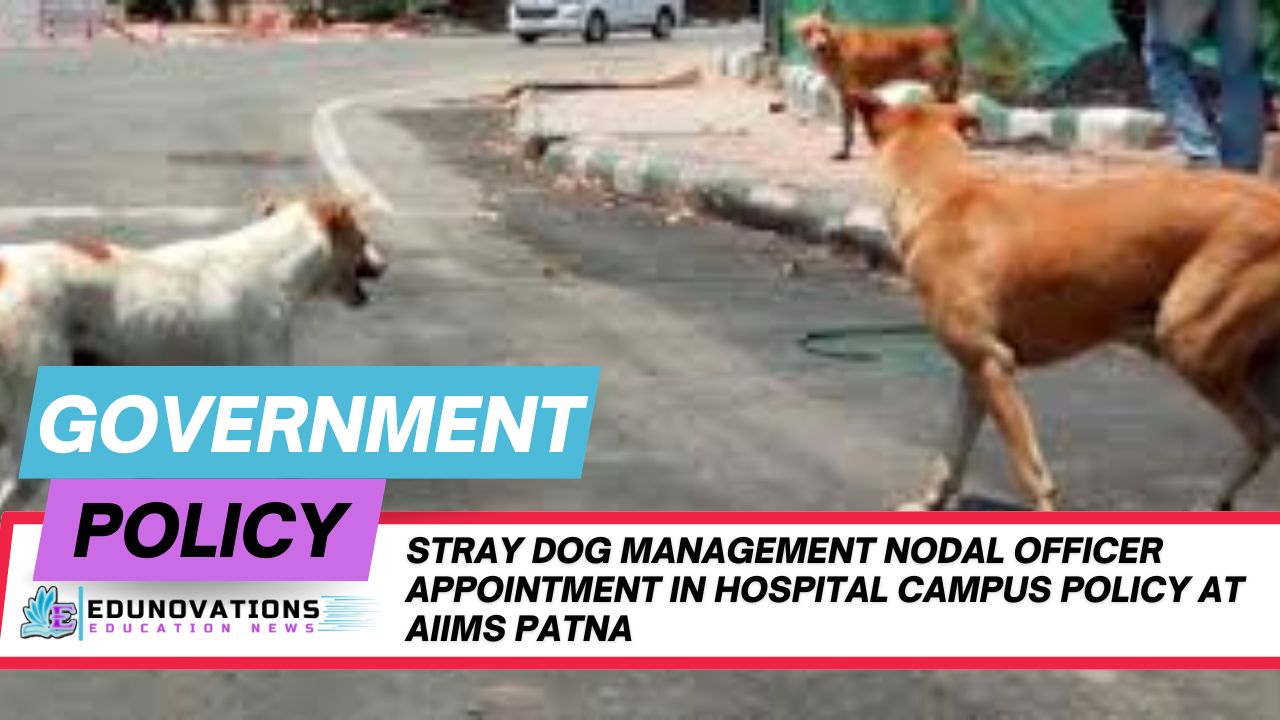
AIIMS Patna appoints a Stray Dog Management Nodal Officer Appointment management to ensure campus safety and compliance with ABC Rules, rabies control, and institutional policy.
Introduction
In a significant step towards enhancing campus safety and public health, AIIMS Patna has officially announced the appointment of a stray dog management nodal officer in hospital campus policy. The move underscores the institution’s commitment to humane management of stray dogs while adhering to government regulations under the Animal Birth Control (ABC) Rules, 2001. This initiative aligns with the broader objective of mitigating health risks, particularly rabies, and ensuring a safe environment for patients, staff, and visitors.
Hospitals across India have long grappled with challenges posed by stray dog populations within campus premises. These challenges range from potential disease transmission to safety hazards for patients and staff. By nominating a dedicated nodal officer, AIIMS Patna sets a precedent for other medical institutions seeking to implement structured and compliant stray dog management systems.
Role and Responsibilities of the Nodal Officer
The appointed nodal officer at AIIMS Patna carries the critical responsibility of coordinating all activities related to stray dog control and rabies prevention within the hospital campus. Key duties include:
- Overseeing stray dog sterilization and vaccination programs in compliance with ABC Rules.
- Monitoring stray dog populations and maintaining accurate records.
- Liaising with municipal authorities and animal welfare organizations for operational support.
- Ensuring that safety measures are in place for patients, staff, and visitors.
- Conducting periodic audits to assess the effectiveness of stray dog management protocols.
The nodal officer serves as the primary point of contact for all administrative and operational matters concerning stray dogs, ensuring the hospital’s adherence to legal and ethical standards.
Implementation Strategy at AIIMS Patna
AIIMS Patna has adopted a comprehensive approach to institutional stray dog management that combines policy, awareness, and operational execution. The strategy includes:
- Mapping Stray Dog Hotspots: Conducting surveys across the campus to identify areas with high stray dog activity.
- Vaccination Drives: Coordinating mass vaccination campaigns to prevent rabies and other zoonotic diseases.
- Sterilization Programs: Implementing humane sterilization measures to control stray dog population growth.
- Community Engagement: Educating staff and visitors about safe interactions with stray dogs.
- Regular Reporting: Maintaining a transparent system for reporting incidents or health risks associated with stray dogs.
By implementing these measures, AIIMS Patna aims to create a model framework that other medical institutions can replicate to manage stray dogs effectively while ensuring compliance with national guidelines.
Significance of the Appointment
The appointment of a stray dog management nodal officer in hospital campus policy has multiple benefits:
- Health Safety: Reduces the risk of rabies and other infectious diseases.
- Institutional Compliance: Ensures adherence to government-mandated ABC Rules and local animal control laws.
- Operational Efficiency: Streamlines stray dog management procedures, reducing administrative burdens.
- Public Awareness: Enhances awareness among staff, patients, and visitors about responsible interaction with stray dogs.
Dr. Ramesh Kumar, Director of AIIMS Patna, stated, “The appointment of a nodal officer demonstrates our commitment to public health and humane animal management. This initiative sets a benchmark for other hospitals across India.”
Expert Insights on Stray Dog Management in Institutions
Experts in public health and veterinary sciences emphasize the importance of dedicated management strategies within hospital settings:
- Dr. Anita Singh, a public health specialist, notes, “Institutions must integrate vaccination, sterilization, and monitoring programs to prevent the spread of zoonotic diseases while promoting humane treatment of animals.”
- Veterinary expert Dr. Vinay Choudhary adds, “The role of a nodal officer is crucial for coordinating multi-agency efforts and ensuring effective implementation of ABC Rules.”
These insights reinforce the need for systematic stray dog management frameworks within educational and healthcare institutions.
Challenges and Solutions
While the appointment of a nodal officer is a progressive step, institutions may face challenges in implementation:
- Limited Awareness: Staff and visitors may not be fully aware of stray dog protocols.
Solution: Conduct training sessions and distribute educational materials. - Population Monitoring: Accurate tracking of stray dog numbers can be resource-intensive.
Solution: Use digital tools and mobile applications for real-time monitoring. - Resource Constraints: Sterilization and vaccination programs require funding and coordination.
Solution: Collaborate with NGOs and municipal authorities for technical and financial support.
By addressing these challenges proactively, hospitals can ensure the effectiveness of stray dog management programs.
AIIMS Patna as a Model Institution
AIIMS Patna’s initiative serves as a template for other medical and educational institutions in India. Key takeaways include:
- The importance of appointing a dedicated nodal officer.
- Structured implementation of ABC Rules for humane dog population control.
- Integrating community engagement and awareness programs.
- Monitoring and evaluation for continuous improvement.
Institutions adopting similar policies can enhance safety, maintain compliance, and foster a culture of responsible animal management.
Policy Implications and Legal Framework
Stray dog management in India is governed by the Animal Birth Control (Dogs) Rules, 2001, which mandates:
- Sterilization and vaccination of stray dogs.
- Protection of animal rights while addressing public safety concerns.
- Reporting and documentation of stray dog management activities.
AIIMS Patna’s policy aligns fully with these regulations, ensuring that humane methods are prioritized alongside public safety.
Community Awareness and Public Engagement
Engaging the hospital community is essential to the success of stray dog management:
- Workshops and Seminars: Educate staff, patients, and visitors about safe interactions with stray dogs.
- Information Campaigns: Posters, brochures, and digital signage can reinforce safe practices.
- Feedback Systems: Encourage reporting of stray dog sightings and incidents to the nodal officer.
Such engagement fosters a safer campus while promoting ethical treatment of animals.
Integration with Broader Public Health Goals
Stray dog management is closely linked with public health objectives:
- Preventing rabies outbreaks through vaccination campaigns.
- Reducing injuries and bites to hospital staff and visitors.
- Minimizing the risk of zoonotic diseases transmitted by stray dogs.
By appointing a nodal officer, AIIMS Patna actively contributes to national health initiatives and strengthens its role as a public health leader.
Internal and External Resources for Implementation
To facilitate implementation, AIIMS Patna can leverage both internal and external resources:
- Internal: NCERT Courses, Current Affairs, Notes, MCQs, Videos, Syllabus, and Mind Maps for staff training.
- External: Partnerships with NGOs, municipal authorities, and authoritative websites like Mart India Infotech for technical support and consultancy.
These resources ensure comprehensive training, awareness, and adherence to best practices.
Conclusion
The appointment of a stray dog management nodal officer in hospital campus policy at AIIMS Patna represents a milestone in institutional public health and animal welfare. Through structured management, compliance with ABC Rules, and community engagement, the initiative ensures safer hospital premises while promoting humane treatment of stray dogs. Other institutions can draw lessons from AIIMS Patna’s model to enhance campus safety, institutional compliance, and public health outcomes.
Toppers Use Mind Maps to score more than 95%
NCERT Class 11th Commerce Mind Maps
Add to cartOriginal price was: ₹999.00.₹199.00Current price is: ₹199.00.NCERT Class 12th Chemistry Mind Maps
Add to cartOriginal price was: ₹199.00.₹75.00Current price is: ₹75.00.NCERT Class 12th Commerce Mind Maps
Add to cartOriginal price was: ₹999.00.₹199.00Current price is: ₹199.00.NCERT Class 12th Science Mind Maps
Add to cartOriginal price was: ₹999.00.₹199.00Current price is: ₹199.00.NCERT Mind Maps For Class 10th
Add to cartOriginal price was: ₹999.00.₹199.00Current price is: ₹199.00.





Purchase Today
FAQs
- Who has been appointed as the stray dog management nodal officer at AIIMS Patna?
AIIMS Patna has officially nominated a dedicated officer responsible for overseeing stray dog management. - What is the role of a stray dog management nodal officer in hospital campus policy?
The officer coordinates sterilization, vaccination, monitoring, and compliance with ABC Rules. - Why is stray dog management important in hospital campuses?
It prevents rabies, ensures safety for staff and patients, and promotes humane treatment of animals. - How does AIIMS Patna implement stray dog sterilization and vaccination programs?
Through structured campaigns in collaboration with municipal authorities and NGOs. - What are the ABC Rules and their significance?
Animal Birth Control (Dogs) Rules, 2001 mandate humane population control and vaccination of stray dogs. - How can other institutions replicate AIIMS Patna’s model?
By appointing nodal officers, following ABC Rules, and engaging the community through awareness programs. - What challenges are faced in institutional stray dog management?
Limited awareness, monitoring difficulties, and resource constraints are common challenges. - What measures are taken to raise public awareness?
Workshops, seminars, posters, and digital campaigns inform staff, visitors, and patients. - How does stray dog management contribute to public health goals?
It reduces rabies risk, prevents injuries, and controls zoonotic disease transmission. - Where can hospitals find additional resources for implementing stray dog policies?
Internal training materials like NCERT Courses and external partnerships with NGOs and expert websites provide guidance.