Explore the launch of the Indian paediatric leukaemia genome database research 2026 insights and its impact on cancer genomics, early detection, precision oncology and clinician access.
Introduction
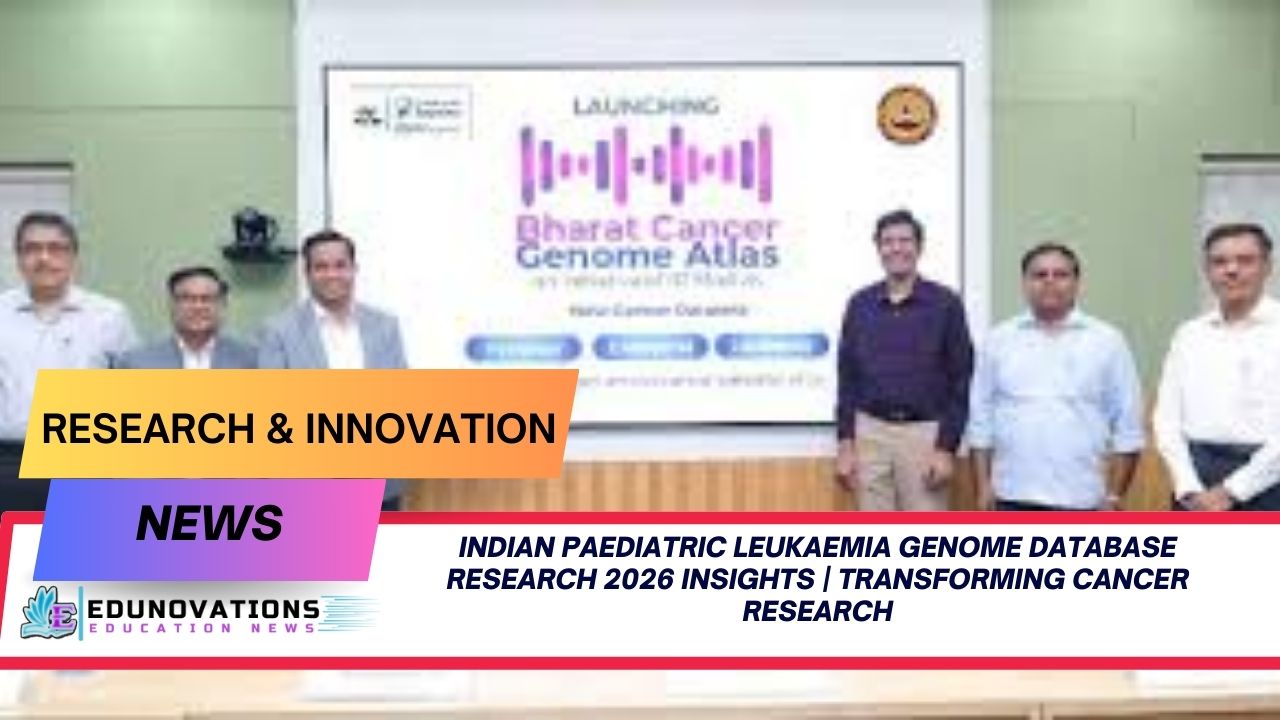
In a major scientific development poised to transform cancer research in India, the Indian paediatric leukaemia genome database research 2026 insights has been released by the Indian Institute of Technology Madras (IIT Madras). This ground-breaking initiative, made public on World Cancer Day (4 February 2026), provides researchers and clinicians unprecedented access to whole genome sequencing data tailored specifically to the Indian population. The release of this first-of-its-kind database — part of the larger Bharat Cancer Genome Atlas — marks a crucial milestone in bridging the genomic information gap that has historically limited precision oncology for Indian patients.
Cancer remains one of the leading causes of mortality globally, and India is no exception. According to the Indian Council of Medical Research (ICMR), one in nine Indians is likely to develop cancer in their lifetime, with approximately 2.5 million people currently living with the disease in the country. Despite a rising cancer burden — with incidence increasing by nearly 12.8% annually — India has been under-represented in global cancer genome studies, limiting the effectiveness of cancer diagnostics, early detection strategies, and targeted treatment options for its diverse population.
The new genomic resource focuses on paediatric leukaemia alongside colorectal and pancreatic cancers. These cancers have high clinical priority due to their complexity and the significant genetic differences observed across populations. This article explores the motivations, scientific foundations, and broader implications of the Indian paediatric leukaemia genome database research 2026 insights, along with expert insights, ongoing collaborations, and implications for Indian healthcare infrastructure.
Why India Needed a Paediatric Leukaemia Genome Database
Historical Under-Representation in Genomic Science
For decades, Indian cancer research has relied heavily on genomic datasets generated from Western populations. These datasets often fail to capture genetic mutations and variants unique to Indian patients, which can influence how cancers develop and respond to treatment. As a result, many diagnostic tools and therapeutic strategies are less effective for Indian patients, especially in rare pediatric cancers such as acute leukaemia.
This gap in genomic representation has significant clinical ramifications:
- Misaligned diagnostics: Tests developed using non-Indian genetic profiles may not detect key mutations prevalent in Indian patients.
- Inadequate treatment targeting: Therapies optimized for Western genomic data may perform poorly among genetically distinct Indian groups.
- Delayed detection and intervention: Without Indian genomic baselines, early detection strategies may miss critical variants.
The Indian paediatric leukaemia genome database research 2026 insights was specifically designed to address these challenges by cataloging whole genome sequencing data across several cancer types, starting with paediatric leukaemia, colorectal, and pancreatic cancers.
What the Genome Database Contains
Comprehensive Sequencing and Anonymised Data
At the heart of the project is the Bharat Cancer Genome Atlas (BCGA), a public repository that provides access to anonymised whole genome sequencing data from Indian cancer patients. The database includes:
- Genetic sequences from thousands of cancer samples across multiple demographics.
- Mutational data specific to paediatric leukaemia, colorectal and pancreatic cancers.
- Population-specific variants that can support deeper research into disease onset, progression, and treatment response.
By making this data freely accessible to researchers and clinicians through the institute’s web portal, the initiative removes barriers to scientific discovery and collaboration, enabling a broader global research community to engage with Indian genomic data.
Expert Insight: Precision Oncology and Population-Specific Care
According to Professor V. Kamakoti, Director of IIT Madras, the new database is part of the institute’s commitment to “IITM for All.” He explained that while global genomic research has advanced precision medicines, India’s unique genetic diversity required more tailored data to ensure effective clinical interventions.
Leading the project, Professor S. Mahalingam, Head of the Centre of Excellence on Cancer Genomics and Molecular Therapeutics, highlighted that identifying cancer-specific biomarkers is central to the success of future diagnostic and treatment strategies. The database will support:
- Early detection markers for paediatric leukaemia in Indian children.
- Identification of novel therapeutic targets specific to Indian genetic backgrounds.
- Development of population-tailored therapies that increase treatment effectiveness and reduce side effects.
By integrating whole genome sequencing with clinical research, the database fills a significant void in oncological data and builds the foundation for precision medicine in India.
How the Initiative Was Funded and Supported
Strategic Partnerships and Funding
The Indian paediatric leukaemia genome database research 2026 insights was made possible through a strategic partnership supported by the Hyundai Motor India Foundation under its flagship CSR initiative, Hyundai Hope for Cancer. The philanthropic support, amounting to INR 56 Crore, funded genetic sequencing projects and extended the reach of clinical research infrastructure.
Key collaborators included:
- Karkinos Healthcare, Mumbai
- KK Childs Trust Hospital, Chennai
- Institute of Child Health, Chennai
- Govt. Rajiv Gandhi Hospital, Chennai
- Kumaran Hospital, Chennai
These partnerships contributed to data collection, sequencing efforts, and clinical analysis, ensuring representation from diverse Indian regions. Subsequent phases aim to expand sample diversity further, including rural and underserved areas, through mobile medical units and community screening camps.
Clinical Benefits: From Biomarkers to Better Therapies
Population-Specific Biomarkers
One of the most critical advantages of the new genome database is its ability to help identify biomarkers — genetic signatures that can signal cancer onset, progression, or therapeutic response. For paediatric leukaemia, these biomarkers can:
- Alert clinicians to high-risk patients at earlier stages.
- Serve as targets for drug development focused on Indian genetic variations.
- Provide benchmarks for monitoring disease progression and treatment outcomes.
This aligns closely with global trends in oncology, where personalized medicine is revolutionizing how cancer is detected and treated. ﹡
Enhancing Clinical Decision-Making
Clinicians armed with access to Indian-specific genomic data can evolve clinical practice in several ways:
- Improved diagnostics: Detect mutations more reliably in Indian patients due to representative data.
- Targeted therapies: Design or select treatments based on patient-specific genomic profiles.
- Reduced trial-and-error treatment: Limit ineffective therapies that do not match the genetic profile of Indian cancers.
These advancements could reduce treatment costs, improve patient outcomes, and inspire confidence in genomic-driven oncology.
Public Access and Research Collaboration
Open Access for Global Researchers
The BCGA portal now serves as a publicly accessible repository (with anonymised data) for researchers and clinicians inside India and abroad. This supports:
- Academic research collaborations
- Multi-institutional clinical trials
- Bioinformatics and computational oncology projects
Access to the genome database enables scientists worldwide to analyze Indian cancer genetics and contribute to studies that may influence global health outcomes.
Screening, Outreach and Support for Underserved Communities
Extended Healthcare Access
The initiative extends beyond data collection into community engagement and healthcare outreach. Through screening and vaccination camps, it provides early detection opportunities to households that might otherwise lack access to advanced healthcare services. The project also includes mobile medical units and funds targeted towards treatment support, especially for economically disadvantaged families.
These outreach programs:
- Promote public awareness about the importance of early detection.
- Train healthcare technicians in genome-based diagnostic protocols.
- Expand the reach of precision oncology to remote regions.
Future Directions and Global Collaboration
Next Phases of Cancer Genomic Research
While the initial launch focuses on paediatric leukaemia, colorectal and pancreatic cancer genetic data, future ambitions include:
- Expansion to additional cancer types relevant to Indian demographics.
- Integration with global genomic consortia to inform larger datasets.
- Encouraging researchers to submit their own genomic data to broaden the atlas further.
Leaders at IIT Madras have emphasized that building a dynamic, growing genomic resource can help reshape how cancer is studied, diagnosed, and treated — both within India and globally.
Additional Context: The Global Burden of Paediatric Leukaemia
According to global health statistics, paediatric leukaemia represents the most common cancer type among children, requiring advanced genomic insights for effective care. The need for tailored genomic databases reflects a broader movement in precision medicine, where patient-specific genetic data informs more customized and effective clinical outcomes.
Internal & External SEO Links – Recommended Placement
To support SEO and user engagement, include relevant internal links such as:
- Learn foundational concepts with NCERT courses on genomics and biology.
- Explore related medical and biological current affairs content.
- Access structured notes and videos to supplement cancer research learning.
Example internal links:
- For NCERT Courses: https://courses.edunovations.com/
- For Current Affairs: https://edunovations.com/currentaffairs/
- For Notes: https://edunovations.com/notes/
- For MCQs: https://edunovations.com/mcq/
- For Videos: https://edunovations.com/videos/
- For Syllabus: https://edunovations.com/syllabus/
- For Free NCERT PDF Downloads and Mind Maps: https://courses.edunovations.com/shop-2/
Example external authoritative link:
- Need Website for Schools Contact: https://www.martindiainfotech.com/ “Mart Ind Infotech”
Toppers Use Mind Maps to score more than 95%
-
NCERT Class 11th Commerce Mind Maps
Add to cartOriginal price was: ₹999.00.₹199.00Current price is: ₹199.00. -
NCERT Class 12th Chemistry Mind Maps
Add to cartOriginal price was: ₹199.00.₹75.00Current price is: ₹75.00. -
NCERT Class 12th Commerce Mind Maps
Add to cartOriginal price was: ₹999.00.₹199.00Current price is: ₹199.00. -
NCERT Class 12th Science Mind Maps
Add to cartOriginal price was: ₹999.00.₹199.00Current price is: ₹199.00. -
NCERT Mind Maps For Class 10th
Add to cartOriginal price was: ₹999.00.₹199.00Current price is: ₹199.00.





Purchase Today
10 FAQs on India’s Paediatric Leukaemia Genome Database
- What is the Indian paediatric leukaemia genome database research 2026 insights initiative?
Answer: It is India’s first publicly accessible genomic research database focusing on whole genome sequencing data for paediatric leukaemia and other cancers in Indian patients, designed to improve research and clinical outcomes. - How can researchers access the paediatric leukaemia genomic data?
Answer: The data is available online through the Bharat Cancer Genome Atlas portal where researchers and clinicians globally can analyze it. - Why is population-specific genomic data important for cancer research?
Answer: It provides accurate genetic variant profiles relevant to the Indian population, enabling better diagnostics and precision therapies. - How does the database support early detection of paediatric leukaemia?
Answer: By identifying biomarkers and genetic mutations specific to Indian patients, enabling early clinical intervention. - Who funded the genome sequencing project?
Answer: The project was supported by Hyundai Motor India Foundation under the Hyundai Hope for Cancer initiative. - What cancers are included in the initial genomic database?
Answer: The initial focus includes paediatric leukaemia, colorectal, and pancreatic cancers. - Can clinicians use the database for patient treatment decisions?
Answer: Yes, clinicians can use the database to guide treatment strategies based on Indian genomic profiles. - Does the initiative include community screening or outreach?
Answer: Yes, it includes screening camps, technician training, and mobile medical units to expand access. - How will the database impact precision oncology in India?
Answer: It will help develop tailored diagnostics and therapies, improving outcomes and reducing treatment failures. - Is the genome database open for future contributions?
Answer: Plans include hosting additional cancer genomic data submitted by researchers to enhance the atlas.