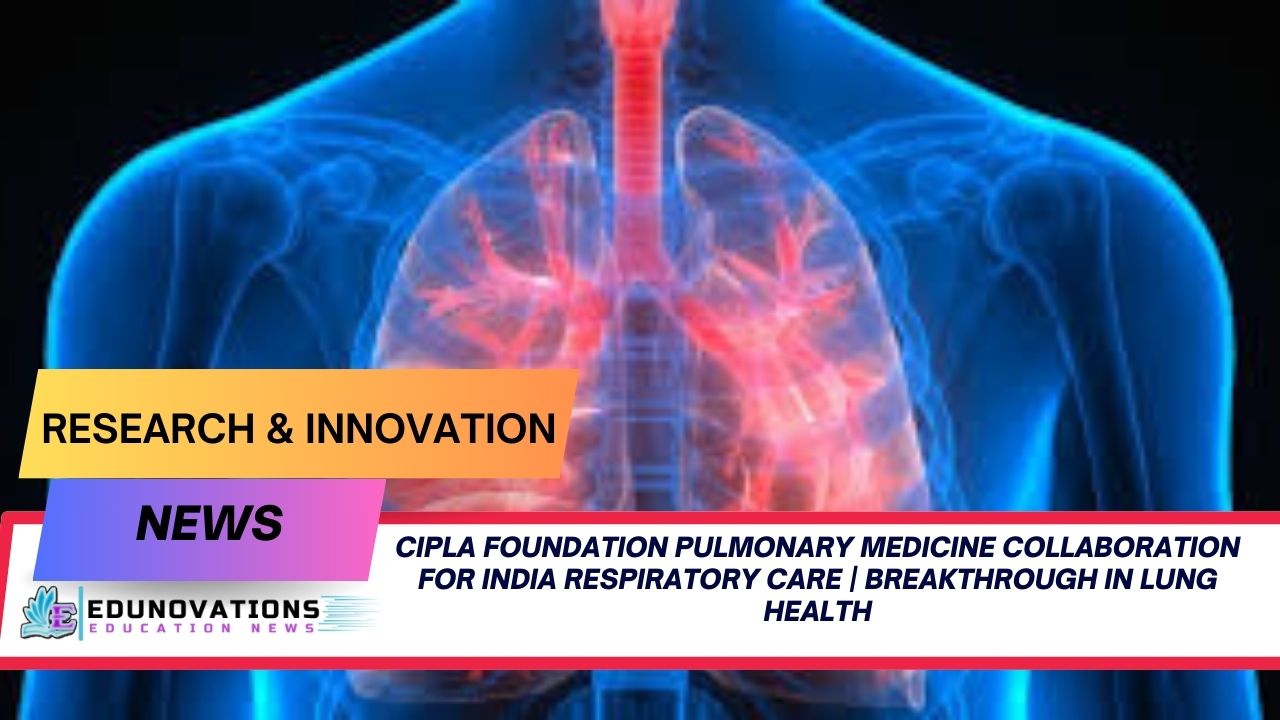
Explore how the Cipla Foundation Pulmonary Medicine collaboration for India respiratory care drives advanced research, early diagnosis, training, and community lung health empowerment.
Introduction
In a major advance for public health in India, the Cipla Foundation Pulmonary Medicine collaboration for India respiratory care has taken a pivotal step toward transforming respiratory research, treatment, and specialist training. The initiative—anchored in a strategic partnership between the Cipla Foundation and the Tata IISc Medical School at the Indian Institute of Science (IISc), Bengaluru—aims to create a comprehensive centre that will reshape how respiratory illnesses are managed and understood in the country.
This collaboration goes beyond conventional care, promising a blend of patient services, cutting‑edge research, capacity building, and community outreach that could alleviate one of India’s most pressing health burdens. Here’s an in‑depth look at what this collaboration entails, its implications for India’s public health landscape, and how it addresses the escalating respiratory disease challenge.
A New Era in Respiratory Health: Vision and Scope
The Cipla Foundation Pulmonary Medicine collaboration for India respiratory care represents a landmark in the country’s healthcare ecosystem by establishing a dedicated Centre for Pulmonary Medicine at the Tata IISc Medical School. This centre has been envisioned not merely as a treatment facility but as an epicenter for preventive care, scientific inquiry, skill development, and community empowerment.
Comprehensive Care Services
The new centre will offer:
- State‑of‑the‑art diagnostic facilities for early detection of lung diseases
- Outpatient and inpatient services tailored to chronic respiratory conditions
- A dedicated Intensive Care Unit (ICU) and high‑dependency units for complex cases
- Supportive care and rehabilitation protocols for long‑term patient recovery
By combining clinical excellence with preventive and rehabilitative care, the initiative aims to reduce morbidity and mortality associated with complex pulmonary disorders.
Strategic Research Initiatives
A central pillar of the centre’s mission is to elevate the scientific understanding of respiratory diseases through advanced research. Key research themes include:
- Development of India‑specific clinical guidelines for conditions such as COPD, Interstitial Lung Disease (ILD), and asthma
- Exploration of biomarkers for early disease detection
- Research in pharmacogenomics and AI‑based pulmonary diagnostics
- Clinical trials for novel therapeutics tailored to the Indian disease burden
This research focus not only supports evidence‑based practice but also places India at the forefront of pulmonary innovation in the global healthcare arena.
Tackling a Growing National Health Challenge
India carries a disproportionate share of global respiratory disease cases. Factors such as high air pollution levels, rampant tobacco use, occupational hazards, and low public awareness contribute to this trend, affecting millions across urban and rural regions.
According to recent public health data, chronic respiratory conditions like COPD and asthma rank among the top non‑communicable diseases nationwide. Initiatives such as this collaboration aim to reduce these health burdens by prioritizing early diagnosis, improving access to treatment, and strengthening preventive measures.
Training the Next Generation of Specialists
Advanced treatment services must be complemented by a skilled workforce. The centre will play a critical role in training pulmonologists and allied healthcare specialists. Through workshops, hands‑on training programs, global partnerships, and knowledge exchange, the centre seeks to elevate clinical expertise across India.
This effort directly addresses an existing gap: the uneven distribution of respiratory specialists, particularly outside major metropolitan areas—a problem that has often resulted in delayed diagnosis and suboptimal care for patients in underserved regions.
Community Programs: Awareness and Prevention
Effective lung health management must begin at the community level. The initiative will roll out targeted public programs focusing on:
- Early lung disease screening drives
- Air quality awareness campaigns
- Smoking cessation support services
- Preventive health education tailored to vulnerable populations
These community‑centric drives are designed to create sustainable behaviour change, reduce risk factors, and empower individuals with the knowledge to protect their respiratory health.
Collaborative Leadership and Expert Insights
At the heart of this initiative are leaders from both academia and healthcare organizations. Anurag Mishra, Head of the Cipla Foundation, emphasizes a philosophy of “Caring for Life,” stating that the foundation’s commitment lies in bridging gaps in access, skills, and infrastructure for respiratory care.
Likewise, Prof. Govindan Rangarajan, Director of IISc, highlighted the collaboration’s potential to drive interdisciplinary research and innovative treatments suited not just for India but for global application.
Why This Initiative Matters
The Cipla Foundation Pulmonary Medicine collaboration for India respiratory care stands as one of the most ambitious efforts in India’s healthcare journey to combat respiratory disease, offering a hopeful path forward through:
- Evidence‑based clinical interventions
- High‑impact research and innovation
- Skill enhancement for healthcare professionals
- Community mobilization and preventive care
By uniting patient care with research and community engagement, this partnership is poised to build a resilient respiratory health framework capable of tackling current and future challenges.
Looking Ahead: Long‑Term Impact and Sustainability
This initiative is expected to produce ripple effects across India’s healthcare ecosystem:
- Enhanced national respiratory disease surveillance and treatment standards
- Creation of a centre of excellence in pulmonary medicine
- Stronger public health infrastructure aligned with global best practices
- Increased capacity for domestic scientific discoveries in lung health
As India continues to wrestle with the long‑term consequences of chronic lung diseases, interventions such as this collaboration can redefine the future of respiratory care.
Conclusion
The Cipla Foundation Pulmonary Medicine collaboration for India respiratory care is not merely a medical project—it is a comprehensive movement toward sustainable health outcomes. By integrating cutting‑edge research, specialist training, patient‑centric care, and community empowerment, the initiative promises to reshape India’s approach to respiratory health.
This is a model that other nations confronting similar challenges could look toward—a testament to what visionary partnerships can accomplish in public health.
Toppers Use Mind Maps to score more than 95%
NCERT Class 11th Commerce Mind Maps
Add to cartOriginal price was: ₹999.00.₹199.00Current price is: ₹199.00.NCERT Class 12th Chemistry Mind Maps
Add to cartOriginal price was: ₹199.00.₹75.00Current price is: ₹75.00.NCERT Class 12th Commerce Mind Maps
Add to cartOriginal price was: ₹999.00.₹199.00Current price is: ₹199.00.NCERT Class 12th Science Mind Maps
Add to cartOriginal price was: ₹999.00.₹199.00Current price is: ₹199.00.NCERT Mind Maps For Class 10th
Add to cartOriginal price was: ₹999.00.₹199.00Current price is: ₹199.00.





Purchase Today
10 Frequently Asked Questions (FAQs)
- What is the Cipla Foundation Pulmonary Medicine collaboration for India respiratory care?
It is a partnership between the Cipla Foundation and Tata IISc Medical School designed to advance respiratory research and comprehensive lung health services in India. - Where is the Centre for Pulmonary Medicine located?
The centre is being established at the Tata IISc Medical School in Bengaluru, Karnataka. - What services will the centre provide?
Services include diagnostics, outpatient and inpatient care, ICU support, and comprehensive respiratory disorder treatment. - Which diseases will receive research focus at the centre?
Primary research will focus on COPD, asthma, ILD, biomarkers, and AI‑based pulmonary diagnostics. - How will the collaboration improve early lung disease diagnosis?
Through advanced diagnostic tools, community screening programs, and research into biomarkers and AI diagnostics. - Will the centre offer specialist training programs?
Yes, the centre will provide training for pulmonologists and allied healthcare professionals through workshops and international collaborations. - Are community awareness programs part of the initiative?
Yes, including smoking cessation campaigns and air quality awareness efforts. - Does the initiative impact underserved populations?
The program aims to enhance equitable access to quality respiratory care, especially in rural and peri‑urban areas. - How does the centre support research in lung health?
By conducting clinical research, exploring pharmacogenomics, and developing India‑specific health guidelines. - What long‑term changes can this collaboration bring to India’s healthcare?
It can elevate respiratory care infrastructure, strengthen clinical capacities, and foster preventive and community‑based health approaches.