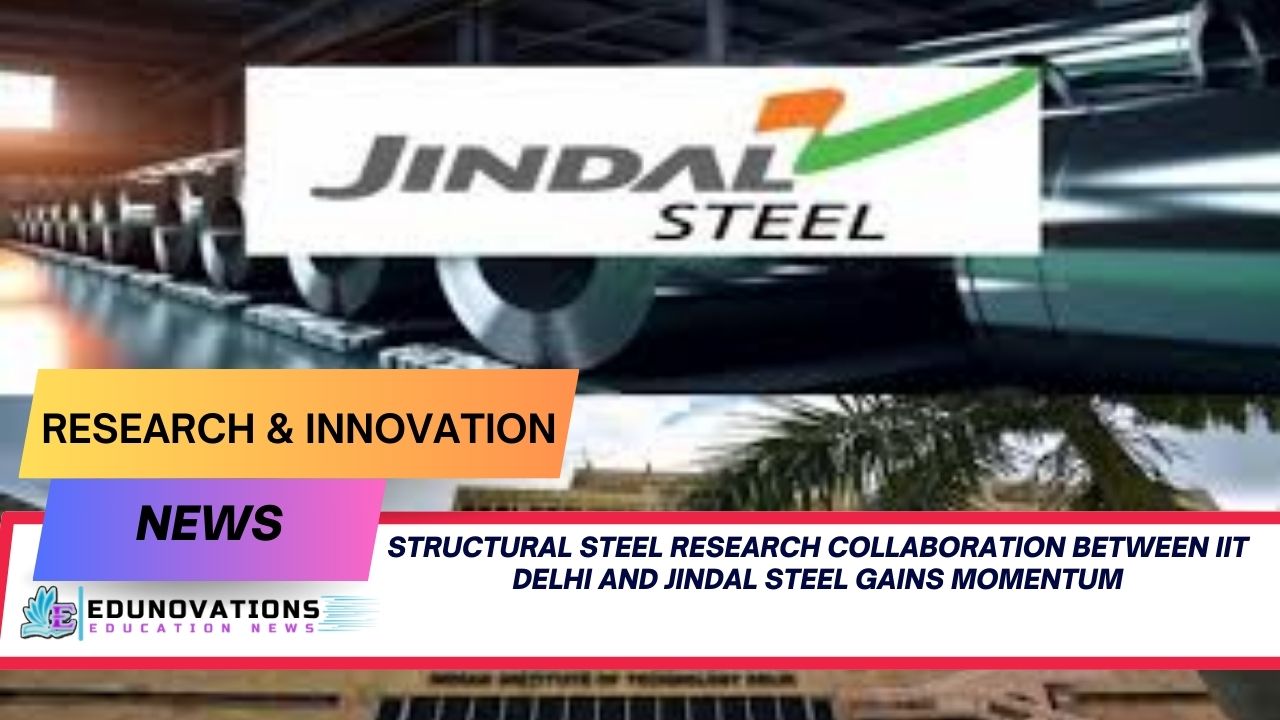
The structural steel research collaboration between IIT Delhi and Jindal Steel aims to advance innovation, sustainability, and performance oriented structural steel applications in modern construction across India.
India’s construction and infrastructure sector is undergoing rapid transformation, driven by sustainability goals, urban expansion, and technological innovation. In a significant move poised to reshape the future of structural engineering, a landmark structural steel research collaboration between IIT Delhi and Jindal Steel has been formalized to advance innovation, performance, and sustainability in steel-intensive construction.
This strategic partnership is more than a ceremonial agreement. It represents a long-term vision to establish India as a global leader in structural steel design, research, and capacity building. With the nation investing heavily in highways, railways, metro systems, airports, smart cities, and industrial corridors, the timing of this initiative is particularly significant.
A Strategic Partnership for National Infrastructure Growth
The newly announced structural steel research collaboration between IIT Delhi and Jindal Steel is aimed at creating a strong academic-industry ecosystem. The initiative focuses on developing next-generation structural steel technologies, enhancing engineering practices, and fostering research that aligns with India’s infrastructure ambitions.
This partnership underscores three major priorities:
- Innovation in structural steel design
- Capacity building for engineers and researchers
- Promotion of sustainable high strength steel construction methods
India’s steel consumption per capita remains lower than many developed nations, yet the country is the world’s second-largest steel producer. Experts believe that deeper integration between research institutions and industry leaders can bridge the gap between production capacity and high-value application.
Establishing a National Hub for Innovation
A key objective of this initiative is to strengthen the nodal centre of excellence for structural steel innovation in India at IIT Delhi. Such a centre is expected to:
- Conduct advanced research in steel-intensive construction
- Develop testing standards and design guidelines
- Support government infrastructure missions
- Train engineers in performance-based structural design
By reinforcing a nodal centre of excellence for structural steel innovation in India, the partnership aims to institutionalize innovation rather than rely on isolated projects.
According to infrastructure analysts, structured research ecosystems like these can accelerate the adoption of high-performance steel in bridges, industrial buildings, earthquake-resistant structures, and high-rise construction.
Driving Performance-Oriented Engineering
The emphasis on performance oriented structural steel applications in modern construction reflects global best practices. Rather than merely focusing on material strength, performance-based engineering evaluates durability, seismic resistance, lifecycle cost, and environmental impact.
Through the structural steel research collaboration between IIT Delhi and Jindal Steel, researchers plan to:
- Develop new testing protocols
- Improve seismic performance modeling
- Study fatigue resistance in heavy-load structures
- Enhance corrosion resistance in coastal infrastructure
The adoption of performance oriented structural steel applications in modern construction can significantly reduce maintenance costs over decades while improving safety standards.
Industry experts note that steel structures can be 30–40% faster to erect compared to traditional reinforced concrete systems, making them ideal for India’s time-bound infrastructure targets.
Innovation in Structural Steel Design and Capacity Building
Another core dimension of this initiative is the IIT Delhi structural steel design innovation capacity building program. This program will serve as a bridge between research and real-world implementation.
Key components of the IIT Delhi structural steel design innovation capacity building program include:
- Specialized workshops for practicing engineers
- Industry-integrated doctoral research
- Certification courses in advanced steel design
- Development of digital modeling tools
Capacity building remains crucial. According to industry surveys, a shortage of trained structural engineers familiar with modern steel design standards has slowed the adoption of advanced materials.
By strengthening the IIT Delhi structural steel design innovation capacity building program, the collaboration seeks to create a new generation of professionals equipped with global best practices.
Students preparing for competitive examinations can access structured academic resources through platforms such as NCERT Courses, Notes, MCQs, and Syllabus sections to build foundational understanding in structural mechanics and materials science.
Sustainability and High-Strength Steel Applications
Sustainability is central to the structural steel research collaboration between IIT Delhi and Jindal Steel. With global climate targets tightening, construction materials must reduce embodied carbon while maintaining structural integrity.
The partnership will explore sustainable high strength steel construction methods and research India, focusing on:
- Reduced carbon steel production techniques
- Optimized structural designs using less material
- Recycling and circular economy integration
- Lifecycle assessment studies
Steel is already one of the most recycled materials globally. However, innovation in sustainable high strength steel construction methods and research India can further lower emissions and material waste.
Environmental analysts estimate that optimized steel design can reduce material usage by up to 20% without compromising structural safety. Such savings translate into lower carbon footprints for mega projects.
Industry-Academia Synergy: Why It Matters
The structural steel research collaboration between IIT Delhi and Jindal Steel reflects a growing recognition that academia and industry must work together to remain globally competitive.
Industry partnerships provide:
- Real-world testing environments
- Funding for applied research
- Faster commercialization pathways
- Access to industrial-grade laboratories
Academic institutions contribute:
- Fundamental research
- Independent validation
- Talent development
- Policy advisory inputs
This synergy strengthens the nodal centre of excellence for structural steel innovation in India, ensuring long-term institutional stability.
Expert Insights on the Collaboration
Leading structural engineers have welcomed the structural steel research collaboration between IIT Delhi and Jindal Steel as a “timely and visionary step.”
Infrastructure economist Dr. Anil Sharma observed that India’s infrastructure pipeline, valued at over $1.5 trillion, requires rapid innovation in materials science. He emphasized that performance oriented structural steel applications in modern construction could reduce project timelines and lifecycle costs.
Senior engineers also highlighted that the IIT Delhi structural steel design innovation capacity building program will play a pivotal role in aligning Indian standards with global benchmarks.
Economic and National Impact
The structural steel research collaboration between IIT Delhi and Jindal Steel is expected to generate long-term economic benefits, including:
- Increased domestic steel consumption
- Enhanced export potential of value-added steel products
- Improved infrastructure durability
- Job creation in engineering and manufacturing
Strengthening the nodal centre of excellence for structural steel innovation in India can also position India as a knowledge exporter in structural engineering.
Additionally, the development of sustainable high strength steel construction methods and research India aligns with India’s commitments under international climate agreements.
Educational and Skill Development Implications
For students and aspirants preparing for engineering and civil services examinations, understanding initiatives like the structural steel research collaboration between IIT Delhi and Jindal Steel is crucial.
You can strengthen your conceptual clarity through:
- Current Affairs Updates
- Subject-wise Notes
- Practice MCQs
- Video Lectures
- Free NCERT PDF Downloads
- NCERT Mind Maps
These structured learning tools enhance both theoretical understanding and exam readiness.
Digital Infrastructure and Outreach
Modern research initiatives require strong digital outreach to maximize impact. Educational institutions and schools seeking to enhance their online presence can connect with Mart Ind Infotech for professional website development solutions.
A well-designed digital ecosystem ensures that findings from the structural steel research collaboration between IIT Delhi and Jindal Steel reach policymakers, engineers, and students nationwide.
Looking Ahead: The Road to Global Leadership
The success of the structural steel research collaboration between IIT Delhi and Jindal Steel will depend on sustained investment, transparent governance, and measurable research outcomes.
If effectively implemented, the initiative can:
- Transform construction practices
- Boost India’s global ranking in steel innovation
- Accelerate sustainable infrastructure development
- Enhance technical education standards
With a strong nodal centre of excellence for structural steel innovation in India, expanded performance oriented structural steel applications in modern construction, and a robust IIT Delhi structural steel design innovation capacity building program, the nation is poised for transformative progress.
Toppers Use Mind Maps to score more than 95%
NCERT Class 11th Commerce Mind Maps
Add to cartOriginal price was: ₹999.00.₹199.00Current price is: ₹199.00.NCERT Class 12th Chemistry Mind Maps
Add to cartOriginal price was: ₹199.00.₹75.00Current price is: ₹75.00.NCERT Class 12th Commerce Mind Maps
Add to cartOriginal price was: ₹999.00.₹199.00Current price is: ₹199.00.NCERT Class 12th Science Mind Maps
Add to cartOriginal price was: ₹999.00.₹199.00Current price is: ₹199.00.NCERT Mind Maps For Class 10th
Add to cartOriginal price was: ₹999.00.₹199.00Current price is: ₹199.00.





Purchase Today
FAQs
1. What is the structural steel research collaboration between IIT Delhi and Jindal Steel?
It is a strategic partnership aimed at advancing research, innovation, and sustainability in structural steel applications.
2. How will the nodal centre of excellence for structural steel innovation in India benefit engineers?
It will provide advanced research facilities, testing standards, and training programs for engineers.
3. What are performance oriented structural steel applications in modern construction?
They focus on durability, seismic resistance, lifecycle cost efficiency, and sustainability.
4. What does the IIT Delhi structural steel design innovation capacity building program include?
It includes workshops, research fellowships, certification courses, and digital modeling initiatives.
5. Why are sustainable high strength steel construction methods and research India important?
They reduce carbon emissions and improve resource efficiency in infrastructure projects.
6. How does this collaboration impact India’s infrastructure growth?
It supports innovation in highways, bridges, metro systems, and industrial projects.
7. Will students benefit from this initiative?
Yes, through research exposure, internships, and academic programs.
8. How does this improve global competitiveness?
It strengthens India’s research ecosystem and export potential in value-added steel.
9. Is sustainability a major focus?
Yes, the collaboration emphasizes eco-friendly steel production and lifecycle assessment.
10. What makes this collaboration significant for the construction industry?
It integrates academic research with industrial application for scalable innovation.