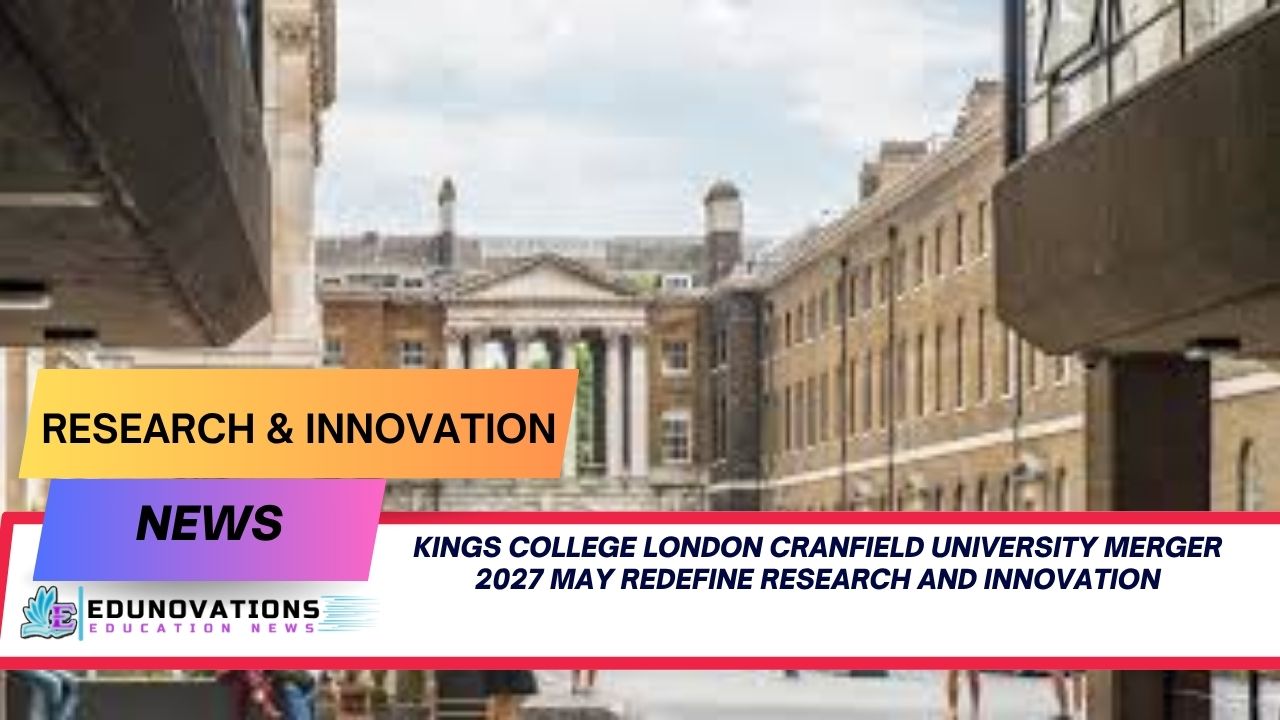
The proposed kings college london cranfield university merger 2027 could transform UK higher education through advanced research, AI, aerospace, defence innovation, and global academic collaboration.
The UK higher education sector is witnessing a potentially transformative development as King’s College London and Cranfield University move forward with plans for a strategic merger that could reshape the future of research, innovation, engineering, and defence education in Britain. The proposed collaboration has already sparked discussions across academic circles, policy institutions, and global education forums due to the unique strengths both universities bring to the table.
The kings college london cranfield university merger 2027 proposal represents far more than a routine institutional partnership. Analysts believe the move could create one of the UK’s most influential research-driven universities with a strong emphasis on artificial intelligence, aerospace engineering, sustainability, healthcare innovation, and national security research.
Education experts suggest that this initiative arrives at a critical moment when universities worldwide are under pressure to expand interdisciplinary collaboration, strengthen industrial partnerships, and improve research commercialization. The planned integration between the two prestigious institutions could therefore establish a new benchmark for strategic academic mergers in Europe.
Students looking for educational resources and preparation materials can also explore platforms like NCERT Courses and Current Affairs Updates for academic support and exam-focused learning.
Why the Proposed Collaboration Matters
King’s College London is internationally recognized for excellence in medicine, humanities, public policy, and social sciences, while Cranfield University has earned a strong reputation in aerospace, defence, advanced manufacturing, and technology innovation.
The combination of these complementary strengths could produce a globally competitive institution with enhanced capabilities in:
- Artificial intelligence research
- Aerospace engineering
- Climate resilience studies
- Defence technology
- Biomedical innovation
- Robotics and automation
- Cybersecurity programs
- Sustainable energy systems
Experts believe the proposed collaboration may accelerate research commercialization and improve the UK’s ability to compete with leading American and Asian universities.
The kings college london cranfield university merger 2027 plan has gained attention particularly because it aligns with broader UK government objectives related to innovation-led economic growth and advanced scientific research.
A New Era for UK Research Universities
Higher education analysts argue that universities can no longer operate in isolation if they wish to remain globally competitive. Increasing research costs, international competition, and rapid technological change are encouraging institutions to adopt collaborative strategies.
The proposed merger may help both universities expand their global footprint while sharing infrastructure, research expertise, and funding opportunities.
Many observers describe this development as a major step toward creating a powerful UK technology-focused academic ecosystem.
The idea of a uk university merger engineering and defence education initiative has also attracted attention from policymakers interested in strengthening Britain’s technological capabilities.
According to sector specialists, mergers in higher education are often difficult because institutions possess different cultures, governance systems, and operational priorities. However, supporters believe this collaboration appears strategically aligned because both institutions focus heavily on research impact and international partnerships.
Strategic Importance for Aerospace and Defence Research
One of the most significant dimensions of the proposed partnership involves aerospace and defence innovation.
Cranfield University has longstanding expertise in aviation, defence engineering, autonomous systems, and military technology research. King’s College London, meanwhile, contributes internationally recognized expertise in policy studies, cybersecurity, ethics, diplomacy, and health sciences.
The combination may create stronger interdisciplinary research opportunities involving:
- Defence medicine
- Military logistics
- AI-powered defence systems
- Aerospace sustainability
- National resilience planning
- Cyber warfare prevention
- Drone and autonomous systems research
The cranfield university merger with kings college london news has therefore generated interest among defence analysts and industrial partners.
Industry observers believe such collaboration could strengthen Britain’s position in advanced aerospace and defence research at a time when global geopolitical tensions are increasing investments in technological innovation.
Artificial Intelligence and Emerging Technologies
Artificial intelligence remains a major priority for universities globally, and the proposed merger could significantly enhance Britain’s AI research ecosystem.
The kings college london cranfield ai and aerospace merger concept is particularly attractive because it combines engineering expertise with policy, ethics, and healthcare applications.
Experts note that future AI leadership will require multidisciplinary collaboration rather than isolated technical research.
Potential focus areas may include:
- AI in healthcare diagnostics
- Aerospace automation
- Ethical AI governance
- Robotics engineering
- Smart defence technologies
- Data-driven climate modeling
- AI-assisted public services
The proposed collaboration could also attract international funding from governments and private technology firms seeking research partnerships.
Students interested in technological education resources may also access NCERT Notes Platform and Educational Videos for subject preparation and conceptual learning.
Impact on Students and Academic Programs
Students are expected to benefit significantly if the merger moves forward successfully.
Possible advantages include:
Expanded Research Opportunities
Students may gain access to advanced laboratories, industrial partnerships, and interdisciplinary research projects.
Improved Employability
Combined industry connections could strengthen internship and placement opportunities.
International Exposure
A larger institution may attract more international collaborations and exchange programs.
Wider Academic Offerings
The merger could create innovative multidisciplinary programs blending technology, policy, medicine, and engineering.
The new uk technology university merger 2026 explained discussions have already become popular among prospective students exploring future-oriented academic pathways.
However, some experts also caution that university mergers often involve operational challenges, including curriculum alignment, administrative restructuring, and campus integration.
Financial and Institutional Implications
University mergers are frequently influenced by financial sustainability considerations. Rising operational costs and global competition have pushed many institutions to explore collaborative models.
The proposed merger could potentially improve:
- Research grant competitiveness
- Infrastructure efficiency
- International student recruitment
- Industrial funding opportunities
- Technology commercialization capabilities
Education economists believe research-intensive universities increasingly require large-scale investment ecosystems to remain globally competitive.
The kings college london cranfield university merger 2027 may therefore represent a strategic long-term investment rather than merely an administrative restructuring exercise.
Reactions from Academic Experts
Several higher education commentators have described the proposal as one of the most strategically significant developments in UK academia in recent years.
Some policy experts argue that Britain needs stronger university collaborations to compete with global innovation hubs in the United States and China.
Academic analysts also point out that interdisciplinary institutions are becoming more attractive to governments and private investors.
The idea behind the uk university merger engineering and defence education initiative reflects growing recognition that future innovation challenges require collaboration across multiple fields.
Potential Benefits for Industry Partnerships
Industrial collaboration could become a defining feature of the merged institution.
Potential industry sectors expected to benefit include:
- Aerospace manufacturing
- Renewable energy
- Artificial intelligence
- Healthcare technology
- Defence systems
- Smart mobility
- Cybersecurity
- Robotics engineering
Industry experts believe stronger university-industry partnerships are essential for improving research commercialization and economic growth.
The cranfield university merger with kings college london news has already generated interest among innovation-focused companies looking for research partnerships.
Businesses seeking digital outreach and educational technology support can also connect with Mart Ind Infotech for technology and institutional solutions.
The Global Higher Education Context
Globally, universities are increasingly pursuing partnerships and mergers to enhance competitiveness.
Countries including the United States, China, Germany, and Singapore have invested heavily in interdisciplinary research ecosystems linking academia, industry, and government institutions.
The proposed merger may therefore help the UK maintain competitiveness in emerging technologies and scientific research.
The kings college london cranfield ai and aerospace merger concept also aligns with broader global trends emphasizing AI-enabled industrial innovation and sustainability-focused research.
Experts believe that institutions capable of combining technological expertise with policy understanding and healthcare innovation will become increasingly influential in the coming decade.
Challenges That Could Influence the Process
Despite optimism surrounding the proposal, university mergers can involve substantial complexity.
Potential challenges include:
- Governance restructuring
- Faculty integration
- Cultural alignment
- Financial management
- Regulatory approvals
- Student transition planning
- Research infrastructure coordination
Education specialists note that maintaining institutional identity while creating a unified vision is often one of the most difficult aspects of academic mergers.
The new uk technology university merger 2026 explained conversations frequently highlight both opportunities and implementation risks.
How the Proposal Could Influence Future University Models
The merger may eventually influence how universities globally approach collaboration and specialization.
Rather than attempting to excel independently across all disciplines, future universities may increasingly focus on strategic partnerships that combine complementary strengths.
The kings college london cranfield university merger 2027 proposal therefore represents a broader transformation within global higher education.
Some experts predict that universities of the future will function more like interconnected innovation ecosystems involving:
- Academic research
- Government collaboration
- Industry partnerships
- Technology incubation
- Public policy engagement
Role of Innovation Corridors in Academic Growth
The UK government has emphasized the importance of regional innovation corridors connecting universities, industries, and technology clusters.
The proposed collaboration may strengthen Britain’s innovation ecosystem by linking research expertise with industrial development priorities.
Analysts believe this could support national ambitions related to:
- Net-zero technologies
- AI leadership
- Aerospace innovation
- Defence modernization
- Health technology research
The uk university merger engineering and defence education initiative is therefore viewed by some commentators as strategically aligned with national economic priorities.
Growing Interest Among International Students
International students are increasingly selecting universities based on research reputation, employability outcomes, and interdisciplinary opportunities.
A merged institution combining King’s College London’s global brand with Cranfield’s technical specialization could attract significant international attention.
The cranfield university merger with kings college london news has already become a widely discussed topic among students interested in engineering, aerospace, and AI programs.
Students preparing for competitive examinations can also explore MCQ Practice Resources and Syllabus Materials for academic preparation.
Future Outlook
While discussions regarding the merger remain ongoing, the proposal has already triggered important conversations about the future direction of UK higher education.
If implemented successfully, the collaboration could establish a powerful model for integrating research excellence, technological innovation, and industrial engagement.
The kings college london cranfield ai and aerospace merger may ultimately redefine how universities contribute to economic development, national resilience, and global scientific leadership.
Observers believe the coming years will determine whether this initiative becomes one of the most influential academic transformations in modern British higher education history.
Students and educators looking for free learning resources can also access Free NCERT PDFs and Mind Maps for additional educational support.
Conclusion
The proposed collaboration between King’s College London and Cranfield University represents a landmark moment for UK higher education. Beyond administrative restructuring, the initiative reflects broader global shifts toward interdisciplinary research, innovation-driven growth, and strategic academic partnerships.
The kings college london cranfield university merger 2027 proposal has generated substantial interest because of its potential to strengthen Britain’s position in AI, aerospace, defence, healthcare, and sustainability research.
As universities worldwide adapt to technological disruption and growing international competition, collaborations of this scale may become increasingly common. Whether the merger ultimately succeeds or evolves into another form of strategic partnership, it has already become one of the most closely watched developments in the global education sector.
Toppers Use Mind Maps to score more than 95%
NCERT Class 11th Commerce Mind Maps
Add to cartOriginal price was: ₹999.00.₹199.00Current price is: ₹199.00.NCERT Class 12th Chemistry Mind Maps
Add to cartOriginal price was: ₹199.00.₹75.00Current price is: ₹75.00.NCERT Class 12th Commerce Mind Maps
Add to cartOriginal price was: ₹999.00.₹199.00Current price is: ₹199.00.NCERT Class 12th Science Mind Maps
Add to cartOriginal price was: ₹999.00.₹199.00Current price is: ₹199.00.NCERT Mind Maps For Class 10th
Add to cartOriginal price was: ₹999.00.₹199.00Current price is: ₹199.00.




Purchase Today
FAQs
1. What is the kings college london cranfield university merger 2027?
It is a proposed strategic merger between King’s College London and Cranfield University aimed at strengthening research, innovation, AI, aerospace, and defence education.
2. Why is the cranfield university merger with kings college london news important?
The proposal could create a globally competitive research institution focused on advanced technologies and interdisciplinary collaboration.
3. How could the kings college london cranfield ai and aerospace merger benefit students?
Students may gain access to better research facilities, stronger industry partnerships, and expanded interdisciplinary programs.
4. What sectors may benefit from the uk university merger engineering and defence education initiative?
Aerospace, cybersecurity, healthcare technology, robotics, AI, and defence sectors could benefit significantly.
5. Is the new uk technology university merger 2026 explained officially confirmed?
The proposal is currently under discussion and subject to institutional and regulatory processes.
6. Will the merger impact international students?
Yes, experts believe the collaboration could improve global rankings and attract more international students.
7. How does the proposed merger support AI research?
It combines technical engineering expertise with policy, healthcare, and ethical AI capabilities.
8. Why are university mergers becoming more common globally?
Universities seek stronger research ecosystems, financial sustainability, and global competitiveness.
9. Could the merger improve employability for graduates?
Yes, expanded industrial partnerships may create better internships and career opportunities.
10. What makes this UK university proposal unique?
The combination of aerospace engineering, defence research, healthcare innovation, and AI collaboration makes the proposal distinctive.