Discover why a future trainee had her career derailed. Explore if you can lose your training contract for forging a signature and the strict SRA rules.
Understanding the High-Stakes Environment of Modern Legal Practice
The path to qualifying as a solicitor in the United Kingdom is notoriously demanding, requiring years of academic dedication, practical training, and unyielding professional integrity. For thousands of aspiring legal professionals, securing a training contract is the ultimate milestone after completing routes like the Legal Practice Course (LPC) or the Solicitors Qualifying Examination (SQE). However, the intense competitive pressure can sometimes drive junior staff members into making catastrophic errors of judgment. A recent high-profile regulatory decision has sent shockwaves through the legal community, serving as a stark reminder that regulatory bodies hold zero tolerance for dishonesty, regardless of the career stage of the individual involved.
In an industry where public trust is the foundational currency, maintaining transparency is non-negotiable. When professionals choose to cut corners, the repercussions are swift and permanent. For a broader perspective on professional training, educational guidelines, and foundational knowledge, students can explore resources such as NCERT Courses or access comprehensive Notes to understand structural ethics and governance. Furthermore, professionals seeking to stay ahead of regulatory updates can monitor daily insights via Current Affairs.
The Anatomy of a Career-Ending Mistake
The case centers around Nishaat Shamas Saeed, an immigration paralegal working at East London law firm Elaahi & Co. Saeed had successfully completed her academic training and had earned a promotion to senior paralegal, working diligently since September 2023. Most notably, she was just months away from transitioning into a highly coveted training contract with the firm, scheduled to begin in June 2025.
Her promising legal career unraveled over a critical three-day period in February 2025. Tasked with managing a client’s critical application for an extension of leave to remain in the UK, Saeed failed to send essential declaration forms to the client and their sponsor for mandatory signatures before the submission deadline. Faced with the daunting prospect of admitting an administrative oversight to her superiors, she chose a path of active deception.
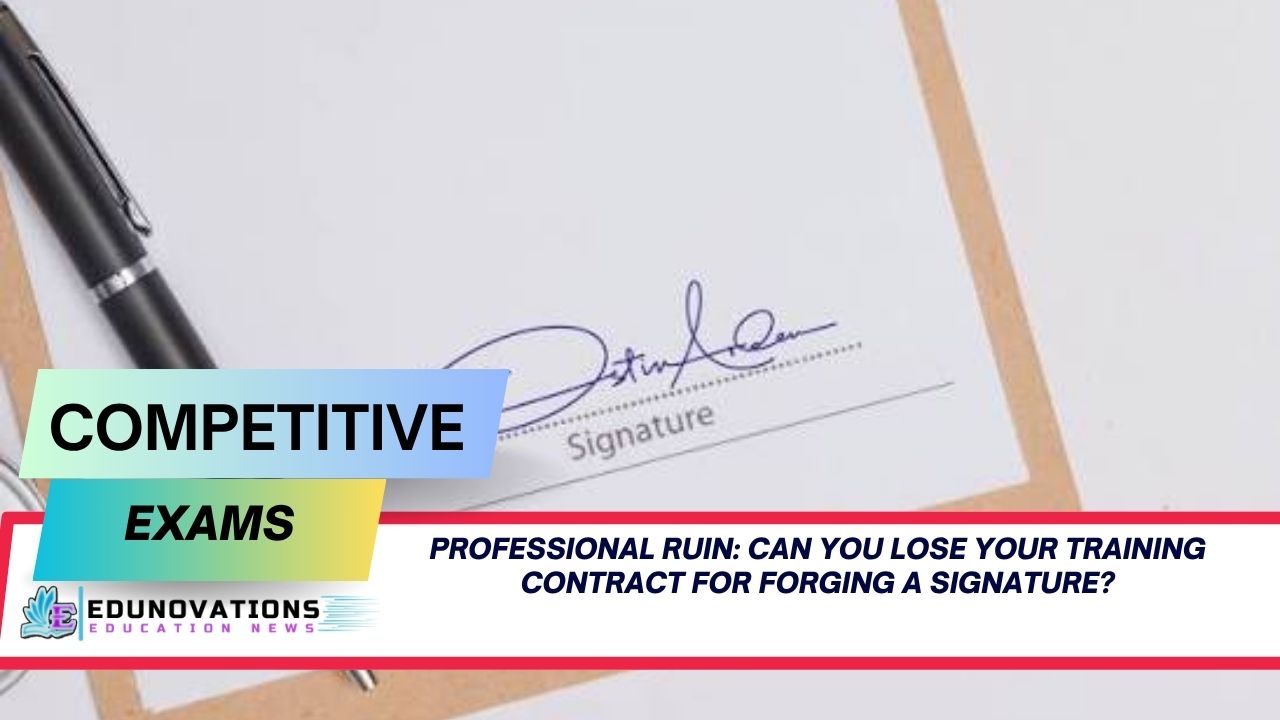
Instead of confessing to the oversight, Saeed forged both the client’s and the sponsor’s signatures across four separate declaration forms and submitted them directly to the Home Office. Compounding her actions, she also falsified an English language test certificate dated January 2025, submitting it on behalf of the client who had never actually completed the qualification. Saeed later admitted she fabricated the certificate to conceal her failure to advise the client that the qualification was a mandatory prerequisite for their immigration application.
To evaluate how educational institutions and professional training bodies handle compliance and systemic errors, educators and institutional leaders often collaborate with specialized organizations like Mart Ind Infotech to build secure administrative infrastructures.
The Cover-Up and Internal Investigation
As is typical in modern law firms, quality control and internal audits eventually flagged discrepancies in the file. When Elaahi & Co initiated a formal internal investigation into the handling of the immigration matter, Saeed doubled down on her dishonest behavior rather than coming clean.
During the inquiry, she fabricated an electronic mail message containing the missing declaration forms, falsely claiming it had been dispatched to the client at 6:00 PM on February 8, 2025. To solidify this fabricated narrative, she went so far as to digitally tamper with screenshots taken from her work laptop screen to trick her employers into believing the communication had occurred natively.
Despite these elaborate efforts, the firm’s investigative team gathered indisputable digital evidence contradicting her claims. Confronted with the definitive proof, Saeed finally admitted to her actions. Elaahi & Co summarily dismissed her for gross misconduct on February 24, 2025—months before her training contract was due to commence. For those looking to test their knowledge on legal scenarios, administrative rules, and professional standards, practicing with interactive MCQ’s can provide structural clarity.
Regulatory Intervention and the Section 43 Order
The matter was promptly referred to the Solicitors Regulation Authority (SRA), the independent regulatory body for solicitors in England and Wales. The SRA assessed the gravity of the misconduct, noting that while the client was completely unaware of and uninvolved in the forgery, the deception had a profound and detrimental impact on their official immigration application.
Because Saeed was not yet a fully qualified solicitor admitted to the roll, the SRA exercised its powers under Section 43 of the Solicitors Act 1974. This regulatory mechanism allows the SRA to place formal restrictions on non-solicitors working within authorized legal practices.
The resulting order dictates that Saeed is effectively barred from being employed or taking up a role in any SRA-regulated firm without receiving explicit, prior written approval from the regulator. Additionally, she was ordered to pay financial costs amounting to £600 to cover the regulatory investigation. This penalty mirrors other recent high-profile regulatory crackdowns on junior professionals attempting to bypass firm rules, such as cases involving unauthorized access to assessment materials or falsified time entries.
Students preparing for professional qualifying examinations can review structured Syllabus outlines and visual learning tools like NCERT Mind Maps to understand regulatory frameworks. For a deeper audio-visual breakdown of professional ethics, exploring curated Videos is highly recommended. Supplementary reference materials and exam prep bundles can also be found directly via the Downloads of Free NCERT PDFs portal.
Expert Insights on Workplace Culture and Professional Ethics
The incident has sparked widespread debate across legal forums and industry commentary boards regarding the underlying pressures faced by junior legal practitioners. Legal commentators have debated whether the intense billable hour expectations and high-stakes workloads in immigration law departments create an environment where junior staff panic when facing minor administrative slip-ups.
Prominent legal ethicists and senior partners have frequently spoken out about the psychology of workplace mistakes. Lord Pannick KC, a renowned British barrister and crossbench peer known for his extensive commentary on legal ethics and professional standards, has often emphasized that the cornerstone of advocacy and legal practice is absolute candor with the court and clients. In various public lectures regarding professional integrity, Lord Pannick has noted:
“The legal profession relies entirely on a baseline of uncompromised truth. A mistake in procedure can almost always be rectified through transparency and application to the court or regulator; a deliberate falsehood, however, destroys the professional currency of trust instantaneously and permanently.”
Industry analysts point out that while heavy workloads and lack of senior supervision can amplify stress, they can never serve as a valid legal or ethical justification for fraud, forgery, or systemic deception. Law firms are increasingly being urged to cultivate open-door reporting cultures where junior employees feel secure enough to report errors immediately without fearing immediate termination or psychological intimidation.
Statistical Overview of SRA Disciplinary Trends
To understand the broader regulatory landscape, recent data highlights the growing frequency of compliance interventions among junior applicants and non-admitted staff:
- Rise in Section 43 Orders: Regulatory actions involving paralegals and prospective trainees have seen a steady uptick over recent years, driven by rigorous digital audits and automated firm compliance checks.
- Dishonesty as a Primary Trigger: Over 70% of SRA interventions involving junior staff members stem from attempts to cover up administrative errors rather than the initial mistakes themselves.
- Financial and Career Toll: The average cost penalty for minor regulatory hearings starts around £600, but the ultimate lifetime loss of earnings from a revoked training contract stretches into millions of pounds.
Toppers Use Mind Maps to score more than 95%
NCERT Class 11th Commerce Mind Maps
Add to cartOriginal price was: ₹999.00.₹199.00Current price is: ₹199.00.NCERT Class 12th Chemistry Mind Maps
Add to cartOriginal price was: ₹199.00.₹75.00Current price is: ₹75.00.NCERT Class 12th Commerce Mind Maps
Add to cartOriginal price was: ₹999.00.₹199.00Current price is: ₹199.00.NCERT Class 12th Science Mind Maps
Add to cartOriginal price was: ₹999.00.₹199.00Current price is: ₹199.00.NCERT Mind Maps For Class 10th
Add to cartOriginal price was: ₹999.00.₹199.00Current price is: ₹199.00.





Purchase Today
Frequently Asked Questions (FAQs)
1. Can you lose your training contract for forging a signature?
Yes. Forging a client or sponsor signature is classified as severe professional dishonesty. It results in immediate summary dismissal by the law firm and formal barring by the SRA, permanently revoking training contract prospects.
2. What is an SRA Section 43 order?
A Section 43 order is a regulatory restriction under the Solicitors Act 1974 that prevents non-solicitors (such as paralegals or administrative staff) from working in any SRA-regulated law firm without prior written consent from the regulator.
3. How does the SRA detect document forgery by paralegals?
The SRA typically uncovers forgery during internal firm investigations triggered by client complaints, Home Office audit discrepancies, or digital forensics on work laptops and communication logs.
4. What happens if a paralegal covers up a missed administrative deadline?
Attempting to cover up a missed deadline through fabricated emails, altered time entries, or fake certificates is treated as active deceit. Regulators view the cover-up as significantly more serious than the original administrative oversight.
5. Are immigration paralegals subject to stricter oversight?
Immigration departments operate under strict Home Office compliance guidelines and tight statutory deadlines, meaning errors can severely prejudice client legal statuses, drawing intensive regulatory scrutiny.
6. Can a barred paralegal ever return to the legal profession?
A barred individual can theoretically work in the legal sector again only if they petition the SRA and successfully secure explicit, prior approval—though obtaining this approval after a finding of dishonesty is exceptionally difficult.
7. How do law firms investigate professional misconduct internally?
Firms generally launch formal internal disciplinary procedures, review digital audit trails, inspect email servers, and interview supervising partners and colleagues before reporting findings to the SRA.
8. What role does supervision play in paralegal misconduct cases?
While inadequate supervision is sometimes cited in commentary as a contributing environment, regulatory tribunals maintain that individual accountability for honesty and integrity remains absolute regardless of oversight levels.
9. Do law students face background checks before starting training contracts?
Yes. Law firms and regulators conduct rigorous character and suitability assessments, Disclosure and Barring Service (DBS) checks, and employment history verifications before confirming training contract starts.
10. What is the penalty for dishonesty under SRA guidelines?
The SRA’s default sanction for proven dishonesty is a prohibition from the profession, as maintaining public confidence in the integrity of legal service providers overrides mitigating personal circumstances.