Access to clean and reliable drinking water has long been considered a foundational pillar of public health and societal development.
Access to clean and reliable drinking water has long been considered a foundational pillar of public health and societal development. Across developing nations, the daily scramble for potable water traditionally consumed hours of productive labor, disproportionately falling on the shoulders of women and young girls. However, a monumental shift is currently underway in the heartland of India. A comprehensive independent evaluation has brought to light extraordinary transformations taking place across underserved districts, proving that reliable water infrastructure acts as a catalyst for massive socio-economic upliftment.
Recent evaluations, such as the IIT Kanpur Jal Jeevan Mission study rural UP findings, have provided groundbreaking empirical evidence regarding how micro-level infrastructure interventions ripple outward to reshape community dynamics, health profiles, and educational attainment. Spearheaded by academic leaders at premier technological institutions, these discoveries offer vital insights for policymakers, researchers, and students who frequently analyze developmental economics and public policy. (For detailed academic resources, consult structured Notes or practice targeted MCQ’s to deepen your conceptual clarity.)
Unveiling the Groundbreaking Research from IIT Kanpur
The comprehensive assessment conducted by the Indian Institute of Technology Kanpur focused heavily on evaluating the tangible impacts of household tap water connectivity under national rural water initiatives across the Devi Patan administrative division in Uttar Pradesh. Covering expansive rural terrains spanning districts like Gonda, Bahraich, Shravasti, and Balrampur, the academic investigation meticulously analyzed data collected from roughly 4,000 households spread across 80 distinct villages.
Led by Professor Pradip Swarnakar—a prominent expert serving as the Head of the Department of Humanities and Social Sciences at IIT Kanpur—the research team sought to measure how transitioning from traditional, distant water sources to functional household tap connections (FHTCs) altered daily living conditions. Professor Swarnakar noted during institutional briefings that infrastructure development goes far beyond physical engineering; it fundamentally alters human dignity, gender equity, and public health paradigms.
Official programmatic data cited within the assessment highlighted that the targeted four districts achieved an astonishing 97.11% functional household tap connection coverage. This remarkable milestone successfully delivered safe, running water to approximately 15.18 lakh rural households distributed across 4,672 villages, setting a high benchmark for rural transformation across the country. (To explore audiovisual breakdowns of similar developmental milestones, check out curated educational Videos or review official curriculum outlines in the Syllabus.)
Quantifying the Surge in Quality of Life
When examining the direct human experience, the statistics compiled by the IIT Kanpur evaluation team are nothing short of profound. Overall, a staggering 75.8% of surveyed households across the entire Devi Patan region reported a noticeable, measurable enhancement in their day-to-day quality of life following the installation of household tap connections.
When broken down geographically, the improvements remained consistently high across all administrative zones:
- Gonda: 77.7% of households reported enhanced living standards.
- Bahraich: 79.6% experienced noticeable positive changes.
- Shravasti: 66.8% cited substantial lifestyle improvements.
- Balrampur: 78.7% confirmed a better quality of life.
These figures illustrate that the IIT Kanpur Jal Jeevan Mission study rural UP findings are not isolated anomalies but represent a broad, regional welfare uplift. (For students and researchers seeking portable learning materials, you can easily access Downloads of Free NCERT PDFs and comprehensive NCERT Mind Maps to aid your academic studies.) Furthermore, technological and infrastructural rollouts of this magnitude often require robust digital management systems, prompting regional bodies to collaborate with specialized tech implementers such as Mart Ind Infotech for streamlined administrative tracking.
Empowering Women: Safety, Dignity, and Workload Reduction
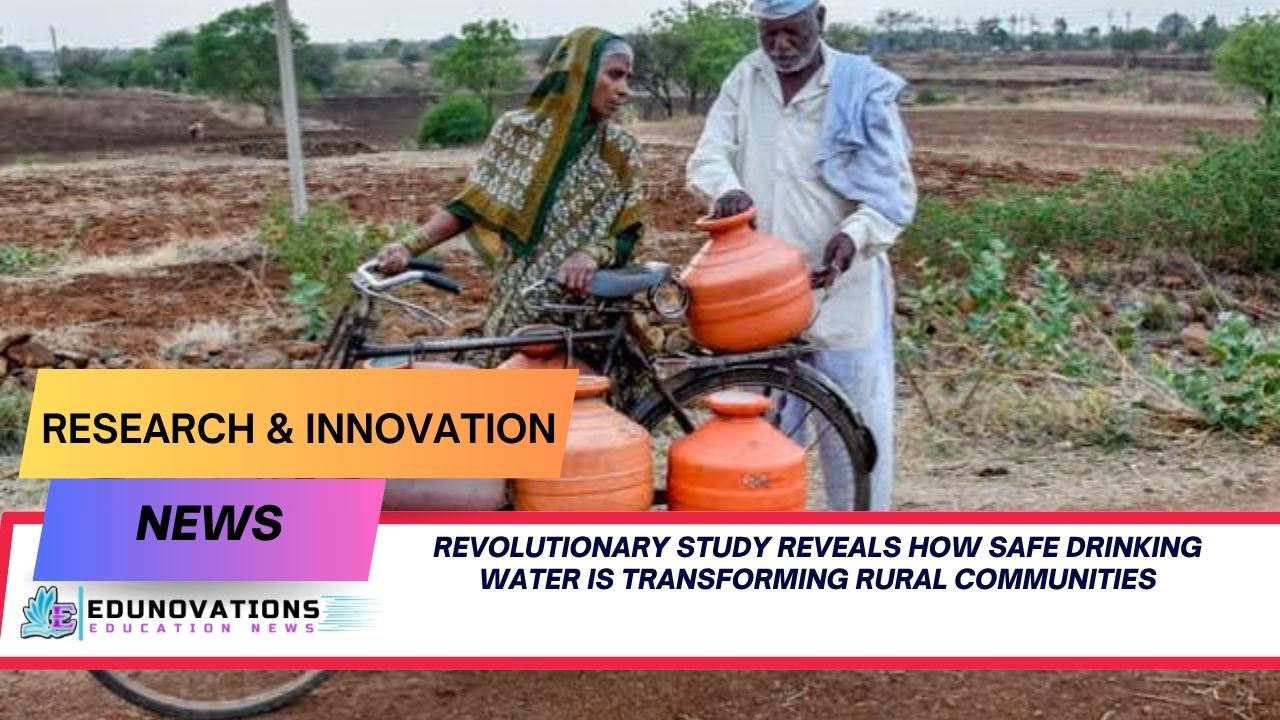
Historically, rural women and young girls spent hours every single day trekking long distances, carrying heavy vessels, and waiting anxiously at community standposts or handpumps to secure basic drinking water. This grueling routine robbed them of educational opportunities, economic independence, and adequate rest.
The recent study quantified a dramatic reversal of this burden. Overall, 70.2% of households surveyed reported a significant improvement specifically concerning women’s safety and social dignity. District-wise breakdowns further reinforced this positive trend:
- Gonda: 75.0% reported enhanced safety and dignity.
- Bahraich: 72.9% observed similar protective benefits.
- Shravasti: 62.1% noted positive social shifts.
- Balrampur: 70.8% confirmed improved conditions for women.
Moreover, the reduction in physical workload was even more pronounced. Overwhelming majorities across Gonda (73.5%), Bahraich (79.2%), Shravasti (68.0%), and Balrampur (76.8%) noted that the hours previously wasted on water collection had been safely handed back to women.
Professor Pradip Swarnakar emphasized that liberating women from water-fetching chores serves as a cornerstone for gender justice in rural societies. When women are freed from manual logistics, they can redirect their energy toward personal well-being, family care, and community leadership.
Reclaiming Time: How Rural Families Spend Their Newly Found Hours
The elimination of daily water collection routines has unlocked unprecedented blocks of free time for millions of rural residents. The IIT Kanpur assessment tracked how families actively utilized these newly created hours to improve their daily routines and financial stability:
- Household Chores & Management: 63.6% of households channeled the extra time into efficient home management and domestic responsibilities.
- Leisure & Rest: 45.8% utilized the time for vital rest and relaxation, combating chronic physical fatigue.
- Elderly & Child Care: 34.2% dedicated extra hours to nurturing young children and caring for elderly family members who required constant attention.
- Income-Generating Work: 10.2% invested their liberated hours into productive economic activities to supplement household income.
- Self-Education & Skills: 0.7% directed their time toward personal education and professional skill training.
This intelligent redistribution of time proves that infrastructure investments act as direct human capital investments, driving both social contentment and localized economic productivity.
Public Health Milestones and Educational Uplift
Beyond convenience and dignity, the influx of clean, treated tap water has triggered a dramatic decline in waterborne afflictions. According to the assessment data, an astonishing 99.1% of households reported absolute freedom from waterborne illnesses during the six months preceding the survey. Reliable water distribution has also successfully revitalized hygiene and sanitation standards across rural schools, local Anganwadi centers, and community health outposts.
Furthermore, the ripple effects are vividly visible in educational metrics, particularly regarding young girls’ school attendance. Because girls were no longer required to assist their mothers in hauling heavy water containers throughout the morning, educational continuity surged:
- Gonda: School attendance rose by 38.1%.
- Bahraich: Attendance improved by 17.4%.
- Shravasti: Recorded a 15.1% rise in student attendance.
- Balrampur: Saw a 13.2% increase in participating female students.
As educational access strengthens, regional literacy rates climb, paving the way for a more self-reliant and prosperous rural workforce.
Expert Insights and Future Policy Directions
Policy analysts and public administration experts have widely praised the multi-faceted framework of decentralized water management. Economists note that integrating structural reforms with community-led monitoring ensures long-term asset sustainability.
Eminent developmental experts have often remarked that rural infrastructure projects succeed only when local communities take active ownership of the distribution networks. By combining academic institutional oversight—such as that provided by IIT Kanpur—with rigorous ground-level execution, government programs can continuously audit their progress, identify bottlenecks, and refine policy implementations in real-time.
As India marches steadily toward complete universal tap water coverage, the empirical success recorded in Uttar Pradesh serves as a scalable blueprint for other states facing similar topographical and socioeconomic hurdles.
Toppers Use Mind Maps to score more than 95%
NCERT Class 11th Commerce Mind Maps
Add to cartOriginal price was: ₹999.00.₹199.00Current price is: ₹199.00.NCERT Class 12th Chemistry Mind Maps
Add to cartOriginal price was: ₹199.00.₹75.00Current price is: ₹75.00.NCERT Class 12th Commerce Mind Maps
Add to cartOriginal price was: ₹999.00.₹199.00Current price is: ₹199.00.NCERT Class 12th Science Mind Maps
Add to cartOriginal price was: ₹999.00.₹199.00Current price is: ₹199.00.NCERT Mind Maps For Class 10th
Add to cartOriginal price was: ₹999.00.₹199.00Current price is: ₹199.00.





Purchase Today
Frequently Asked Questions (FAQs)
1. What did the recent IIT Kanpur research uncover about rural development?
The assessment highlighted how household tap water connectivity successfully elevated living standards, reduced female workloads, and improved public health metrics across rural districts.
2. Which specific geographical region was evaluated in the institutional study?
The investigation focused intensely on the Devi Patan administrative division in Uttar Pradesh, covering Gonda, Bahraich, Shravasti, and Balrampur.
3. What percentage of households reported an enhanced quality of life?
Overall, 75.8% of households across the surveyed districts reported a significant, measurable improvement in their daily quality of life.
4. How did the availability of tap water impact women’s daily routines?
It drastically reduced physical labor, with over 70% of households noting substantial improvements in women’s safety, dignity, and workload management.
5. How are rural families utilizing the extra time saved from water collection?
Households are directing the saved time toward domestic management, rest, elderly and child care, income generation, and self-education.
6. What impact did the water initiative have on local public health?
A remarkable 99.1% of surveyed households reported zero waterborne illnesses during the six-month period preceding the study.
7. How did reliable water access influence girls’ education in the region?
School attendance among girls experienced substantial spikes, ranging from 13.2% up to 38.1% across the evaluated districts.
8. What level of tap connection coverage was achieved in the studied districts?
The four target districts successfully recorded an impressive 97.11% functional household tap connection coverage across thousands of villages.
9. Who led the comprehensive academic evaluation team from the technological institute?
The research was spearheaded by Professor Pradip Swarnakar, Head of the Department of Humanities and Social Sciences at IIT Kanpur.
10. Why is decentralized water infrastructure vital for rural economic growth?
It frees up human capital, improves community health, boosts educational participation, and allows families to redirect energy toward productive economic ventures.