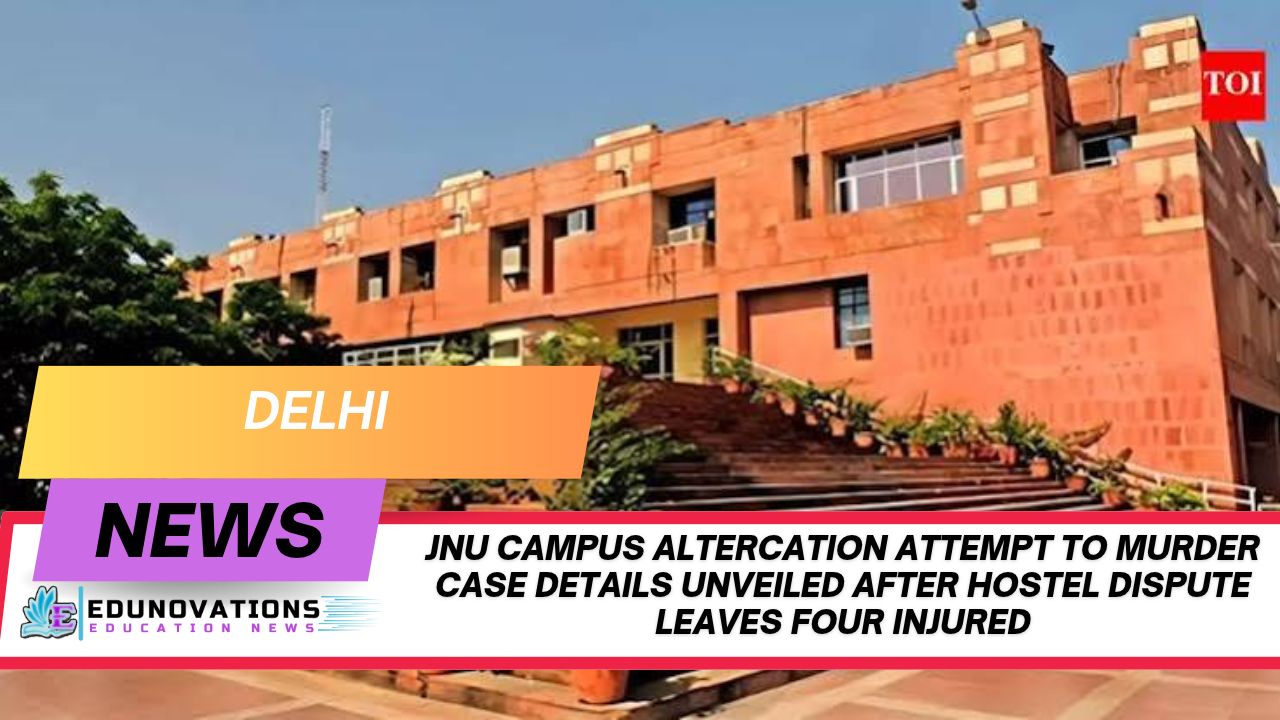
The serene environment of one of India’s premier central universities was violently shattered recently when a personal dispute spiraled into an unprecedented physical confrontation.
The serene environment of one of India’s premier central universities was violently shattered recently when a personal dispute spiraled into an unprecedented physical confrontation. Academic spaces are traditionally designed for intellectual discourse, collaborative growth, and holistic student development. However, recent events have sparked urgent conversations regarding campus safety, student mental health counseling, and institutional accountability. For students balancing their academic milestones—whether they are preparing for competitive exams using resources like NCERT Courses or brushing up on general awareness through Current Affairs—the incident serves as a grim reminder of how unmanaged personal conflicts can escalate into severe legal and physical catastrophes.
Understanding the Anatomy of the Conflict
The horrific incident, which sent shockwaves through the academic fraternity, unfolded inside a residential hostel room on the university premises. According to official reports released by the law enforcement authorities and local intelligence sources, the core catalyst of the confrontation was a personal disagreement regarding a friendship involving a woman student.
What began as a heated verbal exchange inside the room quickly deteriorated into physical violence. Witnesses and security personnel reported hearing sudden commotions as the altercation drew more individuals into the fray. By the time security teams and medical responders arrived at the scene, the situation had grown catastrophic, leaving multiple individuals battered, bloodied, and requiring emergency medical intervention.
Immediate Aftermath and Medical Emergencies
The severity of the assault became immediately clear when victims were rushed to premier medical facilities, including the All India Institute of Medical Sciences (AIIMS) Trauma Centre. Medical bulletins and statements issued by hospital representatives detailed the horrific extent of the trauma inflicted during the clash:
- Severe Physical Trauma: Victims suffered extensive lacerations, fractures, and severe soft-tissue damage across their faces, shoulders, and hands.
- Critical Eye Injuries: Primary medical reports highlighted that one of the main victims suffered permanent, devastating damage, losing vision in his right eye due to direct blunt and sharp force trauma.
- Collateral Injuries: In addition to the primary victim, three other students sustained varying degrees of injuries during the chaotic melee, bringing the total casualty count to four individuals requiring urgent clinical hospitalization.
For students tracking these developments alongside their academic schedules—utilizing structured Notes or testing their knowledge via MCQ’s—understanding the legal and administrative aftermath is vital for civic awareness.
Police Investigation and Legal Framework
Swift action followed the emergency response as local law enforcement authorities took charge of the crime scene. Following statements and formal complaints registered by affected parties at the Vasant Kunj North Police Station, the investigative machinery swung into full motion.
Deputy Commissioner of Police (Southwest) Amit Goyal confirmed that an official First Information Report (FIR) had been filed immediately. The legal charges invoked are severe, reflecting the gravity of the assault:
- Attempt to Murder: Charged under stringent provisions equivalent to historical framework sections, emphasizing the lethal nature of the weapon and intent.
- Bharatiya Nyaya Sanhita (BNS) Integration: The case has been registered under appropriate, updated sections of the Bharatiya Nyaya Sanhita (BNS), ensuring rigorous legal prosecution.
- Formal Arrests: Following medical clearance and initial inquiries, the primary accused student—identified as an MA scholar enrolled at the institution—was officially placed under arrest.
Institutional Response and Administrative Crackdown
Educational institutions across the country are held to high standards of moral and physical security. When violent crimes pierce through campus gates, university administrations face immense scrutiny. In response to this breach of discipline, the university’s Proctor’s Office initiated immediate disciplinary protocols.
Under strict administrative powers, including Sections 32(1) and 32(3) of the JNU Act, 1966, the university administration issued immediate rustication orders against the implicated students. These individuals have been barred from entering the campus premises pending the completion of a comprehensive proctorial inquiry. Furthermore, the administration issued strict warnings to the student body, stating that any individual found providing shelter or harboring the expelled students within hostel rooms would face immediate, uncompromised disciplinary measures.
For educators, school administrators, and institutional planners looking to tighten their security frameworks, consulting specialized infrastructure providers like Mart Ind Infotech (“Mart Ind Infotech”) offers valuable insights into modern digital surveillance and campus monitoring solutions.
Expert Insights, Sociological Context, and Expert Perspectives
The recurrence of violent altercations within higher education spaces has prompted sociologists, criminologists, and student counselors to evaluate the root causes behind mounting youth aggression.
Renowned educationist and youth counselor Dr. Alok Mukherjee weighed in on the psychological pressures facing modern university students:
“Higher education environments place immense academic, social, and psychological demands on young adults. When personal relationships intertwine with unchecked emotional volatility, and when campuses lack accessible, non-judgmental mental health intervention channels, minor disputes can mutate into major tragedies. Institutional wellness programs must evolve beyond mere academics to actively monitor and nurture emotional resilience among resident scholars.”
Statistical data compiled across various central universities over the past five years indicates a worrying 14% rise in peer-to-peer campus altercations driven by personal disputes rather than ideological clashes. Experts emphasize that proactive peer counseling, mandatory conflict-resolution workshops, and stringent monitoring of residential hostel corridors are no longer optional—they are absolute necessities for student safety.
Students and aspirants preparing for competitive examinations or aiming to structure their learning paths can leverage comprehensive study aids, such as structured Syllabus breakdowns, digital Videos, and free downloadable materials available via Downloads of Free NCERT PDFs and visual learning tools like NCERT Mind Maps.
Toppers Use Mind Maps to score more than 95%
-
NCERT Class 11th Commerce Mind Maps
Add to cartOriginal price was: ₹999.00.₹199.00Current price is: ₹199.00. -
NCERT Class 12th Chemistry Mind Maps
Add to cartOriginal price was: ₹199.00.₹75.00Current price is: ₹75.00. -
NCERT Class 12th Commerce Mind Maps
Add to cartOriginal price was: ₹999.00.₹199.00Current price is: ₹199.00. -
NCERT Class 12th Science Mind Maps
Add to cartOriginal price was: ₹999.00.₹199.00Current price is: ₹199.00. -
NCERT Mind Maps For Class 10th
Add to cartOriginal price was: ₹999.00.₹199.00Current price is: ₹199.00.





Purchase Today
Frequently Asked Questions (FAQs)
1. What triggered the violent clash on the university campus?
The violent confrontation erupted due to an intense personal dispute between students regarding a friendship with a woman student inside a hostel room.
2. How many individuals were injured during the altercation?
A total of four individuals sustained injuries during the violent clash, ranging from minor cuts to severe trauma and permanent vision impairment.
3. What legal charges have been filed against the accused?
The local police station registered an FIR under stringent legal provisions, including charges of attempt to murder and relevant sections of the Bharatiya Nyaya Sanhita (BNS).
4. Which police station is handling the investigation of this case?
The investigation is being actively led by the Vasant Kunj North Police Station under the supervision of the Southwest district police leadership.
5. What medical facilities were provided to the critically injured victim?
The primary victim, who suffered severe facial trauma and lost sight in his right eye, was rushed to the AIIMS Trauma Centre for emergency surgeries and intensive medical care.
6. What action has the university administration taken against the accused?
The university’s Proctor’s Office invoked Sections 32(1) and 32(3) of the JNU Act, 1966, to rusticate the implicated students and bar them from entering the campus premises.
7. Was the primary accused also injured during the incident?
Yes, initial police and medical reports confirmed that the primary accused student also sustained injuries during the physical altercation and received medical attention.
8. How are educational institutions planning to prevent such incidents in the future?
Experts and administrators are advocating for enhanced mental health counseling, stricter hostel visitor tracking, and active conflict-resolution mechanisms to address youth aggression early.
9. Where can students access reliable educational resources and updates safely?
Students can access curated educational content, syllabus guides, and current affairs updates through verified portals like Edunovations and its dedicated course platforms.
10. What is the current status of the legal proceedings?
The primary accused student has been arrested by law enforcement agencies, and a comprehensive judicial and proctorial inquiry remains ongoing.