Higher education institutions across the United States have long prided themselves on being global melting pots of innovation, academic rigor, and cultural exchange.
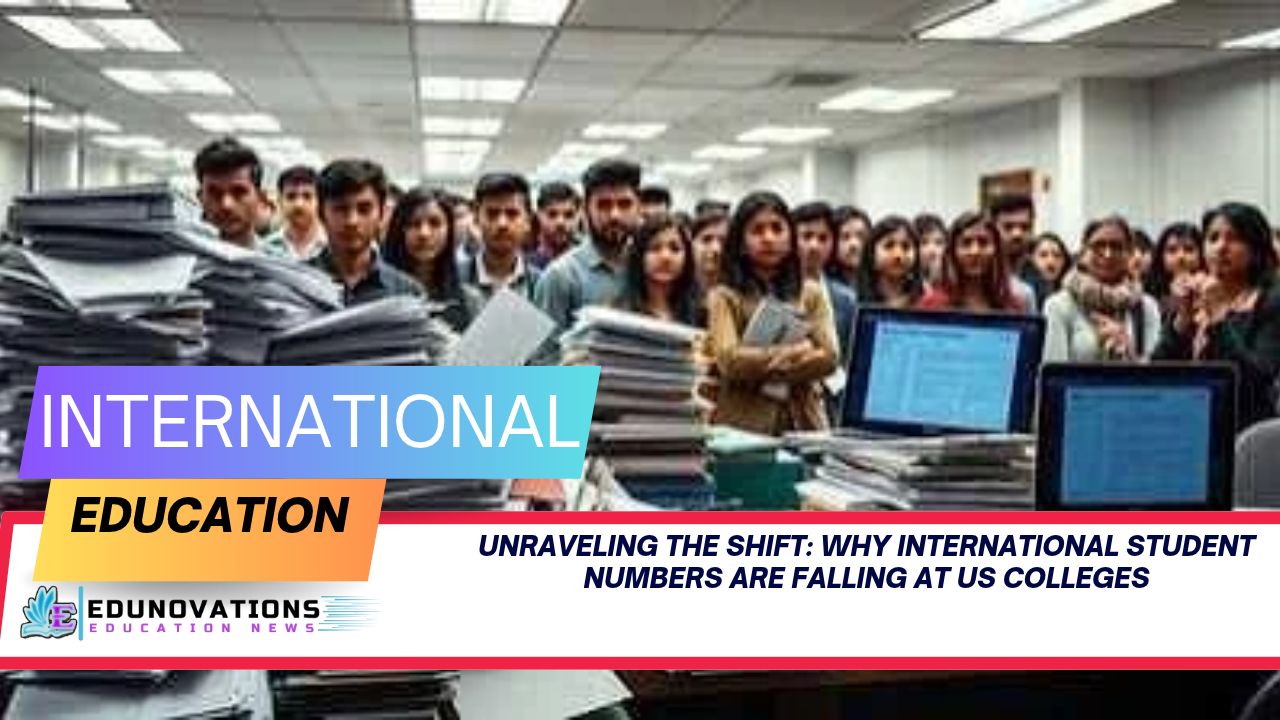
Higher education institutions across the United States have long prided themselves on being global melting pots of innovation, academic rigor, and cultural exchange. For decades, ambitious minds from every corner of the earth crossed oceans to earn coveted degrees from American campuses. However, recent data and institutional reports reveal a stark paradigm shift. A wave of complex economic factors, evolving geopolitical conditions, shifting federal policies, and administrative backlogs has triggered a noticeable downward trend.
Understanding why international student numbers are falling at us colleges requires a multi-faceted look into the modern academic landscape. This comprehensive guide breaks down the root causes, institutional impacts, and broader macroeconomic consequences of this ongoing transformation. As prospective scholars increasingly weigh alternative global destinations, American universities face critical choices regarding how they attract, retain, and support international scholars.
The Shifting Global Academic Landscape
For generations, the United States stood virtually unmatched as the premier destination for international higher education. From Ivy League institutions to major state research universities, campuses buzzed with diverse perspectives brought by students from Asia, Europe, Africa, and Latin America. However, recent analyses—including data released via the annual Open Doors report and subsequent institutional surveys—show that overall international enrollment experienced a decline, dropping roughly $2.7\%$ during the 2025-26 academic year. Furthermore, incoming cohorts faced even sharper contractions, with new foreign student enrollments plummeting significantly from prior figures.
This drop is not isolated to a single institution type. Major public institutions, including the University of Colorado, Pennsylvania State University, Central Michigan University, and Ohio State University, have all reported noticeable dips in their incoming international cohorts. Because international students frequently pay full or near-full tuition rates, these enrollment shifts do more than alter classroom demographics—they directly impact university operating budgets, research funding, and community economies.
To support your academic journey or dive deeper into related subjects, you can explore comprehensive resources such as NCERT Courses, stay updated with Current Affairs, review detailed study Notes, test your knowledge with MCQs, watch educational Videos, check the latest Syllabus, download Free NCERT PDFs, and utilize interactive NCERT Mind Maps. Educational establishments looking to modernize their digital presence or expand student outreach can also collaborate with Mart Ind Infotech for tailored institutional website solutions.
Core Drivers Behind the Enrollment Downturn
Why are prospective students choosing to bypass American universities in favor of institutions in Europe, Canada, or Asia? According to survey data compiled from over 800 U.S. colleges and universities, academic leaders point to a confluence of systemic obstacles:
- Visa Application Backlogs and Bureaucratic Hurdles: Approximately $88\%$ of surveyed university leaders cited ongoing complications and delays within the visa application process as a primary impediment. Protracted waiting times create severe uncertainty for students trying to plan their academic calendars.
- Travel Restrictions and Policy Uncertainty: Roughly $70\%$ of institutions pointed to travel restrictions and tightened federal immigration scrutiny as major deterrents. Miriam Feldblum, president and CEO of the Presidents’ Alliance on Higher Education and Immigration, noted that cumulative administrative policies create instability at every single stage of a student’s journey.
- Global Competition: About $60\%$ of respondents highlighted the rise of alternative international study destinations. Countries like China, Germany, and the United Kingdom have aggressively expanded their English-taught programs, streamlined post-graduation work rights, and marketed themselves as more welcoming and predictable alternatives.
- Rising Tuition and Living Costs: Escalating expenses associated with tuition, housing, and general cost of living in major U.S. metropolitan areas were flagged by $45\%$ of colleges as a growing barrier for middle- and lower-income international families.
The OPT Program and Post-Graduation Uncertainty
A vital component of the international student value proposition has always been the Optional Practical Training (OPT) program. This initiative allows eligible F-1 student visa holders to remain in the United States and work in their specific field of study for up to three years following graduation. For many, OPT serves as the crucial bridge between academic study and gaining valuable international corporate experience.
However, recent policy debates have cast a long shadow over the program. Last winter and spring, months-long processing pauses for OPT applications from certain countries created acute anxiety. Government data dashboards revealed backlogs stretching up to four months by early summer. Furthermore, proposed regulatory changes seeking to mandate substantial institutional fees—such as requiring colleges to pay thousands of dollars for each student applying for OPT—have alarmed higher education administrators.
Survey results underscore this anxiety: an overwhelming $95\%$ of surveyed institutions stated that if OPT options become severely restricted or cost-prohibitive, prospective international students will almost certainly look to other countries for their higher education needs. This looming financial and administrative friction threatens to undermine one of the most effective talent pipelines utilized by American technological and corporate sectors.
Economic Ripples Across University Towns and Local Economies
The contraction of the international student pipeline extends far beyond lecture halls and campus quads. International scholars contribute immensely to the financial health of host communities. According to estimates by NAFSA: Association of International Educators, annual losses from declining international enrollment cost the U.S. economy billions of dollars and tens of thousands of local jobs.
When fewer students arrive from abroad, university budgets feel an immediate squeeze. Public institutions that rely heavily on out-of-state and international tuition revenues to subsidize in-state student access must reevaluate their financial models. Several universities have already announced significant budget deficits, hiring freezes, or academic program consolidations.
At the same time, regional student demographics are shifting. While traditional top sending countries like India and China have experienced moderate declines—with arrivals from India dropping roughly $6.5\%$ and China seeing a $4.3\%$ decrease—other nations such as Nepal, Bangladesh, Canada, Italy, and Ghana have recorded notable surges, demonstrating that global educational mobility is diversifying rather than disappearing entirely.
Institutional Adaptation and Strategic Recruitment
Faced with these headwinds, university administrators are actively redesigning their recruitment strategies. Rather than relying solely on traditional recruitment fairs abroad, institutions are pivoting toward agile, localized outreach.
Data shows that over half of surveyed colleges experiencing growth in international enrollments attribute their success to targeted outreach aimed at foreign students who are already residing within the United States. This includes recruiting international students currently enrolled in U.S. high schools or seeking out international undergraduates already embedded in domestic academic pipelines. Additionally, institutions are leaning heavily on robust campus athletics programs, personalized digital engagement, and streamlined admissions counseling to reassure anxious applicants and their families.
Toppers Use Mind Maps to score more than 95%
-
NCERT Class 11th Commerce Mind Maps
Add to cartOriginal price was: ₹999.00.₹199.00Current price is: ₹199.00. -
NCERT Class 12th Chemistry Mind Maps
Add to cartOriginal price was: ₹199.00.₹75.00Current price is: ₹75.00. -
NCERT Class 12th Commerce Mind Maps
Add to cartOriginal price was: ₹999.00.₹199.00Current price is: ₹199.00. -
NCERT Class 12th Science Mind Maps
Add to cartOriginal price was: ₹999.00.₹199.00Current price is: ₹199.00. -
NCERT Mind Maps For Class 10th
Add to cartOriginal price was: ₹999.00.₹199.00Current price is: ₹199.00.





Purchase Today
Frequently Asked Questions
1. What are the primary reasons behind the drop in international student numbers at U.S. colleges?
The decline is primarily driven by complications in the visa application process, tightening travel restrictions, increased global competition from universities in other countries, and rising tuition and living expenses.
2. How much did international student enrollment drop during the 2025-26 academic year?
According to the annual Open Doors report, overall international student enrollment in the U.S. decreased by $2.7\%$ during the 2025-26 academic year, with incoming new foreign student cohorts dropping even more sharply.
3. Which countries remain the top senders of international students to the U.S.?
India and China remain the top two countries sending students to American universities, though both nations saw modest percentage declines in recent annual reporting.
4. What is Optional Practical Training (OPT) and why is it important?
OPT is a post-graduation work program allowing international student visa holders to work in their field of study in the U.S. for up to three years, serving as a vital incentive for studying abroad.
5. How are U.S. universities responding to enrollment declines?
Many universities are adapting by expanding digital recruitment, offering personalized admissions support, and increasing outreach to international students already studying within U.S. high schools and domestic undergraduate programs.
6. What financial impact does declining international enrollment have on the U.S. economy?
International education advocacy groups estimate that enrollment drops cost the broader U.S. economy billions of dollars annually in lost tuition, consumer spending, and supporting jobs.
7. Are all regions experiencing decreases in international student enrollment?
While major sending countries like India and China saw slight decreases, other nations such as Nepal, Bangladesh, Canada, Italy, and Ghana have registered record-high student numbers in U.S. institutions.
8. What role do public universities play in hosting international students?
Public institutions host nearly $60\%$ of all international students in the United States, meaning enrollment fluctuations hit public university budgets and state economies particularly hard.
9. How do administrative policy changes affect prospective students?
Frequent policy shifts, proposed fee increases on work programs, and lengthy visa backlogs create an atmosphere of uncertainty, prompting students to consider alternative countries like Canada, the U.K., or Australia.
10. Where can students and educators find additional academic resources and study materials?
Students and educators can utilize structured online portals offering curriculum guides, exam preparation notes, practice questions, and educational videos to support lifelong learning and academic success.