
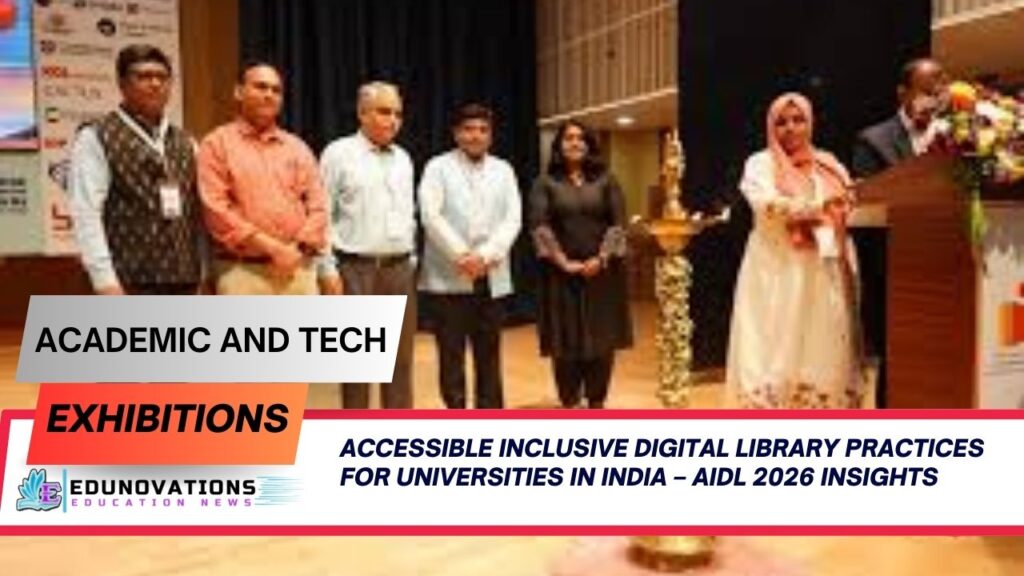
Discover accessible inclusive digital library practices for universities in India at AIDL 2026, emphasizing AI assistive technologies, WCAG compliance, and inclusive knowledge ecosystems.
Introduction
The Indian Institute of Technology Hyderabad (IIT Hyderabad) recently hosted the Accessible and Inclusive Digital Library (AIDL)–2026, a pioneering symposium highlighting the importance of accessible inclusive digital library practices for universities in India. The two-day event, held from March 6–7, 2026, convened experts, academicians, technology developers, policymakers, and librarians from across the country to chart a roadmap for inclusivity in higher education digital resources.
With the increasing reliance on digital knowledge repositories, AIDL–2026 emerged as a crucial platform to strengthen accessibility frameworks, integrate assistive technologies, and develop inclusive library infrastructures.
Inaugural Highlights and Key Messages
The symposium opened with the Lighting of the Lamp ceremony and an inspiring address by Prof. B. S. Murty, Director of IIT Hyderabad. Prof. Murty emphasized the need for inclusive knowledge systems that empower learners, including differently-abled students, by offering equitable access to academic resources.
Dr. Dipendra Manocha, Director of the Developing Countries Program, DAISY Consortium, highlighted technological challenges faced by users with disabilities and underlined the importance of early integration of assistive tools in educational institutions. He advocated for AI-enabled assistive solutions that can personalize learning and library interactions for all students.
Prof. Saket Asthana, Symposium Chair, reinforced the vital role of libraries as gateways to knowledge, while Dr. Bhojaraju Gunjal, Chief Library Officer, stressed practical strategies for implementing inclusive digital library accessibility tools and assistive technologies at the institutional level.
Key Symposium Themes
1. Assistive Tools and Technologies
AIDL–2026 showcased cutting-edge AI-enabled assistive technologies. Keynote presentations and research papers addressed topics such as:
- Personalization of digital library services for Divyangjan users.
- Integration of speech and computer vision technologies to improve access.
- Smart library ecosystems for enhanced accessibility.
These initiatives reflect a growing national commitment to embedding inclusive library services and accessibility best practices for researchers.
2. Designing Inclusive Library Spaces
Experts like Ms. Parul Kumtha and Ms. T.V. Aishwarya highlighted the application of universal design principles. Discussions included:
- Accessibility audits and infrastructure planning.
- Digital interfaces that are culturally responsive and user-friendly.
- Support systems for visually impaired and hearing-impaired students.
3. Policy, Governance, and Legal Compliance
Sessions explored strategies to align library operations with the RPwD Act, ensuring structured accessibility governance. Key recommendations included:
- Development of WCAG-compliant digital platforms.
- Integration of AI-enabled assistive technologies.
- Outcome-oriented inclusion governance mechanisms in higher education.
Community Engagement and Collaboration
AIDL–2026 emphasized collaboration between academic libraries, public institutions, and community organizations. Case studies presented:
- Rural accessibility programs and outreach initiatives.
- Digital learning interventions supporting learners from diverse communities.
- Structured partnerships to reinforce inclusive knowledge ecosystems.
This approach ensures that AI-enabled assistive solutions in digital libraries for Divyangjan users reach all corners of society.
Exhibition and Hands-On Learning
The symposium featured an exhibition of assistive technologies, adaptive furniture, accessibility software, and digital publishing tools. Participants gained practical exposure to inclusive library services and accessibility best practices for researchers, fostering meaningful exchanges among librarians, technologists, and policymakers.
Valedictory Session and Recommendations
The closing session summarized key outcomes, emphasizing the need to:
- Develop collections serving Divyangjan and differently-abled learners.
- Adopt WCAG-compliant web standards.
- Integrate AI-enabled assistive solutions into library systems.
- Build capacity for library professionals in inclusive practices.
The symposium concluded with a consensus that accessibility should be an embedded feature of policy, infrastructure planning, and service delivery rather than a standalone compliance requirement.
Expert Insights
Dr. Dipendra Manocha remarked:
“Inclusion in digital libraries is no longer optional; it is essential for academic equity. AI-enabled systems can revolutionize access for differently-abled learners, ensuring no student is left behind.”
Prof. B. S. Murty added that structured collaboration between academic institutions can accelerate the adoption of accessible inclusive digital library practices for universities in India, creating a national knowledge ecosystem that is both equitable and sustainable.
Future Directions
AIDL–2026 sets the stage for a recurring national dialogue on accessible and inclusive libraries. Future initiatives will focus on:
- Strengthening AI-assisted accessibility frameworks.
- Scaling inclusive practices to rural and underserved regions.
- Encouraging policy reforms for institutional governance of accessibility.
The symposium positions India as a leader in inclusive digital knowledge ecosystems, demonstrating that technological innovation and policy alignment can jointly advance accessibility in higher education.
Related Resources
- NCERT Courses
- Current Affairs
- Notes
- MCQ Practice
- Video Lectures
- Syllabus Resources
- NCERT PDFs
- NCERT Mind Maps
- School Contact Solutions
Toppers Use Mind Maps to score more than 95%
-
NCERT Class 11th Commerce Mind Maps
Add to cartOriginal price was: ₹999.00.₹199.00Current price is: ₹199.00. -
NCERT Class 12th Chemistry Mind Maps
Add to cartOriginal price was: ₹199.00.₹75.00Current price is: ₹75.00. -
NCERT Class 12th Commerce Mind Maps
Add to cartOriginal price was: ₹999.00.₹199.00Current price is: ₹199.00. -
NCERT Class 12th Science Mind Maps
Add to cartOriginal price was: ₹999.00.₹199.00Current price is: ₹199.00. -
NCERT Mind Maps For Class 10th
Add to cartOriginal price was: ₹999.00.₹199.00Current price is: ₹199.00.


Purchase Today
FAQs
- What are accessible inclusive digital library practices for universities in India?
They are strategies and technologies that ensure equitable library access for all students, including differently-abled users. - Which AI-enabled assistive technologies were showcased at AIDL–2026?
AI-powered speech systems, computer vision tools, and smart library platforms enhancing accessibility. - How can libraries adopt WCAG-compliant web standards?
By integrating guidelines for accessible interfaces, text alternatives, and navigation for all users. - What role do universal design principles play in digital libraries?
They ensure that library spaces and digital platforms are usable by students with diverse physical and sensory abilities. - How do inclusive library services support researchers?
They provide personalized access, adaptive resources, and assistive tools, enhancing research productivity. - What community initiatives were discussed at AIDL–2026?
Rural accessibility programs, digital learning interventions, and collaborative outreach projects. - Why is AI integration important for accessibility in libraries?
AI enables personalization, real-time assistance, and scalable solutions for differently-abled learners. - How does institutional governance affect digital library accessibility?
Structured policies and accountability frameworks ensure consistent implementation and compliance. - Who are the key stakeholders in building inclusive digital libraries?
Academicians, librarians, policymakers, technology developers, and community organizations. - What is the future vision for inclusive digital libraries in India?
Expanding AI-enabled systems, rural outreach, and institutional reforms to ensure national accessibility standards.