
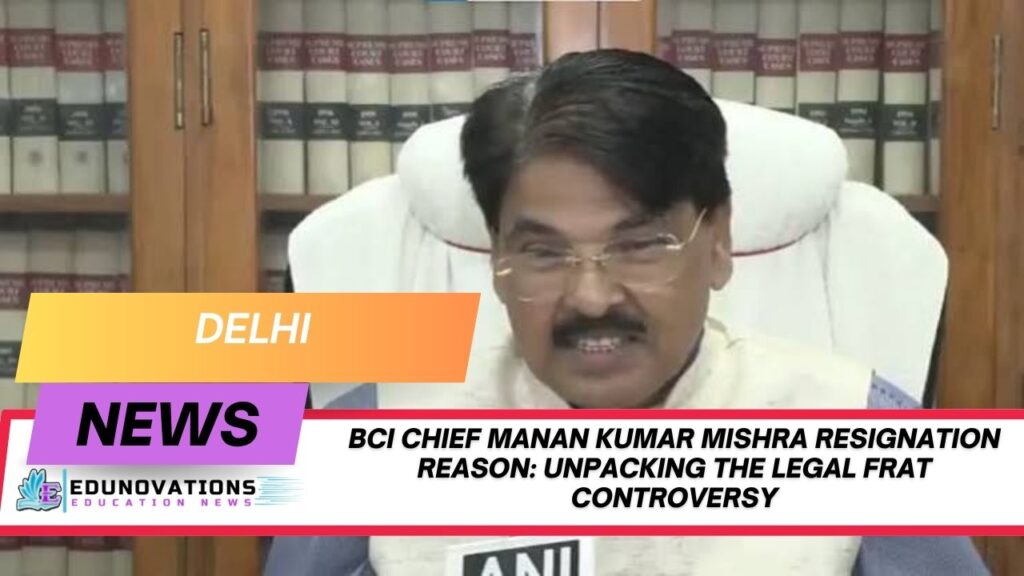
The landscape of India’s legal administration has recently been shaken by a wave of vocal dissent. At the heart of this storm is the bci chief manan kumar mishra resignation
The landscape of India’s legal administration has recently been shaken by a wave of vocal dissent. At the heart of this storm is the bci chief manan kumar mishra resignation reason, a topic that has sparked intense debate within the corridors of the judiciary and among the younger generation of legal professionals. When news surfaces regarding the potential departure of a high-ranking official like the Chairman of the Bar Council of India (BCI), it is essential to look past the sensational headlines to understand the underlying friction between the regulator and the student body.
This controversy serves as a stark reminder of the evolving relationship between academic freedom, institutional authority, and the rights of young advocates in a constitutional democracy.
The Genesis of the Conflict: NALSAR and the BCI Directive
The current crisis traces its origins to a controversial directive issued by the BCI concerning the graduating students of the National Academy of Legal Studies and Research (NALSAR) University of Law. The friction began when students voiced their opposition to the inclusion of the Chief Justice of India, Surya Kant, as the chief guest at their convocation.
For students aiming for civil services, keeping track of such administrative developments is crucial. You can find detailed updates on our Current Affairs page. The protest was not merely about a guest list; it was a symbolic stand against what students perceived as administrative overreach. The BCI’s initial response—directing state bar councils to withhold the enrollment of these students—was met with widespread condemnation, leading the council to withdraw the directive hours later.
Understanding such complex legal scenarios requires a solid grasp of basic principles. Students can refine their foundational knowledge by accessing our NCERT Courses or by practicing with our specialized MCQ’s.
The Call to Action: Voices of Dissent
Following the withdrawal of the directive, the demand for accountability only intensified. Among the most prominent figures in this movement is Abhijeet Dipke, founder of the Cockroach Janta Party (CJP). His viral social media post, “Manan, it’s done bro,” served as a rallying cry, framing the protest as a necessary intervention by those he colorfully termed “legal cockroaches.”
This unique terminology highlights the grassroots nature of the protest, emphasizing the need for young advocates to assert their voices. Such movements often mirror the complexities found in the Syllabus of political science and constitutional law courses.
Why Are Lawyers Protest-Ready?
The protest organized by the All India Young Advocates Association (AIYAA) underscores a growing sentiment that the BCI leadership must be held to higher standards. Critics argue that the move to penalize students for voicing dissent was an abuse of power that undermined the spirit of democratic debate.
- Democratic Rights: Peaceful protest is a pillar of the legal profession.
- Accountability: Demanding answers from regulatory bodies is a responsibility, not just a right.
- Student Integrity: The “vast majority” of students should not be penalized for the actions of a few.
For those interested in the historical context of such protests, our Notes section provides a comprehensive overview of how civil disobedience has shaped legal history.
Examining the Wider Implications
The demand for accountability from Manan Kumar Mishra is not happening in a vacuum. It is part of a larger conversation about the role of the Bar Council in governing legal education. When controversies arise, they often raise questions about whether the current regulatory framework is equipped to handle the concerns of a digital-native generation of lawyers.
Expert observers have noted that institutional rigidity often leads to such explosive confrontations. For schools and institutions trying to stay updated with the latest technological and educational shifts, partnering with experts like Mart India Infotech can help modernize administrative systems, ensuring transparency and better communication.
If you are a student or a law enthusiast, it is important to stay prepared. You can enhance your study efficiency by checking out our Videos on complex legal topics or downloading our Free NCERT PDFs to solidify your foundational knowledge. For visual learners, our NCERT Mind Maps are a perfect tool to grasp these nuances quickly.
The Role of the Judiciary and Legal Fraternity
CJI Surya Kant himself characterized the incident as a “dialogue between students and me,” distancing the institution from the BCI’s retaliatory actions. This intervention provided a cooling effect but did not entirely satisfy those calling for resignation. The Bombay Bar Association’s reported involvement further escalated the pressure, framing the BCI’s conduct as an “abuse of power.”
As we move forward, the legal fraternity remains divided. Some argue that the BCI chief’s apology for the NALSAR row should be sufficient, while others insist that structural changes are necessary to prevent such incidents in the future.
Toppers Use Mind Maps to score more than 95%
-
NCERT Class 11th Commerce Mind Maps
Add to cartOriginal price was: ₹999.00.₹199.00Current price is: ₹199.00. -
NCERT Class 12th Chemistry Mind Maps
Add to cartOriginal price was: ₹199.00.₹75.00Current price is: ₹75.00. -
NCERT Class 12th Commerce Mind Maps
Add to cartOriginal price was: ₹999.00.₹199.00Current price is: ₹199.00. -
NCERT Class 12th Science Mind Maps
Add to cartOriginal price was: ₹999.00.₹199.00Current price is: ₹199.00. -
NCERT Mind Maps For Class 10th
Add to cartOriginal price was: ₹999.00.₹199.00Current price is: ₹199.00.




Purchase Today
FAQs: Understanding the Legal Controversy
1. What is the primary reason cited for the BCI Chief Manan Kumar Mishra resignation demand? The demand for resignation stems from the BCI’s controversial directive to bar NALSAR graduates from enrollment following student protests, which many lawyers deemed an overreach and an abuse of power.
2. How did Abhijeet Dipke spark the protest movement? Abhijeet Dipke, founder of the CJP, posted on social media calling for “legal cockroaches” to protest, which became a viral rallying cry for young advocates seeking accountability.
3. What is the nalsar convocation controversy bci order explained? The BCI issued an order seeking to penalize students who opposed the presence of the CJI at the NALSAR convocation. It was quickly withdrawn after facing intense criticism from the legal community.
4. Why are lawyers protesting against bci chairman across various platforms? Lawyers are protesting to demand transparency, accountability, and a shift in how the BCI handles dissent and academic freedom within legal institutions.
5. Is the cockroach janta party founder abhijeet dipke a legal professional? Yes, the movement led by Abhijeet Dipke involves young advocates who align with the CJP to challenge what they perceive as authoritarianism within the BCI.
6. What is the significance of the “legal cockroaches” term? It is a symbolic term used by CJP members to describe young, marginalized advocates who are standing up against established, high-ranking administrative figures.
7. How did the CJI respond to the NALSAR controversy? CJI Surya Kant described the matter as a personal dialogue between him and the students, distancing himself from the BCI’s punitive actions.
8. Will this protest lead to actual policy changes in the BCI? While the immediate result was an apology, the movement is pushing for systemic reforms to ensure that the BCI’s powers are checked and used democratically.
9. How can students stay updated on legal developments? Students can follow reputable sources and educational platforms like Edunovations for updates on current affairs and legal developments.
10. What is the core lesson from this institutional row? The controversy highlights the importance of open dialogue and the necessity for regulatory bodies to respect the constitutional rights of students and young professionals.