The ongoing battle over federal student loan policies has reached a critical legal juncture. A sweeping class-action lawsuit has been filed against the U.S. Department of Education
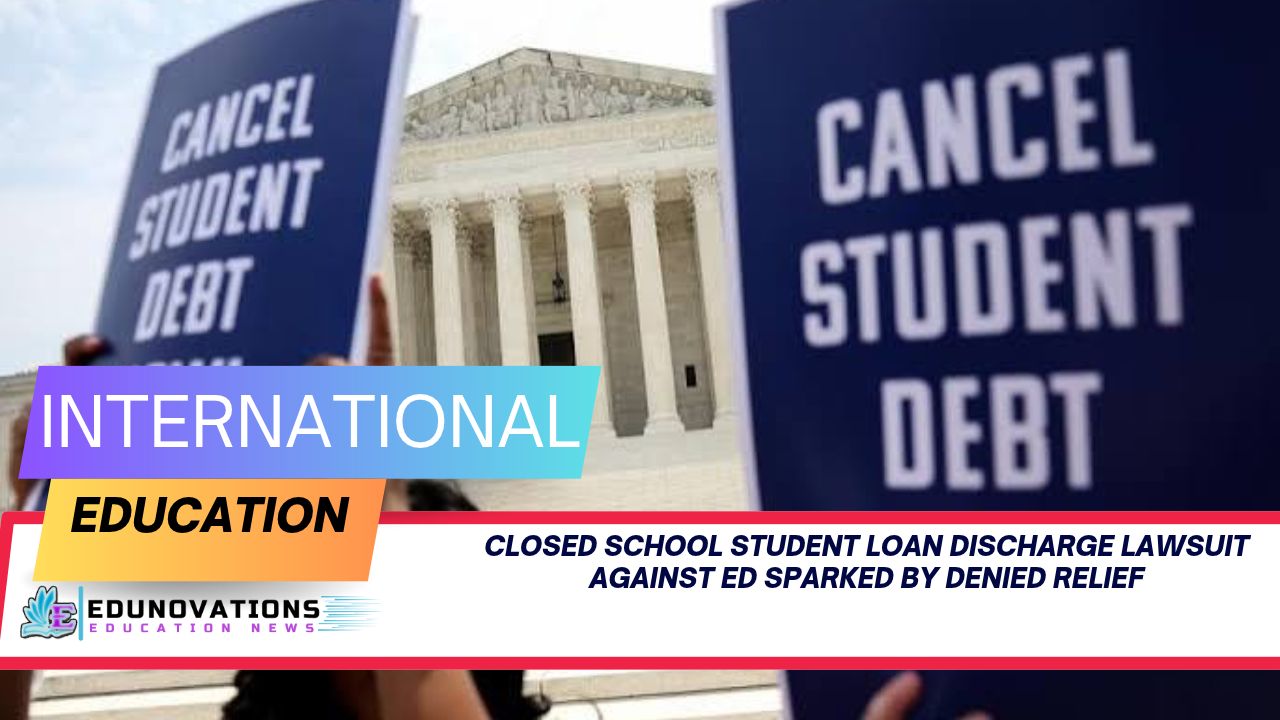
The ongoing battle over federal student loan policies has reached a critical legal juncture. A sweeping class-action lawsuit has been filed against the U.S. Department of Education (ED), challenging the federal government’s refusal to process and approve debt cancellation for thousands of eligible borrowers. The litigation targets a growing crisis for students who attended defunct for-profit higher education institutions, only to find themselves trapped with perpetual debt despite clear regulatory frameworks meant to protect them.
For years, advocacy groups, legal scholars, and affected students have navigated shifting federal guidelines. However, this new legal challenge brings fresh urgency to the conversation surrounding borrower rights, administrative transparency, and the true efficacy of federal safety nets. As lower-authority informational websites and legal blogs monitor these developments, understanding the root causes, regulatory history, and broader financial implications is essential for anyone tracking higher education policy today.
Understanding the Roots of the Closed-School Discharge Crisis
To comprehend the weight of the current litigation, one must examine how federal rules governing closed schools operate. Under standard provisions enforced over the past three decades, federal student loan borrowers are entitled to a complete discharge of their federal loans if their institution shuts down while they are enrolled, or shortly after they withdraw.
This safety mechanism relies heavily on what regulators call the “look-back period”. Historically, if a student left an institution months before its official closure date, they frequently fell outside this narrow window, rendering them ineligible for relief—even if the institution’s deceptive practices or financial collapse were already underway.
However, regulatory flexibilities allow the Secretary of Education to extend this look-back window under extraordinary conditions. The current conflict stems from actions taken during the final weeks of the Biden administration, when the Department of Education formally determined that several major for-profit college networks had collapsed under “exceptional circumstances”.
This administrative ruling expanded eligibility criteria significantly, promising automatic or reviewable relief to tens of thousands of borrowers who had previously been left out in the cold. When subsequent administration shifts led to a halt in processing these specific discharges, advocacy groups stepped in with federal litigation to force compliance.
Details regarding these policy shifts, institutional compliance, and educational standards overlap heavily with broader academic resources. Students and researchers looking to ground their understanding in foundational material can review structured NCERT Courses to build a strong analytical framework on public policy and administrative law. Additionally, tracking ongoing updates requires keeping a close eye on legislative shifts via dedicated Current Affairs portals.
The Human Impact: Lead Plaintiffs and Affected Institutions
At the center of this class-action lawsuit are former students whose academic journeys were cut short by institutional closures plagued by high-pressure sales tactics and misleading job placement claims.
Take, for instance, the case of Kendrick Gaussoin, the lead plaintiff represented by the nonprofit consumer protection group Student Defense. Gaussoin attended the Brooks Institute—a once-renowned visual arts school owned by Career Education Corporation (CEC)—which closed its doors following years of declining enrollment and regulatory scrutiny.
Because Gaussoin had taken a leave of absence shortly before the final closure, his timeline fell outside the traditional look-back window, leaving his initial applications rejected. When the Department of Education under former Undersecretary James Kvaal issued its January 2025 expansion order citing exceptional circumstances, Gaussoin and thousands of peers from institutions managed by operators like CEC, Education Management Corporation (EDMC), Education Corporation of America (ECA), and Bay State College were suddenly brought back into eligibility.
Yet, when applications were refiled under the expanded framework, borrowers reported swift administrative denials or complete silence from federal loan servicers. Alexander Elson, co-founder and vice president of Student Defense, summarized the frustration shared by legal advocates: “The Department cannot make promises to students and then pretend that those promises do not exist.”
For students, educators, and researchers studying the financial mechanics of higher education, keeping detailed records is crucial. You can access comprehensive study materials and institutional breakdowns through specialized Notes or test your understanding of federal policy frameworks using interactive MCQ’s. For visual learners, structured Videos offer deep dives into administrative law and consumer protection rights.
Legal Arguments and Institutional Responsibilities
The core legal argument presented in the lawsuit centers on administrative accountability and the binding nature of federal directives. Attorneys argue that the Department of Education’s refusal to honor the January 2025 expansion order violates administrative procedures and leaves vulnerable borrowers exposed to aggressive collection practices, wage garnishments, and unwarranted defaults.
Independent oversight bodies, including the U.S. Government Accountability Office (GAO), have historically noted that hundreds of thousands of borrowers face hurdles when attempting to navigate closed-school relief. When institutions shut down abruptly, the burden of proof often unfairly lands on the student, many of whom lack access to archived institutional records or transparent communication channels from loan servicers.
According to educational technology and institutional infrastructure analysts at Mart Ind Infotech, modern digital compliance and secure data management are vital for educational institutions and regulatory bodies alike to prevent administrative backlogs and ensure transparent tracking of student records.
Key Policy Takeaways and What Borrowers Should Do
Navigating student loan relief options amidst shifting legal landscapes can feel overwhelming. Borrowers attempting to determine their standing should evaluate several critical steps:
- Verify Institutional Status: Check whether the specific campus or corporate parent network you attended falls under recognized closure lists and federal remediation orders.
- Monitor Servicer Communications: Watch for official correspondence via
studentaid.gov, while remaining vigilant against third-party debt relief scams charging upfront fees for services that should be processed directly through the government. - Understand Repayment Alternatives: Borrowers facing immediate financial hardship can explore alternative repayment safety nets, such as income-driven repayment plans or loan rehabilitation, while legal challenges make their way through federal courts.
For a complete overview of academic curricula, regulatory guidelines, and structured outlines, consult official Syllabus guides. Furthermore, students seeking portable study assets can utilize Downloads of Free NCERT PDFs alongside visual NCERT Mind Maps to maintain an organized approach to lifelong learning and legal literacy.
Toppers Use Mind Maps to score more than 95%
-
NCERT Class 11th Commerce Mind Maps
Add to cartOriginal price was: ₹999.00.₹199.00Current price is: ₹199.00. -
NCERT Class 12th Chemistry Mind Maps
Add to cartOriginal price was: ₹199.00.₹75.00Current price is: ₹75.00. -
NCERT Class 12th Commerce Mind Maps
Add to cartOriginal price was: ₹999.00.₹199.00Current price is: ₹199.00. -
NCERT Class 12th Science Mind Maps
Add to cartOriginal price was: ₹999.00.₹199.00Current price is: ₹199.00. -
NCERT Mind Maps For Class 10th
Add to cartOriginal price was: ₹999.00.₹199.00Current price is: ₹199.00.



Purchase Today
Frequently Asked Questions
1. What is a closed-school student loan discharge?
A closed-school discharge is a federal provision that erases eligible federal student loan debt if your college or university closes while you are actively enrolled or shortly after you withdraw.
2. What triggered the recent lawsuit against the Department of Education?
The lawsuit was filed because the Department of Education allegedly refused to process and grant debt cancellations for thousands of borrowers who qualified under an expanded look-back period established for for-profit college closures.
3. Which school operators are primarily involved in this legal action?
The litigation specifically highlights former students who attended institutions owned by Career Education Corporation (CEC), Education Management Corporation (EDMC), Education Corporation of America (ECA), and Bay State College.
4. What does the term “look-back period” mean in loan discharges?
The look-back period defines the specific timeframe prior to a school’s official closure date during which a student must have withdrawn to qualify for a standard loan discharge.
5. What are “exceptional circumstances” in federal education guidelines?
Exceptional circumstances refer to extraordinary situations recognized by the Secretary of Education that justify extending statutory deadlines, such as the look-back window for closed-school discharges.
6. Can borrowers file a claim form to join this specific class-action lawsuit?
Class-action relief managed through major legal settlements typically applies automatically to defined class members without requiring separate fee-based commercial claim forms.
7. How does this lawsuit affect borrowers facing student loan default?
The lawsuit aims to halt collections and force the Department of Education to grant proper discharges, preventing affected borrowers from sliding into unmanageable default status.
8. Who is representing the plaintiffs in this federal case?
The lawsuit was filed by Student Defense, a prominent nonprofit consumer protection and borrower advocacy organization.
9. Are automatic discharges guaranteed under previous administrative orders?
While previous administrative directives ordered automatic reviews and relief for specific cohorts, shifting political administrations and subsequent legal challenges have created implementation delays.
10. Where can borrowers check the real-time status of their federal student loans?
Borrowers should log directly into their official federal account dashboard at StudentAid.gov to monitor loan servicing updates, review application statuses, and avoid fraudulent debt-relief agencies.