
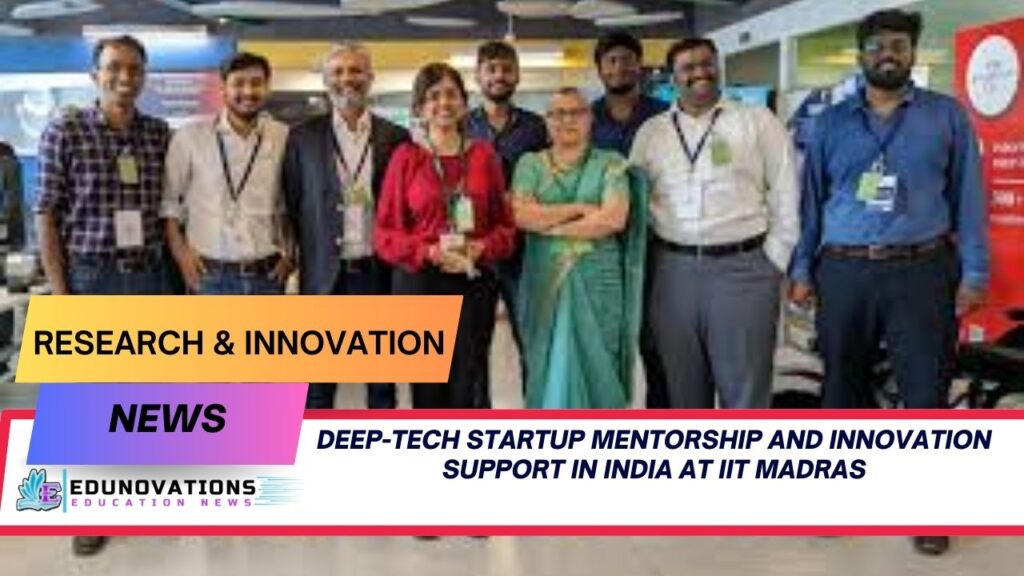
Discover how IIT Madras GDC is advancing deep-tech startup mentorship and innovation support in India, shaping the future of entrepreneurial ecosystems.
The Indian Institute of Technology Madras (IIT Madras) has once again emerged at the forefront of nurturing deep-tech startup mentorship and innovation support in India. The Gopalakrishnan-Deshpande Centre (GDC) at IIT Madras is pioneering programs that empower researchers, students, and entrepreneurs to transform innovative ideas into commercially viable solutions, strengthening India’s entrepreneurial ecosystem.
Driving Entrepreneurship from Lab to Market
The GDC’s mission revolves around bridging the gap between research labs and the commercial market. By providing structured mentorship, access to cutting-edge infrastructure, and industry connections, the center is creating pathways for engineers and scientists to convert their research into impactful startups. Programs offered by GDC focus on how to build entrepreneurial mindset in engineering researchers India, encouraging students and faculty to approach technological innovation with a market-ready perspective.
The center emphasizes hands-on learning and industry collaboration. Startups under GDC’s guidance gain insights from seasoned entrepreneurs and industry experts, fostering a culture of experimentation and risk-taking. These initiatives highlight IIT Madras’ commitment to democratising innovation and entrepreneurship programs for STEM, ensuring opportunities are accessible beyond traditional tech hubs.
Expanding the Innovation Ecosystem in India
IIT Madras recognizes the critical need to democratize innovation. The GDC is actively engaging with students from tier II and tier III cities, promoting inclusion in the startup ecosystem. This approach aligns with the growing trend of innovation ecosystem development for tier II and tier III startups India, which aims to harness talent across the country, not just in metropolitan centers.
Through workshops, bootcamps, and accelerator programs, participants gain exposure to business strategy, product development, intellectual property rights, and venture funding. The center has successfully incubated numerous startups in sectors ranging from AI and biotechnology to sustainable energy and materials science. These initiatives reinforce IIT Madras’ reputation as a leading hub for lab to market transition deep tech commercialization strategies India.
Structured Mentorship Programs
A distinctive feature of GDC is its structured mentorship model. Experienced entrepreneurs, venture capitalists, and academic leaders provide guidance to budding innovators. This model ensures that every startup receives tailored advice, maximizing their potential for success. The center emphasizes iterative development, prototyping, and early market validation, crucial steps in establishing sustainable startups.
Moreover, by connecting researchers with industry partners, the GDC fosters collaborations that accelerate product commercialization. This approach not only benefits startups but also contributes to the overall growth of India’s deep-tech sector, highlighting the center’s role in promoting deep-tech startup mentorship and innovation support in India.
Fostering Entrepreneurial Mindset Among Researchers
Building an entrepreneurial mindset among engineers and scientists is central to GDC’s philosophy. The center conducts seminars, lectures, and hands-on projects focusing on how to build entrepreneurial mindset in engineering researchers India. Students learn to identify market needs, understand customer pain points, and develop scalable solutions.
In addition to academic training, the center encourages interdisciplinary collaboration, blending expertise from computer science, mechanical engineering, biotechnology, and management studies. This holistic approach ensures that participants are well-equipped to navigate the complexities of the startup landscape.
Democratizing Access to Innovation
One of GDC’s primary objectives is democratising innovation and entrepreneurship programs for STEM across India. By offering remote workshops, online mentorship, and digital resources, the center ensures that geographic location is no longer a barrier. These initiatives make it possible for talented individuals from all regions to participate in advanced programs, paving the way for a more inclusive entrepreneurial ecosystem.
IIT Madras’ efforts reflect a broader trend in India, where government agencies and educational institutions are increasingly investing in regional innovation hubs. The GDC’s approach serves as a model for other institutes aiming to integrate research with practical commercialization strategies.
Success Stories from IIT Madras GDC
Several startups nurtured at GDC have achieved significant milestones. Companies in AI, renewable energy, and healthcare technology have successfully raised funding, expanded operations, and entered international markets. The center’s mentorship programs and accelerator initiatives have been instrumental in these successes, highlighting the effectiveness of lab to market transition deep tech commercialization strategies India.
Additionally, alumni often return as mentors, creating a sustainable cycle of knowledge sharing and support. This network strengthens the innovation ecosystem and exemplifies innovation ecosystem development for tier II and tier III startups India.
Strategic Partnerships and Collaborations
IIT Madras has forged partnerships with leading industry players, venture capital firms, and global institutions to support the GDC’s vision. These collaborations provide startups with access to resources, market insights, and funding opportunities that are otherwise difficult to obtain. By combining academic rigor with industry expertise, the center accelerates the commercialization of deep-tech innovations.
Such partnerships also encourage knowledge exchange and create pathways for international market access. These strategic collaborations underline IIT Madras’ commitment to deep-tech startup mentorship and innovation support in India, ensuring that students and startups are not only innovative but also competitive on a global scale.
Enhancing Research Impact
The GDC’s initiatives extend beyond entrepreneurship. By enabling researchers to commercialize their innovations, the center amplifies the societal impact of academic research. Whether it’s sustainable energy solutions, advanced materials, or healthcare technologies, GDC’s programs translate theoretical research into practical applications that benefit communities nationwide.
This approach also nurtures a culture of accountability and measurable impact, encouraging startups to focus on solutions that address real-world challenges. The integration of research, mentorship, and commercialization represents a comprehensive strategy for democratising innovation and entrepreneurship programs for STEM.
Digital and Remote Learning Opportunities
In today’s digital era, GDC leverages technology to provide online mentorship, virtual workshops, and digital resources. These initiatives are crucial for innovation ecosystem development for tier II and tier III startups India, ensuring that talented individuals from less-accessible regions can participate in programs without relocating.
Furthermore, these digital initiatives allow for scalable learning and engagement, enabling GDC to reach a wider audience and foster a nationwide culture of entrepreneurship.
Expert Insights
Dr. Gopalakrishnan, co-founder of GDC, emphasizes that “mentorship and structured support are key to transforming deep-tech research into impactful startups. India’s entrepreneurial ecosystem thrives when innovation is accessible to all, not just a few metropolitan hubs.”
Industry experts highlight that centers like GDC play a pivotal role in building India’s competitiveness in deep-tech sectors, by providing an integrated environment of mentorship, funding, and commercialization pathways.
Future Directions
Looking ahead, IIT Madras aims to scale its programs, expand industry partnerships, and increase international collaboration. By continuing to focus on deep-tech startup mentorship and innovation support in India, the GDC plans to nurture the next generation of entrepreneurs who will drive India’s technological and economic growth.
The center is also exploring specialized programs in AI, biotechnology, sustainable energy, and advanced materials, ensuring that emerging startups are aligned with global innovation trends.
Key Takeaways
- IIT Madras GDC is at the forefront of deep-tech startup mentorship and innovation support in India.
- Focus on building entrepreneurial mindset among engineering researchers.
- Inclusive programs aim to democratize STEM entrepreneurship across all regions.
- Structured mentorship, industry collaboration, and digital initiatives ensure successful lab to market transition.
- Strategic partnerships enhance commercialization and international market access.
Toppers Use Mind Maps to score more than 95%
-
NCERT Class 11th Commerce Mind Maps
Add to cartOriginal price was: ₹999.00.₹199.00Current price is: ₹199.00. -
NCERT Class 12th Chemistry Mind Maps
Add to cartOriginal price was: ₹199.00.₹75.00Current price is: ₹75.00. -
NCERT Class 12th Commerce Mind Maps
Add to cartOriginal price was: ₹999.00.₹199.00Current price is: ₹199.00. -
NCERT Class 12th Science Mind Maps
Add to cartOriginal price was: ₹999.00.₹199.00Current price is: ₹199.00. -
NCERT Mind Maps For Class 10th
Add to cartOriginal price was: ₹999.00.₹199.00Current price is: ₹199.00.



Purchase Today
Frequently Asked Questions (FAQs)
1. What is deep-tech startup mentorship and innovation support in India at IIT Madras?
Deep-tech startup mentorship and innovation support in India at IIT Madras is led by the Gopalakrishnan-Deshpande Centre (GDC), which provides structured guidance, funding access, industry networking, and commercialization training to help researchers and students transform advanced technological research into market-ready startups.
2. How does IIT Madras promote deep-tech startup mentorship and innovation support in India?
IIT Madras promotes deep-tech startup mentorship and innovation support in India through accelerator programs, expert mentoring panels, entrepreneurship bootcamps, and industry collaborations that enable innovators to move from laboratory research to successful business ventures.
3. How does GDC help in learning how to build entrepreneurial mindset in engineering researchers India?
The GDC trains engineering researchers through workshops, real-world startup projects, investor interaction sessions, and business-model training. These initiatives help participants understand market needs, risk management, and innovation leadership, answering the challenge of how to build entrepreneurial mindset in engineering researchers India.
4. What programs support democratising innovation and entrepreneurship programs for STEM students?
GDC offers inclusive innovation programs, online mentorship modules, regional outreach workshops, and open-access entrepreneurship training. These efforts ensure democratising innovation and entrepreneurship programs for STEM learners across diverse academic and geographic backgrounds.
5. How does IIT Madras support lab to market transition deep tech commercialization strategies India?
IIT Madras supports lab to market transition deep tech commercialization strategies India by offering patent assistance, prototype development labs, startup incubation spaces, venture capital connections, and regulatory guidance for scaling deep-tech products.
6. Why is innovation ecosystem development for tier II and tier III startups India important?
Innovation ecosystem development for tier II and tier III startups India ensures that talented innovators outside major metro cities gain access to mentorship, funding, and industry networks, creating a more inclusive and nationally balanced startup environment.
7. Who can apply for deep-tech startup mentorship and innovation support in India at IIT Madras?
Students, faculty members, research scholars, and early-stage entrepreneurs working on technology-driven innovations can apply for deep-tech startup mentorship and innovation support in India through IIT Madras GDC’s structured selection programs.
8. What industries benefit most from lab to market transition deep tech commercialization strategies India?
Industries such as artificial intelligence, healthcare technology, renewable energy, biotechnology, robotics, and advanced materials benefit most from lab to market transition deep tech commercialization strategies India due to strong research-commercialization integration.
9. How do online initiatives contribute to democratising innovation and entrepreneurship programs for STEM?
Online mentorship, virtual demo days, digital learning modules, and remote incubation allow students and innovators from any region to participate, making democratising innovation and entrepreneurship programs for STEM more accessible nationwide.
10. How does IIT Madras strengthen innovation ecosystem development for tier II and tier III startups India?
IIT Madras strengthens innovation ecosystem development for tier II and tier III startups India through outreach partnerships with regional colleges, digital training platforms, and startup showcases that connect local innovators with national investment and mentorship networks.