Discover the Drug Free Campus Campaign at University of Delhi 2026 initiative promoting youth empowerment, health, and substance-free education.
Drug Free Campus Campaign at University of Delhi 2026 Initiative: Empowering Youth for a Healthy India
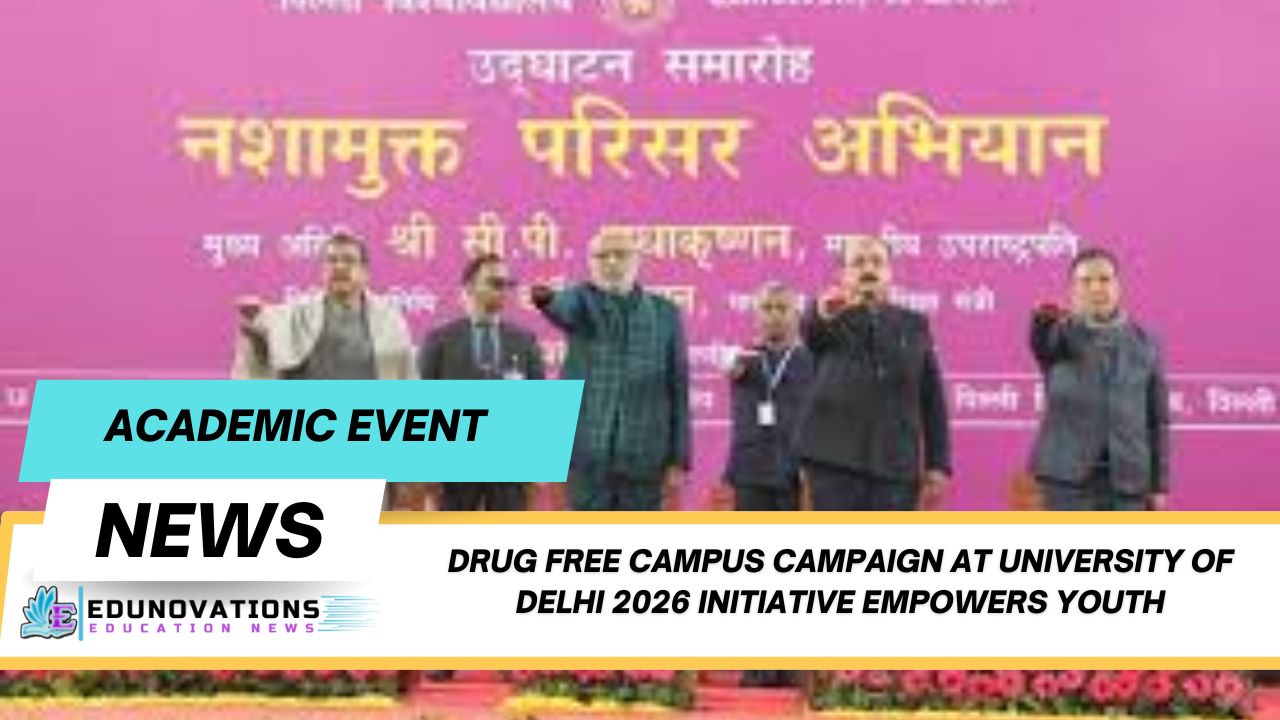
The Drug Free Campus Campaign at University of Delhi 2026 initiative was officially inaugurated by the Vice-President of India, Shri C. P. Radhakrishnan, marking a significant step towards fostering a healthy, aware, and empowered youth community. The event, held at the prestigious University of Delhi, also witnessed the presence of Union Minister for Education Shri Dharmendra Pradhan, Delhi Education Minister Shri Ashish Sood, Vice-Chancellor Prof. Yogesh Singh, along with senior officials, faculty members, and students.
The campaign emphasizes the urgent need to protect the nation’s youth from substance abuse and aligns with the vision of a Viksit Bharat, ensuring a strong foundation for a healthy, self-reliant, and purpose-driven future generation.
Inauguration Highlights: A Strong Push for a Drug-Free Campus
During the inauguration, Vice-President Shri C. P. Radhakrishnan emphasized that universities are more than centers of academic excellence—they are hubs for value creation and idea generation. By launching the Drug Free Campus Campaign at University of Delhi 2026 initiative, the University is setting a benchmark for Higher Education Institutions (HEIs) across India to adopt robust measures against drug abuse.
A dedicated e-pledge platform and mobile application under the Nasha Mukt Parisar Abhiyaan were launched, inviting students nationwide to take a pledge for a drug-free campus. This interactive digital tool aims to create a widespread awareness network and encourage active participation among students.
Shri Dharmendra Pradhan, Union Minister for Education, highlighted that the campaign is not just a symbolic initiative but a collective resolve of society, youth, and educational institutions. He remarked that a healthy and empowered student body is key to realizing the vision of Viksit Bharat 2047. The Minister further praised the University of Delhi for pioneering this movement and urged students to transform the campaign into a nationwide people’s movement.
Objectives of the Drug-Free Campus Campaign
The Drug Free Campus Campaign at University of Delhi 2026 initiative focuses on several critical goals:
- Promoting awareness about the harmful effects of substance abuse.
- Encouraging healthy lifestyles through workshops, seminars, and interactive sessions.
- Mobilizing students to actively participate in creating a safe, substance-free academic environment.
- Aligning with NEP 2020 priorities, ensuring student well-being remains central to institutional objectives.
According to Shri Dharmendra Pradhan, over 16 lakh educational institutions across India will benefit from similar initiatives, highlighting the commitment of Indian universities to the forefront of the Drug-Free India movement.
Expert Insights on the Campaign
Dr. Anjali Mehta, a leading sociologist specializing in youth empowerment, commented on the campaign:
“By combining technology with student engagement, the University of Delhi is setting a precedent for other educational institutions. A drug-free campus is crucial for nurturing innovation, productivity, and responsible citizenship among students.”
Similarly, Prof. Yogesh Singh, Vice-Chancellor of the University of Delhi, emphasized the importance of integrating this campaign into academic and extracurricular life, ensuring that students are consistently reminded of their role in fostering a healthy campus culture.
Digital Engagement: Pledge and Participation
The digital component of the initiative includes an e-pledge platform, which allows students to publicly commit to maintaining a drug-free campus. This modern approach leverages technology to increase outreach and engagement. Students can also track their contributions, share success stories, and participate in campus-wide challenges aimed at promoting awareness.
This interactive platform aligns with the vision of how University of Delhi launched national drug free campus awareness, creating a replicable model for other HEIs in India.
National Significance: Linking Campaign to Viksit Bharat
The campaign is directly linked to the national mission of building a Viksit Bharat, where youth are self-reliant, aware, and empowered. Shri Dharmendra Pradhan stressed that India’s youth are the foundation of the nation’s progress, and initiatives like the Drug Free Campus Campaign at University of Delhi 2026 initiative are pivotal in shaping a future generation capable of leading social, economic, and academic growth.
He noted, “The vision of Viksit Bharat 2047 can only be realized when young people are healthy, aware, and purpose-driven.”
Role of Higher Education Institutions
The University of Delhi has demonstrated that universities are not just academic centers but active agents of societal transformation. By promoting a drug-free higher education institutions program, HEIs can:
- Reduce incidences of substance abuse among students.
- Promote a culture of awareness, empathy, and peer support.
- Foster leadership qualities and civic responsibility.
- Ensure alignment with national educational goals and NEP 2020 mandates.
Student and Faculty Engagement
The success of the campaign hinges on active engagement from students, faculty, and administrators. Workshops, counseling sessions, and peer-led initiatives are being organized to ensure that the message reaches every corner of the campus. Students are encouraged to lead clubs and campaigns, creating a network of health-conscious and empowered youth.
Faculty members play a pivotal role in mentoring students, guiding discussions, and ensuring the campaign’s principles are embedded in campus life.
Social Media and Awareness Campaign
Social media has played a crucial role in amplifying the campaign. Tweets and posts from Shri Dharmendra Pradhan highlighted the initiative’s significance, reaching millions of students nationwide. Hashtags such as #DrugFreeCampus and #NashaMuktCampus are being used to mobilize participation and track campaign progress.
This approach demonstrates how University of Delhi launched national drug free campus awareness, ensuring that even students beyond Delhi can participate virtually and pledge commitment.
External Collaboration and Resources
In addition to internal resources, the campaign has partnered with organizations such as Mart India Infotech, which provides digital tools and consultancy for awareness programs. These collaborations ensure that the initiative is scalable, technologically supported, and sustainable in the long term.
Conclusion: Building a Drug-Free, Healthy India
The Drug Free Campus Campaign at University of Delhi 2026 initiative is more than just a symbolic event. It represents a collective commitment to youth empowerment, societal well-being, and the vision of Viksit Bharat. By leveraging technology, faculty engagement, and student participation, this initiative sets a benchmark for universities across India to follow.
As India moves towards 2047, campaigns like this ensure that the nation’s youth are not only academically accomplished but also socially responsible, self-reliant, and healthy.
Toppers Use Mind Maps to score more than 95%
NCERT Class 11th Commerce Mind Maps
Add to cartOriginal price was: ₹999.00.₹199.00Current price is: ₹199.00.NCERT Class 12th Chemistry Mind Maps
Add to cartOriginal price was: ₹199.00.₹75.00Current price is: ₹75.00.NCERT Class 12th Commerce Mind Maps
Add to cartOriginal price was: ₹999.00.₹199.00Current price is: ₹199.00.NCERT Class 12th Science Mind Maps
Add to cartOriginal price was: ₹999.00.₹199.00Current price is: ₹199.00.NCERT Mind Maps For Class 10th
Add to cartOriginal price was: ₹999.00.₹199.00Current price is: ₹199.00.





Purchase Today
10 FAQs on Drug-Free Campus Campaign at University of Delhi
- What is the Drug Free Campus Campaign at University of Delhi 2026 initiative?
It is a national initiative to promote awareness and create substance-free campuses at Indian universities. - Who inaugurated the Drug-Free Campus Campaign at University of Delhi?
Vice-President Shri C. P. Radhakrishnan officially inaugurated the campaign. - Which ministry supports the campaign?
The Ministry of Education, led by Union Minister Shri Dharmendra Pradhan, supports it. - How can students participate in the campaign?
Students can take an e-pledge and actively engage in workshops, seminars, and campus programs. - What is the purpose of the campaign?
To promote healthy lifestyles, raise awareness about substance abuse, and empower youth. - How does this campaign align with Viksit Bharat 2047?
By ensuring students are healthy, aware, self-reliant, and purpose-driven. - What digital tools are used in the campaign?
An e-pledge platform and mobile application under Nasha Mukt Parisar Abhiyaan. - How are other universities involved?
The campaign serves as a model for HEIs nationwide to adopt similar drug-free initiatives. - Why is this campaign important for higher education institutions?
It fosters a safe, substance-free academic environment and promotes civic responsibility among students. - Where can students access resources and support for the campaign?
Through university programs, online pledge platforms, workshops, and collaborations with organizations like Mart India Infotech.