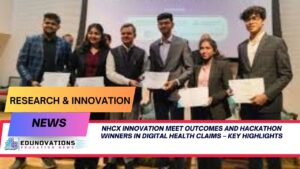
Discover how the Federated Health AI Hackathon India 2026 accelerated digital public goods and privacy-preserving healthcare AI solutions, with expert insights, key winners, and national impact.
Introduction
The federated health AI hackathon India 2026 marked a pivotal moment in the intersection of technology, healthcare, and public policy as innovators from across the nation gathered at the Indian Institute of Technology (IIT) Kanpur to develop privacy-preserving, scalable artificial intelligence solutions for modern healthcare systems. Held as a prelude to the India AI Impact Summit 2026, the six-day event brought together policymakers, researchers, tech startups, and healthcare professionals to focus on digital public goods that can enhance India’s health infrastructure.
This national initiative aimed to bridge cutting-edge AI innovation with real-world healthcare needs, placing India at the forefront of responsible, scalable solutions capable of transforming patient care while maintaining trust and privacy.
Federated Health AI Hackathon India 2026: A Confluence of Innovation and Policy
Organised by the National Health Authority (NHA), in collaboration with the ICMR–National Institute for Research in Digital Health and Data Science (NIRDHDS) and IIT Kanpur, the hackathon ran from 19th to 24th January 2026.
More than 370 participants — including individual innovators, interdisciplinary teams, and startups — registered for the event, demonstrating strong interest in building next-generation healthcare AI solutions that align with India’s public health priorities.
Aim and Vision
The core objective of the hackathon was to accelerate the development of digital public goods for health AI — interoperable, reusable, and privacy-centric systems that can seamlessly integrate with national programmes such as the Ayushman Bharat Digital Mission (ABDM). These digital building blocks are envisioned to support inclusive health coverage, enhance data accessibility, and future-proof healthcare delivery mechanisms in both urban and rural contexts.
Speakers and experts at the event emphasised the significance of ethical, transparent, and privacy-preserving AI designs that respect patient consent and safeguard sensitive health data — principles that are essential for scaling AI adoption in public health systems.
Key Highlights: Innovation, Testing, and Benchmarking
Privacy First, Scalability Always
During his keynote address, Dr. Sunil Kumar Barnwal — CEO of NHA — stressed the importance of moving from isolated pilot projects to reliable, benchmarked AI systems that can be rolled out at the population level.
He articulated that federated, consent-driven architectures — where machine learning models can be trained and tested across distributed data sources without aggregating sensitive data centrally — are crucial to safeguarding privacy while empowering innovation. This model of computation helps institutions collaborate without compromising trust or compliance.
The emphasis on diversity in healthcare data is also critical. Dr. Barnwal highlighted the need for AI systems to be validated on diverse datasets that reflect India’s varied demographic and geographical profiles to ensure fairness and effectiveness in real-world deployment.
Benchmarking for Trust
A remarkable achievement of the hackathon was the creation of a benchmarking platform developed by NHA in partnership with IIT Kanpur. This platform evaluates the performance, fairness, and efficacy of various AI models, allowing stakeholders to compare solutions in a controlled environment while preserving patient privacy and institutional oversight.
This innovation plays a central role in establishing trust among healthcare providers and regulators, enabling informed decisions about deployment strategies and clinical integration.
Core Themes & Tech Tracks
The teams and individual participants focused on designing AI systems to address diverse healthcare challenges. The event spotlighted three major problem tracks:
- Bone Age Prediction
- Cataract Detection
- Diabetic Retinopathy Screening
All of these tools can help early diagnosis and preventive care strategies in public health settings.
Participants used federated learning concepts and privacy-preserving machine learning methodologies to build solutions that balance accuracy with ethical considerations.
Experts and Thought Leadership
The inaugural sessions featured addresses from prominent thought leaders, including:
- Prof. Sandeep Verma, Head, Gangwal School of Medical Sciences & Technology, IIT Kanpur
- Prof. Manindra Agrawal, Director, IIT Kanpur
- Ritu Maheshwari, Secretary, Medical Health & Family Welfare and State Mission Director, ABDM–Uttar Pradesh
- Dr. R.S. Sharma, Distinguished Visiting Professor and former CEO of NHA
- Vivek Raghavan, CEO & Co-founder, SarvamAI
These experts emphasised several themes:
- The importance of indigenous, open-source AI models for long-term sustainability and innovation
- The need for robust quality, security, and privacy frameworks in healthcare AI
- Integration of digital public infrastructure with national missions such as AB PM-JAY and ABDM
Their insights highlighted a broader vision: an AI ecosystem that is secure, inclusive, and reflective of India’s specific healthcare needs.
Winners and Impactful Outcomes
The event concluded with awards across the three main categories. Winners received certificates and prizes totalling Rs. 12 lakhs, recognising excellence in technical innovation, real-world applicability, and scalable design.
The awards not only celebrate technical achievement but also underscore the potential of AI-driven tools to transform medical diagnostics, early detection, and equitable care delivery across India.
By encouraging interdisciplinary participation — from healthcare professionals to AI researchers and startups — the hackathon fostered a collaborative ecosystem aimed at producing viable solutions beyond the event itself.
Why This Hackathon Matters to India’s Healthcare Future
- Promoting Ethical Healthcare AI: The hackathon reinforced that responsible AI innovation requires transparency, explainability, and privacy — not just performance metrics.
- Strengthening Public Health Systems: Solutions developed can integrate with nationwide initiatives like the Ayushman Bharat Digital Mission or support local health systems through interoperable data standards.
- Empowering Local Innovation: By highlighting indigenous model development, the initiative aimed to reduce reliance on external tools and foster self-sufficient, homegrown AI ecosystems.
- Bridging Policy & Technology: Through partnerships with government bodies and research institutions, the event created pathways for academic research to influence public policy outcomes.
Internal & External Resources for Further Learning
For readers interested in complementary educational content and tools, explore:
- NCERT Courses: Find structured learning pathways at our internal NCERT course hub.
- Current Affairs: Stay updated with the latest developments from national and global events.
- Notes & MCQs: Revision material to strengthen your understanding of AI and public health topics.
- Videos & Syllabus: Engaging multimedia content supporting exam preparation.
- Free NCERT PDFs & Mind Maps: Download helpful study resources.
- Need expert support or tools? Connect with Mart Ind Infotech for solutions that help schools and organisations implement digital systems.
Toppers Use Mind Maps to score more than 95%
NCERT Class 11th Commerce Mind Maps
Add to cartOriginal price was: ₹999.00.₹199.00Current price is: ₹199.00.NCERT Class 12th Chemistry Mind Maps
Add to cartOriginal price was: ₹199.00.₹75.00Current price is: ₹75.00.NCERT Class 12th Commerce Mind Maps
Add to cartOriginal price was: ₹999.00.₹199.00Current price is: ₹199.00.NCERT Class 12th Science Mind Maps
Add to cartOriginal price was: ₹999.00.₹199.00Current price is: ₹199.00.NCERT Mind Maps For Class 10th
Add to cartOriginal price was: ₹999.00.₹199.00Current price is: ₹199.00.



Purchase Today
FAQs
- What is the federated health AI hackathon India 2026?
It is a national event designed to foster development of digital public goods and privacy-preserving health AI solutions. - Who organised the hackathon on digital public goods for health AI?
It was organised by the National Health Authority with ICMR–NIRDHDS and IIT Kanpur. - What were the main focus areas of the hackathon?
Topics included bone age prediction, cataract detection, and diabetic retinopathy screening. - How does federated learning benefit healthcare AI development?
It allows AI training across distributed data sources without centralising sensitive data, preserving privacy. - What is a benchmarking platform in the context of health AI?
It is a system to evaluate and compare AI models on performance, privacy, and trust metrics. - Why is data diversity important in healthcare AI?
Diverse datasets ensure AI tools perform accurately across various demographic and regional contexts. - How many teams participated in the hackathon?
The hackathon saw participation from more than 370 innovators and teams. - What prizes were awarded in the hackathon?
Winners received certificates and cash awards totalling ₹12 lakhs. - What foundational principles guided the hackathon?
Principles included responsible AI, privacy, interoperability, and public benefit. - How does the hackathon support national health initiatives?
Its solutions align with digital public infrastructure objectives like the Ayushman Bharat Digital Mission.