
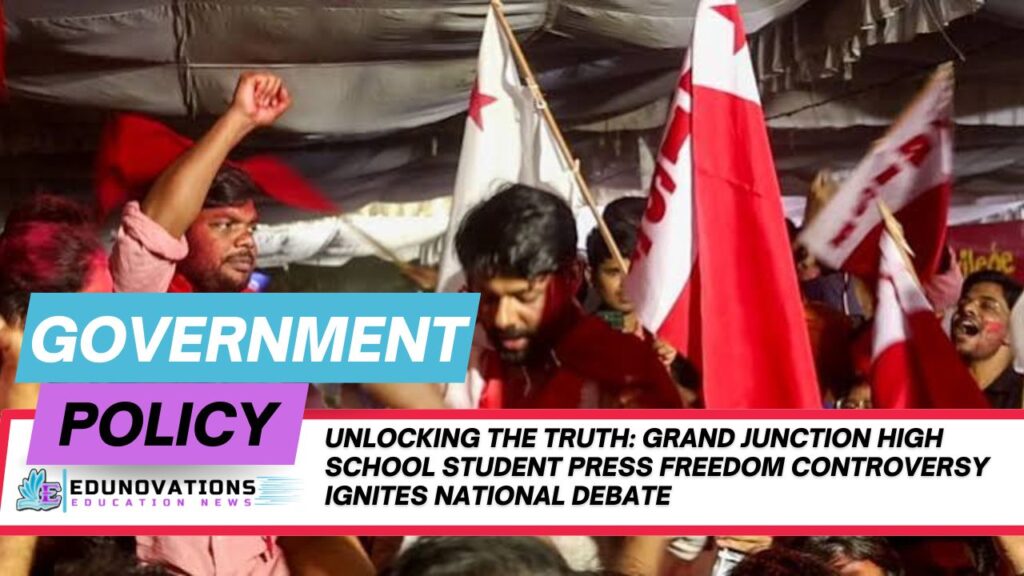
Explore the Grand Junction High School student press freedom controversy following student op-eds, adviser shifts, and free speech concerns.
The landscape of secondary education journalism has always walked a delicate tightrope between administrative oversight and student empowerment. Recently, this fragile balance was brought into sharp national focus. The core of the discussion centers heavily around the Grand Junction High School student press freedom controversy, an event that has triggered widespread debates concerning First Amendment rights on school campuses, editorial independence, and the limits of institutional control over young writers.
As educational institutions grapple with contemporary global issues, the intersection of student voices and administrative caution continues to reshape modern media literacy. To understand the broader scope of this issue, students and educators frequently look toward structured learning paths and academic tools. For those aiming to deepen their academic foundation, utilizing resources like comprehensive NCERT Courses or staying informed through daily Current Affairs can provide essential context on how civic rights function within educational environments. Furthermore, structured Notes and practice MCQs offer additional avenues for students pursuing political science and journalism education.
The Spark: A Controversial Student Column
The chain of events leading to intense scrutiny began when the campus publication released a student-penned opinion piece addressing geopolitical tensions. Written by then-senior Alek Purser, the column—titled “Why is Gaza Important — American tax dollars fund genocide”—appeared in the fourth-quarter print edition of the school’s media outlet.
While the publication’s editor-in-chief at the time, Eli Schultz, noted that there was immediate internal consensus and no initial student backlash, external friction quickly mounted. Faculty members, including social studies teacher and Young Conservatives club adviser Mark Carris, voiced fierce opposition. Public records requests later revealed that Carris sent emails condemning the column as containing “outright racism,” “bigotry,” and “Nazi propaganda,” while calling for formal disciplinary measures against the student author.
This intense polarization highlights a growing challenge for modern schools: how to handle controversial geopolitical discussions written by adolescents. Educators seeking specialized institutional frameworks often consult professional management services, such as those provided by Mart India Infotech, to streamline communication and digital infrastructure.
Administrative Response and the Adviser Reassignment
Despite the sharp internal critique from specific faculty factions, the publication’s leadership met with Principal Jory Sorensen, who stated that the administration found no direct violation of school policies within the Gaza piece. However, the administrative fallout manifested in an unexpected manner shortly thereafter.
Steve Fox, who had served as the faculty adviser for the publication for five years, was abruptly notified that he would be reassigned. This decision—communicated right around graduation—effectively removed Fox from his advisory role. The timing of this shift sparked immediate allegations of indirect censorship, prompting many to examine the Orange and Black newspaper adviser reassignment scrutiny as a cautionary tale for scholastic journalism across the state.
For students tracking legal frameworks and curriculum guidelines, exploring structured educational tools such as an updated Syllabus or video lectures via dedicated academic platforms can help clarify the legal boundaries governing school-sponsored media.
Broader Implications for Student Free Speech
The events in Colorado are part of a larger, nationwide friction point regarding high school student column censorship Israel Gaza conflict. Across the country, student journalists are increasingly turning their focus toward international affairs, testing the boundaries of traditional school-sponsored media guidelines.
Legal experts and free speech advocates frequently argue that suppressing student discourse stifles civic growth. According to data compiled by scholastic press associations, high schools that encourage open, guided dialogue tend to produce more civically engaged graduates. When institutions react punitively—whether through direct content blocks or structural staff reassignments—they risk chilling future investigative reporting.
- Key concerns raised by free speech advocates include:
- The potential silencing of diverse student viewpoints on foreign policy.
- The vulnerability of faculty advisers facing administrative retaliation.
- The blurring lines between administrative oversight and unconstitutional censorship.
Students and educators looking to review historical documentation or analytical summaries can access free resources via platforms offering Free NCERT PDFs and detailed NCERT Mind Maps to support comprehensive civics education.
Expert Insights on Scholastic Press Freedom
Prominent legal and educational analysts have weighed in on similar campus free speech disputes nationwide. Constitutional scholars often emphasize that while public high schools possess broad management powers, student-led publications operating as public forums enjoy specific protections.
“When schools treat student newspapers as open forums for student expression, pulling back editorial freedom or penalizing staff usually backfires, creating greater public scrutiny than the original article ever would,” notes civil liberties analyst Marcus Vance in a recent commentary on student media rights.
The sentiment is echoed by local alumni and editorial boards who view the adviser transition not as a routine staffing update, but as a direct blow to independent student reporting.
Toppers Use Mind Maps to score more than 95%
-
NCERT Class 11th Commerce Mind Maps
Add to cartOriginal price was: ₹999.00.₹199.00Current price is: ₹199.00. -
NCERT Class 12th Chemistry Mind Maps
Add to cartOriginal price was: ₹199.00.₹75.00Current price is: ₹75.00. -
NCERT Class 12th Commerce Mind Maps
Add to cartOriginal price was: ₹999.00.₹199.00Current price is: ₹199.00. -
NCERT Class 12th Science Mind Maps
Add to cartOriginal price was: ₹999.00.₹199.00Current price is: ₹199.00. -
NCERT Mind Maps For Class 10th
Add to cartOriginal price was: ₹999.00.₹199.00Current price is: ₹199.00.

Purchase Today
Frequently Asked Questions (FAQs)
1. What sparked the controversy at Grand Junction High School?
The controversy began after the publication of a student-penned op-ed addressing the Israel-Gaza conflict in the campus newspaper’s print edition.
2. Who wrote the controversial opinion piece?
The column was written by Alek Purser, who was a senior at the time of publication.
3. What role did Steve Fox play in the publication?
Steve Fox served as the faculty adviser for the student newspaper for five years before being reassigned.
4. Why was the faculty adviser reassigned?
Although administration cited standard staffing rotations, the reassignment occurred shortly after sharp faculty complaints regarding the Gaza column, sparking widespread censorship scrutiny.
5. Did the school administration find policy violations in the column?
According to student reports following a meeting with Principal Jory Sorensen, the administration stated they found nothing inherently wrong with the published piece.
6. What specific criticisms were leveled against the student column?
A faculty member condemned the piece in emails as containing bigotry, racism, and unauthorized propaganda, demanding disciplinary measures.
7. How did student editors react to the publication of the article?
Student editors maintained that the piece was thoroughly researched with cited sources and generated no initial negative backlash from the student body.
8. How does this event impact student journalism across the region?
It has intensified regional debates regarding student press freedom, adviser job security, and the boundaries of free speech in public high schools.
9. Are student newspapers protected by freedom of speech guidelines?
Protection levels vary depending on whether the publication is officially designated as a public forum and whether it adheres to specific state-level student free expression laws.
10. Where can students find more resources on civic rights and education?
Students can explore academic platforms, curriculum outlines, and civic notes repositories to better understand constitutional rights and responsibilities.