
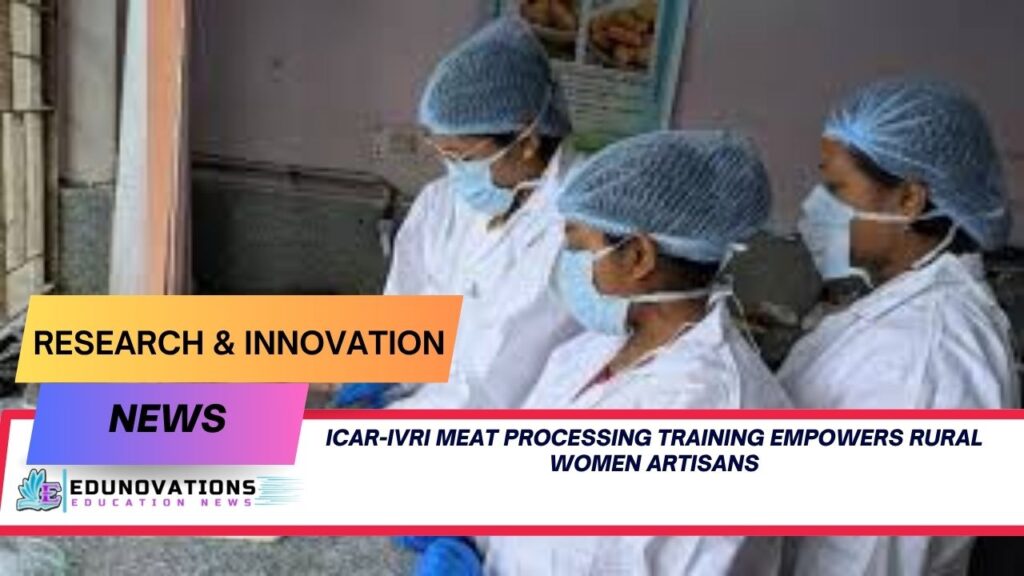
ICAR-IVRI Kolkata hosts hands-on training on how to make chicken nugget emulsion with meat mincer and value addition to boost rural livelihoods.
In a decisive stride toward enhancing rural livelihoods, advancing food safety standards, and fostering sustainable entrepreneurship, the Eastern Regional Station (ERS) of the ICAR-Indian Veterinary Research Institute (IVRI) in Belgachia, Kolkata, conducted a comprehensive hands-on training workshop titled “Scientific Meat Processing and Value Addition: Empowering Rural Women through Skill Development.”
Organized under the auspices of the Development Action Scheme for Scheduled Caste (DAPSC), the high-impact initiative gathered select women beneficiaries from the rural blocks of Bongaon (North 24 Parganas) and Sonarpur (South 24 Parganas), West Bengal. Having previously received fundamental agricultural inputs—including high-quality poultry chicks, balanced feed formulations, nutritional supplements, and veterinary medicines—these participants were equipped to transition from primary poultry rearing to sophisticated livestock product processing and value creation.
Strategic Imperative of Value Addition in Rural Livestock Economies
Rural poultry farming across Eastern India faces recurring market bottlenecks. A primary hurdle remains the acute vulnerability of raw livestock to perishable supply chains, compounded by inconsistent cold chain infrastructure in remote villages and a shifting consumer demographic that increasingly leans toward processed convenience over raw poultry cuts.
Addressing the workshop participants during the opening ceremony, Dr. Goutam Kumar Das, Principal Scientist and Nodal Officer of the DAPSC program at ICAR-IVRI, underscored the transformative potential of technical skill building.
“Empowering rural women through value addition is not merely an economic intervention; it is a direct driver of household nutrition, enterprise creation, and financial resilience,” declared Dr. Goutam Kumar Das. “By converting raw livestock into shelf-stable, highly palatable, value-added products, smallholders can bypass distress sales, mitigate post-farm losses, and tap into lucrative urban and semi-urban food markets.”
This shift toward localized processing addresses a critical market gap. Raw poultry prices frequently fluctuate based on seasonal demand, whereas processed items such as nuggets, patties, and sausages command steady profit margins.
Furthermore, processing offers a sustainable avenue for utilizing spent hens—older egg-laying birds whose muscle tissue becomes tough and less desirable for conventional cooking. Through specialized mincing, seasoning, and emulsion techniques, spent hen meat can be successfully converted into high-value culinary products. To gain a strong academic foundation in food science and agricultural economics, students can access structured study resources through NCERT Courses and prepare systematically for competitive exams.
Technical Mastery: Equipment Functionality and Process Dynamics
The core operational modules of the training program were led by Dr. Arun K Das, Principal Scientist and Program Coordinator, an internationally recognized scholar in muscle food processing, bioactive packaging, and functional food development. Dr. Das provided participants with immersive, hands-on instruction spanning the complete operational hierarchy of a modern meat processing facility.
Essential Processing Machinery & Functional Mechanics
To establish a viable micro-enterprise, smallholders must gain thorough operational knowledge of specialized processing machinery. The workshop delivered practical sessions on several core pieces of equipment:
- Industrial Meat Slicers: Engineered for uniform portioning, muscular grain alignment, and precise thickness control across high-volume meat cuts.
- Heavy-Duty Meat Mincers: Heavy-duty systems designed for primary particle size reduction, converting whole muscle tissue into uniform coarse or fine grinds required for further processing.
- Precision Bowl Choppers: High-speed cutter bowls that perform simultaneous particle reduction, lipid dispersion, binder incorporation, and cellular matrix breakdown to establish a stable meat emulsion.
- Pneumatic Sausage Fillers: Hydraulic or manual piston machines designed to pack emulsified batters into collagen, cellulose, or natural casings without trapping air pockets.
- Thermal Steam Cookers & Deep Fat Fryers: Controlled heating units used for precise core-temperature pasteurization, protein coagulation, and textural crisping of enrobed foods.
- Hot Air Ovens: Industrial convection dehydrators utilized for moisture control, thermal processing, and extending product shelf life.
Learning the exact mechanical interplay behind these tools allows small-scale producers to lower equipment maintenance overhead, prevent heat-induced protein denaturation during processing, and optimize batch yields.
Masterclass on Emulsion Formulation and Particle Reduction
The scientific highlight of the workshop centered on the mechanical principles governing stable meat batters. Achieving the ideal texture, juiciness, and structural integrity in emulsified products requires a deep technical understanding of protein solubilization.
+-------------------------------------------------------------------+
|               STAGES OF MEAT EMULSION FORMULATION                 |
+-------------------------------------------------------------------+
|  1. DEBONING & SIZE REDUCTION                                     |
|     Manual deboning followed by primary mincing through 4-6mm plates|
+-------------------------------------------------------------------+
                                  │
                                  ▼
|  2. MYOFIBRILLAR PROTEIN EXTRACTION                               |
|     High-shear chopping with salt (NaCl) & tripolyphosphates       |
+-------------------------------------------------------------------+
                                  │
                                  ▼
|  3. LIPID DISPERSION & ICE FLAKE ADDITION                         |
|     Gradual incorporation of animal fat & temperature control (<12°C)|
+-------------------------------------------------------------------+
                                  │
                                  ▼
|  4. BINDER & SPICE INTEGRATION                                    |
|     Blending condiments, hydrocolloids, and functional extenders  |
+-------------------------------------------------------------------+
                                  │
                                  ▼
|  5. THERMAL COAGULATION & ENROBING                                |
|     Stuffing/moulding, batter-and-breading, and thermal cooking   |
+-------------------------------------------------------------------+
During the hands-on sessions, trainees processed poultry meat to master emulsion formation. The initial step requires deboning and size reduction, wherein raw muscle tissue is trimmed free of dense connective tendons and passed through mincing plates to prepare it for high-shear emulsification.
The trainees then transferred the minced meat into high-speed bowl choppers. Here, exact proportions of salt, ice flakes, animal fat, functional binders, and ground spices were introduced in precise sequence. Salt plays a crucial role in extracting myofibrillar proteins (primarily myosin and actin), forming a soluble matrix that coats dispersed fat droplets.
Ice flakes are essential during chopping to absorb friction heat generated by the rapidly spinning blades; keeping the batter temperature below 12°C prevents matrix breakdown and fat separation. The result is a smooth, homogeneous batter that serves as the foundation for products such as patties, skinless sausages, and bite-sized nuggets.
Trainees also prepared enrobed items, such as crispy chicken croquettes. These products rely on a three-tier coating system: pre-dusting flour, liquid egg wash batter, and seasoned breadcrumbs. Crisp, enrobed meat snacks are consistently popular among urban consumers and caterers due to their appealing texture, convenient cooking preparation, and long storage stability.
To keep up with evolving rural development policies, agricultural technologies, and government initiatives, readers can follow current policy updates on Current Affairs and review comprehensive study guides on Notes.
Stringent Sanitation Protocols and Food Safety Standards
Modern food manufacturing places equal weight on processing efficiency and microbiological safety. Dr. Arun K Das emphasized that strict sanitation protocols are vital to prevent cross-contamination, safeguard consumer health, and meet commercial food quality standards.
+---------------------------------------------------------------------+
|            CRITICAL SANITATION & HYGIENE REQUIREMENTS               |
+---------------------------------------------------------------------+
|  PERSONAL HYGIENE         |  • 20-second anti-bacterial hand wash   |
|                           |  • Mandatory headgear, aprons & gloves  |
|                           |  • Zero face/hair touching during work  |
+---------------------------+-----------------------------------------|
|  EQUIPMENT SANITATION     |  • Pre-operational hot water rinsing    |
|                           |  • Food-grade detergent scrubbing       |
|                           |  • 200 ppm chlorine/sanitizer rinse     |
+---------------------------+-----------------------------------------|
|  ENVIRONMENTAL CONTROL    |  • Temperature-monitored work zones     |
|                           |  • Segregated raw vs. cooked areas      |
|                           |  • Continuous waste removal systems     |
+---------------------------------------------------------------------+
Essential Personal Hygiene Mandates
Participants practiced strict sanitary habits required in food processing facilities:
- Hand Washing Protocols: Thorough, multi-step hand washing with antibacterial soap before entering processing areas and after every operational transition.
- Protective Gear: Mandatory use of clean headgear, facial masks, food-grade nitrile gloves, and impervious protective aprons.
- Behavioral Hygiene: Complete elimination of unsanitary habits during processing, such as touching the hair, face, or eyes, which can introduce Staphylococcus aureus or other pathogens into raw meat.
Plant and Equipment Sanitation
Equipment surfaces that come into direct contact with raw meat must undergo continuous cleaning. Mincers, bowl choppers, and cutting surfaces require systematic dismantling, hot water pre-rinsing to dissolve fat residues, scrubbing with food-grade alkaline detergents, and final rinsing with approved sanitizing solutions.
Implementing these steps prevents the formation of bacterial biofilms, controls foodborne pathogens like Salmonella and Listeria monocytogenes, and ensures compliance with global Hazard Analysis Critical Control Point (HACCP) criteria.
Economic Evaluation: Raw Sales vs. Value-Added Enterprise
A key element of the training program was an economic comparison between selling raw live birds and manufacturing processed meat products. The financial advantage of processing becomes clear when examining the value addition potential across popular items:
| Product Category | Primary Raw Material | Key Processing Step | Target Consumer Market | Margin Improvement Potential |
| Chicken Nuggets | Deboned poultry / Spent hen meat | High-shear chopping & emulsion formation | Fast-food outlets, retail stores, quick snacks | +45% to +60% over live bird sales |
| Breakfast Sausages | Fine-minced muscle fat matrix | Emulsified casing stuffing & steam poaching | Urban supermarkets, hotels, breakfast cafes | +50% to +70% over live bird sales |
| Enrobed Croquettes | Coarse minced meat & seasonings | Multi-stage battering & breading | Event caterers, party snacks, home meals | +40% to +55% over live bird sales |
| Value Patties | Minced poultry & vegetable binders | Moulded patty forming & flash freezing | Quick-service restaurants, local burger shops | +35% to +50% over live bird sales |
As shown in the evaluation, transitioning from selling live birds to selling packaged, processed meat items can boost profit margins by up to 70%. Processing also extends product shelf life through freezing and vacuum packaging, protecting producers against market gluts and emergency price drops.
Empowering Rural Micro-Entrepreneurs: Future Horizons
At the conclusion of the workshop, all 16 women beneficiaries received comprehensive resource kits containing protective operational gear (masks, aprons, headgear, and gloves) alongside detailed technical literature published by ICAR-IVRI. These bulletins serve as practical field manuals, offering precise formulations, thermal processing schedules, and equipment troubleshooting steps for small-scale production units.
The long-term impact of this training extends well beyond individual skill acquisition. By equipping rural women with technical processing expertise, ICAR-IVRI is building local micro-enterprises across South and North 24 Parganas.
As these self-help groups (SHGs) establish small-scale production units, they create a sustainable framework for localized economic growth, higher household incomes, and improved rural nutrition.
Educational Resources for Agricultural & Veterinary Science Aspirants
For students, researchers, and competitive exam aspirants aiming to master livestock technology, veterinary public health, and food processing systems, having access to clear, well-structured study materials is essential.
Students preparing for foundational and advanced examinations can leverage comprehensive digital tools designed for academic success:
- Self-Assessment & Testing: Test your knowledge on food safety, animal husbandary, and biological concepts using targeted practice modules at MCQ’s.
- Visual Learning Modules: Understand mechanical operations, equipment design, and biological processes through structured video lectures on Videos.
- Syllabus Tracking: Stay aligned with national curriculum guidelines and exam requirements by visiting Syllabus.
- Free Study Materials: Download official educational resources, textbooks, and past papers via Downloads of Free NCERT PDFs.
- Visual Memory Aids: Simplify complex scientific pathways, bacterial hygiene workflows, and agricultural concepts using structured visual aids from NCERT Mind Maps.
Institutions and vocational academies seeking modern digital platforms to deliver vocational courses and educational content can consult expert web developers at Mart Ind Infotech to build scalable online learning portals.
Toppers Use Mind Maps to score more than 95%
-
NCERT Class 11th Commerce Mind Maps
Add to cartOriginal price was: ₹999.00.₹199.00Current price is: ₹199.00. -
NCERT Class 12th Chemistry Mind Maps
Add to cartOriginal price was: ₹199.00.₹75.00Current price is: ₹75.00. -
NCERT Class 12th Commerce Mind Maps
Add to cartOriginal price was: ₹999.00.₹199.00Current price is: ₹199.00. -
NCERT Class 12th Science Mind Maps
Add to cartOriginal price was: ₹999.00.₹199.00Current price is: ₹199.00. -
NCERT Mind Maps For Class 10th
Add to cartOriginal price was: ₹999.00.₹199.00Current price is: ₹199.00.





Purchase Today
Frequently Asked Questions (FAQs)
1. What are the key processing steps for preparing emulsified poultry items?
The primary steps involve deboning raw meat, size reduction via mincing, high-shear chopping in a bowl chopper with salt and ice flakes to extract myofibrillar proteins, adding fat and spices, moulding, and thermal cooking or pasteurization.
2. Why is maintaining low batter temperature crucial during processing?
Friction during chopping can raise batter temperature, causing myofibrillar proteins to denature prematurely. Keeping the mixture below 12°C using ice flakes ensures a stable emulsion and prevents oil and water separation during cooking.
3. How does processing spent hen meat benefit poultry farmers?
Spent egg-laying hens have tough muscle tissue that commands low prices in raw markets. Processing this meat through mincing and emulsification breaks down tough fibers, turning spent hens into tender, high-value nuggets, patties, and sausages.
4. What basic machinery is required for a small-scale processing unit?
A functional small-scale unit typically requires a heavy-duty meat mincer, a high-speed bowl chopper, a manual or pneumatic sausage filler, a temperature-controlled deep fat fryer or steam cooker, and a deep freezer for storage.
5. Why are functional binders added to meat emulsions?
Binders such as cereal flours, starch, or isolated soy proteins improve water-binding capacity, increase product yields, stabilize fat dispersion, and enhance the overall texture and firmness of processed items.
6. What personal hygiene standards must operators maintain during processing?
Operators must wear clean protective headgear, face masks, aprons, and gloves. They must follow strict hand washing steps before handling food and avoid touching their face or hair to prevent bacterial contamination.
7. How does enrobing enhance the commercial value of meat snacks?
Enrobing involves coating products with liquid batter and seasoned breadcrumbs. This process creates an appealing golden color, delivers a crisp texture upon frying, retains inner moisture, and increases overall product volume.
8. What role does ICAR-IVRI play in supporting rural women entrepreneurs?
ICAR-IVRI provides hands-on technical training, input kits, scientific literature, and continuous extension support under schemes like DAPSC, helping rural women build micro-enterprises and generate steady income.
9. What is the average shelf-life extension achieved through processing and freezing?
While raw poultry spoils within 24 to 48 hours at room temperature, properly processed, cooked, and vacuum-packaged products stored at -18°C can maintain quality and safety for three to six months.
10. How can smallholders access training literature and processing guides?
Smallholders and rural self-help groups can access official extension bulletins, processing guidebooks, and training manuals directly from national research institutions like ICAR-IVRI or download academic learning materials online.