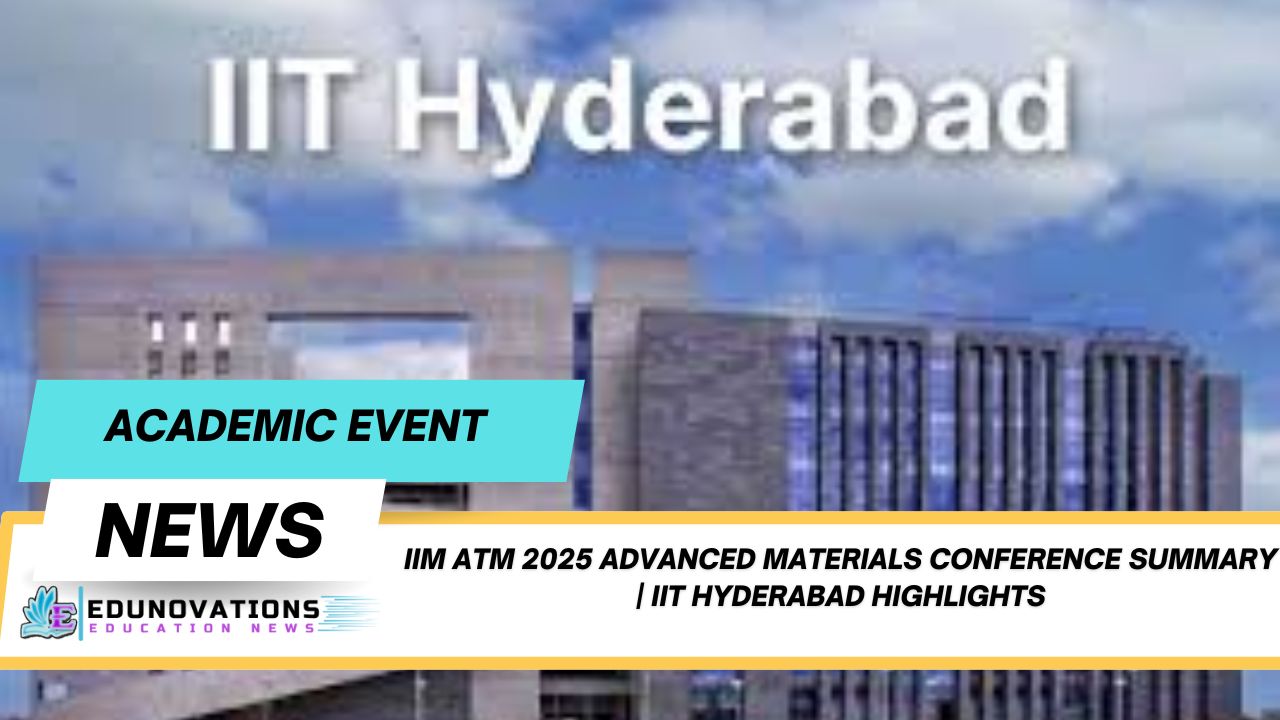
Explore the IIM ATM 2025 advanced materials conference summary at IIT Hyderabad, featuring global experts, cutting-edge research, and sustainable energy insights.
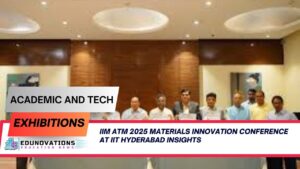
The IIM ATM 2025 advanced materials conference summary at IIT Hyderabad highlights a landmark gathering of global metallurgical leaders, researchers, and academicians. Hosted at the prestigious Indian Institute of Technology Hyderabad (IIT Hyderabad) from 4th to 6th December 2025, the 79th Annual Technical Meeting (ATM) of the Indian Institute of Metals (IIM) showcased cutting-edge developments in metallurgy, materials science, and critical minerals for energy transition.
With over 1,400 abstract submissions, 100+ metallography micrographs, and participants from countries including Australia, Japan, Germany, USA, South Africa, and France, the conference set a new record in participation. The inaugural day featured 24 plenary talks, a major technical exhibition, and addresses by eminent leaders from academia, industry, and government, reinforcing India’s position as a hub for advanced materials research.
Pioneering Discussions on Advanced Materials and Critical Minerals
The conference began with an international focus on advanced materials and critical minerals for energy transition, emphasizing sustainable technologies and responsible mineral processing. Prof. B. S. Murty, Director of IIT Hyderabad and President of IIM, highlighted India’s global imperative to decarbonize. He stressed the need for developing materials with superior functional properties and processing critical minerals efficiently.
Dr. Komal Kapoor, Senior Vice-President of IIM and Chairman & Managing Director of Nuclear Fuel Complex (NFC), emphasized the rising demand for materials to meet energy transition goals, strategic national requirements, and sustainable production. She advocated energy-efficient processes, reduced waste, and utilization of renewable materials to shape the future of metallurgical industries.
Dr. Tata Narasinga Rao, Vice Chancellor of Sri Venkateswara University (SVU), Tirupati, co-convenor of IIM ATM 2025, outlined the selection process for distinguished speakers covering all aspects of advanced materials and critical minerals.
International Collaboration and Knowledge Sharing
The IIM ATM 2025 advanced materials conference summary highlights international collaboration with experts from India, Australia, Japan, Germany, USA, South Africa, and France. Prof. K. Bhanu Sankara Rao, Convenor of IIM ATM 2025, emphasized the platform’s role in fostering knowledge exchange, collaboration, and innovation across the metallurgical and materials science communities.
The technical exhibition showcased advanced characterization equipment and manufacturing technologies from 45 institutes, inaugurated by Shri N. Balaram, Chairman and Managing Director of Singareni Collieries Company Limited (SCCL). The event offered hands-on exposure to next-generation manufacturing and metallography techniques, highlighting India’s technological self-reliance in materials science.
Highlights of Technical Sessions
The conference’s technical sessions covered:
- Alloys Design and Development: New strategies in alloy engineering for advanced applications.
- Advanced Energy Materials: Materials designed to improve energy storage and conversion.
- Processing and Applications of Novel Alloys: Innovations in fabrication and industrial applications.
- Quantum and Electronic Materials/Devices: Emerging materials for electronic and quantum technologies.
- Critical Mineral Resources and Processing: Sustainable extraction and refinement strategies.
- Recycling of Critical Metals: Methods to reduce waste and reuse valuable minerals.
24 plenary talks presented groundbreaking research and technologies, reinforcing India’s leadership in metallurgical innovation.
Significance for Energy Transition
Critical minerals play a pivotal role in global energy transition. The IIM ATM 2025 advanced materials conference summary underscores India’s commitment to sustainable energy solutions and technological self-reliance, aligning with the nation’s “Atmanirbar Bharat” initiative. Experts highlighted the life-cycle approach: from responsible sourcing and beneficiation to advanced materials processing and next-generation manufacturing technologies.
Expert Insights
- Shri N. Balaram (SCCL): Advocated for increased production and responsible management of critical minerals in India.
- Prof. B. S. Murty: Emphasized decarbonization and energy-efficient material processing.
- Dr. Komal Kapoor: Highlighted sustainable metallurgical practices to meet future energy demands.
- Prof. K. Bhanu Sankara Rao: Encouraged international collaboration to enhance knowledge and technological growth.
These insights highlight the role of academia-industry-government collaboration in shaping India’s metallurgy and energy sector.
IIT Hyderabad’s Achievements and Research Impact
IIT Hyderabad, established in 2008, has rapidly become a leading institute for research, technology development, and innovation. Key achievements include:
- Ranked 7th in NIRF Engineering 2025 and 6th in Innovation.
- 5150+ R&D projects worth over Rs. 1630 Cr, including Rs. 335 Cr in 2024–25.
- Over 12,750 publications and 244,000+ citations.
- 630+ patents filed, with 210+ patents in 2024, ranking highest per capita among IITs.
- 330+ startups generating 1,100+ jobs with Rs. 1,500+ Cr revenue.
The institute continues to advance research in materials science, sustainable metallurgy, and critical mineral technologies, making it an ideal host for the IIM ATM 2025 conference.
Educational and Professional Opportunities
Attendees benefited from workshops, seminars, and exhibitions that provided:
- Insights into advanced materials design and applications.
- Exposure to cutting-edge metallography techniques.
- Networking with global experts for collaborative research.
- Guidance on sustainable material processing and energy transition technologies.
For students, courses, and notes related to materials science, you can explore NCERT Courses, Current Affairs, Notes, MCQ’s, Videos, Syllabus, Free NCERT PDFs, and Mind Maps.
Toppers Use Mind Maps to score more than 95%
NCERT Class 11th Commerce Mind Maps
Add to cartOriginal price was: ₹999.00.₹199.00Current price is: ₹199.00.NCERT Class 12th Chemistry Mind Maps
Add to cartOriginal price was: ₹199.00.₹75.00Current price is: ₹75.00.NCERT Class 12th Commerce Mind Maps
Add to cartOriginal price was: ₹999.00.₹199.00Current price is: ₹199.00.NCERT Class 12th Science Mind Maps
Add to cartOriginal price was: ₹999.00.₹199.00Current price is: ₹199.00.NCERT Mind Maps For Class 10th
Add to cartOriginal price was: ₹999.00.₹199.00Current price is: ₹199.00.
Purchase Today
FAQs: IIM ATM 2025 Advanced Materials Conference Summary
- What is IIM ATM 2025 advanced materials conference summary about?
It provides key insights into the 79th Annual Technical Meeting of IIM, focusing on advanced materials and critical minerals for energy transition. - Where was IIM ATM 2025 held?
The conference was hosted at IIT Hyderabad from 4th to 6th December 2025. - Who were the key speakers at IIM ATM 2025?
Prof. B. S. Murty, Dr. Komal Kapoor, Prof. K. Bhanu Sankara Rao, and Shri N. Balaram were notable speakers. - What topics were covered in the technical sessions?
Topics included alloys design, advanced energy materials, quantum materials, critical mineral processing, and recycling. - How many abstracts and micrographs were submitted?
Over 1,400 abstracts and 100+ metallography micrographs were submitted for presentations and competitions. - Which countries participated in IIM ATM 2025?
Experts from India, Australia, Japan, Germany, USA, South Africa, and France attended the conference. - Why are critical minerals important for energy transition?
Critical minerals are essential for sustainable energy technologies, including storage, conversion, and renewable manufacturing. - How does IIM ATM 2025 promote research and collaboration?
It provides a platform for knowledge exchange, collaboration, and innovation among global experts. - What exhibitions were featured at the conference?
The exhibition showcased advanced characterization equipment and next-generation manufacturing technologies from 45 institutes. - How can students and researchers benefit from IIM ATM 2025?
Attendees gain knowledge of advanced materials, sustainable processing, metallography techniques, and networking opportunities.