The journey toward economic self-reliance and national development requires a synergy of robust institutions, visionary leadership, and adaptability.
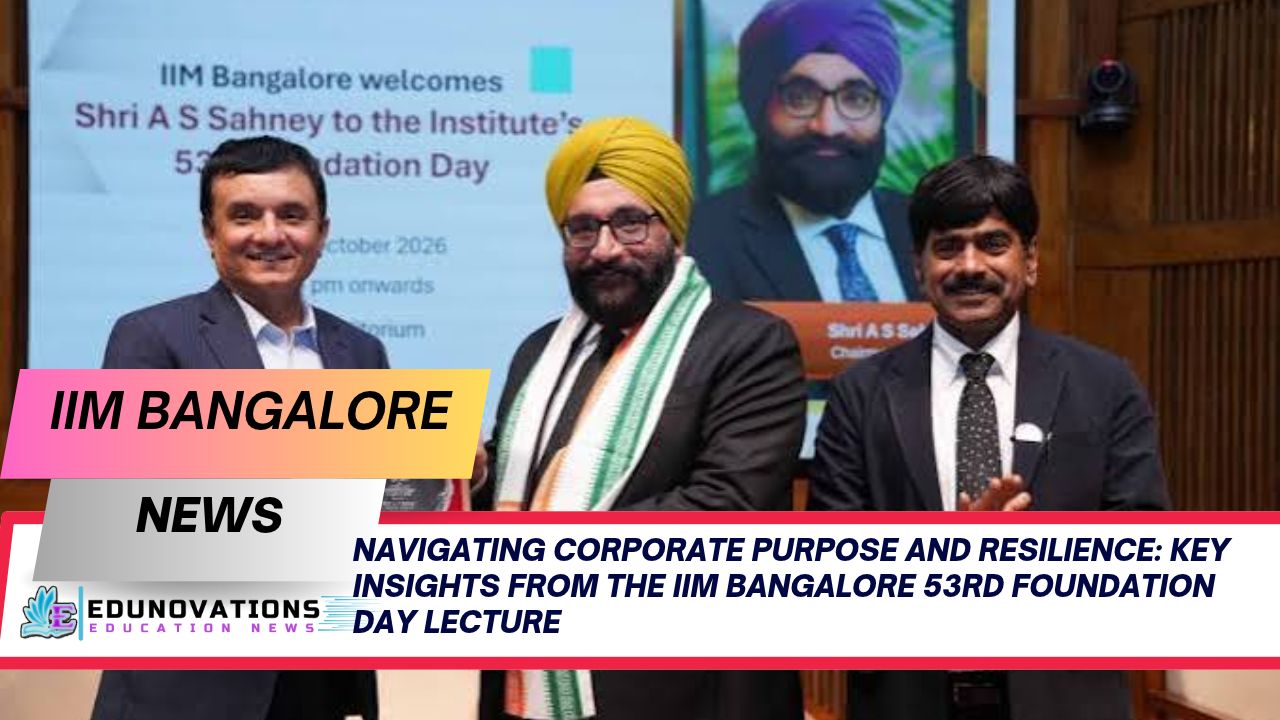
The journey toward economic self-reliance and national development requires a synergy of robust institutions, visionary leadership, and adaptability. During the landmark 53rd Foundation Day celebrations at the Indian Institute of Management Bangalore (IIMB), IndianOil Chairman Shri A.S. Sahney delivered an inspiring keynote address centered on iimb foundation day speech on corporate purpose. Addressing students, faculty members, alumni, and distinguished guests, the session explored how India’s energy transition intersects with corporate resilience, ethical leadership, and institutional evolution.
For aspiring managers, corporate professionals, and academic researchers seeking structured learning resources, platforms like NCERT Courses and Current Affairs offer invaluable foundational perspectives on national growth and economic policies.
The Core Tenet: Purpose Under Pressure
Opening his address, Shri A.S. Sahney emphasized that true organizational character is forged during crises rather than periods of stability. Highlighting the realities of modern corporate governance, he noted that foundational strength determines how institutions withstand external shocks.
“Purpose is not what you say in good times, but what you do in bad times.” — Shri A.S. Sahney, Chairman, IndianOil
This philosophy resonates deeply with modern business frameworks. Whether exploring strategic management modules through structured Notes or evaluating case studies via interactive MCQ’s, students learn that crisis management separates thriving enterprises from failing ones. During unprecedented global events such as the COVID-19 pandemic, IndianOil prioritized national service by mobilizing Liquid Medical Oxygen supply chains across India. This monumental effort proved that a corporation’s true worth extends far beyond balance sheets into societal impact and humanitarian dedication.
Strategic Leadership and India’s Evolving Energy Sector
As the nation marches toward the vision of Viksit Bharat, the energy sector remains a crucial pillar of macroeconomic stability. Delivering insights pertinent to indianoil chairman speech india energy journey insights, Shri Sahney outlined the complex geopolitics governing global energy markets.
To maintain continuous supply chains despite international disruptions, enterprises must balance short-term efficiency with long-term security. Modern supply chain theory often contrasts two opposing paradigms:
- Just-in-Time (JIT): Highly efficient for cost minimization during stable economic conditions.
- Just-in-Case (JIC): Essential for operational resilience and risk mitigation during geopolitical or domestic supply bottlenecks.
Organizations seeking comprehensive academic breakdowns of industrial supply chains can access detailed visual breakdowns and conceptual frameworks through NCERT Mind Maps. Furthermore, institutions looking to upgrade their digital infrastructure and web presence can partner with expert technology providers like Mart Ind Infotech for professional school website development services.
Fostering Competitive Advantage and Institutional Evolution
Sustaining market leadership in a volatile global economy requires continuous self-evaluation. Organizations must master how businesses adapt and sustain competitive advantage without falling victim to past triumphs. History demonstrates that historical advantages can quickly morph into operational blind spots if management fails to innovate proactively.
Key Pillars of Sustainable Growth:
- People-Centric Leadership: Cultivating internal talent through dedicated talent development initiatives like IndianOil’s Leaders of Tomorrow program.
- Empowerment and Trust: Granting teams the autonomy to experiment, challenge legacy practices, and learn constructively from calculated failures.
- Diversification and Innovation: Blending conventional energy operations with emerging green technologies to secure a sustainable future.
For visual learners and educators seeking multimedia reinforcement, exploring curated Videos and downloading comprehensive Free NCERT PDFs can significantly enrich academic research on industrial economics and organizational behavior.
Cultivating Management Talent for Tomorrow
Directing his advice toward young professionals and business students studying under updated academic frameworks, Shri Sahney highlighted the importance of leadership lessons for young managers from iimb event. Drawing inspiration from India’s historic women’s hockey triumph at the Asian Games—where half of the victorious squad comprised IndianOil employees—he underscored that teamwork, discipline, and relentless determination remain universal prerequisites for success.
Students tracking academic requirements and exam frameworks can verify complete curricular guidelines via the official Syllabus portal. Aspiring leaders must look beyond conventional career paths, embracing challenging assignments in infrastructure, manufacturing, and energy sectors where fundamental nation-building takes place.
Understanding the Deeper Meaning of Corporate Resilience
The discourse on corporate governance often returns to evaluating core organizational values. Exploring the conceptual depths of purpose is what you do in bad times quote meaning reveals that ethical leadership requires moral courage when information is incomplete and stakes are exceptionally high.
Institutions that prioritize transparency, employee trust, and national responsibility build enduring legacies that transcend quarterly financial targets. As IIM Bangalore continues to shape future industry leaders, events such as the 53rd Foundation Day serve as vital reminders that sustainable economic progress relies on the harmonious alignment of human capital, strategic foresight, and institutional integrity.
Toppers Use Mind Maps to score more than 95%
-
NCERT Class 11th Commerce Mind Maps
Add to cartOriginal price was: ₹999.00.₹199.00Current price is: ₹199.00. -
NCERT Class 12th Chemistry Mind Maps
Add to cartOriginal price was: ₹199.00.₹75.00Current price is: ₹75.00. -
NCERT Class 12th Commerce Mind Maps
Add to cartOriginal price was: ₹999.00.₹199.00Current price is: ₹199.00. -
NCERT Class 12th Science Mind Maps
Add to cartOriginal price was: ₹999.00.₹199.00Current price is: ₹199.00. -
NCERT Mind Maps For Class 10th
Add to cartOriginal price was: ₹999.00.₹199.00Current price is: ₹199.00.




Purchase Today
Frequently Asked Questions (FAQs)
1. What was the central theme of the 53rd Foundation Day at IIM Bangalore?
The central theme focused on India’s energy journey, corporate purpose, geopolitical resilience, and the critical role of institutions in nation-building.
2. Who delivered the keynote address at the IIMB Foundation Day event?
The keynote address was delivered by Shri A.S. Sahney, Chairman of IndianOil.
3. What significant quote did Shri A.S. Sahney emphasize regarding organizational purpose?
He stated, “Purpose is not what you say in good times, but what you do in bad times,” highlighting how crises test the true character of an institution.
4. How did IndianOil demonstrate its national commitment during the pandemic?
IndianOil played a pivotal role in supporting national healthcare infrastructure by facilitating the production, procurement, and transportation of life-saving Liquid Medical Oxygen.
5. What distinction did Shri Sahney draw between supply chain strategies?
He explained that while ‘Just-in-Time’ models optimize operational costs, ‘Just-in-Case’ strategies provide essential resilience against unexpected disruptions.
6. What is the objective of IndianOil’s ‘Leaders of Tomorrow’ program?
The program is designed to identify, groom, and prepare promising executives for senior leadership roles within the organization.
7. Which sports achievement did Shri Sahney cite to illustrate teamwork and perseverance?
He highlighted the remarkable victory of the Indian women’s hockey team at the Asian Games, noting that half of the squad members were IndianOil employees.
8. Why is institutional evolution critical for modern businesses?
History shows that no competitive advantage lasts forever; therefore, organizations must transform and innovate proactively before market circumstances force them to do so.
9. What sectors did the speaker recommend for young management graduates?
Beyond conventional paths like consulting and finance, he urged graduates to explore high-impact sectors such as energy, infrastructure, manufacturing, and agriculture.
10. How do academic platforms support aspiring management professionals?
Platforms offering structured study materials, current affairs updates, and conceptual mind maps help students bridge theoretical management frameworks with real-world industry applications.