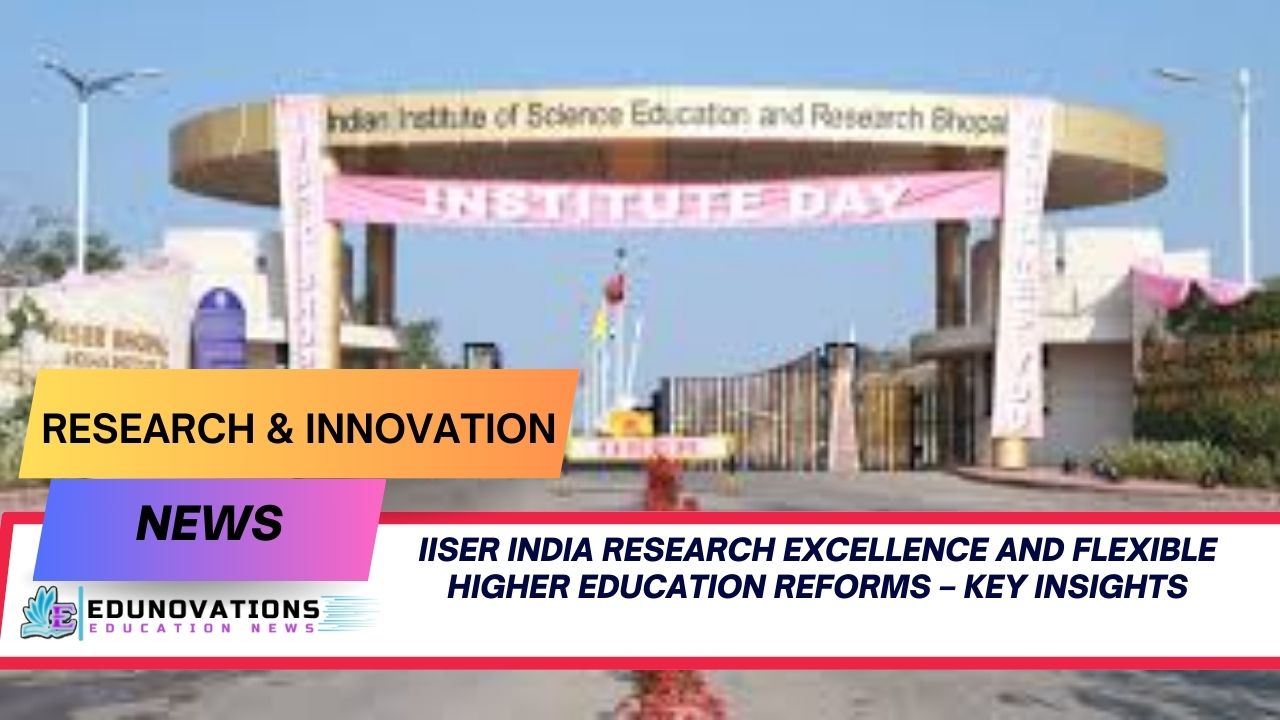
Discover how IISER India research excellence and flexible higher education reforms are shaping the future of science and innovation in India.
The Indian Institutes of Science Education and Research (IISERs) are once again at the forefront of shaping India’s scientific future. In a recent high-profile event, Union Education Minister Shri Dharmendra Pradhan chaired the 3rd Meeting of the Standing Committee of IISERs in New Delhi, highlighting transformative strategies aimed at fostering academic excellence, innovation, and industry-relevant research. This meeting was crucial in defining the roadmap for the nation’s premier science institutions, ensuring they remain globally competitive while addressing India’s societal and technological challenges.
The meeting brought together distinguished dignitaries, including Prof. Anil D. Sahasrabudhe, Chairman of NAAC, Prof. M. Jagadesh Kumar, former UGC Chairman, Ms. Debjani Ghosh, NITI Aayog Fellow, and several directors of IISERs. Together, they discussed initiatives that not only reinforce IISERs’ commitment to research but also enrich the student experience through flexible, learner-centric programs.
Transforming Higher Education through Academic Flexibility
A major highlight of the discussion was the implementation of flexible higher education reforms through the iFLEX (Flexible Learning Entry and eXit) framework. This initiative aims to provide students with multiple entry and exit options, including re-entry into programs and one-semester experiential internships. These internships are designed to integrate research, innovation, and industry exposure into the academic curriculum, giving students tangible experience while earning academic credits.
Such IISER India research excellence and flexible higher education reforms are expected to create a dynamic academic environment, allowing students to tailor their education to align with career goals, industry demands, and research interests. The approach also addresses the global trend of experiential learning and outcome-oriented education.
For students preparing for competitive exams or looking for study material, resources like NCERT Courses and Notes can complement the IISER curriculum and help build foundational knowledge in science.
PhD Reforms for Industry-Ready Research
Another critical discussion point was the overhaul of PhD programs at IISERs. Directors of the institutes presented detailed analyses highlighting gaps in current research programs, industry alignment, and global best practices. These PhD reforms aim to equip students with advanced research skills, critical thinking, and industry-ready expertise.
By aligning doctoral programs with national priority missions and global scientific challenges, IISERs are positioning themselves as centers of excellence in innovation and scientific research. This initiative strengthens India’s knowledge economy and ensures that graduates are capable of leading cutting-edge projects in academia and industry alike.
For additional learning support, students can explore NCERT Mind Maps and MCQs to enhance problem-solving skills relevant to IISER research areas.
Research Parks and Innovation Ecosystem
A significant outcome of the meeting was the emphasis on research parks and innovation incubators within each IISER campus. These parks will act as convergence points for academia, startups, and industrial R&D, fostering sustainable innovation. Each IISER has been assigned a specific domain of focus:
- IISER Pune: Advanced Computing & Quantum Technologies
- IISER Kolkata: Biotechnology
- IISER Mohali: Healthcare & MedTech
- IISER Bhopal: Advanced Materials
- IISER Thiruvananthapuram: Energy, Sustainability & Climate Change
- IISER Tirupati: Agriculture & Food Technologies
- IISER Berhampur: Rare-Earth & Critical Minerals
The initiative not only encourages interdisciplinary collaboration but also aligns with the national mission of Viksit Bharat and Make in India by leveraging homegrown technological expertise.
External stakeholders, including industry partners, will be integrated through Section 8 companies in each IISER, ensuring a structured collaboration framework. This strategic move is designed to attract funding, establish technology transfer protocols, and strengthen global academic networks.
Attracting Talented Students for a Stronger Scientific Future
Recognizing the importance of nurturing talent, IISERs are introducing special admission provisions for meritorious students. High-performing participants in International Olympiads may be offered quotas, and efforts are underway to consider a sports quota for undergraduate admissions. Additionally, measures are being taken to support students from Bharatiya Bhasha-medium backgrounds, helping them transition seamlessly into IISER programs.
This holistic approach demonstrates a commitment to inclusivity while ensuring that India’s brightest minds are nurtured in world-class research environments.
MoUs and Collaborative Ventures
The meeting also featured the signing of MoUs between IISERs and Biotech Consortium India Limited (BCIL), IIT Madras, and IISc Bengaluru. These agreements aim to:
- Strengthen academic and research collaborations
- Promote technology transfer and commercialization of research outputs
- Support joint innovation projects across multiple domains
Such collaborations are essential for creating a globally competitive scientific workforce and reinforcing IISERs’ status as hubs of research excellence.
Vision Statement: A Roadmap for 5 and 10 Years
The culmination of the Standing Committee meeting was the release of 5-year and 10-year Vision Statements for IISERs. These documents outline strategic goals, including:
- Expansion of flexible learning programs
- Strengthening of PhD reforms and research output
- Creation of sustainable innovation ecosystems
- Industry collaboration through Section 8 companies
- Student-focused initiatives for global competitiveness
This roadmap ensures that IISERs continue to nurture the next generation of scientists, innovators, and entrepreneurs capable of tackling national and international challenges.
Expert Insights on the Future of IISERs
Dr. Vineet Joshi, Secretary of the Department of Higher Education, emphasized, “IISERs are the backbone of India’s scientific leadership. The reforms and flexible learning initiatives will transform student potential into tangible innovations for societal impact.”
Educational analysts note that IISER India research excellence and flexible higher education reforms are set to make these institutions globally benchmarked centers of knowledge, blending theoretical rigor with practical, industry-aligned applications.
For students aiming to prepare for a future in IISERs, Current Affairs and Videos covering research trends and scientific advancements can provide additional insights and context.
Conclusion
The 3rd Standing Committee Meeting of IISERs chaired by Shri Dharmendra Pradhan reflects India’s commitment to nurturing scientific talent and promoting innovation-driven higher education. Through IISER India research excellence and flexible higher education reforms, students will experience personalized learning, hands-on research, and global-standard academic programs.
By integrating research parks, fostering industry partnerships, and attracting top-tier talent, IISERs are poised to redefine scientific education and research in India, aligning academic objectives with national development goals.
Toppers Use Mind Maps to score more than 95%
NCERT Class 11th Commerce Mind Maps
Add to cartOriginal price was: ₹999.00.₹199.00Current price is: ₹199.00.NCERT Class 12th Chemistry Mind Maps
Add to cartOriginal price was: ₹199.00.₹75.00Current price is: ₹75.00.NCERT Class 12th Commerce Mind Maps
Add to cartOriginal price was: ₹999.00.₹199.00Current price is: ₹199.00.NCERT Class 12th Science Mind Maps
Add to cartOriginal price was: ₹999.00.₹199.00Current price is: ₹199.00.NCERT Mind Maps For Class 10th
Add to cartOriginal price was: ₹999.00.₹199.00Current price is: ₹199.00.


Purchase Today
10 FAQs
- What are the key features of IISER India research excellence and flexible higher education reforms?
The reforms focus on flexible learning, experiential internships, PhD program enhancements, and industry collaboration. - How does iFLEX framework improve student learning at IISERs?
iFLEX offers multiple entry-exit options, re-entry, and credit-based experiential internships to enhance student experience. - Which domains are assigned to IISERs for research excellence?
IISER Pune (Advanced Computing), Kolkata (Biotech), Mohali (Healthcare & MedTech), Bhopal (Advanced Materials), Thiruvananthapuram (Energy & Sustainability), Tirupati (Agri & Food Tech), Berhampur (Rare-Earth Minerals). - What PhD reforms are being implemented in IISERs?
PhD programs are being realigned with industry requirements, global best practices, and national priority missions. - What is the purpose of Section 8 companies in IISERs?
To bridge research with industry, attract funding, and oversee technology transfer and commercialization. - How will IISERs attract meritorious students?
Through quotas for International Olympiad participants and support for students from diverse educational backgrounds. - Which collaborations were established during the meeting?
MoUs were signed with BCIL, IIT Madras, and IISc Bengaluru for research and innovation projects. - What are the main objectives of the 5-year and 10-year vision statements of IISERs?
Expansion of flexible programs, PhD reforms, industry partnerships, and innovation ecosystems. - How do IISERs contribute to India’s innovation ecosystem?
By establishing research parks, incubators, and centers of excellence to promote sustainable, applied research. - Where can students find additional study resources related to IISER programs?
Resources are available through NCERT Courses, Notes, Mind Maps, Videos, and Current Affairs portals.