
Discover the key takeaways from the IIT Delhi CSR Conclave 2026 sustainability technology insights and how green innovations are shaping India’s future.
The intersection of corporate social responsibility, academic rigor, and technological innovation reached a monumental milestone recently as premier institutions gathered in the national capital. The pursuit of a greener tomorrow requires more than just high-minded ideals; it demands actionable frameworks, scalable scientific models, and robust financial backing. Central to this massive dialogue is the IIT Delhi CSR Conclave 2026 sustainability technology insights, an event that has redefined how Indian academia and corporate giants collaborate to solve pressing environmental and developmental crises.
Bridging the Gap Between Industry and Academia
For decades, academic research institutions like the Indian Institute of Technology (IIT) Delhi have served as incubators for cutting-edge engineering marvels and scientific breakthroughs. However, translating a laboratory prototype into a mass-market, society-benefiting product often requires significant capital infusion, strategic management, and deep regulatory backing. This is where modern Corporate Social Responsibility (CSR) frameworks play a transformative role.
By leveraging structured funding channels, corporations can directly support transformative environmental technologies. Whether you are a student exploring academic pathways or a researcher looking for comprehensive study guides, understanding how institutional projects align with national goals is essential. For comprehensive preparation resources and structured learning, students often refer to standard academic channels. If you are preparing for competitive exams or looking to deepen your academic understanding, you can explore resources For NCERT Courses or download essential learning material through For Downloads of Free NCERT PDFs.
Highlights of the Conclave: Driving Environmental Goals
The recent conclave brought together over 245 top-tier leaders representing diverse sectors, including corporate foundations, public sector undertakings, government entities, non-governmental organizations, and academic powerhouses. The core objective was clear: to foster deep, strategic partnerships aimed at sustainable development.
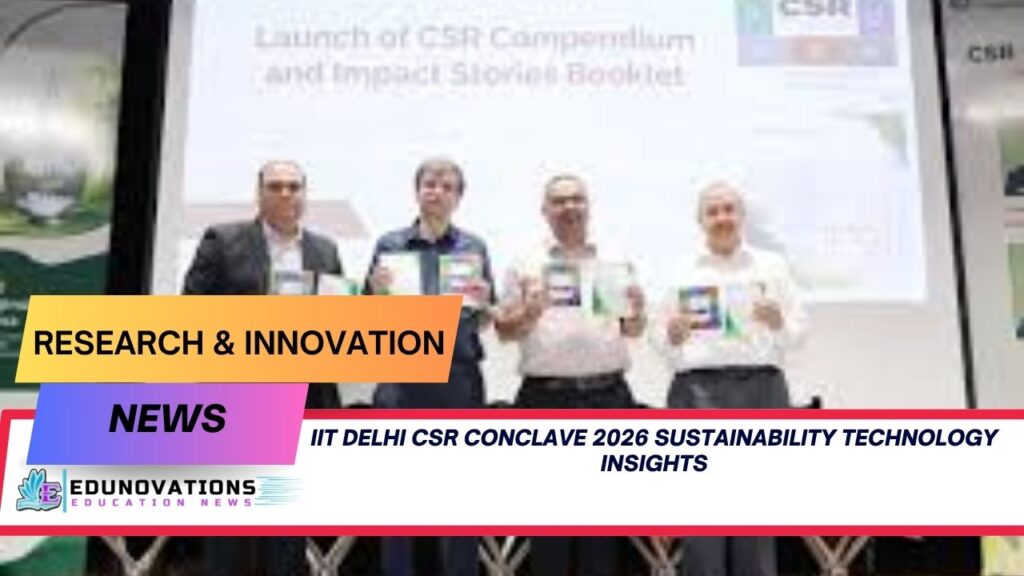
During the event, leadership unveiled two monumental initiatives from the Corporate Relations Office: the CSR Project Compendium and the CSR Impact Stories booklet. These documents highlight high-impact societal projects seeking immediate CSR partnership and showcase successful, past-funded initiatives that have already yielded measurable environmental benefits.
When tracking how national policies shift toward green accountability, staying updated with daily events is crucial. Aspirants and professionals tracking policy shifts can follow For Current Affairs to stay ahead. Furthermore, retaining core concepts is easier when utilizing specialized study aids such as visual organizers available through For NCERT Mind Maps.
The Role of Technology in Circular Bioeconomy and Clean Energy
A major attraction during the event’s technology demonstration was the focus on circular bioeconomy through algal and microbial biotechnology, transforming waste into valuable resources. From clean and green combustion devices to advanced waste management frameworks, researchers showcased prototypes designed to combat air pollution and climate change.
Experts have long argued that institutional infrastructure must evolve to handle contemporary challenges. Commenting on the synergy between corporate vision and institutional research, Professor Rangan Banerjee, Director of IIT Delhi, emphasized:
“India’s journey towards sustainable and inclusive development requires strong partnerships between academia, industry, government, and civil society. At IIT Delhi, we are committed to developing technologies that address national priorities, and through strategic CSR collaborations, we can accelerate the translation of research into scalable solutions that benefit society.”
Professor Banerjee, a renowned expert in energy studies and thermal engineering, has consistently advocated for policies that integrate technical research with grassroots implementation. His leadership has steered IIT Delhi toward becoming a leading institution of eminence, particularly in cross-disciplinary environmental engineering.
Expanding the Horizon: Digital and Infrastructural Integration
Modern research and development do not happen in isolation; they require robust digital infrastructure, administrative organization, and precise planning. Educational institutions and research bodies alike rely heavily on structured digital tools to manage institutional data, student engagement, and corporate relations. To implement advanced technological solutions across educational and research campuses, institutions frequently collaborate with specialized technical service providers. For organizations looking to upgrade their digital and administrative architecture, partnering with digital infrastructure leaders like Mart Ind Infotech offers reliable web and technical services.
For students and professionals engaging with technical subjects, testing conceptual clarity through regular practice is vital. You can test your analytical abilities using structured practice sets available at For MCQ’s, or review detailed study materials via For Notes.
Additionally, keeping track of institutional curricula and academic frameworks ensures alignment with national educational policies. You can examine updated academic blueprints and guidelines through For Syllabus. Visual learners and researchers can also gain deep insights by reviewing digital lectures and documentary archives found at For Videos.
Economic Impact and Statistics of Green Investments
Recent economic analyses indicate that corporate investments directed toward sustainable technology and environmental remediation yield high societal returns. According to recent industry reports, corporate funding channeled into academic R&D in India has grown by over 35% over the past five years. This surge is largely driven by mandated CSR spending rules under corporate law, which encourage companies to invest up to 2% of their average net profits into eligible social, environmental, and educational projects.
The collaborative initiatives highlighted at the conclave align directly with India’s broader national commitments, including achieving net-zero carbon emissions and scaling up clean energy adoption. By converting agricultural stubble into value-added products, deploying clean combustion devices, and optimizing water quality monitoring through real-time bioelectrochemical sensors, IIT Delhi researchers continue to demonstrate how academic excellence directly translates into commercial and societal utility.
Toppers Use Mind Maps to score more than 95%
-
NCERT Class 11th Commerce Mind Maps
Add to cartOriginal price was: ₹999.00.₹199.00Current price is: ₹199.00. -
NCERT Class 12th Chemistry Mind Maps
Add to cartOriginal price was: ₹199.00.₹75.00Current price is: ₹75.00. -
NCERT Class 12th Commerce Mind Maps
Add to cartOriginal price was: ₹999.00.₹199.00Current price is: ₹199.00. -
NCERT Class 12th Science Mind Maps
Add to cartOriginal price was: ₹999.00.₹199.00Current price is: ₹199.00. -
NCERT Mind Maps For Class 10th
Add to cartOriginal price was: ₹999.00.₹199.00Current price is: ₹199.00.



Purchase Today
Frequently Asked Questions
- What is the primary focus of the IIT Delhi CSR Conclave 2026 sustainability technology insights? The primary focus is showcasing cutting-edge environmental technologies developed by IIT Delhi researchers and fostering strategic corporate partnerships to fund these sustainable innovations.
- How can organizations leverage the IIT Delhi CSR Project Compendium? Organizations can use the compendium to identify high-impact research and societal projects that align with their CSR goals and mandate funding support.
- Who officially launched the CSR Compendium and Impact Stories booklet? The booklets were launched by Professor Rangan Banerjee, Director of IIT Delhi, alongside key deans and deputy directors of the institution.
- What are some of the key technology areas demonstrated during the conclave? Key technology demonstrations included circular bioeconomy solutions using algal and microbial biotechnology, clean combustion devices, and waste-to-resource innovations.
- Where can students find comprehensive learning resources and study materials online? Students can access curated educational resources, notes, and curriculum guides through specialized academic portals and digital educational platforms.
- Why are industry-academia partnerships crucial for green technology development? They bridge the gap between academic research capabilities and corporate financial backing, enabling laboratory prototypes to scale up into commercially viable, society-benefiting solutions.
- How do corporate investments in academic research impact national development? Corporate investments accelerate the translation of scientific innovations into practical solutions that address national priorities such as climate change, clean energy, and waste management.
- What role do digital infrastructure partners play in institutional research management? Digital service providers help institutions streamline their administrative workflows, web management, and data systems to foster smooth collaboration between corporations and academic bodies.
- Where can professionals track current policy shifts and updates regarding environmental technology? Professionals track daily developments, policy updates, and corporate trends through dedicated current affairs and policy analysis portals.
- How can a lower domain authority website benefit from covering institutional innovations? By targeting specific long-tail queries and providing detailed contextual analysis, smaller websites can capture niche search traffic and build organic authority quickly.