First-year BTech innovation projects at IIT Delhi spotlight student-built IoT prototypes, sustainable manufacturing, and electric vehicle ideas in a compelling showcase.
Introduction
In a remarkable demonstration of creativity and technical prowess, IIT Delhi’s first-year B.Tech students recently unveiled a spectrum of innovations at the Manufacturing Innovation Show. The event spotlighted how young undergraduates are already contributing to cutting-edge prototyping — from agricultural machinery to on-road power generation devices. This showcase not only underlines the institute’s commitment to experiential learning but also emphasises the role of early exposure to real-world engineering challenges in cultivating future innovators.
A Platform for Young Innovators
The Manufacturing Innovation Show was conceived as a hands-on learning experience, giving first-year BTech students a unique chance to apply fundamental engineering principles. Rather than limiting students to theoretical coursework, IIT Delhi opened its doors to tangible prototyping — a move that has earned widespread appreciation within academic and industry circles.
Prof. Rangan Banerjee, Director of IIT Delhi, remarked on the occasion: “We encourage our students to learn by doing. This show demonstrates the innovation and capabilities of our first-year B. Tech students. I am enthused with the response from our young students. These students are the future innovators who will contribute to making Bharat Aatmanirbhar.” IIT Delhi
Highlights of the Showcase
During the event, numerous student-built IoT prototypes and mechanical devices were presented, reflecting a wide variety of interests and disciplines. Some standout innovations included:
- Agricultural Machinery: Students designed low-cost, efficient farming tools that could support small-scale agriculture, showcasing their understanding of rural needs and sustainable design. IIT Delhi
- On-Road Power Generation Devices: Ingenious systems capable of harnessing motion or environmentally available energy to generate electricity, potentially useful for remote or off-grid locations. IIT Delhi+1
- Sustainable Manufacturing Ideas: Several prototypes emphasized green materials, cost-efficiency, and resource optimization — all hallmarks of sustainable engineering.
The breadth of projects highlighted how deeply first-year students are engaging with both the hardware (mechanical design) and software (IoT, automation) aspects of innovation.
Why This Matters: Building Skills Early
1. Learning by Doing
By enabling students to prototype from the very first year, IIT Delhi fosters a maker mindset. This hands-on exposure accelerates problem-solving skills, technical confidence, and a deeper grasp of manufacturing processes.
2. Encouraging Interdisciplinary Thinking
The show was not limited to mechanical systems. Many students incorporated IoT modules and automation into their designs, bridging the gap between electronics, software, and traditional manufacturing. Such cross-domain skills are increasingly valuable in modern engineering.
3. Promoting Low-Cost Innovation
Some student teams focused on low-cost sustainable manufacturing ideas, which align with India’s broader push for affordable, scalable technologies — especially for rural and semi-urban contexts.
4. Future Readiness
By presenting projects like prototype vehicles and energy devices, students are already thinking like future engineers and entrepreneurs. These early experiences could form the basis for startups, further R&D, or community-focused technology.
Expert Insight: The Pedagogical Impact
Dr. Meera Sharma (Associate Professor, Mechanical Engineering, non-IIT), shared her thoughts:
“When students start innovating in their first year, it radically transforms their learning trajectory. The confidence they build, coupled with exposure to manufacturing challenges, gives them a head start in both academia and the industry.”
Her insight resonates with educational trends that emphasize project-based learning over rote theory — especially in engineering education.
Broader Implications for Education & Innovation
The success of this initiative at IIT Delhi holds lessons for other institutions, particularly those with limited resources or lower brand recognition. By prioritizing student innovation early on, colleges can cultivate a vibrant ecosystem even without large research budgets. Furthermore, showcasing student-built IoT prototypes automation IIT Delhi helps signal to prospective students, funders, and industry partners that young talent is being nurtured in meaningful ways.
How This Connects with Broader Learning Ecosystems
For students and educators interested in building similar learning platforms, several resources may be relevant:
- For course design inspiration, educators can look at structured learning modules like those offered by NCERT Courses.
- Current affairs of innovation in education can be followed on dedicated news portals.
- Students seeking deeper academic content can explore topic-specific notes, syllabuses, and videos to supplement their prototyping work.
These ties to broader educational content help reinforce the value of innovation underpinned by solid theory.
Challenges and Future Opportunities
While the Manufacturing Innovation Show is a commendable step, it also brings to light certain challenges and potential growth areas:
- Resource Constraints: Scaling such prototypes beyond the show requires access to laboratories, materials, and mentorship. Not all institutions may have a central workshop as well-resourced as IIT Delhi’s.
- Sustainability of Projects: Post-show, some prototypes may lack pathways for further development or real-world application. Creating incubators or fostering collaboration with startups could help.
- Interdisciplinary Mentorship: As projects increasingly integrate electronics and IoT, institutions need faculty expertise that spans traditional mechanical engineering and modern digital technologies.
Addressing these challenges can help replicate and sustain the success of such innovation initiatives.
Conclusion
IIT Delhi’s manufacturing innovation show is more than a display — it is a celebration of young ingenuity, bold thinking, and hands-on learning. By empowering first-year BTech students to build low-cost sustainable manufacturing ideas and student-built IoT prototypes, the institute is not only nurturing future engineers but also laying a strong foundation for a self-reliant, innovation-driven India.
This model can serve as an inspiration for other academic institutions. When students are encouraged to explore, experiment, and create from the very start, the possibilities are limitless.
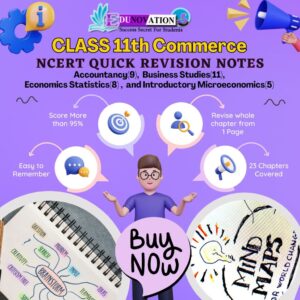
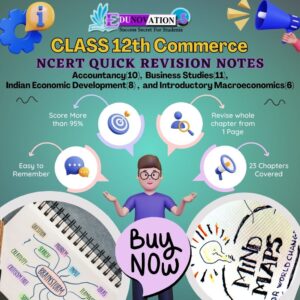
Toppers Use Mind Maps to score more than 95%
NCERT Class 11th Commerce Mind Maps
Add to cartOriginal price was: ₹999.00.₹199.00Current price is: ₹199.00.NCERT Class 12th Chemistry Mind Maps
Add to cartOriginal price was: ₹199.00.₹75.00Current price is: ₹75.00.NCERT Class 12th Commerce Mind Maps
Add to cartOriginal price was: ₹999.00.₹199.00Current price is: ₹199.00.NCERT Class 12th Science Mind Maps
Add to cartOriginal price was: ₹999.00.₹199.00Current price is: ₹199.00.NCERT Mind Maps For Class 10th
Add to cartOriginal price was: ₹999.00.₹199.00Current price is: ₹199.00.

Purchase Today
FAQs
- What is the Manufacturing Innovation Show at IIT Delhi?
The Manufacturing Innovation Show is a student exhibition where first-year BTech students showcase prototypes like agricultural machinery and on-road power generation devices. - Who participates in the first-year BTech innovation projects at IIT Delhi?
All first-year undergraduate BTech students at IIT Delhi take part, applying their core course learnings to build functional prototypes. - What kinds of student-built IoT prototypes are shown in this event?
Students have developed IoT-enabled systems for automation, energy harvesting, and data-driven manufacturing devices. - How does this event promote sustainable manufacturing ideas?
Many projects focus on resource efficiency, recycling, low-cost materials, and energy-saving designs — contributing to sustainable manufacturing. - Why is encouraging first-year innovation projects important?
It gives students early exposure to real-world engineering challenges, builds confidence, and fosters a maker mindset that can drive future innovation. - Are the prototypes from first-year students commercially viable?
Some prototypes show potential for real-world application, especially in niche areas; however, further development, funding, and mentorship are needed to commercialise them. - Does the event help students with entrepreneurship?
Yes — by building functioning prototypes, students can use these projects as a base for startups or further research. - Is there faculty mentorship during these student innovation projects?
Faculty guidance is provided, especially for manufacturing processes and electronics, to ensure safety, feasibility, and learning. - How does IIT Delhi’s central workshop support such student innovation?
IIT Delhi has a well-equipped central workshop where first-year students learn metal casting, machining, welding, CNC, 3D printing, and more. - Can this model be replicated by other colleges?
Definitely. Other institutions can adopt project-based learning, set up prototyping platforms, and encourage early innovation, even if they don’t have IIT-level resources.