The transition toward a sustainable, resource-conscious economy received a monumental boost as academic rigor met real-world deployment.
The transition toward a sustainable, resource-conscious economy received a monumental boost as academic rigor met real-world deployment. In an inspiring display of technological ingenuity, the Startup Incubation and Innovation Centre (SIIC) at the Indian Institute of Technology Kanpur (IITK), bolstered by the Pernod Ricard India Foundation (PRIF), celebrated a watershed moment for green entrepreneurship. The IIT Kanpur Advaya Cohort 1 startups list represents more than just a roster of emerging enterprises; it stands as a testament to India’s growing capacity to engineer scalable, market-ready solutions combating plastic pollution and environmental degradation.
As environmental challenges escalate globally, the convergence of institutional incubation and grassroots innovation offers a vital roadmap. The recent product showcase event at IIT Kanpur brought this vision into sharp focus, demonstrating how targeted acceleration can transform laboratory prototypes into commercially viable deployment models. For students, researchers, and aspiring entrepreneurs examining these developments through educational resources such as NCERT Courses, understanding circular systems is becoming an essential component of modern scientific literacy.
Fostering a Greener Future: The Genesis of a Sustainable Revolution
Environmental sustainability is no longer merely an academic talking point; it is an urgent economic imperative. India generates millions of tons of plastic waste annually, a significant portion of which evades formal collection and recycling channels. Addressing this monumental crisis requires innovative frameworks that bridge the gap between ideation and commercial execution. This realization served as the catalyst for establishing a specialized incubation vehicle designed specifically to nurture enterprises tackling the plastic waste value chain.
The initiative provides comprehensive support systems, including financial grants, rigorous mentorship, strategic business structuring, and access to an expansive industry ecosystem. Such structured frameworks are critical for overcoming the notorious “valley of death” that often swallows early-stage deep-tech startups before they can scale. Observers tracking national economic transitions and policy shifts can explore related analytical perspectives via Current Affairs, where modern developmental milestones are systematically documented.
Celebrating Excellence: Key Highlights from the Product Showcase
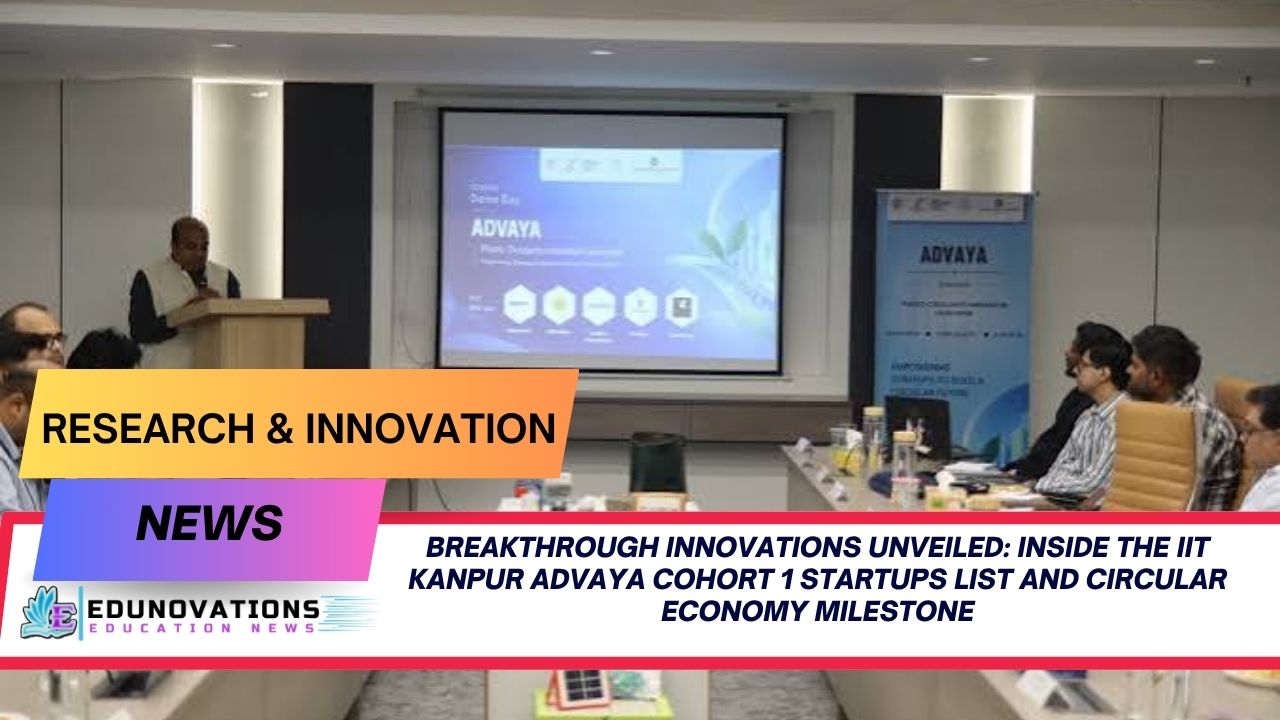
The centerpiece of the recent milestone was the Product Showcase, where five pioneering ventures from the inaugural batch presented their market-ready technologies. The event drew distinguished dignitaries, including Kanpur Municipal Commissioner Shri Arpit Upadhyay, who graced the occasion as the Chief Guest. Touring the exhibition booths, Shri Upadhyay interacted directly with founders, closely examining technologies designed to revolutionize plastic waste management, recycling methodologies, and sustainable material alternatives.
The presence of senior administrative and industrial leaders—such as Shri V. K. Verma and Shri Amit Bajpai from MSME-DFO Kanpur, alongside Mr. Akash Singh representing the Pernod Ricard India Foundation—underscored the multi-stakeholder collaboration required to drive meaningful environmental reform. Institutional leadership was powerfully represented by Prof. Deepu Philip, Professor-in-Charge at SIIC, and Dr. Ashutosh Agnihotri, CEO of SIIC, both of whom have been instrumental in steering these technological ventures toward commercial viability.
For educators and students looking to integrate practical environmental science case studies into their curriculum, structured study materials available via Notes provide excellent foundational references on waste valorization and polymer chemistry.
Spotlight on Pioneer Ventures: Transforming Waste into Value
The five enterprises comprising the IIT Kanpur Advaya Cohort 1 startups list have each carved out distinct niches across the circularity value chain, proving that commercial viability and environmental stewardship can coexist seamlessly:
- Rau Ecostone (Paving+): Specializing in advanced construction materials, this venture repurposes plastic and industrial waste to manufacture durable paving blocks, significantly reducing the carbon footprint of civil infrastructure projects.
- Zuviron: Focusing on interior aesthetics and structural applications, Zuviron engineers high-quality building and décor panels crafted entirely from recycled materials, offering sustainable alternatives to traditional wood and synthetic panels.
- SwachhAI Technologies: Bringing artificial intelligence to municipal sanitation, this team demonstrated smart bins equipped with automated waste segregation capabilities, streamlining the initial and most critical phase of the recycling pipeline.
- Fruvetech: Tackling post-harvest agricultural loss, Fruvetech developed innovative recycled-plastic cold-storage solutions designed to extend produce shelf life while utilizing upcycled polymers.
- Mushloop: Operating at the intersection of biotechnology and packaging, Mushloop produces mycelium-based compostable packaging and natural pigments, offering a truly biodegradable alternative to single-use plastics.
The depth of engineering displayed by these ventures illustrates why structured technological education—supplemented by targeted MCQ’s for self-assessment—remains paramount for cultivating the next generation of scientific innovators.
Expert Insights and Economic Imperatives of Circularity
Industry experts and environmental economists have long advocated for closed-loop industrial models. According to recent sustainability reports by global environmental agencies, transitioning toward a circular economy could unlock trillions of dollars in economic value worldwide while drastically slashing greenhouse gas emissions.
Dr. Ashutosh Agnihotri, reflecting on the milestone achieved by the cohort, emphasized the importance of real-world deployment:
“Our objective has always transcended academic prototyping. We are empowering these ventures to transition seamlessly from controlled laboratory environments into dynamic commercial markets where their solutions can generate measurable, large-scale environmental impact.”
Similarly, institutional stakeholders highlight that scaling such ventures requires robust digital infrastructure, streamlined supply chains, and modern operational platforms. Enterprises and educational institutions seeking to upgrade their technological capabilities or establish robust digital presences often collaborate with specialized digital partners such as Mart Ind Infotech for comprehensive IT solutions.
For a deeper visual and auditory exploration of how these technologies function in practice, learners can access curated multimedia content through Videos, which break down complex industrial engineering concepts into accessible formats.
Looking Ahead: Expanding Horizons with Cohort 2
Even as the inaugural cohort celebrates its successful transition toward market readiness, the institutional machinery continues to expand. The recent event marked the formal induction of eight new enterprises into the subsequent phase. The incoming batch features a diverse array of innovators, including:
- Reearthtech Innovations Private Limited
- NECRV Biopolymerix Private Limited
- Minus Degre Manufacturers Private Limited
- EarthImpact Innovations Private Limited
- Bharga Biotech
- Re-Energy Solutions Private Limited
- Plasticure Private Limited
- EpixO Robotics Private Limited
- Athar Packaging Solutions Private Limited
These incoming ventures have commenced an intensive residential training program at the institute, featuring expert-led modules on advanced business modeling, municipal waste management logistics, enterprise scaling, and investment readiness. Students preparing for competitive examinations can review the broader academic frameworks governing these technical disciplines via structured Syllabus portals.
Furthermore, educators and environmental researchers seeking offline reading materials can access comprehensive study guides and reference compilations by downloading Free NCERT PDFs, while visual learners can map out complex ecological interdependencies using specialized NCERT Mind Maps.
Toppers Use Mind Maps to score more than 95%
-
NCERT Class 11th Commerce Mind Maps
Add to cartOriginal price was: ₹999.00.₹199.00Current price is: ₹199.00. -
NCERT Class 12th Chemistry Mind Maps
Add to cartOriginal price was: ₹199.00.₹75.00Current price is: ₹75.00. -
NCERT Class 12th Commerce Mind Maps
Add to cartOriginal price was: ₹999.00.₹199.00Current price is: ₹199.00. -
NCERT Class 12th Science Mind Maps
Add to cartOriginal price was: ₹999.00.₹199.00Current price is: ₹199.00. -
NCERT Mind Maps For Class 10th
Add to cartOriginal price was: ₹999.00.₹199.00Current price is: ₹199.00.


Purchase Today
Frequently Asked Questions
1. What is the IIT Kanpur Advaya Cohort 1 startups list? The IIT Kanpur Advaya Cohort 1 startups list comprises five pioneering technology-driven ventures—Rau Ecostone, Zuviron, SwachhAI Technologies, Fruvetech, and Mushloop—supported by SIIC IITK and the Pernod Ricard India Foundation to advance plastic circularity.
2. What is the primary objective of the Advaya programme? The initiative aims to accelerate India’s transition toward a circular plastic economy by providing startups across the waste value chain with financial grants, structured incubation, mentorship, and real-world deployment pathways.
3. Which organization hosted the Cohort 1 Product Showcase? The showcase was organized by the Startup Incubation and Innovation Centre (SIIC) at IIT Kanpur, with backing from the Pernod Ricard India Foundation.
4. Who was the Chief Guest at the recent product showcase event? Shri Arpit Upadhyay, Municipal Commissioner of the Kanpur Municipal Corporation, graced the occasion as the Chief Guest and felicitated the participating startup founders.
5. What innovative solution did Rau Ecostone present at the showcase? Rau Ecostone showcased construction and paving materials developed by upcycling plastic and industrial waste.
6. How does SwachhAI Technologies contribute to waste management? SwachhAI Technologies demonstrated AI-enabled smart bins designed for automated waste segregation, improving the efficiency of the recycling pipeline.
7. Which startups were announced for Cohort 2? Cohort 2 includes eight new ventures, such as Reearthtech Innovations, NECRV Biopolymerix, Minus Degre Manufacturers, EarthImpact Innovations, Bharga Biotech, Re-Energy Solutions, Plasticure, EpixO Robotics, and Athar Packaging Solutions.
8. What support do startups receive during the residential training at IIT Kanpur? Startups receive expert-led sessions focusing on business model refinement, waste management logistics, market scaling strategies, and investment readiness.
9. What role does the Pernod Ricard India Foundation play in this initiative? The foundation provides critical support and funding as part of its commitment to fostering resource circularity and sustainable enterprise development in India.
10. Where can students and researchers find educational resources on circular economies? Interested learners can access comprehensive educational materials, current affairs, and academic notes through structured learning portals like Edunovations