Explore the impact of water and gender equality in sustainable agriculture India. Discover women’s role, groundwater strategies, and innovative water management practices.
Introduction
On 22nd March 2026, the Water Technology Centre at ICAR-Indian Agricultural Research Institute (IARI), New Delhi, commemorated World Water Day with a technical programme focusing on the central theme, “Water and Gender”. The event highlighted the pivotal role of women in managing water resources and promoting sustainable agriculture practices.
This year’s programme emphasized impact of water and gender equality in sustainable agriculture India, underscoring the intersection of environmental stewardship, technology, and social empowerment. Experts, farmers, and policymakers gathered to share knowledge, field experiences, and innovative strategies to ensure water security while advancing gender inclusivity in farming communities.
Keynote and Expert Insights
Dr. S.K. Ambast, Hon’ble Member (NRM), ASRB, served as the Chief Guest, highlighting the critical contributions of women across Indian society. He discussed the challenges faced by women in fetching fresh water, especially in saline zones and areas facing chronic water scarcity. He stressed the urgent need to develop best management practices for sustainable water resource management with active participation of women farmers.
Dr. Ambast also addressed the ongoing over-exploitation of groundwater and outlined effective measures for strengthening groundwater recharge, emphasizing community-driven solutions.
Rapid Brainstorming Session: Empowering Farm Women
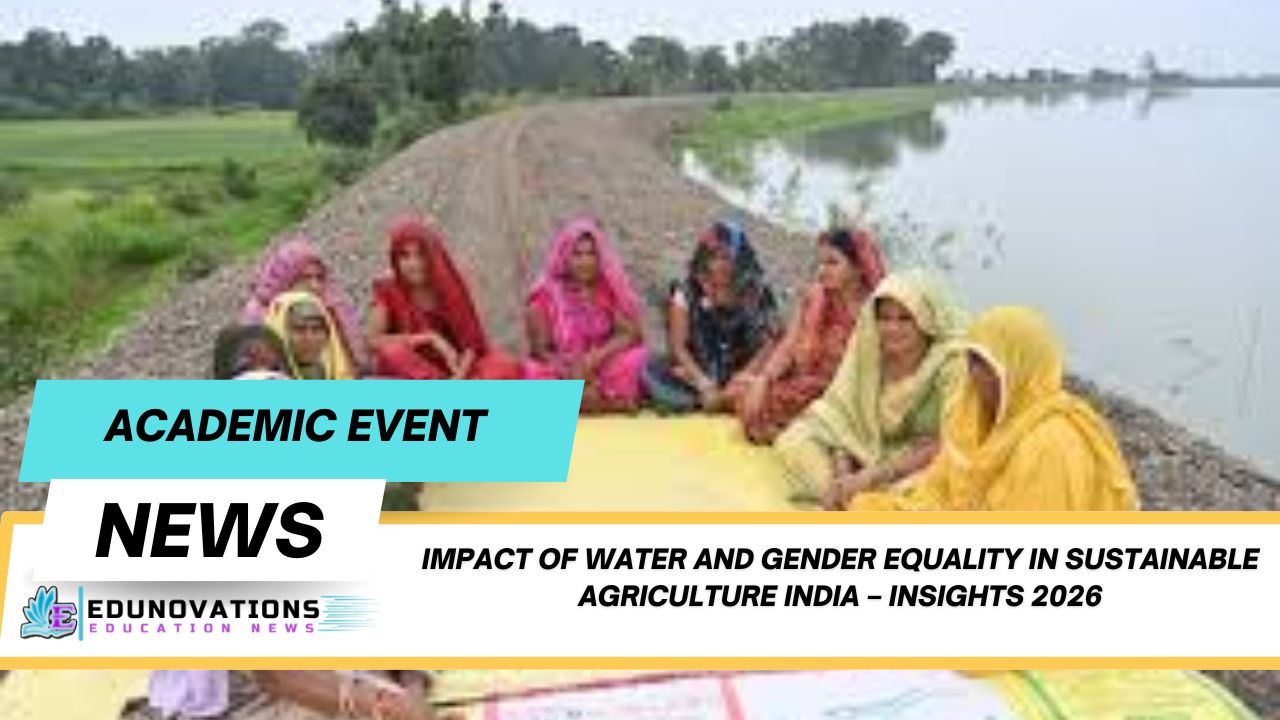
A Rapid Brainstorming Session titled “Empowering Farm Women through Water Literacy and Governance” was organized in collaboration with Dhan Foundation, Madurai. Seventeen farmers, including eight women, from Tamil Nadu, Karnataka, Telangana, Bihar, Odisha, and Delhi shared their experiences in efficient utilization of water resources, particularly water tanks and local irrigation systems.
The session aimed to amplify farm women water literacy and governance practices for rural regions, equipping women with technical knowledge and leadership opportunities to enhance water management and decision-making in agriculture.
Traditional Water Practices and Modern Innovations
Dr. Anupama Singh, Joint Director (Education) and Dean, emphasized the importance of traditional water harvesting solutions empowering Indian farm women, noting that age-old practices are critical for sustaining local water systems.
Dr. C. Viswanathan, Joint Director (Research), elaborated on the benefits of automated irrigation for reducing farm women drudgery India, highlighting how technological innovations minimize manual labor while ensuring efficient water distribution.
Dr. R.N. Padaria, Joint Director (Extension), spoke about the significant role of women in maintaining ‘Jal Sahelis’ in the Bundelkhand region. He proposed strategies to further strengthen women’s decision-making in water governance.
Event Overview
The programme was initiated by Dr. P.S. Brahmanand, Project Director, WTC, IARI, who welcomed participants and framed the discussions around the significance of women farmers in sustainable water management. During the event, several publications by WTC, ICAR-IARI were released by Dr. Ambast.
Approximately 140 participants, including farmers, professors, HoDs, scientists, and students from institutions like Delhi University, NRAA, ICAR-NBSSLUP, ICAR-NIAP, ICAR-IARI, and Dhan Foundation, attended this event, reflecting the collaborative spirit of water and gender initiatives in Indian agriculture.
Water and Gender Equality in Agriculture: Challenges and Opportunities
Women in rural India often bear the brunt of water scarcity. Studies show that female farmers spend significant hours daily on water collection, limiting time for income-generating activities and education. Promoting groundwater recharge and sustainable water management for women farmers is vital to reduce this burden.
The integration of gender-sensitive water policies, community-driven water governance, and technology adoption ensures:
- Enhanced crop productivity through precise water use.
- Reduced physical strain for women in water-intensive farming tasks.
- Greater leadership and decision-making roles for women in rural communities.
- Preservation of local ecosystems through traditional water harvesting solutions.
Expert Commentary and Insights
Dr. Vandana Singh, water management expert at the National Institute of Agricultural Extension, remarked:
“Empowering women farmers with knowledge and tools for sustainable water use can transform India’s rural agricultural landscape. When women lead in water governance, the entire community benefits.”
Such expert insights highlight the intersection of gender, technology, and sustainable farming, reinforcing the need for policies that prioritize women’s empowerment alongside environmental stewardship.
Linking Sustainable Agriculture with Education and Resources
To facilitate water literacy and governance:
- NCERT Courses provide structured learning modules.
- Current Affairs updates connect policy and community action.
- Notes and MCQ materials enhance practical understanding.
- Videos illustrate field-based water management techniques.
- Syllabus and Free NCERT PDFs support academic preparation.
- NCERT Mind Maps simplify complex water management concepts.
For external collaboration, tools like Mart India Infotech provide school-level water management resources and digital outreach for broader community engagement.
Statistical Insights
Recent studies indicate:
- Women constitute nearly 50% of agricultural laborers in India, yet they often lack access to formal water governance.
- Areas with active women participation in water projects show 20-30% higher water-use efficiency.
- Automated irrigation and rainwater harvesting have reduced manual water collection time for rural women by up to 40% in pilot projects.
These statistics reinforce the need for targeted programmes emphasizing impact of water and gender equality in sustainable agriculture India.
Recommendations for Policy and Community Action
- Encourage community-led groundwater recharge projects with female leadership.
- Integrate traditional water harvesting techniques with modern irrigation systems.
- Provide training and awareness programmes for farm women water literacy and governance practices.
- Promote technology adoption to reduce manual labor for women farmers.
- Document and scale successful women-led water governance initiatives.
Conclusion
The World Water Day 2026 programme at IARI highlighted the transformative potential of women in water management. By combining traditional knowledge, modern technology, and inclusive governance, India can achieve sustainable agriculture and equitable water access.
Empowering women farmers through education, technological tools, and policy support ensures long-term sustainability and social equality in rural water management systems.
Toppers Use Mind Maps to score more than 95%
NCERT Class 11th Commerce Mind Maps
Add to cartOriginal price was: ₹999.00.₹199.00Current price is: ₹199.00.NCERT Class 12th Chemistry Mind Maps
Add to cartOriginal price was: ₹199.00.₹75.00Current price is: ₹75.00.NCERT Class 12th Commerce Mind Maps
Add to cartOriginal price was: ₹999.00.₹199.00Current price is: ₹199.00.NCERT Class 12th Science Mind Maps
Add to cartOriginal price was: ₹999.00.₹199.00Current price is: ₹199.00.NCERT Mind Maps For Class 10th
Add to cartOriginal price was: ₹999.00.₹199.00Current price is: ₹199.00.





Purchase Today
FAQs
- What is the impact of water and gender equality in sustainable agriculture India?
- How can farm women water literacy and governance practices for rural regions be improved?
- What are effective strategies for groundwater recharge and sustainable water management for women farmers?
- How do traditional water harvesting solutions empower Indian farm women?
- What role does automated irrigation benefit for reducing farm women drudgery India play in modern agriculture?
- Which Indian states participated in World Water Day 2026 IARI event?
- How do women contribute to the maintenance of Jal Sahelis in Bundelkhand?
- What are the key publications released by WTC, ICAR-IARI during World Water Day 2026?
- How can schools and rural communities access water management resources online?
- What are the benefits of integrating traditional water practices with modern technology for women farmers?