Discover the latest updates on industry-centric PhD curriculum reform in Indian technical institutes, aligning education with national priorities and emerging technologies.
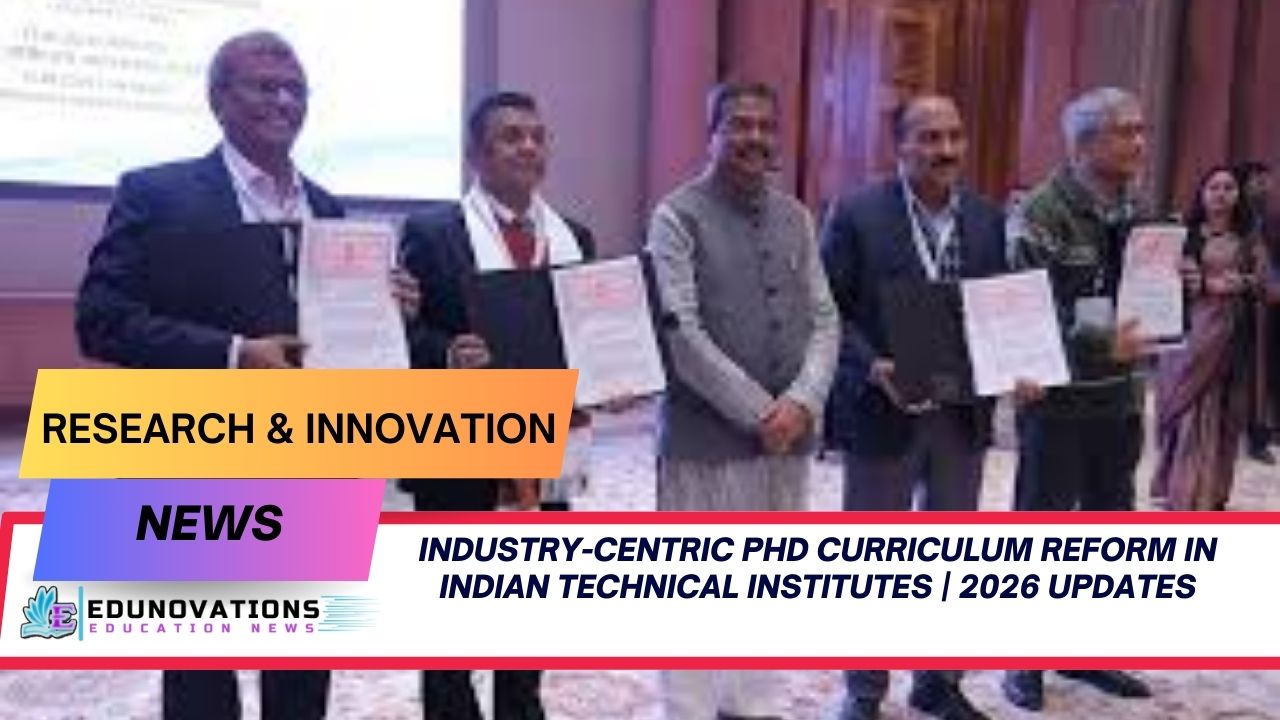
The Ministry of Education, Government of India, recently emphasized the importance of industry-centric PhD curriculum reform in Indian technical institutes during the 13th Meeting of the Council of National Institutes of Technology, Science Education and Research (NITSER), held on 13 January 2026 at Bharat Mandapam, New Delhi. Chaired by Union Education Minister Shri Dharmendra Pradhan, the meeting brought together leading academics, policymakers, and industry stakeholders to discuss the future of technical education in India.
Aligning Curriculum with National Priorities
Shri Dharmendra Pradhan highlighted that the curriculum at premier technological institutes must align with national priorities. Emphasizing the need for industry-centric PhD programs, the Minister urged institutions to create industry-led curriculum committees. These committees will focus on emerging job roles, Industry 4.0 technologies, green hydrogen, artificial intelligence, cybersecurity, quantum computing, and semiconductor innovations, all critical for driving India’s vision of Aatmanirbhar Bharat and Viksit Bharat by 2047.
To strengthen technical education, the Ministry proposed specialized PG and M.Tech programs tailored to specific industry requirements. Such programs will equip students with practical skills and foster a transition from traditional academic learning to hands-on, industry-relevant expertise.
Comprehensive PhD Reforms
The council approved a 360-degree PhD reform plan, aiming to make research more industry-oriented and application-driven. Key reforms include:
- Industry-led and industry-funded PhD programs to promote collaboration between academia and the private sector.
- Product-based PhDs, ensuring research outcomes directly contribute to technological advancements.
- Faculty-based PhD assignments linked to performance, encouraging accountability and mentorship quality.
These initiatives are expected to enhance the innovation quotient of Indian institutes, turning them into vibrant hubs for applied research and future-ready workforce development.
Strengthening Innovation and Entrepreneurship
Innovation and entrepreneurship were central themes of the meeting. Shri Pradhan emphasized the need to transform students from job seekers into job creators. Measures discussed included:
- Establishment of incubation centers in all 13 NITs lacking them.
- Creation of Research Parks in at least 10 NITs to support cutting-edge projects.
- Organizing a start-up pitching conclave in July 2026, connecting students with investors and industry stakeholders.
These steps aim to build a robust ecosystem that fosters startups, applied research, and entrepreneurial initiatives within technical institutes.
Accreditation and Quality Assurance
The council stressed the importance of bringing NITs, IIESTs, and IISERs under a national accreditation framework. Participation in NAAC reviews will ensure that institutes maintain high academic and research standards, thereby strengthening India’s global position in science and technology education.
The Minister stated that robust accreditation mechanisms not only enhance institutional credibility but also improve student outcomes and industry readiness.
Promoting Inclusivity Through Multilingual AI Learning
A unique highlight of the meeting was the focus on inclusive education. Institutes were urged to adopt artificial intelligence for multilingual learning, ensuring students from diverse linguistic backgrounds can access quality education. The initiative will enable learners to engage with complex STEM subjects in their preferred languages, promoting equitable learning opportunities across India.
Expert Insights and Future Roadmap
Experts attending the meeting underscored the transformative potential of these reforms. Prof. Anil D. Sahasrabudhe, Chairman of NAAC, highlighted that industry-integrated research would significantly increase employability and global competitiveness of Indian graduates. Ms. Debjani Ghosh, Distinguished Fellow at NITI Aayog, added that the synergy between innovation hubs and industry will accelerate India’s technological self-reliance.
The roadmap includes:
- Completion of external peer reviews within one year.
- Strengthening collaborations with startups and industry for practical research exposure.
- Encouraging institutes to actively contribute to India’s strategic initiatives like green energy, AI, and quantum technologies.
These measures will ensure Indian technical institutes are at the forefront of global research and innovation.
Key Takeaways for Students and Researchers
- Industry-Centric PhD Curriculum Reform in Indian Technical Institutes ensures research aligns with real-world applications.
- Specialized PG/M.Tech programs cater to industry demands, increasing employability.
- Innovation and entrepreneurship ecosystems are being expanded through incubation centers and research parks.
- Accreditation ensures quality standards and global recognition.
- Multilingual AI learning promotes inclusivity and broadens access to technical education.
For students interested in related learning resources, the Ministry encourages accessing NCERT courses, current affairs updates, and MCQs to stay informed on emerging educational trends.
Toppers Use Mind Maps to score more than 95%
NCERT Class 11th Commerce Mind Maps
Add to cartOriginal price was: ₹999.00.₹199.00Current price is: ₹199.00.NCERT Class 12th Chemistry Mind Maps
Add to cartOriginal price was: ₹199.00.₹75.00Current price is: ₹75.00.NCERT Class 12th Commerce Mind Maps
Add to cartOriginal price was: ₹999.00.₹199.00Current price is: ₹199.00.NCERT Class 12th Science Mind Maps
Add to cartOriginal price was: ₹999.00.₹199.00Current price is: ₹199.00.NCERT Mind Maps For Class 10th
Add to cartOriginal price was: ₹999.00.₹199.00Current price is: ₹199.00.



Purchase Today
FAQs on Industry-Centric PhD Curriculum Reform
1. What is industry-centric PhD curriculum reform in Indian technical institutes?
It is a reform where PhD programs are designed in collaboration with industry, focusing on practical applications and emerging technologies.
2. Which institutions are part of this reform initiative?
The reform includes NITs, IISERs, and IIESTs across India.
3. What are the main objectives of the PhD reforms?
Objectives include industry collaboration, product-based research, and linking faculty performance with research guidance.
4. How will these reforms promote innovation?
By establishing incubation centers, research parks, and start-up pitching events, students are encouraged to develop entrepreneurial solutions.
5. What role does AI play in this curriculum reform?
AI will be used to facilitate multilingual learning, promoting inclusivity for students from diverse linguistic backgrounds.
6. How will accreditation improve technical education quality?
National accreditation ensures institutes meet high academic standards, boosting global recognition and student employability.
7. What industries are targeted in the curriculum alignment?
Industries include AI, green hydrogen, cybersecurity, quantum technologies, semiconductors, and advanced manufacturing.
8. Are there any specialized PG programs under this reform?
Yes, specialized M.Tech and PG programs are designed to meet specific industry needs.
9. How will startups benefit from these reforms?
Startups incubated within institutes will get access to research parks, mentorship, and funding opportunities.
10. When will the start-up pitching conclave take place?
The conclave is scheduled for July 2026, connecting students with investors and industry stakeholders.