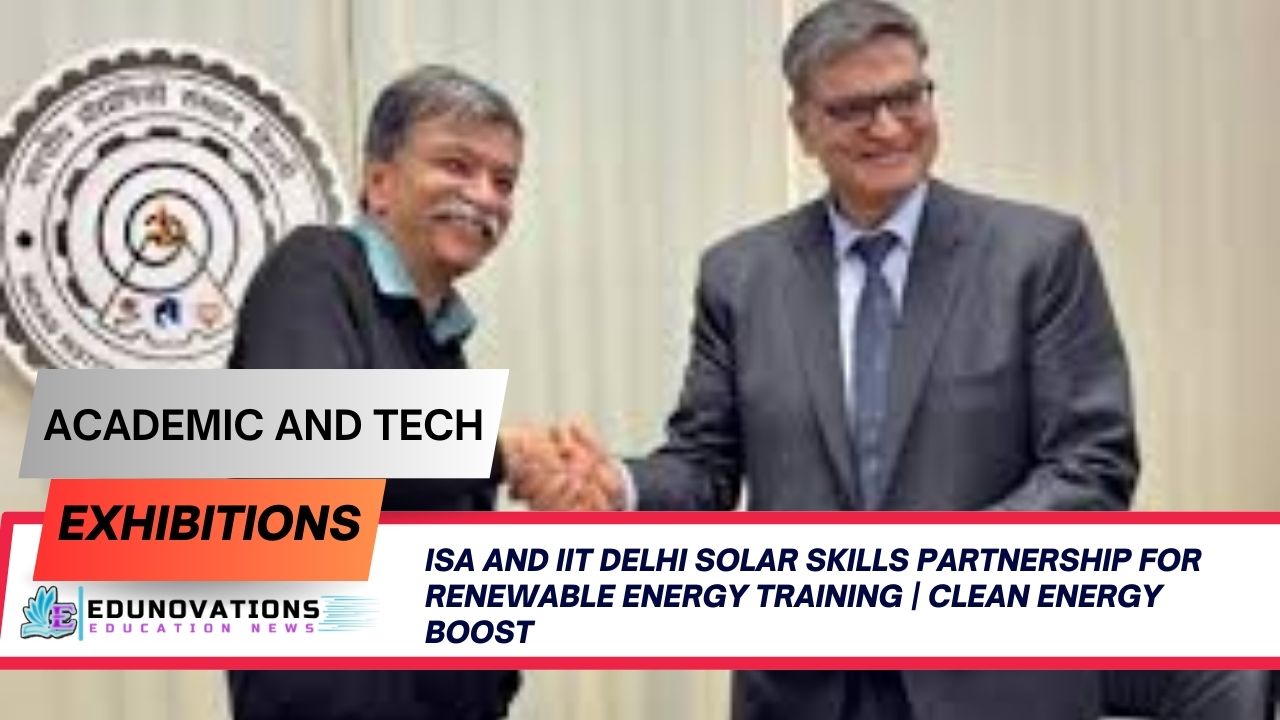
The ISA and IIT Delhi solar skills partnership for renewable energy training marks a major step in global clean energy workforce development, strengthening capacity building and solar technology education worldwide.
A New Era in Global Solar Cooperation
In a significant development for the global renewable energy sector, the ISA and IIT Delhi solar skills partnership for renewable energy training has emerged as a transformative initiative aimed at strengthening clean energy capacity across nations. The collaboration between the International Solar Alliance (ISA) and the Indian Institute of Technology Delhi represents a strategic step toward advancing solar technology education, research, and workforce development.
As countries accelerate efforts to meet climate targets under the Paris Agreement, the need for skilled professionals in renewable energy has become urgent. This landmark collaboration focuses on structured training programs, research support, and institutional capacity building to create a globally competent solar workforce.
Strengthening Renewable Energy Capacity Worldwide
The ISA and IIT Delhi solar skills partnership for renewable energy training aligns with India’s broader clean energy ambitions and its leadership in solar diplomacy. India has consistently promoted solar power as a cornerstone of sustainable development, and this initiative reinforces that commitment.
Under the partnership framework:
- Specialized training modules will be designed for engineers and policymakers.
- Solar technology research will receive academic backing.
- Capacity building programs will support ISA member countries.
- Knowledge-sharing workshops will connect global stakeholders.
According to renewable energy experts, skill development remains one of the most critical gaps in global solar expansion. While solar installations are increasing rapidly, there is a shortage of certified professionals trained in installation, maintenance, grid integration, and project management.
The ISA and IIT Delhi solar skills partnership for renewable energy training directly addresses this challenge by combining ISA’s international outreach with IIT Delhi’s academic excellence.
Why Solar Skill Development Matters Now
Global renewable energy deployment has grown significantly over the past decade. According to international energy reports, solar power has become one of the cheapest sources of electricity in many regions. However, scaling infrastructure requires trained manpower.
Key challenges include:
- Lack of standardized training programs.
- Limited research collaboration between nations.
- Gaps in technical knowledge for emerging solar technologies.
- Insufficient workforce development frameworks.
The international solar alliance renewable energy capacity building programme aims to bridge these gaps by creating a standardized learning ecosystem for ISA member countries.
By leveraging IIT Delhi’s technical expertise, the ISA and IIT Delhi solar skills partnership for renewable energy training seeks to build a sustainable model for education and innovation in the solar domain.
Academic Excellence Meets Global Solar Diplomacy
The International Solar Alliance was established to promote solar energy deployment globally, particularly in countries with abundant sunlight. With over 100 member and signatory countries, ISA plays a crucial role in mobilizing finance, technology, and capacity-building resources.
On the other hand, Indian Institute of Technology Delhi is recognized as one of India’s premier engineering institutions, known for cutting-edge research and innovation.
The solar energy academic collaboration and training initiative press release highlighted that this partnership will include:
- Faculty exchange programs.
- Joint certification courses.
- Solar research fellowships.
- International training workshops.
Through the ISA and IIT Delhi solar skills partnership for renewable energy training, the two institutions aim to build a global talent pool equipped to design, implement, and manage large-scale solar projects.
Focus Areas of the Collaboration
1. Curriculum Development
Experts from IIT Delhi will develop specialized modules covering:
- Solar photovoltaic systems
- Energy storage integration
- Smart grids
- Solar project finance
- Policy and regulatory frameworks
These modules will contribute significantly to the international solar alliance renewable energy capacity building programme.
2. Training and Certification
Structured certification courses will be offered to professionals from ISA member countries. These programs will combine theoretical learning with practical demonstrations.
3. Research and Innovation
The IIT Delhi renewable energy education and solar technology development framework will support advanced research in:
- High-efficiency solar cells
- Grid stability mechanisms
- Hybrid renewable systems
- Energy analytics
This will further strengthen the MoU solar skills training global clean energy workforce development goals.
Expert Insights on the Initiative
Energy policy analysts believe that capacity building is the backbone of clean energy transition. Without skilled professionals, infrastructure investments may fail to deliver optimal results.
A senior renewable energy scholar from IIT Delhi stated that the ISA and IIT Delhi solar skills partnership for renewable energy training is not merely an academic arrangement but a global mission to empower developing nations.
Industry experts have also highlighted that such partnerships can reduce dependency on fossil fuels, create green jobs, and enhance energy security.
Impact on ISA Member Countries
The international solar alliance renewable energy capacity building programme will particularly benefit developing and least-developed countries that face resource and training constraints.
Expected outcomes include:
- Improved solar project implementation rates
- Increased employment opportunities in renewable energy
- Stronger policy frameworks
- Enhanced technology transfer
Through the ISA and IIT Delhi solar skills partnership for renewable energy training, ISA member nations can access structured educational resources and technical expertise.
India’s Leadership in Solar Innovation
India has emerged as a global solar leader over the past decade. The country’s ambitious renewable targets and international outreach initiatives demonstrate its commitment to sustainability.
The IIT Delhi renewable energy education and solar technology development initiative complements national missions aimed at expanding renewable capacity.
By collaborating with ISA, India reinforces its role as a key driver of global solar transformation.
How This Initiative Supports Students and Professionals
For students preparing for competitive exams or pursuing renewable energy careers, understanding such global collaborations is crucial.
Learners can enhance their preparation using:
- NCERT Courses: https://courses.edunovations.com/
- Current Affairs Updates: https://edunovations.com/currentaffairs/
- Comprehensive Notes: https://edunovations.com/notes/
- Practice MCQs: https://edunovations.com/mcq/
- Educational Videos: https://edunovations.com/videos/
- Updated Syllabus Guides: https://edunovations.com/syllabus/
- Free NCERT PDFs & Mind Maps: https://courses.edunovations.com/shop-2/
For educational institutions seeking digital infrastructure, schools can connect with Mart Ind Infotech for website solutions and technological support.
Broader Economic and Environmental Benefits
The MoU solar skills training global clean energy workforce development approach delivers multi-dimensional benefits:
- Reduced carbon emissions
- Increased green employment
- Strengthened energy independence
- Innovation-driven economic growth
Studies suggest that renewable energy sectors create more jobs per megawatt compared to fossil fuels. The ISA and IIT Delhi solar skills partnership for renewable energy training could significantly contribute to workforce expansion in the solar domain.
Global Collaboration as the Way Forward
Climate change remains one of the most pressing challenges of our time. International collaboration is essential to accelerate renewable energy adoption.
The solar energy academic collaboration and training initiative press release emphasized that this partnership aims to serve as a model for similar collaborations worldwide.
By integrating academic excellence with international cooperation, the ISA and IIT Delhi solar skills partnership for renewable energy training demonstrates how institutions can collectively address global sustainability challenges.
Toppers Use Mind Maps to score more than 95%
NCERT Class 11th Commerce Mind Maps
Add to cartOriginal price was: ₹999.00.₹199.00Current price is: ₹199.00.NCERT Class 12th Chemistry Mind Maps
Add to cartOriginal price was: ₹199.00.₹75.00Current price is: ₹75.00.NCERT Class 12th Commerce Mind Maps
Add to cartOriginal price was: ₹999.00.₹199.00Current price is: ₹199.00.NCERT Class 12th Science Mind Maps
Add to cartOriginal price was: ₹999.00.₹199.00Current price is: ₹199.00.NCERT Mind Maps For Class 10th
Add to cartOriginal price was: ₹999.00.₹199.00Current price is: ₹199.00.



Purchase Today
Frequently Asked Questions (FAQs)
1. What is the ISA and IIT Delhi solar skills partnership for renewable energy training?
It is a collaboration between ISA and IIT Delhi aimed at strengthening solar workforce training and global capacity building.
2. How does the international solar alliance renewable energy capacity building programme benefit member countries?
It provides structured training, certification, and research support to enhance solar project implementation.
3. What areas are covered under IIT Delhi renewable energy education and solar technology development?
Key areas include solar PV systems, smart grids, storage solutions, and policy research.
4. Why is the MoU solar skills training global clean energy workforce development important?
It ensures skilled manpower for expanding renewable energy infrastructure globally.
5. Who can participate in the solar energy academic collaboration and training initiative press release programs?
Professionals, engineers, policymakers, and researchers from ISA member nations.
6. How does the ISA and IIT Delhi solar skills partnership for renewable energy training impact students?
It opens opportunities for research, certification, and international exposure.
7. What role does ISA play in renewable energy capacity building?
ISA mobilizes global cooperation, funding, and knowledge-sharing initiatives.
8. How will this partnership improve solar technology adoption?
By training professionals and standardizing educational frameworks.
9. Is the collaboration limited to India?
No, it benefits ISA member countries globally.
10. How does this initiative align with global climate goals?
It strengthens renewable energy deployment and workforce readiness to meet sustainability targets.