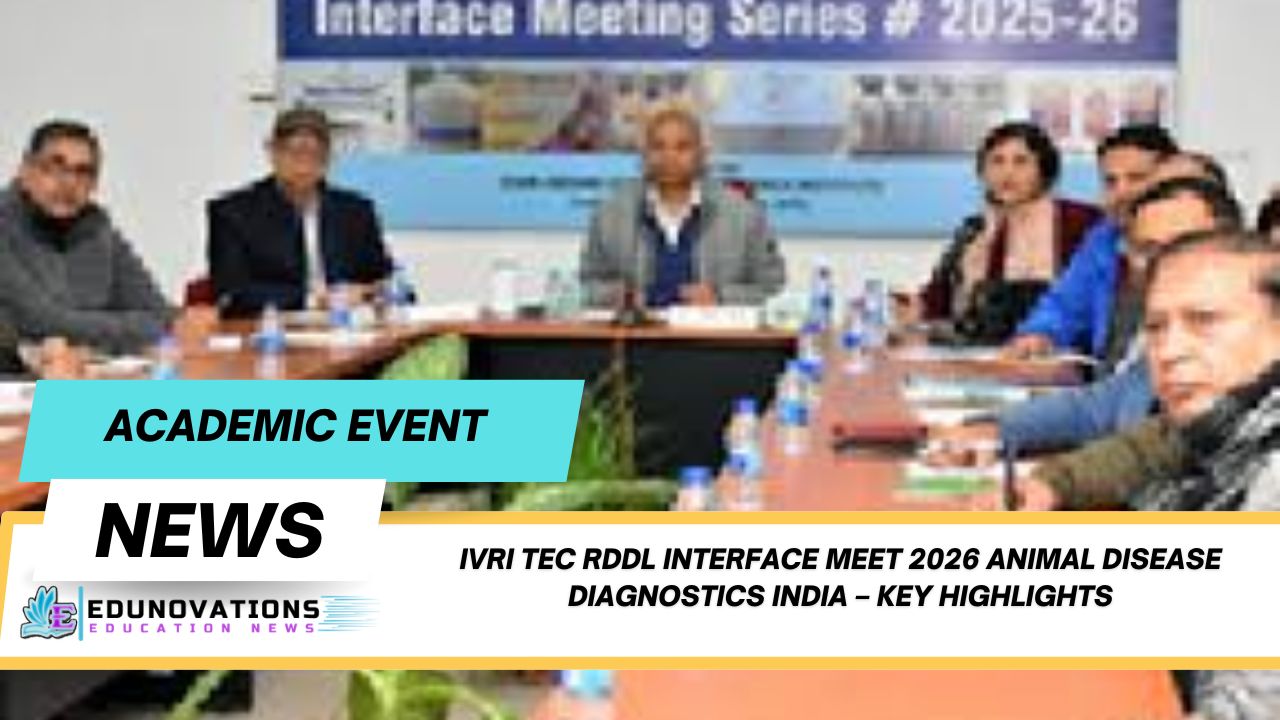
The ivri tec rddl interface meet 2026 animal disease diagnostics india brought together veterinary scientists and diagnostic laboratories to strengthen disease surveillance, collaboration, and testing capacity across India.
Introduction
India’s veterinary health infrastructure has witnessed a significant boost following the ivri tec rddl interface meet 2026 animal disease diagnostics india, a major technical interaction involving leading veterinary diagnostic laboratories and researchers. The meeting was organized by the Indian Veterinary Research Institute, one of the country’s premier institutions for veterinary science and animal disease research.
The interface meeting served as a strategic platform for strengthening diagnostic networks, sharing research findings, and enhancing coordination among regional and state disease diagnostic laboratories. Experts emphasized the importance of collaboration to ensure early detection and rapid response to emerging livestock diseases.
India’s livestock sector contributes significantly to the agricultural economy, and improved diagnostic capabilities are crucial to safeguard animal health, food security, and rural livelihoods. Through the ivri tec rddl interface meet 2026 animal disease diagnostics india, stakeholders discussed ways to modernize laboratory infrastructure, adopt advanced testing technologies, and enhance disease surveillance mechanisms.
Background of the Meeting
The veterinary diagnostic ecosystem in India includes several specialized laboratories tasked with monitoring and diagnosing diseases affecting livestock. These laboratories work in coordination with national research institutions to identify outbreaks and recommend control strategies.
The ICAR-Indian Veterinary Research Institute, located in Bareilly, organized the interaction meeting to strengthen linkages between the Technical Expert Committee (TEC) and the network of Regional Disease Diagnostic Laboratories (RDDL) and other associated laboratories.
The purpose of the meeting was to ensure better coordination among laboratories involved in animal disease testing and surveillance. By sharing experiences and technical knowledge, experts sought to improve laboratory efficiency and diagnostic accuracy.
The discussions during the ivri tec rddl interface meet 2026 animal disease diagnostics india revolved around:
- Strengthening laboratory collaboration
- Improving disease detection technologies
- Enhancing sample testing protocols
- Developing a nationwide disease surveillance network
These efforts aim to protect India’s livestock sector from emerging threats and ensure timely response to disease outbreaks.
Importance of Veterinary Disease Diagnostics
Veterinary disease diagnostics plays a critical role in maintaining animal health and preventing economic losses in the livestock sector. Accurate and timely detection of diseases allows authorities to take preventive measures before outbreaks spread widely.
During the ivri tec rddl interface meet 2026 animal disease diagnostics india, experts highlighted that improved diagnostics can help:
- Identify disease outbreaks at an early stage
- Support effective vaccination programs
- Reduce mortality in livestock populations
- Protect farmers’ income and food supply chains
The growing demand for animal products such as milk, meat, and eggs makes it essential to maintain strong veterinary health systems. Diagnostic laboratories form the backbone of this system by providing scientific evidence for disease control measures.
Role of Diagnostic Laboratories in India
India’s veterinary disease surveillance system depends on a network of specialized laboratories operating at national, regional, and state levels. These laboratories analyze biological samples from animals to detect pathogens responsible for diseases.
Key laboratories involved in the network include:
- Regional Disease Diagnostic Laboratories
- State Disease Diagnostic Laboratories
- Referral Disease Investigation Laboratories
- National research laboratories
The ivri tec rddl interface meet 2026 animal disease diagnostics india emphasized improving coordination among these institutions so that information can be shared quickly and efficiently.
Experts explained that modern diagnostic laboratories now use advanced tools such as molecular diagnostics, PCR testing, and genomic sequencing. These technologies help identify pathogens with greater precision and speed.
Strengthening the Veterinary Diagnostic Network
One of the central objectives of the meeting was to reinforce the veterinary diagnostic network across India. A coordinated laboratory network enables faster response to animal disease outbreaks.
Participants discussed several strategies to strengthen the system:
- Establishing standardized diagnostic protocols
- Sharing laboratory resources and expertise
- Improving data exchange between laboratories
- Conducting regular training programs for veterinarians
The ivri tec rddl interface meet 2026 animal disease diagnostics india provided an opportunity for laboratory scientists to discuss challenges and explore solutions collectively.
Such interactions also help ensure that laboratories across the country follow uniform testing procedures, which improves the reliability of diagnostic results.
Collaboration Among Veterinary Institutions
Collaboration was a key theme during the meeting. Experts stressed that veterinary institutions must work together to tackle emerging animal diseases effectively.
The Indian Council of Agricultural Research has been supporting initiatives aimed at strengthening veterinary research and diagnostics. Through collaborative projects and training programs, ICAR aims to enhance the capabilities of diagnostic laboratories across the country.
The ivri tec rddl interface meet 2026 animal disease diagnostics india highlighted the importance of knowledge exchange between researchers, laboratory technicians, and field veterinarians.
Such collaborations help:
- Improve diagnostic accuracy
- Develop innovative testing methods
- Strengthen disease surveillance systems
Expert Insights on Animal Disease Surveillance
Experts attending the meeting emphasized that India must adopt a proactive approach to disease surveillance in livestock. With globalization and climate change influencing disease patterns, new challenges are emerging for the veterinary sector.
Veterinary scientists noted that improved diagnostics can significantly enhance surveillance capabilities. Rapid testing methods allow authorities to detect outbreaks early and implement control measures promptly.
The ivri tec rddl interface meet 2026 animal disease diagnostics india also stressed the need for digital data-sharing platforms that connect laboratories across regions. This would enable faster reporting of disease outbreaks and help authorities coordinate response strategies more effectively.
Impact on India’s Livestock Economy
India has one of the largest livestock populations in the world, and animal husbandry contributes substantially to rural livelihoods. Any disruption caused by disease outbreaks can lead to major economic losses for farmers.
Strengthening veterinary diagnostics can help protect the livestock sector by ensuring timely disease detection and control. The discussions during the ivri tec rddl interface meet 2026 animal disease diagnostics india focused on improving preparedness against diseases that could affect cattle, poultry, goats, and other livestock.
According to agricultural experts, better diagnostic systems can:
- Reduce livestock mortality
- Increase productivity in dairy and poultry sectors
- Support sustainable livestock farming
These benefits ultimately contribute to food security and rural economic development.
Training and Capacity Building Initiatives
Another key highlight of the meeting was the emphasis on training and capacity building for veterinary professionals. Diagnostic technologies continue to evolve, and laboratory personnel must stay updated with the latest methods.
Participants recommended organizing regular workshops and training sessions for veterinarians and laboratory technicians.
Such initiatives can help:
- Enhance technical skills
- Improve laboratory efficiency
- Encourage adoption of new diagnostic technologies
The ivri tec rddl interface meet 2026 animal disease diagnostics india underscored the importance of continuous learning to maintain high standards in veterinary diagnostics.
Digital Transformation in Veterinary Diagnostics
Modern veterinary diagnostics increasingly rely on digital tools for data analysis and disease monitoring. Digital platforms enable laboratories to share information quickly and coordinate responses during outbreaks.
Experts suggested that integrating digital technologies into diagnostic systems could significantly improve surveillance capabilities.
Key digital innovations discussed include:
- Real-time disease reporting systems
- Laboratory data management software
- Artificial intelligence tools for disease prediction
These technologies can complement traditional diagnostic methods and make veterinary health systems more efficient.
Importance of Public Awareness
Public awareness about animal diseases is also essential for effective disease control. Farmers and livestock owners play a crucial role in reporting unusual symptoms in animals.
During the ivri tec rddl interface meet 2026 animal disease diagnostics india, experts emphasized educating farmers about the importance of timely disease reporting and vaccination.
Awareness campaigns can help farmers understand:
- Symptoms of common livestock diseases
- Importance of veterinary consultation
- Benefits of vaccination and preventive care
Such initiatives strengthen the overall disease surveillance system.
Role of Education and Knowledge Resources
Access to quality educational resources is essential for veterinary students and professionals. Learning platforms and digital content can support continuous education in veterinary science.
Students preparing for competitive exams can explore NCERT courses and educational resources available at
- https://courses.edunovations.com/
- https://edunovations.com/currentaffairs/
- https://edunovations.com/notes/
- https://edunovations.com/mcq/
- https://edunovations.com/videos/
- https://edunovations.com/syllabus/
- https://courses.edunovations.com/shop-2/
These platforms provide structured learning materials, current affairs updates, and study tools useful for exam preparation.
Educational institutions and research organizations can also strengthen their digital presence through professional website solutions offered by Mart Ind Infotech, which supports educational organizations with modern web infrastructure.
Future Outlook for Veterinary Diagnostics in India
The discussions held during the ivri tec rddl interface meet 2026 animal disease diagnostics india demonstrate India’s commitment to strengthening veterinary disease surveillance.
As scientific research advances, diagnostic laboratories are expected to adopt more sophisticated technologies for detecting pathogens. Enhanced collaboration between research institutions and diagnostic laboratories will play a key role in this transformation.
The veterinary community remains optimistic that continued investments in infrastructure, training, and research will significantly improve the country’s ability to detect and control animal diseases.
Conclusion
The ivri tec rddl interface meet 2026 animal disease diagnostics india represents an important step toward strengthening India’s veterinary diagnostic network. By bringing together scientists, laboratory experts, and veterinary professionals, the meeting created a valuable platform for knowledge sharing and collaboration.
The discussions highlighted the importance of modern diagnostic technologies, standardized protocols, and strong coordination among laboratories. Such initiatives are essential for safeguarding the health of livestock populations and ensuring the stability of the agricultural economy.
As India continues to expand its veterinary health infrastructure, collaborative efforts like these will play a vital role in protecting animal health and supporting sustainable livestock development.
Toppers Use Mind Maps to score more than 95%
NCERT Class 11th Commerce Mind Maps
Add to cartOriginal price was: ₹999.00.₹199.00Current price is: ₹199.00.NCERT Class 12th Chemistry Mind Maps
Add to cartOriginal price was: ₹199.00.₹75.00Current price is: ₹75.00.NCERT Class 12th Commerce Mind Maps
Add to cartOriginal price was: ₹999.00.₹199.00Current price is: ₹199.00.NCERT Class 12th Science Mind Maps
Add to cartOriginal price was: ₹999.00.₹199.00Current price is: ₹199.00.NCERT Mind Maps For Class 10th
Add to cartOriginal price was: ₹999.00.₹199.00Current price is: ₹199.00.





Purchase Today
FAQs
1. What was the purpose of the ivri tec rddl interface meet 2026 animal disease diagnostics india?
The meeting aimed to strengthen collaboration among veterinary diagnostic laboratories and improve disease surveillance systems across India.
2. Which organization organized the ivri tec rddl interface meet 2026 animal disease diagnostics india?
The meeting was organized by the Indian Veterinary Research Institute, a leading veterinary research institution in India.
3. Why are veterinary diagnostic laboratories important in India?
They help detect animal diseases early, allowing authorities to take preventive actions and protect livestock populations.
4. How does the ivri pune interface meeting animal disease diagnostic labs collaboration help farmers?
Improved diagnostics help detect diseases quickly, reducing livestock mortality and economic losses for farmers.
5. What role do regional disease diagnostic laboratories play in veterinary health?
They analyze samples from animals to identify pathogens and support disease surveillance programs.
6. How does the wrddl pune ivri interface meet strengthening veterinary diagnostics india improve surveillance?
It encourages knowledge sharing among laboratories and promotes standardized testing protocols.
7. What technologies are used in modern veterinary diagnostics?
Modern diagnostics include PCR testing, molecular diagnostics, genomic sequencing, and advanced laboratory techniques.
8. How does the animal disease diagnostic network meeting ivri pune february 2026 benefit the livestock sector?
The meeting strengthens collaboration among laboratories, improving disease detection and control strategies.
9. What was discussed regarding training during the interface meeting?
Experts recommended regular training programs to help veterinarians and laboratory staff adopt new diagnostic technologies.
10. Why is collaboration important in veterinary disease surveillance?
Collaboration ensures faster information sharing, better diagnostic accuracy, and coordinated responses to disease outbreaks.