
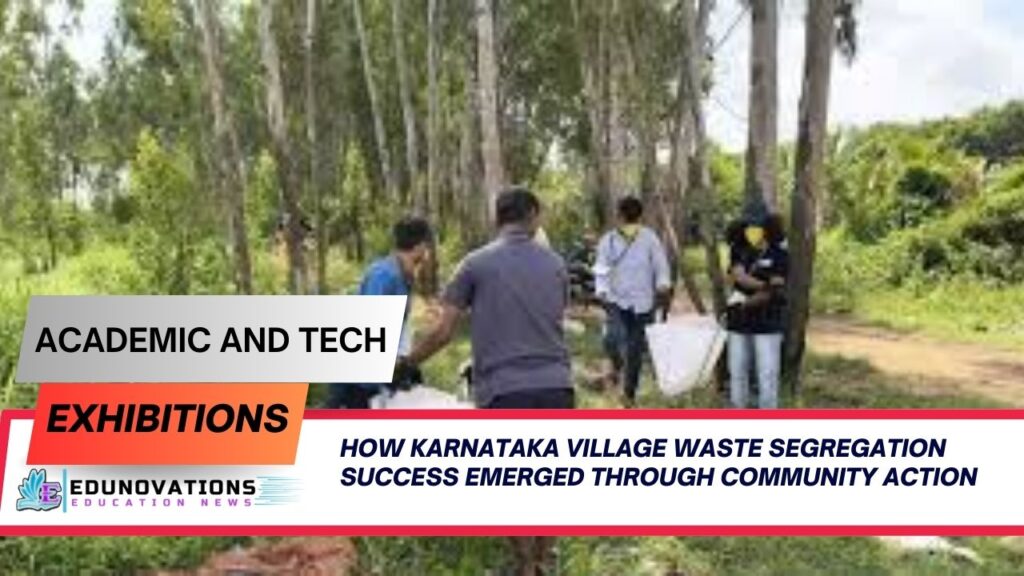
Explore how community action drove Karnataka village waste segregation success and food forest growth — a collaborative model of sustainable waste management.
In the peri-urban landscapes of Karnataka, a remarkable transformation took shape in the Bilapura Panchayat, where Karnataka village waste segregation success became reality through sustained community participation, institutional support, and innovative methods founded on shared responsibility. This inspiring story underscores how a college-led team helped a local village achieve nearly 90 percent waste segregation — turning waste from a burden into a resource and supporting the growth of a thriving food forest.
What sets this transformation apart is how a college team partnered with residents, local government, and NGOs to embed sustainability into everyday life — a model with lessons for communities across India and beyond.
A Growing Problem in Bilapura
Bilapura Panchayat lies on the outskirts of Bengaluru in Anekal Taluk, displaying a blend of rural character and pressures from rapid urban expansion. Like many peri-urban regions, waste management systems lagged behind, causing garbage to pile on open land and in water bodies. Residents faced pollution from burning trash, contaminated lakes, and significant health hazards.
The situation became increasingly untenable as population growth and shifting consumption patterns produced volumes of waste that traditional disposal methods could not manage:
- Mixed waste ended up in open dumps.
- Plastic and non-biodegradable materials were eaten by animals or entered local water systems.
- Air pollution worsened as burning plastics and organic matter released toxic smoke.
- Sanitation standards declined, affecting livelihoods and local ecosystems.
This backdrop set the stage for an intervention rooted not in technology alone, but in systemic change grounded in shared responsibility and community engagement.
Partnering for Change: University and Panchayat
Located within Bilapura Panchayat, Azim Premji University began looking outward, guided by a desire to align its sustainability practices with real-world impact. Rather than remain an isolated campus, the university engaged neighbors, helping build solutions tailored to the community’s needs.
When the panchayat approached the university for support, a partnership formed with Hasiru Dala, a Bengaluru-based NGO specializing in inclusive, decentralized waste systems. Together, they co-designed a model that relied on local leadership, infrastructural support, and respectful collaboration.
The initiative’s philosophy was clear:
Communities must own and generate their solutions for long-term success.
Redefining Responsibility for Waste
A pivotal question guided the project from the start:
“Why does the waste problem persist even where solutions exist?”
The answer pointed to a gap in responsibility — between those who generate waste and those who manage it. Many households were unaware of waste consequences, while service systems focused more on collection than processing.
To address this, the initiative shifted focus from waste disposal to waste ownership. Households were encouraged to:
- Recognize what kinds of waste they generate.
- Separate wet and dry waste at its source.
- Understand how segregation supports health and environmental goals.
This mindset change would prove essential to enabling widespread buy-in and adherence to the new waste system.
The Zero Waste Centre: Practical Solutions on the Ground
Central to the initiative was the establishment of a Zero Waste Centre (ZWC) — a localized space where waste was treated as a resource rather than refuse. Designed with community input and visible at the heart of Bilapura Panchayat, the centre focused on:
Dry Waste Processing
Dry waste is sorted, stored, and repurposed. Walls and structures use recycled materials such as multi-layer plastics, giving purpose to typically hard-to-recycle waste.
Composting and Organic Waste
Instead of relying on energy-heavy machines, the centre employs low-cost aerobic composting units to handle food scraps, garden trimmings, coconut shells, and more. Compost produced here enriches local soil, directly feeding agricultural and gardening needs.
Technology Integration
A mobile platform called GreenPathOrg — developed by students — tracks waste from households to processing units using QR codes. This real-time data helps administrators, waste workers, and residents understand waste flows and performance.
The visibility and accessibility of the Zero Waste Centre helped reinforce the idea that waste is a shared concern, not someone else’s problem.
From Waste to Growth: Building a Food Forest
One of the most powerful outcomes of this transformation was the creation of a food forest from organic compost generated at the ZWC. What was once a problem — organic waste — became a source of nourishment for trees and plants that now flourish across common lands.
A food forest is not only a symbol of sustainability but also a living ecological asset that:
- Supports biodiversity, attracting birds, insects, and beneficial organisms.
- Improves soil quality through natural enrichment.
- Offers community members access to fruits and ecological learning.
- Helps reduce dependence on chemical fertilizers.
The transformation from dumped waste to thriving plant life illustrates how responsible waste management can support broader environmental resilience and food security.
People First: Roles and Community Impact
The success of the initiative hinged on people — residents, waste workers, students, and leaders.
Local Engagement
Six local women were hired as waste workers, receiving safety gear and dignified work conditions. Roles once shunned became stable, respected jobs.
Shifting Gender Norms
A self-help group (SHG) member driving a waste collection vehicle challenged traditional gender roles, showcasing inclusion in practice.
Student Leadership
Students from the university and partner institutions played guiding roles — from developing tracking apps to coordinating composting and awareness campaigns.
Behavioral Change
Households and apartments became active participants in waste segregation, not only improving cleanliness but also enhancing a sense of collective belonging and purpose.
Community Health and Environmental Benefits
The impact of the project stretched beyond cleanliness. Key benefits include:
Health Improvements
- Reduced air pollution from burning waste.
- Decreased disease spread through better hygiene.
- Improved overall environmental health.
Ecological Restoration
- Increased compost use regenerates soil.
- Food forests support biodiversity.
- Water bodies and common areas are less polluted.
Economic and Social Gains
- Local women gain employment and financial stability.
- Households save on external waste disposal fees.
- Compost and recycled materials can support livelihood opportunities.
Scaling Success Beyond Bilapura
The Bilapura model didn’t remain isolated. Its results drew attention from neighbouring panchayats. Over the last year, eight surrounding Panchayats, representing around 150,000 residents, began adopting similar decentralized, community-centred waste systems.
This spread demonstrates that community engagement combined with institutional support can catalyze systemic change.
Lessons for Other Communities
The success of this initiative yields actionable insights for others seeking to replicate it:
1. Make Responsibility Collective
When households understand their role in waste generation and its consequences, they are more likely to participate actively.
2. Integrate Local Employment
Hiring community members boosts buy-in and creates dignified, stable jobs.
3. Utilize Appropriate Technologies
Simple digital tools like waste tracking apps can help monitor and improve performance.
4. View Waste as a Resource
Transforming organic waste into compost and dry waste into usable materials creates ecological and economic value.
5. Ensure Visibility
Facilities like Zero Waste Centres should be centrally located and accessible, reinforcing progress as a community achievement.
Conclusion: A Model for Sustainable Futures
The story of Karnataka village waste segregation success in Bilapura demonstrates the power of community driven solutions and collaborative action. Through a thoughtful blend of responsibility, technology, education, and ecological sensibility, waste became a resource, not a problem.
What was once open dumping and environmental strain has turned into an example of sustainability rooted in shared ownership. This initiative shows that when communities, institutions like universities, and local governments act together with clear purpose and inclusive design, lasting change is possible.
Toppers Use Mind Maps to score more than 95%
-
NCERT Class 11th Commerce Mind Maps
Add to cartOriginal price was: ₹999.00.₹199.00Current price is: ₹199.00. -
NCERT Class 12th Chemistry Mind Maps
Add to cartOriginal price was: ₹199.00.₹75.00Current price is: ₹75.00. -
NCERT Class 12th Commerce Mind Maps
Add to cartOriginal price was: ₹999.00.₹199.00Current price is: ₹199.00. -
NCERT Class 12th Science Mind Maps
Add to cartOriginal price was: ₹999.00.₹199.00Current price is: ₹199.00. -
NCERT Mind Maps For Class 10th
Add to cartOriginal price was: ₹999.00.₹199.00Current price is: ₹199.00.




Purchase Today
10 FAQs
How did neighboring panchayats adopt practices similar to Bilapura?
What is the key to Karnataka village waste segregation success in Bilapura?
How did the Zero Waste Centre improve waste handling in Bilapura Panchayat?
What role did community engagement play in achieving near-90% waste segregation?
How does compost from waste support food forest growth?
What technology supported waste tracking in this initiative?
How have local women benefited from employment in waste management?
What lessons can other villages learn from Bilapura’s waste program?
How did student involvement contribute to the success of the project?
What are the environmental benefits of decentralized waste management systems?