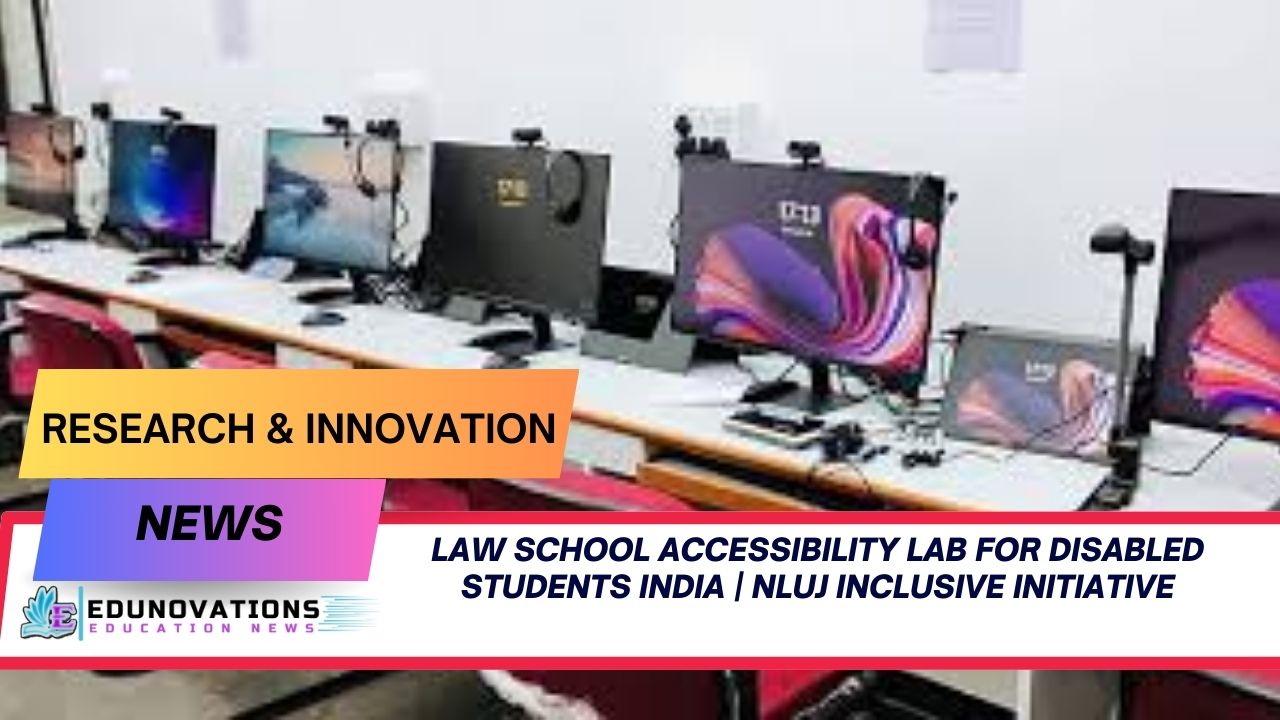
Learn how the new law school accessibility lab for disabled students India at NLUJ is transforming inclusive legal education with assistive technologies and student support.
Introduction
The landscape of higher legal education in India is undergoing a transformative shift, driven by the increasing need for inclusivity, accessibility, and equal opportunities for differently-abled learners. A crucial milestone in this direction has been marked by National Law University, Jodhpur (NLUJ), through the establishment of a pioneering accessibility facility in collaboration with the Rajiv K. Luthra Foundation. This development is poised to drastically improve learning accessibility for disabled students across India.
At the heart of this initiative lies the vision to build a law school accessibility lab for disabled students India, ensuring that every aspiring law student—regardless of physical, visual, auditory, or cognitive limitations—receives equal access to educational resources, assistive technologies, and institutional support.
This article explores the significance of this new accessibility lab, the broader movement toward inclusive legal education, expert insights, the technologies being introduced, and the far-reaching impact of this initiative on the national academic ecosystem.
A Historic Step Toward Inclusive Legal Education in India
National Law University, Jodhpur has partnered with the Rajiv K. Luthra Foundation, a philanthropic initiative established in memory of the late legal luminary Rajiv K. Luthra, to set up an accessibility facility aimed at assisting differently-abled law students.
This facility is not only a milestone for NLUJ but also an exemplary model for other Indian law schools. The initiative promotes equitable access to legal education by integrating advanced assistive technologies, specialized learning tools, and support systems necessary for disabled students to thrive academically.
Why Accessibility in Legal Education Matters
India has nearly 2.68 crore persons with disabilities, according to the Census 2011—yet higher education institutions still lag in terms of infrastructure and learning accessibility. Within professional courses such as law, the challenges are often more severe due to heavy reading loads, extensive research requirements, and courtroom-centric learning.
Students with disabilities in law schools face:
- Lack of accessible reading formats
- Inadequate technological support
- Insufficient ramps, tactile pathways, and mobility-friendly architecture
- Limited awareness about disability rights and inclusion
- Absence of specialized mentors or accessibility officers
The law school accessibility lab for disabled students India at NLUJ directly addresses these gaps through structured support mechanisms, making legal education more inclusive and future-ready.
Core Objectives of the New Accessibility Lab
The newly established accessibility lab is designed with a multi-purpose vision:
1. Assistive Technology Integration
The lab includes specialized tools such as:
- Screen-reading software
- AI-enabled reading assistance
- Digital magnifiers
- Audio-to-text converters
- Tactile devices for visually impaired students
These tools aim to equip students with the latest technological support for academic success.
2. Resource Accessibility
Digitized and accessible formats of essential readings will be provided, supporting students who cannot rely on traditional printed materials.
3. Inclusive Learning Support
Dedicated support staff, peer volunteers, and trained academic facilitators help ensure seamless access to lectures, notes, and examinations.
4. Sensitization & Awareness Programs
Workshops and seminars on inclusive education help students and faculty better understand disability rights, empathy, and inclusive behavior.
Expert Insights: Why This Initiative is Crucial
To enrich this report with greater authority, we refer to insights by disability rights advocate Dr. Satendra Singh, a renowned physician and activist who has been at the forefront of mainstreaming disability inclusion in Indian education systems.
Speaking on accessibility in higher education, Dr. Singh has often emphasized that:
“Accessibility is not charity. It is a fundamental right. True inclusion begins when institutions redesign their systems to support students with disabilities rather than expecting students to adapt.”
Dr. Singh, co-founder of Doctors with Disabilities, has long advocated for better accessibility infrastructure in universities. His vision aligns closely with initiatives such as the law school accessibility lab for disabled students India, which transforms accessibility from a symbolic gesture into a functional system that removes barriers.
Enhancing Competence Through Assistive Technologies
Assistive technologies form the backbone of modern inclusive education environments. At the NLUJ accessibility lab, the following advanced technologies are expected to play a major role:
Screen Readers & AI-Assisted Tools
Software such as JAWS and NVDA help visually impaired students navigate digital legal materials.
Speech-to-Text & Text-to-Speech Solutions
These tools ease classroom learning, research, and note-taking for students with motor or visual disabilities.
Braille Displays & Digital Scanning Devices
These devices help transform printed legal texts into accessible formats.
Accessible Study Stations
Ergonomically designed desks and adjustable monitors make the physical environment more inclusive.
Such technological resources strengthen the wider mission of building a reliable inclusive legal education ecosystem for disabled students across India.
Strengthening Disability Rights Education
India is witnessing a growing demand for legal professionals specializing in disability rights, inclusion policies, and assistive technologies. By hosting this accessibility lab, NLUJ becomes a center for nurturing such future lawyers, policy analysts, and advocates.
This initiative ties directly with:
- The Rights of Persons with Disabilities Act, 2016
- The United Nations Convention on the Rights of Persons with Disabilities (UNCRPD)
- National Education Policy (NEP) 2020 which emphasizes inclusive learning
The inclusive legal education for differently abled law students supported by this lab can help India produce lawyers skilled in promoting equality and justice.
Impact on Current and Future Law Students
The ripple effects of this initiative will be widespread.
1. Improved Academic Performance
With access to assistive tools, disabled students can significantly improve their reading efficiency and research capabilities.
2. Enhanced Participation
Students who were previously restricted by structural or academic barriers can now participate confidently in debates, moot courts, and internships.
3. Greater Mental Well-Being
Equal access fosters dignity, reduces stress, and supports mental health.
4. Inspiration for Other Universities
As one of India’s leading law schools, NLUJ’s step is likely to inspire more universities to adopt similar accessibility infrastructures.
Connecting Students with Wider Learning Resources (Internal Links)
To support students preparing for competitive exams, law courses, or academic development, here are additional resources:
- Explore NCERT Courses: https://courses.edunovations.com/
- Daily Current Affairs for exam preparation: https://edunovations.com/currentaffairs/
- Access detailed Notes: https://edunovations.com/notes/
- Practice MCQs: https://edunovations.com/mcq/
- Watch educational Videos: https://edunovations.com/videos/
- Download complete Syllabus: https://edunovations.com/syllabus/
- Access free NCERT PDFs: https://courses.edunovations.com/shop-2/
- NCERT Mind Maps for fast revision: https://courses.edunovations.com/shop-2/
These resources strengthen student learning alongside the accessibility lab’s ecosystem.
External Authoritative Resource Link
For schools or institutions needing reliable and affordable website development, refer to:
➡️ Mart India Infotech — Professional school website development services
https://www.martindiainfotech.com/
A Model for the Future of Legal Education
The opening of this lab at NLUJ is not just a facility upgrade—it is a shift in mindset. An academic system must recognize every student’s potential and create environments where no disability becomes a barrier.
This initiative positions NLUJ as a national leader in:
- Accessibility infrastructure
- Assistive technology adoption
- Inclusive academic policies
- Support for disabled law students
- Responsible higher education governance
With comprehensive support systems, the inclusive legal education for differently abled law students becomes not just a promise but an achievable goal.
Toppers Use Mind Maps to score more than 95%
NCERT Class 11th Commerce Mind Maps
Add to cartOriginal price was: ₹999.00.₹199.00Current price is: ₹199.00.NCERT Class 12th Chemistry Mind Maps
Add to cartOriginal price was: ₹199.00.₹75.00Current price is: ₹75.00.NCERT Class 12th Commerce Mind Maps
Add to cartOriginal price was: ₹999.00.₹199.00Current price is: ₹199.00.NCERT Class 12th Science Mind Maps
Add to cartOriginal price was: ₹999.00.₹199.00Current price is: ₹199.00.NCERT Mind Maps For Class 10th
Add to cartOriginal price was: ₹999.00.₹199.00Current price is: ₹199.00.



Purchase Today
FAQs
1. What is the purpose of the law school accessibility lab for disabled students India?
The lab aims to provide assistive technologies and support systems enabling disabled students to access legal education without barriers.
2. Which technologies will be available in the accessibility lab?
Screen readers, speech-to-text tools, AI-assisted reading systems, Braille devices, and accessible study stations are part of the setup.
3. How does this initiative support inclusive legal education for differently abled law students?
It offers equal access to study materials, learning tools, and academic assistance.
4. What role does the Rajiv K. Luthra Foundation play?
The foundation has partnered with NLUJ to establish this accessibility lab through philanthropic support.
5. Will visually impaired law students benefit from this lab?
Yes, through advanced screen readers, audio tools, and accessible material formats.
6. Does the lab promote assistive technology support for disabled law students India?
Yes, it introduces a wide range of assistive devices tailored for various disabilities.
7. Is this initiative expected to influence other law universities?
Being a model initiative, it is expected to inspire similar centers across India.
8. How does this lab support inclusive learning?
Through trained facilitators, accessible materials, and specialized equipment.
9. Are mobility-related accessibility improvements also included?
Yes, ergonomic and mobility-friendly infrastructure is part of the campus-wide accessibility plan.
10. What long-term impact will this lab have on legal education?
It will enhance accessibility, promote disability rights expertise, and strengthen equal learning opportunities.