
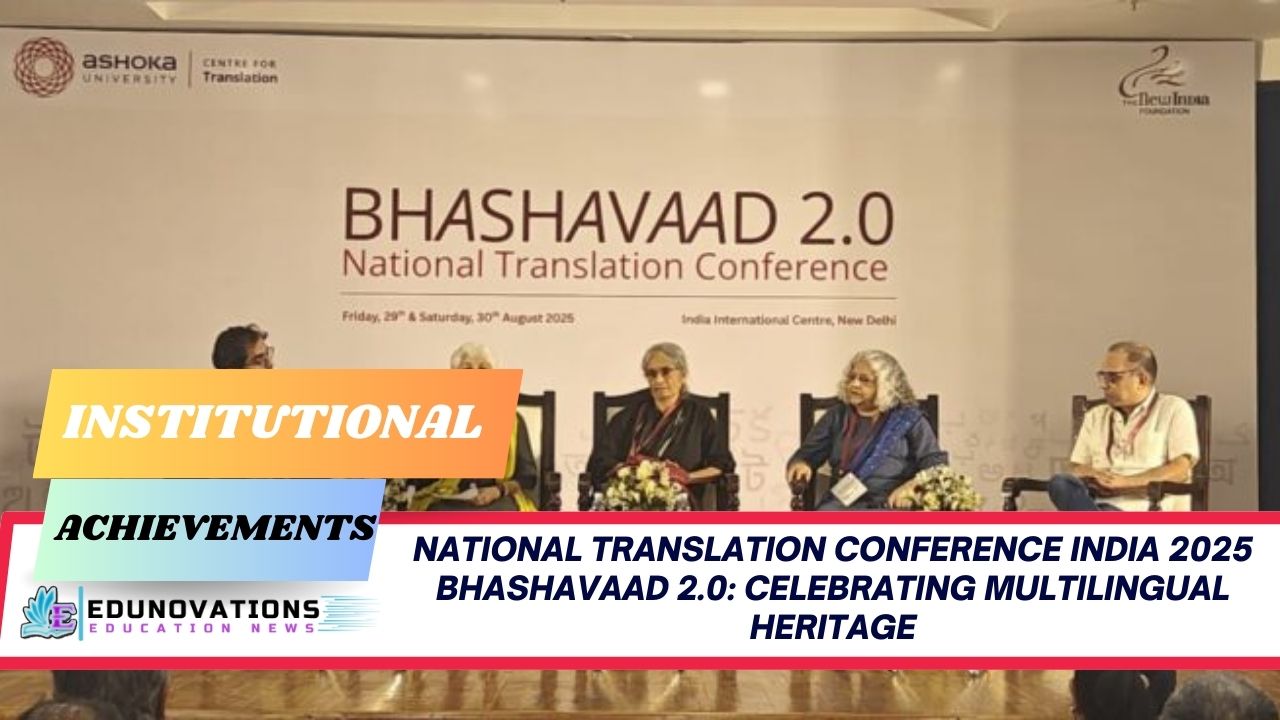
Ashoka University hosts the National Translation Conference India 2025 Bhashavaad 2.0, highlighting India’s multilingual heritage and translation excellence.
Ashoka University recently hosted the National translation conference India 2025 Bhashavaad 2.0, a pioneering event celebrating India’s rich multilingual heritage and promoting the art of translation. Organized by the Ashoka Centre for Translation, this two-day national conference has become a platform for translators, scholars, writers, and literary enthusiasts from across the country to discuss, deliberate, and showcase contemporary translation practices.
The event underscores India’s linguistic diversity, home to over 22 officially recognized languages and hundreds of dialects. Bhashavaad 2.0 aims to preserve, promote, and encourage translation as a bridge between India’s literary cultures, allowing texts from regional languages to reach a national and global audience.
Unveiling of Recent Publications: A Showcase of Translation Excellence
On the first day of the National translation conference India 2025 Bhashavaad 2.0, the Ashoka Centre for Translation unveiled ten recently published books. These publications reflect the Centre’s dedication to bringing lesser-known regional literature to the forefront. Scholars emphasized how translation not only facilitates cross-cultural understanding but also strengthens India’s multilingual literary ecosystem.
Experts at the conference highlighted that effective translation is not merely linguistic substitution but involves cultural mediation, contextual understanding, and literary sensitivity. According to Dr. Rina Das, a renowned translator and speaker at the event, “Translation is an act of empathy—it is where the reader and the author meet across languages and cultures.”
Expanding India’s Multilingual Literary Landscape
India has long been recognized as a treasure trove of languages. The Ashoka Centre for Translation multilingual heritage India initiative encourages scholars and translators to explore regional literatures in depth. By focusing on translation, the Centre aims to prevent linguistic marginalization and ensure that diverse voices find representation in national and global literary spaces.
The conference included interactive sessions on emerging trends in translation, workshops on digital translation tools, and discussions on literary preservation. Attendees engaged in panel discussions on topics such as:
- Challenges in translating classical Indian literature to English and other global languages
- Promoting regional literature in mainstream media
- Digital tools for collaborative translation projects
- Case studies on successful cross-cultural literary adaptations
Insights from Bhashavaad 2.0: Connecting Cultures Through Words
The Bhashavaad 2.0 conference translation scholars India 2025 sessions demonstrated how translation facilitates a dialogue between regional identities and mainstream literary narratives. Scholars from multiple states shared experiences of translating works from Hindi, Tamil, Bengali, Marathi, and other regional languages, highlighting the nuanced approaches required for preserving meaning, tone, and cultural context.
Keynote speakers stressed the role of translation in academic research, cultural diplomacy, and education. Dr. Anil Kumar, a leading linguist, noted, “When regional works are translated, they not only enter a broader literary canon but also contribute to a shared national identity that values diversity.”
Promoting Digital and Collaborative Translation Efforts
In an era of digitization, the Ashoka Centre of Translation emphasized the potential of technology to amplify translation efforts. Workshops demonstrated AI-assisted translation tools, online collaborative platforms, and databases that help maintain the integrity of original texts while making them accessible to a wider audience.
Participants also explored strategies for multilingual educational content creation, linking translation initiatives to broader academic goals. For students and researchers interested in multilingual literature, the conference encouraged engagement with online resources such as NCERT Courses, MCQs, and free educational PDFs. These internal resources, along with scholarly publications, provide valuable reference points for anyone pursuing translation studies in India.
Toppers Use Mind Maps to score more than 95%
NCERT Class 11th Commerce Mind Maps
Add to cartOriginal price was: ₹999.00.₹199.00Current price is: ₹199.00.NCERT Class 12th Chemistry Mind Maps
Add to cartOriginal price was: ₹199.00.₹75.00Current price is: ₹75.00.NCERT Class 12th Commerce Mind Maps
Add to cartOriginal price was: ₹999.00.₹199.00Current price is: ₹199.00.NCERT Class 12th Science Mind Maps
Add to cartOriginal price was: ₹999.00.₹199.00Current price is: ₹199.00.NCERT Mind Maps For Class 10th
Add to cartOriginal price was: ₹999.00.₹199.00Current price is: ₹199.00.





Purchase Today
Community and Cultural Engagement
The India multilingual heritage translation conference 2025 also featured cultural performances, storytelling sessions, and literary readings that celebrated India’s linguistic diversity. These activities reinforced the message that translation is not just an academic exercise but a medium to foster intercultural understanding.
Ashoka University’s collaborations with schools, community groups, and literary organizations further expand the impact of translation initiatives. By involving younger generations and local communities, Bhashavaad 2.0 ensures that India’s multilingual heritage is celebrated, preserved, and carried forward. For schools looking to engage with such programs, resources like Mart India Infotech can facilitate coordination and information dissemination.
Looking Ahead: The Future of Translation in India
The Ashoka University translation conference Bhashavaad 2025 has set a benchmark for future translation initiatives. By integrating scholarly research, practical workshops, and cultural engagement, the conference emphasizes that translation is both an art and a discipline critical to preserving India’s literary diversity.
Experts suggested the following strategies to strengthen translation initiatives across India:
- Increased funding for translation projects and research scholarships
- Integration of translation studies into higher education curricula
- Development of digital platforms for multilingual literary content
- Establishment of collaborative networks between regional writers, translators, and publishers
These steps are crucial for ensuring that India’s vast literary heritage reaches wider audiences, supporting both academic research and cultural preservation.
FAQs on National Translation Conference India 2025 Bhashavaad 2.0
- What is the National translation conference India 2025 Bhashavaad 2.0?
It is a two-day national conference hosted by Ashoka University celebrating India’s multilingual heritage and translation practices. - Who organized Bhashavaad 2.0?
The Ashoka Centre for Translation organized the conference, showcasing its translation projects and recent publications. - Which languages were highlighted at the conference?
Languages included Hindi, Tamil, Bengali, Marathi, and other regional Indian languages. - What were the key themes of Bhashavaad 2.0?
Themes included cultural preservation, literary translation, digital tools for translation, and multilingual education. - Can students participate in translation workshops?
Yes, the conference encouraged participation through workshops and online resources, including NCERT Courses, MCQs, and PDFs. - What books were unveiled at the conference?
Ten recently published books reflecting regional and classical Indian literature were unveiled. - How does translation support India’s multilingual heritage?
Translation connects diverse linguistic communities, preserves regional literature, and promotes intercultural understanding. - Are there digital resources for translation studies?
Yes, AI-assisted tools, collaborative platforms, and online educational materials were demonstrated during the conference. - How can schools get involved in such initiatives?
Schools can collaborate through platforms like Mart India Infotech to participate in translation and cultural programs. - Why is Bhashavaad 2.0 significant for India’s literary culture?
It promotes regional literature nationally, encourages scholarly research, and strengthens India’s multilingual identity.


