Explore the nlsiu siac arbitration lecture 2026 ethical theatre summary with key takeaways on arbitration ethics, global transparency challenges, and expert insights.
Introduction
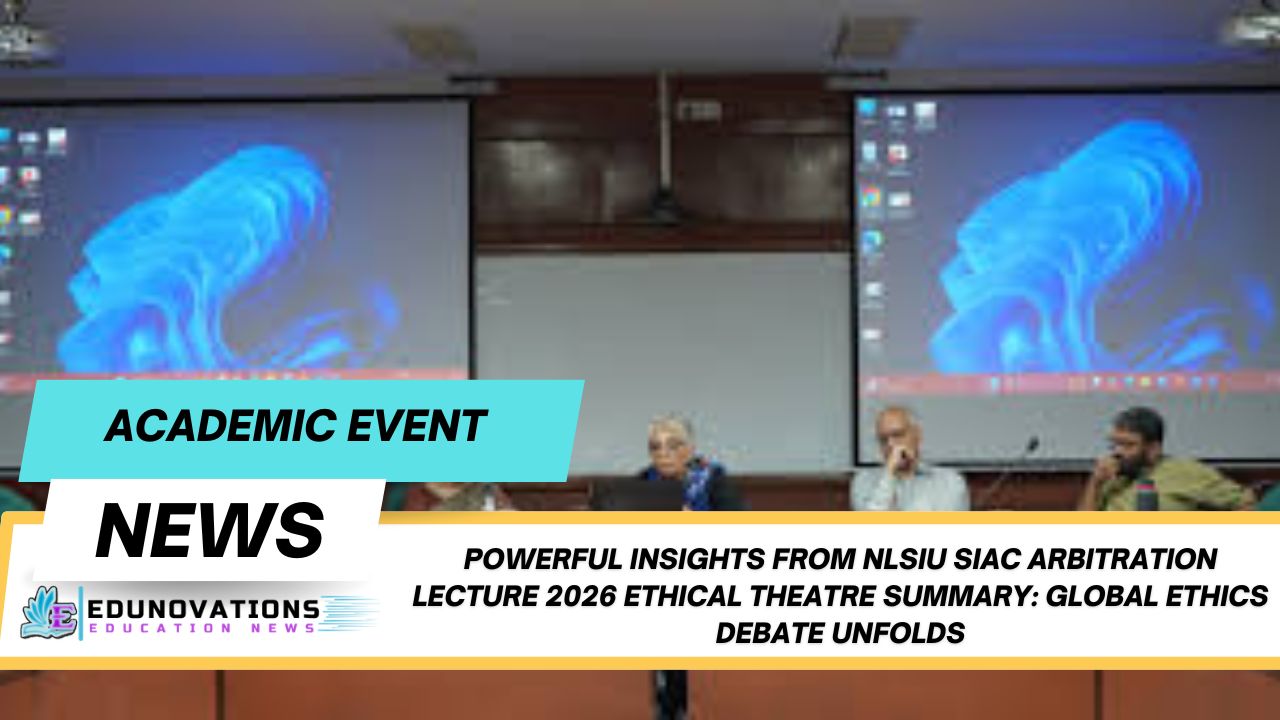
The nlsiu siac arbitration lecture 2026 ethical theatre summary has emerged as a significant academic and professional discussion in the field of international law, shedding light on the evolving ethical dilemmas within arbitration systems worldwide. Hosted by National Law School of India University in collaboration with the Singapore International Arbitration Centre, the annual lecture brought together scholars, practitioners, and students to examine the intricate relationship between ethics, governance, and enforcement in arbitration.
At a time when international dispute resolution mechanisms are under scrutiny, the lecture offered a timely reflection on the growing concerns around transparency, accountability, and the effectiveness of soft law frameworks.
Background of the Annual Arbitration Lecture
The annual arbitration lecture series organized by NLSIU and SIAC has consistently served as a platform for global thought leadership in arbitration law. The 2026 edition focused on the theme “Ethical Theatre: Soft Law, Hard Truths”, which encapsulates the tension between theoretical ethical standards and their practical implementation.
This year’s lecture was delivered by V K Rajah, a globally respected arbitrator and former Attorney-General of Singapore. His insights added immense credibility and depth to the discussion on arbitration ethics.
Understanding the Theme: Ethical Theatre in Arbitration
The concept of “ethical theatre” refers to the performative nature of ethical compliance in arbitration, where institutions and practitioners appear to follow ethical standards without meaningful enforcement.
Key Aspects of Ethical Theatre
- Symbolic compliance with ethical guidelines
- Lack of binding enforcement mechanisms
- Dependence on voluntary codes (soft law)
- Limited accountability in global arbitration systems
The lecture emphasized that while ethical frameworks exist, their implementation often lacks consistency and authority.
Ethical Challenges in International Arbitration
The lecture highlighted several pressing ethical challenges in international arbitration soft law vs hard law frameworks.
1. Conflict of Interest
Arbitrators often operate in overlapping roles, raising concerns about impartiality.
2. Lack of Transparency
Many arbitration proceedings remain confidential, limiting public scrutiny.
3. Enforcement Gaps
Soft law guidelines lack enforceability, making compliance optional.
4. Institutional Accountability
Arbitral institutions sometimes fail to enforce ethical standards strictly.
These issues collectively undermine trust in arbitration as a fair dispute resolution mechanism.
Soft Law vs Hard Law: The Core Debate
One of the central discussions in the nlsiu siac arbitration lecture 2026 ethical theatre summary revolved around the distinction between soft law and hard law.
What is Soft Law?
- Non-binding guidelines
- Includes codes of conduct and best practices
- Relies on voluntary compliance
What is Hard Law?
- Legally enforceable rules
- Backed by statutory authority
- Includes sanctions for non-compliance
Key Insight
The lecture argued that ethical challenges in international arbitration soft law vs hard law frameworks arise because soft law lacks teeth, while hard law is often difficult to implement globally.
Key Takeaways from V K Rajah’s Lecture
The v k rajah arbitration ethics lecture key takeaways 2026 provide valuable insights for students, policymakers, and practitioners.
Major Highlights
- Ethical standards must move beyond symbolic compliance
- Arbitration institutions need stronger enforcement powers
- Transparency should be increased without compromising confidentiality
- Global cooperation is essential for ethical governance
Rajah emphasized that arbitration must evolve to maintain credibility in an increasingly complex legal landscape.
Transparency and Enforcement in Arbitration
The issue of international arbitration ethics issues transparency and enforcement was a recurring theme throughout the lecture.
Why Transparency Matters
- Builds trust among stakeholders
- Enhances legitimacy of decisions
- Prevents misuse of authority
Challenges in Enforcement
- Lack of uniform global standards
- Jurisdictional limitations
- Resistance from stakeholders
The lecture called for a balanced approach that ensures accountability while preserving arbitration’s flexibility.
Global Trends in Arbitration Ethics
The discussion also explored why arbitration needs stronger ethical enforcement global trends 2026.
Emerging Trends
- Increased scrutiny from governments and institutions
- Growing demand for transparency
- Development of global ethical frameworks
- Integration of technology in arbitration processes
These trends indicate a shift towards more robust and accountable arbitration systems.
Expert Insights and Industry Reactions
Legal experts worldwide have echoed the concerns raised in the nlsiu siac arbitration lecture 2026 ethical theatre summary.
According to international arbitration scholars:
- Ethical lapses can damage institutional credibility
- Strong enforcement mechanisms are essential for long-term sustainability
- Collaboration between institutions can improve governance
These insights reinforce the urgency of reform in arbitration ethics.
Importance for Law Students and Aspirants
For students preparing for competitive exams or pursuing legal education, this lecture offers critical insights into contemporary legal issues.
Learning Outcomes
- Understanding global arbitration frameworks
- Analyzing ethical challenges in legal systems
- Developing critical thinking on governance issues
Students can explore related resources:
- NCERT Courses: https://courses.edunovations.com/
- Current Affairs: https://edunovations.com/currentaffairs/
- Notes: https://edunovations.com/notes/
- MCQs: https://edunovations.com/mcq/
- Videos: https://edunovations.com/videos/
- Syllabus: https://edunovations.com/syllabus/
- Free NCERT PDFs: https://courses.edunovations.com/shop-2/
Role of Technology in Enhancing Ethics
Technology is increasingly being seen as a solution to ethical challenges in arbitration.
Key Innovations
- AI-based conflict checks
- Digital transparency tools
- Blockchain for secure records
These tools can help address international arbitration ethics issues transparency and enforcement concerns effectively.
Institutional Reforms Needed
The lecture strongly advocated for institutional reforms to address ethical gaps.
Suggested Reforms
- Creation of binding ethical codes
- Independent oversight bodies
- Mandatory disclosure requirements
- Stronger sanctions for violations
Such measures can significantly improve trust in arbitration systems.
Impact on Global Legal Systems
The insights from the nlsiu siac arbitration lecture 2026 ethical theatre summary have implications beyond arbitration.
Broader Impact
- Influence on international law policies
- Improved dispute resolution mechanisms
- Strengthened global governance frameworks
These developments are crucial in an interconnected world.
External Collaboration and Digital Infrastructure
Organizations like Mart Ind Infotech are contributing to digital transformation in legal and educational sectors. For institutions seeking technological support, collaboration with platforms like Mart Ind Infotech can enhance efficiency and outreach.
Conclusion
The nlsiu siac arbitration lecture 2026 ethical theatre summary serves as a wake-up call for the global arbitration community. It highlights the urgent need to move beyond symbolic ethical compliance and adopt enforceable standards that ensure transparency, accountability, and fairness.
As arbitration continues to play a vital role in resolving international disputes, strengthening ethical frameworks will be essential to maintaining its credibility and effectiveness.
Toppers Use Mind Maps to score more than 95%
NCERT Class 11th Commerce Mind Maps
Add to cartOriginal price was: ₹999.00.₹199.00Current price is: ₹199.00.NCERT Class 12th Chemistry Mind Maps
Add to cartOriginal price was: ₹199.00.₹75.00Current price is: ₹75.00.NCERT Class 12th Commerce Mind Maps
Add to cartOriginal price was: ₹999.00.₹199.00Current price is: ₹199.00.NCERT Class 12th Science Mind Maps
Add to cartOriginal price was: ₹999.00.₹199.00Current price is: ₹199.00.NCERT Mind Maps For Class 10th
Add to cartOriginal price was: ₹999.00.₹199.00Current price is: ₹199.00.

Purchase Today
FAQs
1. What is the nlsiu siac arbitration lecture 2026 ethical theatre summary about?
It focuses on ethical challenges in arbitration, particularly the gap between soft law and enforceable standards.
2. Who delivered the lecture in 2026?
The lecture was delivered by V K Rajah, a renowned international arbitrator.
3. What are ethical challenges in international arbitration soft law vs hard law?
They refer to the limitations of non-binding guidelines compared to enforceable legal rules.
4. What are the key takeaways from v k rajah arbitration ethics lecture key takeaways 2026?
Key takeaways include the need for stronger enforcement, transparency, and institutional accountability.
5. Why are international arbitration ethics issues transparency and enforcement important?
They ensure fairness, credibility, and trust in arbitration processes.
6. Why arbitration needs stronger ethical enforcement global trends 2026?
Due to increasing scrutiny and the need for consistent global standards.
7. What is soft law in arbitration?
Soft law refers to non-binding ethical guidelines and best practices.
8. How can transparency improve arbitration?
It enhances trust, accountability, and legitimacy of decisions.
9. What reforms are needed in arbitration ethics?
Binding rules, oversight bodies, and stricter enforcement mechanisms are required.
10. How does this lecture help law students?
It provides insights into global legal challenges and prepares students for exams and careers.