Attend the online BA honours masterclass on slow research and ethnography 2026 by NLS faculty to explore social sciences and humanities.
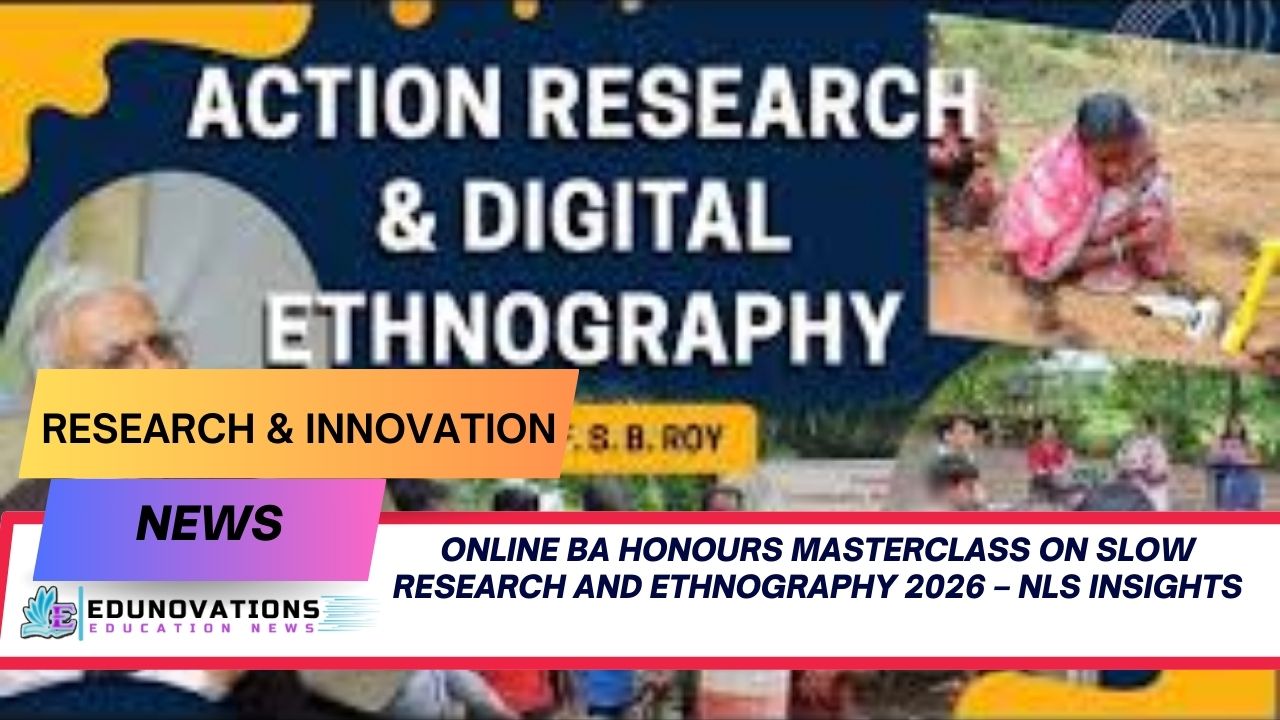
The National Law School of India University (NLSIU), Bengaluru, has announced an exclusive online BA honours masterclass on slow research and ethnography 2026, offering a unique opportunity for students, researchers, and social sciences enthusiasts to explore advanced methodologies in humanities. Scheduled for January 22 and 23, 2026, these sessions are designed to provide wider audiences a comprehensive glimpse into the NLS BA (Hons) classroom and its innovative teaching approach.
The initiative reflects NLSIU’s commitment to bridging academic research with real-world social challenges, fostering analytical thinking, and equipping learners with tools for evidence-based advocacy. These masterclasses are particularly significant in an era of rapid technological change and climate challenges, emphasizing the importance of slow, deliberate research.
About the Masterclasses
The NLS BA (Hons) masterclasses span two sessions, each anchored by distinguished faculty. The first session, led by Dr. Atreyee Majumder, BA (Hons) Co-Chair, introduces participants to the philosophy and practice of slow research. This session, titled “The Nourishment of Slow Research: Evaluating Ethnography with the Long Walk of Paul Salopek”, explores the intricacies of ethnographic methods and the power of time-intensive, immersive research in social sciences.
The second session, conducted by Dr. Sneha Thapliyal, Associate Professor of Economics, focuses on data-driven societal insights. Entitled “Counting the Heat: How Numbers Shape Our Understanding of India’s Heat Waves”, this lecture examines climate data and socio-economic inequalities, illustrating how numerical literacy can inform ethical policy-making.
Both sessions are open to the public, but registration is mandatory, ensuring a structured, interactive online experience. Participants gain not only theoretical knowledge but also actionable insights into research and advocacy.
Session I: The Nourishment of Slow Research
The first masterclass delves into slow research, a methodology emphasizing patience, immersion, and reflective analysis. Using Paul Salopek’s 38,000 km walk across the globe as a case study, Dr. Majumder demonstrates how long-term observation and ethnography reveal deeper truths about human societies.
“The practice of slow research allows us to understand human behavior and societal structures at a pace that fosters empathy and critical analysis,” notes Dr. Atreyee Majumder, highlighting the relevance of immersive study in today’s fast-paced world.
Key takeaways from this session include:
- Ethnographic Methodology: Understanding culture through participant observation.
- Slow Research Applications: Integrating deliberate, thoughtful inquiry into modern academic and professional practices.
- Moral and Legal Advocacy: Leveraging research insights to shape policies that address societal inequities.
- Climate-conscious Research: Encouraging environmentally and socially responsible academic inquiry.
This session is particularly valuable for students of social sciences, humanities, and interdisciplinary studies who seek to enhance analytical skills while addressing pressing global issues such as climate change, urbanization, and ethical governance.
Session II: Counting the Heat – Data and Policy Insights
The second masterclass addresses quantitative literacy and its application in social research. Using the context of India’s heat waves, Dr. Sneha Thapliyal highlights the unequal social and economic impact of rising temperatures.
Important discussion points include:
- Temperature Trends in India: Since 1901, average temperatures have risen by 0.68°C, with accelerated increases since 1986.
- Socio-Economic Disparities: Informal workers face 17 times higher income loss during heat waves compared to formal sector employees.
- Emissions Inequality: The top 10% of income earners contribute ten times more to emissions than the bottom 50%.
- Numbers as Advocacy Tools: Using statistics to reveal hidden social injustices and inform policy-making.
Dr. Thapliyal’s session underscores the critical role of numerical literacy in climate and policy studies, demonstrating that understanding data is key to equitable decision-making.
Expert Insights and Academic Relevance
The NLS BA (Hons) masterclasses are more than lectures—they are intellectual experiences combining pedagogy, research, and applied ethics. Experts believe such initiatives cultivate a holistic understanding of social sciences, blending qualitative insights with quantitative analysis.
According to Dr. Rajeshwari Banerjee, Professor of Social Policy, “Integrating slow research with evidence-based data equips students to tackle societal challenges creatively and ethically.”
Key benefits of attending these sessions include:
- Enhanced Research Skills: Learn advanced ethnographic and analytical techniques.
- Interdisciplinary Learning: Explore intersections between humanities, social sciences, and economics.
- Networking Opportunities: Connect with experts and peers in online academic forums.
- Real-world Applications: Apply classroom insights to policy, legal frameworks, and advocacy.
Participants are encouraged to combine slow research techniques with data literacy to produce well-rounded, actionable insights.
Registration and Accessibility
The masterclasses are hosted online to ensure maximum accessibility. Interested participants must register in advance. Early registration is recommended as seats are limited. These sessions cater to:
- Undergraduate and postgraduate students in social sciences.
- Researchers and academics seeking immersive learning experiences.
- Policy analysts and civil society practitioners interested in ethical advocacy.
Integrating Slow Research into Practice
The sessions encourage participants to:
- Observe with Patience: Take time to study phenomena without rushing conclusions.
- Document Thoroughly: Record observations meticulously for qualitative analysis.
- Question Norms: Challenge conventional approaches using evidence and empathy.
- Advocate Responsibly: Use research insights to influence ethical policy and legal frameworks.
Slow research fosters critical thinking, enabling learners to engage with complex societal issues in a nuanced, reflective manner.
Counting the Heat: Numbers for Social Justice
The second session emphasizes data literacy as a tool for social justice. Understanding the disparities in heat wave exposure and income loss among populations provides a foundation for:
- Targeted Policy Making: Designing interventions for vulnerable groups.
- Public Awareness Campaigns: Educating communities about climate risks.
- Academic Publications: Producing research that bridges statistical analysis with social equity.
The integration of numbers and ethics highlights how quantitative and qualitative research methods can complement each other to address real-world problems.
Why Attend the NLS BA (Hons) Masterclasses
This program is designed to foster a culture of reflective inquiry, preparing students for careers in academia, research, and public policy. Benefits include:
- Access to expert-led sessions on critical social science methodologies.
- Exposure to innovative teaching methods in humanities.
- Enhanced understanding of climate data and ethical implications.
- Opportunity to engage in discussions about contemporary social challenges.
By participating, learners gain a unique edge in research and policy-making, aligning academic insights with practical solutions.
Internal and External Resources
To further enrich learning, attendees are encouraged to explore these resources:
- NCERT Courses and PDFs for foundational knowledge.
- Current Affairs Updates for context on contemporary social issues.
- MCQs, Notes, and Videos to reinforce learning outcomes.
- School Contact Resources for networking and collaborative research.
These resources provide a comprehensive ecosystem for students aiming to integrate theory with practice.
Toppers Use Mind Maps to score more than 95%
NCERT Class 11th Commerce Mind Maps
Add to cartOriginal price was: ₹999.00.₹199.00Current price is: ₹199.00.NCERT Class 12th Chemistry Mind Maps
Add to cartOriginal price was: ₹199.00.₹75.00Current price is: ₹75.00.NCERT Class 12th Commerce Mind Maps
Add to cartOriginal price was: ₹999.00.₹199.00Current price is: ₹199.00.NCERT Class 12th Science Mind Maps
Add to cartOriginal price was: ₹999.00.₹199.00Current price is: ₹199.00.NCERT Mind Maps For Class 10th
Add to cartOriginal price was: ₹999.00.₹199.00Current price is: ₹199.00.
Purchase Today
FAQs – NLS BA (Hons) Masterclasses 2026
- What is the focus of the online BA honours masterclass on slow research and ethnography 2026?
The session explores ethnographic research and slow research methodologies in social sciences. - Who are the faculty leading the NLS BA (Hons) masterclasses?
Dr. Atreyee Majumder and Dr. Sneha Thapliyal lead the two masterclasses. - Are the masterclasses open to the public?
Yes, but prior registration is mandatory to participate. - What topics are covered in the slow research session?
Ethnography, slow journalism, immersive research, and moral advocacy are key topics. - What insights does the counting the heat session provide?
It covers climate data, socio-economic disparities, and using numbers for policy and advocacy. - How can students integrate slow research techniques in their studies?
By observing patiently, documenting meticulously, questioning norms, and advocating responsibly. - What is the significance of Paul Salopek’s long walk in the masterclass?
It serves as a case study demonstrating immersive, time-intensive ethnographic research. - Can researchers outside NLS participate in these masterclasses?
Yes, the program is designed for a wide academic and research audience. - Are recordings of the masterclasses available for later viewing?
Attendees receive access details upon registration and completion of sessions. - Where can participants find additional resources for BA honours social sciences learning?
Internal links include NCERT courses, current affairs updates, MCQs, and free PDFs to enhance learning.