
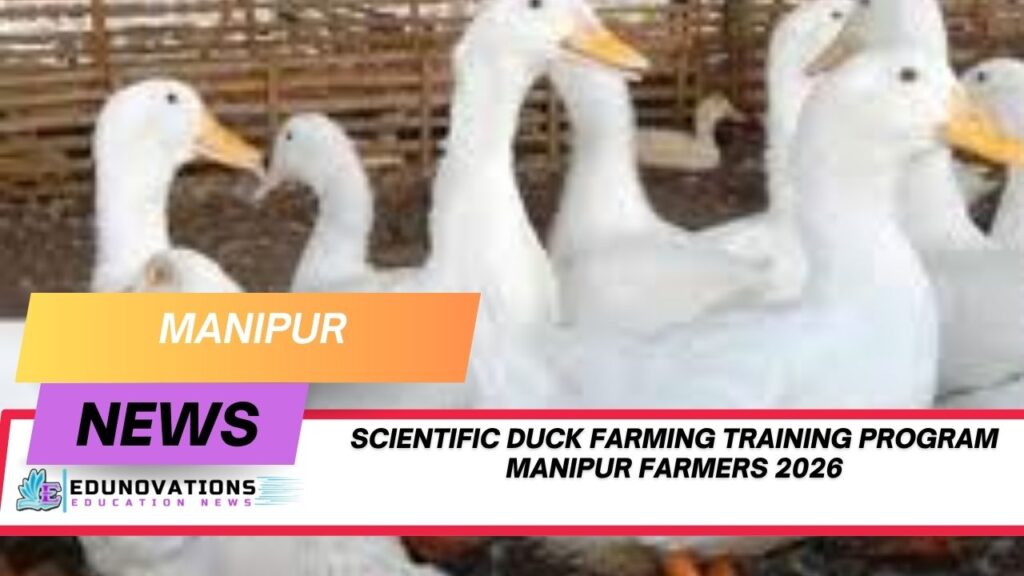
Discover how the scientific duck farming training program Manipur farmers 2026 is empowering rural livelihoods through ICAR-IVRI initiatives, duckling distribution, and modern livestock practices.
Introduction
In a significant push toward sustainable rural development, the scientific duck farming training program Manipur farmers 2026 has emerged as a transformative initiative aimed at enhancing farmers’ income and strengthening livestock-based livelihoods in the North Eastern Hill (NEH) region of India. Spearheaded by the Indian Council of Agricultural Research (ICAR) through the Indian Veterinary Research Institute (IVRI), this initiative integrates training, resource distribution, and modern advisory services to uplift small and marginal farmers.
The program, conducted in collaboration with Krishi Vigyan Kendras (KVKs), reflects a broader strategy to promote scientific livestock farming practices in regions where traditional agriculture often faces climatic and economic challenges.
Background of the Initiative
The scientific duck farming training program Manipur farmers 2026 is part of ICAR’s NEH development strategy, which focuses on improving agricultural productivity and farmer livelihoods in the northeastern states. Manipur, known for its rich biodiversity and water resources, provides an ideal ecosystem for duck farming.
Recognizing this potential, ICAR-IVRI launched a targeted intervention that combines:
- Scientific training in duck farming
- Distribution of improved duck breeds
- Disease management awareness
- Nutrition and housing practices
- Digital advisory support
This integrated approach ensures that farmers not only receive inputs but also gain the knowledge required to sustain and scale their operations.
Training and Capacity Building of Farmers
A key highlight of the scientific duck farming training program Manipur farmers 2026 is its focus on farmer education. Around 70 farmers participated in structured training sessions designed to enhance their technical knowledge.
Key Training Modules Included:
- Scientific breeding techniques
- Feed and nutrition management
- Disease prevention and vaccination
- Housing and sanitation practices
- Market linkage strategies
The training sessions were conducted by veterinary experts and scientists who emphasized practical, field-level applications. This hands-on approach ensures that farmers can implement the techniques effectively.
Duckling Distribution for Livelihood Support
An important component of the scientific duck farming training program Manipur farmers 2026 is the distribution of high-quality ducklings to farmers. Each beneficiary received approximately 50 ducklings, including improved breeds such as White Pekin and Magpie ducks.
Benefits of These Breeds:
- Faster growth rate
- Higher egg production
- Better adaptability to local conditions
- Improved resistance to diseases
This distribution not only reduces the initial investment burden on farmers but also ensures higher productivity and profitability.
Role of ICAR-IVRI and KVK Collaboration
The success of the scientific duck farming training program Manipur farmers 2026 can be attributed to the strong collaboration between ICAR-IVRI and local KVKs.
Key Contributions:
- ICAR-IVRI: Technical expertise, research-based practices, and training modules
- KVKs: Local implementation, farmer mobilization, and follow-up support
This synergy bridges the gap between research and field-level application, ensuring that scientific knowledge reaches grassroots farmers.
Integration of Technology in Livestock Farming
One of the standout features of the scientific duck farming training program Manipur farmers 2026 is the use of digital tools and mobile-based advisory services.
Technological Interventions:
- Mobile apps for livestock health monitoring
- Tele-consultancy with veterinary experts
- Real-time disease alerts and solutions
These innovations empower farmers to make informed decisions and reduce losses due to disease outbreaks or poor management practices.
Economic Impact on Farmers
The scientific duck farming training program Manipur farmers 2026 is expected to significantly boost rural incomes.
Income Enhancement Factors:
- Increased egg production
- Better market prices for improved breeds
- Reduced mortality rates
- Diversification of income sources
Experts estimate that scientific duck farming can increase farmer income by 30–50% compared to traditional practices.
Expert Insights on Livestock Development
Agricultural experts have emphasized the importance of such programs in strengthening rural economies.
A senior livestock scientist associated with the initiative noted:
“Scientific interventions like the scientific duck farming training program Manipur farmers 2026 are crucial for transforming traditional farming into a profitable enterprise. They not only improve productivity but also ensure sustainability.”
This perspective aligns with national goals of doubling farmers’ income and promoting sustainable agriculture.
Importance of Duck Farming in NEH Region
Duck farming holds unique advantages in the NEH region due to its natural ecosystem.
Why Duck Farming is Ideal:
- Abundant water bodies
- Low input cost
- High demand for duck eggs and meat
- Compatibility with integrated farming systems
The scientific duck farming training program Manipur farmers 2026 leverages these advantages to create a scalable model for rural development.
Challenges Addressed by the Program
The scientific duck farming training program Manipur farmers 2026 also addresses several challenges faced by farmers:
- Lack of scientific knowledge
- Poor quality breeds
- Limited access to veterinary services
- Low productivity and income
By tackling these issues, the program ensures long-term sustainability.
Linking Education and Skill Development
For students and aspirants interested in agriculture and livestock development, platforms like:
- NCERT Courses: https://courses.edunovations.com/
- Current Affairs: https://edunovations.com/currentaffairs/
- Notes: https://edunovations.com/notes/
- MCQs: https://edunovations.com/mcq/
- Videos: https://edunovations.com/videos/
- Syllabus: https://edunovations.com/syllabus/
- Free NCERT PDFs: https://courses.edunovations.com/shop-2/
can provide valuable learning resources related to such government initiatives.
Digital Support for Educational and Institutional Growth
For institutions looking to build educational websites and expand digital reach, services like Mart Ind Infotech offer professional solutions for schools and educational platforms.
Future Prospects of the Initiative
The scientific duck farming training program Manipur farmers 2026 is expected to serve as a model for replication in other northeastern states.
Future Expansion Plans:
- Scaling to more districts
- Inclusion of additional livestock species
- Strengthening market linkages
- Enhancing digital advisory systems
Such initiatives can play a crucial role in achieving self-reliance in rural economies.
Government’s Vision for Livestock Development
The program aligns with the government’s broader vision of:
- Promoting sustainable agriculture
- Enhancing farmer income
- Encouraging scientific farming practices
- Strengthening rural livelihoods
The scientific duck farming training program Manipur farmers 2026 is a step in this direction.
Environmental and Sustainability Benefits
Duck farming is considered environmentally sustainable due to:
- Low carbon footprint
- Efficient use of natural resources
- Integration with paddy farming
The scientific duck farming training program Manipur farmers 2026 promotes eco-friendly practices that benefit both farmers and the environment.
Conclusion
The scientific duck farming training program Manipur farmers 2026 stands as a powerful example of how targeted interventions, scientific knowledge, and institutional collaboration can transform rural livelihoods. By equipping farmers with skills, resources, and technological support, the initiative not only enhances productivity but also ensures long-term sustainability.
As India continues to focus on agricultural innovation and rural development, such programs will play a pivotal role in shaping the future of farming.
Toppers Use Mind Maps to score more than 95%
-
NCERT Class 11th Commerce Mind Maps
Add to cartOriginal price was: ₹999.00.₹199.00Current price is: ₹199.00. -
NCERT Class 12th Chemistry Mind Maps
Add to cartOriginal price was: ₹199.00.₹75.00Current price is: ₹75.00. -
NCERT Class 12th Commerce Mind Maps
Add to cartOriginal price was: ₹999.00.₹199.00Current price is: ₹199.00. -
NCERT Class 12th Science Mind Maps
Add to cartOriginal price was: ₹999.00.₹199.00Current price is: ₹199.00. -
NCERT Mind Maps For Class 10th
Add to cartOriginal price was: ₹999.00.₹199.00Current price is: ₹199.00.





Purchase Today
❓ FAQs
1. What is the scientific duck farming training program Manipur farmers 2026?
It is an ICAR-IVRI initiative aimed at training farmers in scientific duck farming and improving their income.
2. How does the scientific duck farming training program Manipur farmers 2026 benefit farmers?
It provides training, ducklings, and technical support to enhance productivity and income.
3. Which breeds are distributed under the program?
White Pekin and Magpie duck breeds are commonly distributed.
4. Who conducts the training in this program?
Experts from ICAR-IVRI and local KVKs conduct the training.
5. How many farmers participated in the program?
Around 70 farmers benefited from the initiative.
6. What is the role of KVK in the program?
KVKs help in implementation, training, and farmer support.
7. How does duck farming increase farmer income in Manipur NEH region?
It provides additional income through egg and meat production with low investment.
8. What technologies are used in the program?
Mobile apps and tele-consultancy services are used for advisory support.
9. Is the program scalable to other regions?
Yes, it can be expanded to other northeastern states.
10. Why is duck farming suitable for the NEH region?
Due to abundant water resources and favorable climatic conditions.