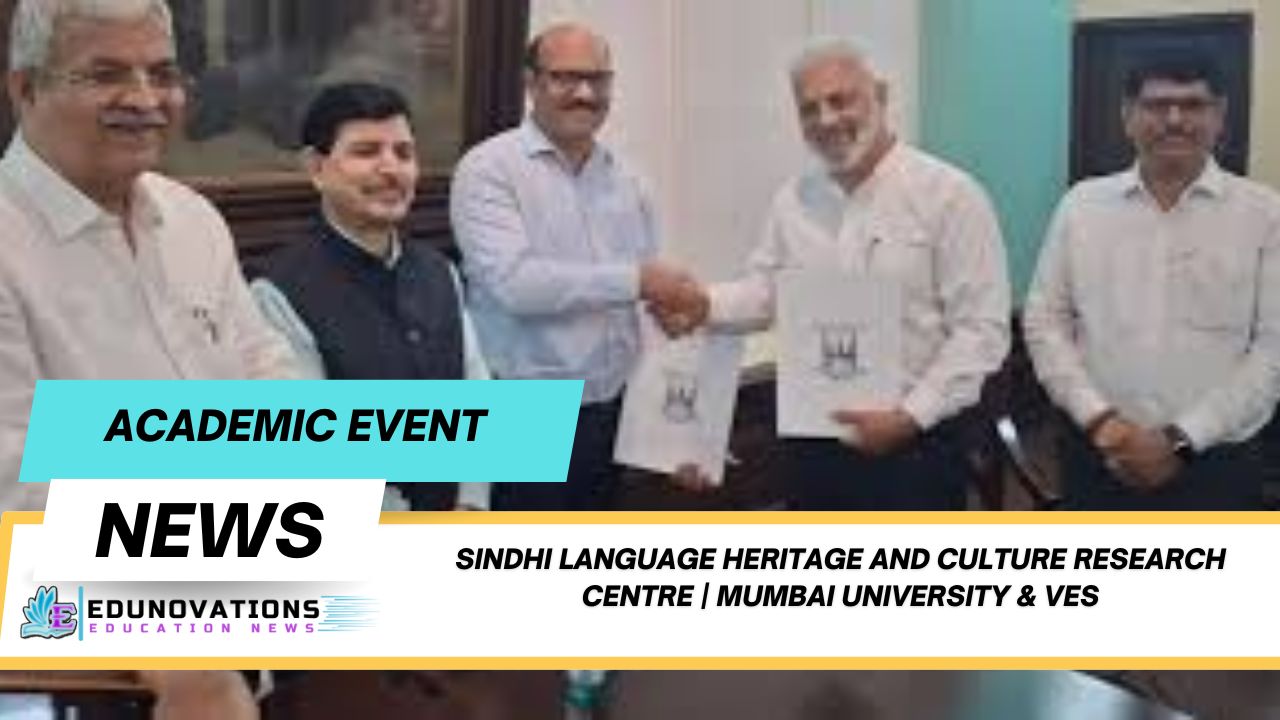
Mumbai University & VES launch historic Sindhi language heritage and culture research centre to preserve Sindhi language, culture and heritage with academic programmes.
Mumbai University and Vivekanand Education Society (VES) have taken a landmark step toward cultural preservation by launching a Sindhi language heritage and culture research centre as part of a broader initiative to strengthen academic research, community engagement, and cultural documentation. This collaborative effort aims to serve as a hub for Sindhi language heritage and culture research, offering programmes and opportunities that elevate the study, preservation, and promotion of an ancient linguistic tradition within India’s modern educational ecosystem.
The Sindhi language heritage and culture research centre is set up under a signed Memorandum of Understanding (MoU) between the University of Mumbai and VES, creating a formal academic partnership to preserve and promote the Sindhi language, its literature, and cultural heritage through research, outreach, and training.
This historic effort is not only significant for Sindhi linguistic and cultural identity but also reflects growing support in India for heritage language education and scholarly work, including academic programmes that empower future generations to engage with and contribute to the conservation of cultural traditions.
A Strategic Academic Alliance for Sindhi Language Preservation
On December 12, 2025, VES announced it had signed an MoU with the University of Mumbai to establish a centre dedicated to Sindhi language heritage and culture research. As part of this initiative, the Vivekanand Education Society Sindhi Research and Development Centre (SRDC) will operate within the new Centre of Excellence (CoE).
The initiative reflects a committed institutional effort to support academic programmes focused on Sindhi cultural heritage, create educational content, and expand access to language research. The centre will also embrace digitisation and documentation practices aimed at preserving rare texts and oral traditions connected with the Sindhi linguistic tradition.
About the Sindhi Language and Its Cultural Importance
The Sindhi language is one of the oldest spoken languages of the Indian subcontinent with rich literary traditions and a deep cultural heritage. It carries centuries of poetry, folklore, and philosophical expression, and has been recognised as part of India’s linguistic diversity. Wikipedia
Over time, however, scholars and educators have noted a decline in active language use and a fragmentation of cultural continuity, especially among diaspora communities and younger generations. Research highlights the need for strategic academic support, preservation programmes, and institutional initiatives to safeguard the language and cultural practices for future generations.
Centre Design and Objectives
The centre will be housed in a newly constructed 12,000 sq. ft. building on the University of Mumbai campus and aligns with the Indian government’s broader goals to promote and sustain heritage languages.
Core Components and Programmes
The centre for Sindhi language heritage and culture research will pursue several key functions:
- Academic programmes focusing on Sindhi language, literature, and cultural traditions.
- Research initiatives including linguistic analysis, literary studies, and scholarly publications.
- Digitisation projects to convert manuscripts into digital formats (Arabic and Devanagari scripts).
- Audiobooks and audiovisual resources to support diverse learning formats.
- Oral tradition preservation, recording folklore, stories, songs, and community narratives.
- Seminars, workshops, and conferences to engage students, researchers, and community members.
This multifaceted approach strengthens the academic and cultural presence of the Sindhi language, while providing a model that could be replicated in other regions and languages across India.
Institutional Leadership and Vision
Advocate Rajesh Gehani, Secretary of Vivekanand Education Society, described the initiative as a historic milestone for the Sindhi community, giving scholars and cultural ambassadors new tools to protect and promote their heritage through structured academic and digital programmes.
Professor Ravindra Kulkarni, Vice-Chancellor of Mumbai University, emphasised the importance of creating a learning environment where the Sindhi language can thrive with scholarly support. He noted that the initiative goes beyond infrastructure to embrace broader goals of linguistic heritage preservation and academic excellence.
Linking Culture, Identity and Academic Opportunity
As the centre begins operation, it will play a pivotal role in connecting the Sindhi community’s historical identity with modern educational contexts. The move also resonates with the National Education Policy (NEP) 2020, which promotes mother-tongue based education and the revitalisation of regional and minority languages within India’s diverse linguistic ecology.
Through structured programmes and outreach efforts, the centre aims to:
- Encourage youth participation in cultural research and language learning.
- Foster interdisciplinary studies involving history, linguistics, anthropology, and cultural preservation.
- Support the documentation of intangible cultural heritage, including rituals, music, and oral histories.
By doing so, the centre contributes to a renewed focus on heritage language education as a crucial aspect of national identity and cultural continuity. IANS News
Advancing Digitisation and Community Engagement
One of the key pillars of the new centre’s strategy is digitisation and digital education, which supports global accessibility and preservation of primary sources related to the Sindhi language. These include:
- Digital versions of rare manuscripts and literary texts.
- Transliteration of Sindhi texts into multiple writing systems for broader research utility.
- Creation of open educational resources (OERs) in audio and video formats.
Digital approaches also allow younger learners and researchers from outside India to engage with Sindhi cultural heritage, bridging geographical and temporal distances.
Broader Impact and Future Prospects
Experts in linguistic preservation applaud the centre as a model for heritage language initiatives and a source of academic inspiration that could extend to other regional languages across India. By centring Sindhi language heritage and culture research, the University of Mumbai and VES are helping to chart a path for future language conservation projects.
Language advocates and community leaders expect that such academic frameworks will encourage universities across the country to adopt similar programmes, ultimately strengthening India’s multilingual heritage
Related Resources for Students and Researchers
To support learners and educators exploring language studies and cultural preservation, here are some helpful links:
Explore Academic & Exam Resources
- NCERT Courses
- Current Affairs
- Notes
- MCQs
- Videos
- Syllabus
- Free NCERT PDFs
- NCERT Mind Maps
External Authority
For schools, language institutions, and cultural preservation projects, consider connecting with external partners, including Mart Ind Infotech for educational technology solutions.
Toppers Use Mind Maps to score more than 95%
NCERT Class 11th Commerce Mind Maps
Add to cartOriginal price was: ₹999.00.₹199.00Current price is: ₹199.00.NCERT Class 12th Chemistry Mind Maps
Add to cartOriginal price was: ₹199.00.₹75.00Current price is: ₹75.00.NCERT Class 12th Commerce Mind Maps
Add to cartOriginal price was: ₹999.00.₹199.00Current price is: ₹199.00.NCERT Class 12th Science Mind Maps
Add to cartOriginal price was: ₹999.00.₹199.00Current price is: ₹199.00.NCERT Mind Maps For Class 10th
Add to cartOriginal price was: ₹999.00.₹199.00Current price is: ₹199.00.




Purchase Today
10 Key FAQs on This Initiative
1. What is the Sindhi language heritage and culture research centre?
It is a research hub created by Mumbai University and VES to promote Sindhi language heritage and culture research through academic programmes, digitisation, and cultural documentation.
2. Who is leading this initiative?
The centre is the result of an MoU signed by the University of Mumbai and Vivekanand Education Society, led by Advocate Rajesh Gehani and Vice-Chancellor Prof. Ravindra Kulkarni.
3. What are the main goals of this programme?
Its goals include preserving the Sindhi language, promoting cultural heritage research, offering academic programmes, and engaging communities in language documentation.
4. Where will the centre be located?
The centre will be housed in a newly developed 12,000 sq. ft. building on the University of Mumbai campus.
5. What research opportunities are available?
Opportunities include linguistic analysis, digital archiving, oral tradition documentation, and audiovisual educational content creation.
6. Can students outside India access the centre’s resources?
Through digital platforms and online resources, learners globally can engage with research outputs and educational materials once published.
7. How does the initiative support cultural identity?
By preserving texts, traditions, and language practices, the centre reinforces community identity and intergenerational cultural transmission.
8. What role does digitisation play?
Digitisation ensures rare manuscripts and oral histories are preserved, searchable, and accessible for future scholarship.
9. Is the centre part of broader government language preservation policies?
Yes, it aligns with India’s efforts to promote heritage language studies and mother-tongue education initiatives.
10. Will similar centres be created for other languages?
Experts anticipate that the centre’s success may inspire comparable programmes for other regional and heritage languages across India.