
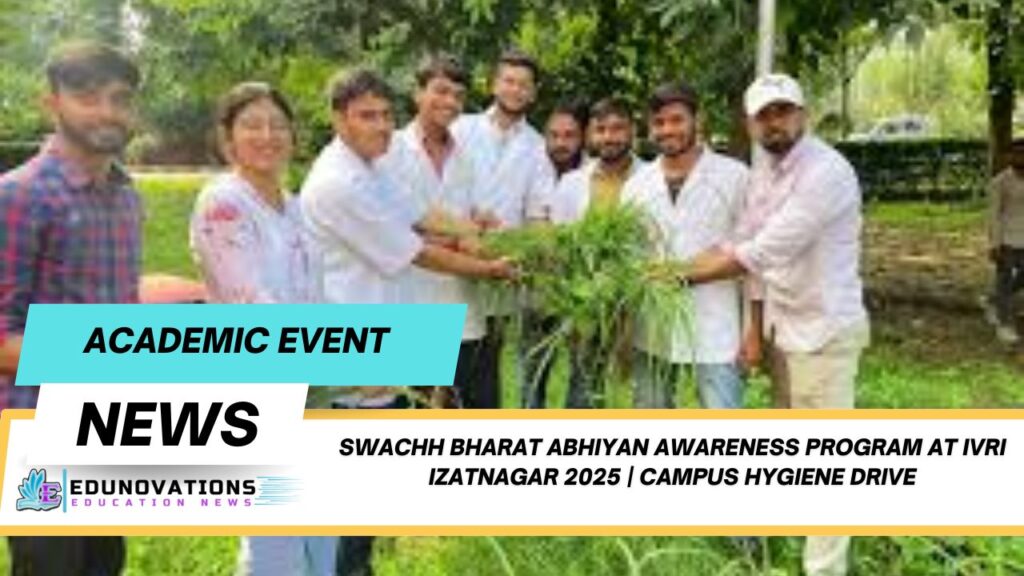
Discover the Swachh Bharat Abhiyan awareness program at IVRI Izatnagar 2025 promoting campus cleanliness, waste segregation, and hygienic practices.
The Indian Veterinary Research Institute (IVRI), Izatnagar, successfully hosted a Swachh Bharat Abhiyan awareness program at IVRI Izatnagar 2025, reflecting the institution’s commitment to a clean and hygienic campus environment. The program, part of the Swachh Bharat Pakhwada initiative, was held on 16 December 2025 at the Central Auditorium and witnessed active participation from students, staff, scientists, and other stakeholders.
Organized meticulously by the Students’ Welfare Office, the event aimed to emphasize the importance of cleanliness, sustainable waste management, and the adoption of hygienic practices on campus. The program aligns with the broader goals of the national Swachh Bharat Mission, aiming to inculcate civic responsibility and environmental consciousness among all members of the IVRI community.
Key Highlights of the Event
- Swachhata Pledge: Dr. S.K. Singh, Joint Director (Research), administered the Swachhata Pledge to Heads of Divisions, Scientists, Students, and Staff members, reiterating the institution’s dedication to a clean campus.
- Awareness Messages: Dr. Singh highlighted crucial points regarding campus cleanliness, waste segregation into wet and dry categories, and hygienic practices that can be integrated into daily routines.
- Active Participation: Officers, employees, students, and stakeholders actively engaged in the event, demonstrating collective responsibility towards maintaining a healthy environment.
- Program Conclusion: The event was concluded efficiently by Dr. S.K. Saha, Principal Scientist and Students Welfare Officer of the Animal Nutrition Division, emphasizing the continuous nature of the cleanliness movement.
The program strongly advocated minimizing plastic usage and incorporating clean habits into everyday life, reinforcing the philosophy that Swachh Bharat Abhiyan is a continuous mass movement that relies on the active engagement of every citizen.
Importance of Cleanliness and Waste Segregation in Educational Institutes
Educational institutions play a pivotal role in shaping societal behavior, and initiatives like the Swachh Bharat Abhiyan awareness program at IVRI Izatnagar 2025 serve as exemplary models for other campuses. By teaching students and staff to manage waste responsibly and maintain hygiene, these programs contribute to:
- Reduced environmental pollution
- Promotion of health and well-being
- Development of civic consciousness among young minds
The IVRI campus actively encourages waste segregation activities, ensuring that organic and inorganic waste is processed efficiently. This not only aids in maintaining campus cleanliness but also provides practical learning experiences for students, bridging theory with real-life environmental practices.
Expert Insights on Campus Cleanliness
Dr. S.K. Singh emphasized that cleanliness should not be limited to events but should be an integral part of daily life. Experts agree that educational institutions adopting regular cleanliness drives foster a culture of responsibility and environmental stewardship. According to recent studies, campuses that maintain structured waste segregation systems report a 40% reduction in plastic waste and significantly improved hygiene levels.
Furthermore, the participation of scientists and officers in such initiatives demonstrates leadership in promoting sustainable practices. When students witness senior members adhering to cleanliness norms, they are more likely to internalize and practice these habits.
Steps Taken During the Swachh Bharat Pakhwada at IVRI
The program encompassed several practical steps to promote hygiene and cleanliness:
- Administration of the Swachhata Pledge – instilling a sense of responsibility among participants.
- Awareness Sessions – explaining the significance of waste segregation and hygienic practices.
- Practical Demonstrations – showing correct disposal of wet and dry waste.
- Student Engagement – interactive sessions where students actively participated in cleanliness activities.
- Leadership Involvement – officers and scientists led by example, reinforcing the program’s objectives.
These measures ensure that Swachh Bharat Pakhwada initiatives translate into long-term behavioral changes, creating a cleaner and healthier environment for all campus residents.
Role of Students and Staff in Maintaining Hygiene
The involvement of students and staff is central to the success of any cleanliness campaign. The Swachh Bharat Abhiyan awareness program at IVRI Izatnagar 2025 encouraged participants to take ownership of their surroundings. Students were guided on practical measures, including:
- Segregating waste into biodegradable and non-biodegradable categories
- Minimizing the use of single-use plastics
- Maintaining personal and communal hygiene
- Organizing and participating in campus cleanliness drives
Staff members and faculty played a mentorship role, guiding students and creating an environment conducive to learning and practicing hygienic habits.
Swachh Bharat Mission: A National Perspective
Initiated in 2014 by the Government of India, the Swachh Bharat Mission has transformed the approach to cleanliness across the country. The IVRI event is part of a nationwide effort to:
- Promote awareness about hygiene and sanitation
- Reduce open defecation and improper waste disposal
- Encourage local participation in sustainable cleanliness programs
Experts note that integrating such programs within educational institutions ensures that the younger generation becomes an active stakeholder in India’s cleanliness journey.
Integrating Clean Habits into Daily Life
Participants at IVRI were urged to adopt clean habits beyond the campus, including:
- Proper disposal of household waste
- Regular cleaning of personal and public spaces
- Participation in community cleanliness drives
- Reducing plastic consumption
The event also highlighted the importance of practical implementation of waste segregation, which can serve as a model for other institutions, schools, and colleges nationwide.
External Resources and Tools for Schools
For schools looking to implement similar initiatives, expert guidance is available through online platforms. One such resource is Mart India Infotech, which provides contact and consultancy services for implementing structured cleanliness programs in educational institutions.
Additionally, for students and teachers interested in structured learning and exam preparation resources, internal links like NCERT Courses, Current Affairs, Notes, MCQs, Videos, Syllabus, and NCERT Mind Maps provide comprehensive educational support.
Conclusion
The Swachh Bharat Abhiyan awareness program at IVRI Izatnagar 2025 successfully reinforced the importance of cleanliness, hygiene, and collective responsibility among students, staff, and scientists. Through pledges, awareness sessions, and active participation, the event has established a benchmark for similar initiatives at other institutions. By adopting sustainable practices and clean habits, the IVRI community exemplifies the ethos of the Swachh Bharat Mission, inspiring the nation toward a cleaner and healthier future.
Toppers Use Mind Maps to score more than 95%
-
NCERT Class 11th Commerce Mind Maps
Add to cartOriginal price was: ₹999.00.₹199.00Current price is: ₹199.00. -
NCERT Class 12th Chemistry Mind Maps
Add to cartOriginal price was: ₹199.00.₹75.00Current price is: ₹75.00. -
NCERT Class 12th Commerce Mind Maps
Add to cartOriginal price was: ₹999.00.₹199.00Current price is: ₹199.00. -
NCERT Class 12th Science Mind Maps
Add to cartOriginal price was: ₹999.00.₹199.00Current price is: ₹199.00. -
NCERT Mind Maps For Class 10th
Add to cartOriginal price was: ₹999.00.₹199.00Current price is: ₹199.00.




Purchase Today
FAQs
- What is the Swachh Bharat Abhiyan awareness program at IVRI Izatnagar 2025?
It is a campus initiative promoting cleanliness, waste segregation, and hygiene among students and staff. - Who organized the Swachh Bharat Pakhwada at IVRI?
The Students’ Welfare Office, IVRI organized the awareness program. - What activities were conducted during the IVRI Swachh Bharat Abhiyan 2025?
Activities included the Swachhata Pledge, awareness sessions, and practical demonstrations on waste segregation. - Who participated in the IVRI campus cleanliness drive?
Students, staff, scientists, and other stakeholders actively participated. - What is the significance of waste segregation in IVRI’s program?
Segregation of wet and dry waste ensures effective waste management and promotes hygiene. - Which expert administered the Swachhata Pledge at IVRI?
Dr. S.K. Singh, Joint Director (Research), administered the pledge. - How does IVRI encourage students to maintain hygiene?
Through interactive sessions, practical demonstrations, and mentorship from faculty and staff. - Can schools replicate IVRI’s cleanliness initiative?
Yes, schools can access guidance through platforms like Mart India Infotech. - What are the long-term benefits of participating in Swachh Bharat Abhiyan at educational institutions?
Promotes civic responsibility, environmental consciousness, and health awareness. - How can students integrate clean habits into daily life?
By minimizing plastic use, segregating waste, maintaining personal hygiene, and participating in local cleanliness drives.