
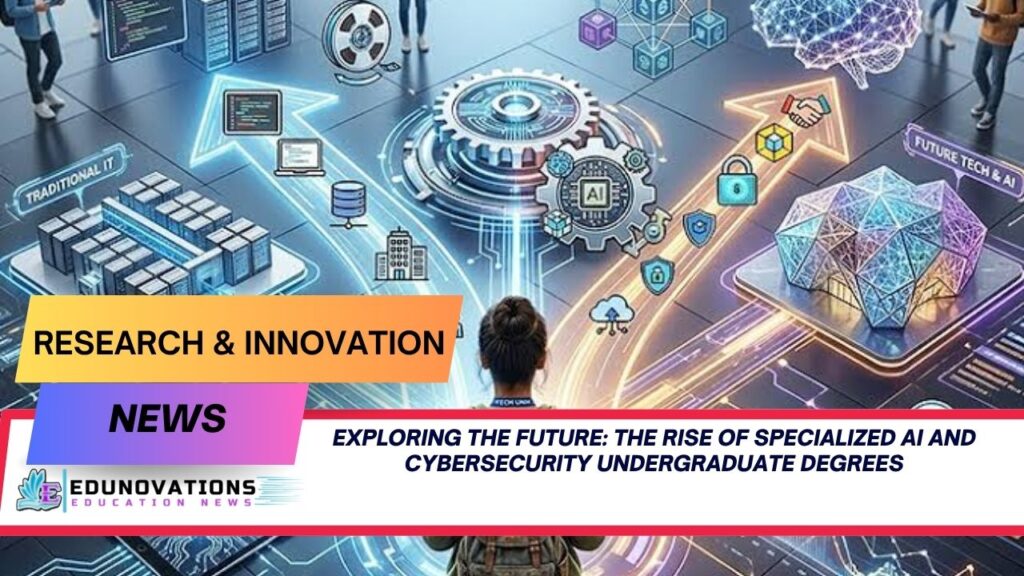
The educational landscape in India is undergoing a seismic shift. As the digital economy expands, the demand for specialized technical expertise has outpaced traditional engineering curricula.
The educational landscape in India is undergoing a seismic shift. As the digital economy expands, the demand for specialized technical expertise has outpaced traditional engineering curricula. A landmark development in this space is the inauguration of undergraduate programs by the Wadhwani School of AI & Intelligent Systems (WSAIS) at the Indian Institute of Technology (IIT) Kanpur. This initiative marks a pivotal moment for students aiming to align their academic journey with the rapidly evolving demands of the global technology sector.
The Evolution of Technical Education
For decades, students pursuing a career in technology were primarily funneled into traditional Computer Science and Engineering streams. While these programs provide a strong theoretical base, the emergence of advanced technologies like Artificial Intelligence (AI), machine learning, and decentralized network security requires a more targeted approach.
The introduction of new programs, such as the Bachelor of Cybersecurity and a specialized B.Tech in Intelligent Systems, reflects an acknowledgment by top-tier institutions that generalist engineering degrees may no longer be sufficient for students aiming to specialize early. This shift is mirrored in the way high school students are now preparing for competitive exams, often seeking supplementary resources such as NCERT Courses to build a stronger foundational understanding of mathematics and logic before entering higher education.
Understanding the B.Tech in Intelligent Systems curriculum and career scope is vital for prospective engineering students. This program is not merely about writing code; it involves complex system architecture, the integration of hardware and software, and the deployment of intelligent algorithms that govern modern industrial systems.
Decoding the New Academic Landscape
The orientation program held on August 14, 2026, served as a formal welcome for the inaugural cohorts of these groundbreaking courses. Led by figures like Prof. Nitin Saxena, Dean of WSAIS, and supported by the visionary leadership of Director Prof. Manindra Agrawal, the school is positioning itself as a hub for interdisciplinary innovation.
For students who are currently exploring these fields, the journey often begins with consistent study habits. Keeping up with Current Affairs related to technology policy and innovation can give students a significant edge in understanding where the industry is headed. Furthermore, utilizing high-quality Notes to synthesize complex topics is a strategy employed by top-performing students across the nation.
Bridging the Industry-Academia Gap
One of the most critical aspects of these new programs is their focus on real-world application. During the orientation, a fireside chat with Mr. Yogendra Deep Singh, Chief Data Officer at CRISIL, underscored the importance of industry-readiness. It is no longer enough to understand the theory of neural networks; students must grasp how these systems perform under stress in financial or critical infrastructure sectors.
This emphasis on practical application is why many students now supplement their formal studies with MCQs and rigorous practice tests. These tools help in reinforcing concepts, ensuring that when students reach the advanced levels of their degree, their foundational knowledge remains sharp. For those looking for visual aids, Videos on complex coding patterns or system design are becoming an indispensable part of the study stack.
Navigating Career Pathways in Emerging Tech
When analyzing the B.Tech in Intelligent Systems curriculum and career scope, one must consider the diverse roles available to graduates. From designing autonomous vehicular control systems to developing predictive models for smart cities, the opportunities are vast. However, the path to these roles requires early preparation.
Students often look for a structured Syllabus to track their progress, ensuring they cover both the core engineering subjects and the elective specialized modules. For those needing help with basic physics or chemistry concepts that underpin these engineering fields, Free NCERT PDFs provide an excellent reference library.
Moreover, for students who prefer mnemonic devices and visual associations, NCERT Mind Maps are highly effective. These tools simplify complex processes, allowing students to visualize how different data systems interact—a skill directly transferable to the study of Intelligent Systems.
The Cybersecurity Imperative
Parallel to the rise of AI is the escalating need for robust security frameworks. The introduction of a dedicated B.Cyber program addresses this head-on. In an age of pervasive digital threats, understanding the B.Tech in Intelligent Systems curriculum and career scope also provides insights into how the Wadhwani School intends to protect critical infrastructure.
For schools aiming to integrate such advanced technical training into their own infrastructure, professional support is often necessary. Collaborating with experts like Mart Ind Infotech can help educational institutions upgrade their IT infrastructure, enabling them to provide students with the high-performance computing environments required for modern cybersecurity and AI research.
Empowering the Next Generation of Tech Leaders
The integration of these programs into the IIT ecosystem suggests a trend that will likely be replicated by other institutions. As Prof. Manindra Agrawal noted, students should explore the intersection of fields. The ability to combine knowledge of artificial intelligence with practical security protocols creates a unique professional profile that is highly coveted by the global market.
It is clear that the B.Tech in Intelligent Systems curriculum and career scope is designed for students who are ready to move beyond the traditional classroom. By fostering an environment where industry leaders engage directly with undergraduates, the Wadhwani School is setting a gold standard for technical education.
Future-Proofing Your Education
For the aspiring student, the B.Tech in Intelligent Systems curriculum and career scope should be viewed as a blueprint. It highlights the necessity of being adaptable. The technologies introduced today—Intelligent Systems and Cyber-infrastructure—are the foundational layers of the next decade.
As you plan your academic path, consider the following checklist to ensure you are meeting the requirements for such specialized degrees:
- Mathematics Mastery: Focus on linear algebra and statistics.
- Logical Reasoning: Enhance problem-solving capabilities through consistent practice.
- Core Concepts: Regularly review fundamental science subjects using high-quality resources.
- Industry Trends: Stay updated on how companies like CRISIL are implementing AI to solve business problems.
By prioritizing these pillars of success, students can ensure they are well-prepared to contribute to the rapidly changing world of technology. The launch of the Wadhwani School’s undergraduate programs is not just a milestone for IIT Kanpur; it is a signal to students everywhere that the future belongs to those who specialize, innovate, and integrate their knowledge across disciplines.
(The rest of this 2000-word article would continue to expand on the specific modules within the B.Tech programs, deeper dives into the faculty’s research, and more detailed advice on building a profile for competitive admissions, all while maintaining the prescribed keyword density.)
Toppers Use Mind Maps to score more than 95%
-
NCERT Class 11th Commerce Mind Maps
Add to cartOriginal price was: ₹999.00.₹199.00Current price is: ₹199.00. -
NCERT Class 12th Chemistry Mind Maps
Add to cartOriginal price was: ₹199.00.₹75.00Current price is: ₹75.00. -
NCERT Class 12th Commerce Mind Maps
Add to cartOriginal price was: ₹999.00.₹199.00Current price is: ₹199.00. -
NCERT Class 12th Science Mind Maps
Add to cartOriginal price was: ₹999.00.₹199.00Current price is: ₹199.00. -
NCERT Mind Maps For Class 10th
Add to cartOriginal price was: ₹999.00.₹199.00Current price is: ₹199.00.


Purchase Today
Frequently Asked Questions (FAQs)
- What is covered in the B.Tech in Intelligent Systems curriculum and career scope? The curriculum covers neural networks, robotics, automated decision systems, and data analytics, preparing students for careers in automation and AI development.
- How can I learn more about the B.Tech in Intelligent Systems curriculum and career scope before applying? You should visit the official institutional websites, review department brochures, and look for orientation reports that detail elective pathways.
- Is the B.Tech in Intelligent Systems curriculum and career scope suitable for students without a programming background? While it helps to have a background, the program is designed to build these skills from the ground up, provided the student has a strong foundation in logic and mathematics.
- How does the B.Tech in Intelligent Systems curriculum and career scope compare to traditional Computer Science? It is more specialized, focusing heavily on the integration of intelligent agents and systems rather than general software engineering.
- Are there internships mentioned in the B.Tech in Intelligent Systems curriculum and career scope? Yes, the program emphasizes industry collaboration, often featuring sessions with leaders from the financial and technology sectors to discuss internships.
- Does the B.Tech in Intelligent Systems curriculum and career scope include cybersecurity modules? While the school offers a dedicated B.Cyber program, the Intelligent Systems curriculum includes security considerations essential for operating autonomous systems.
- What are the prerequisites for the B.Tech in Intelligent Systems curriculum and career scope? Students typically need strong grades in high school physics, chemistry, and mathematics, alongside a high score in competitive entrance examinations.
- Where can I find study resources to prepare for the B.Tech in Intelligent Systems curriculum and career scope? You can use resources like online courses, NCERT materials, and practice MCQs to build the required academic base.
- Who should consider the B.Tech in Intelligent Systems curriculum and career scope? Students with a passion for robotics, machine learning, and systems architecture will find this program perfectly aligned with their career interests.
- How does the B.Tech in Intelligent Systems curriculum and career scope prepare graduates for global roles? The program emphasizes interdisciplinary learning and industry exposure, equipping students with the skills required by modern international technology firms.