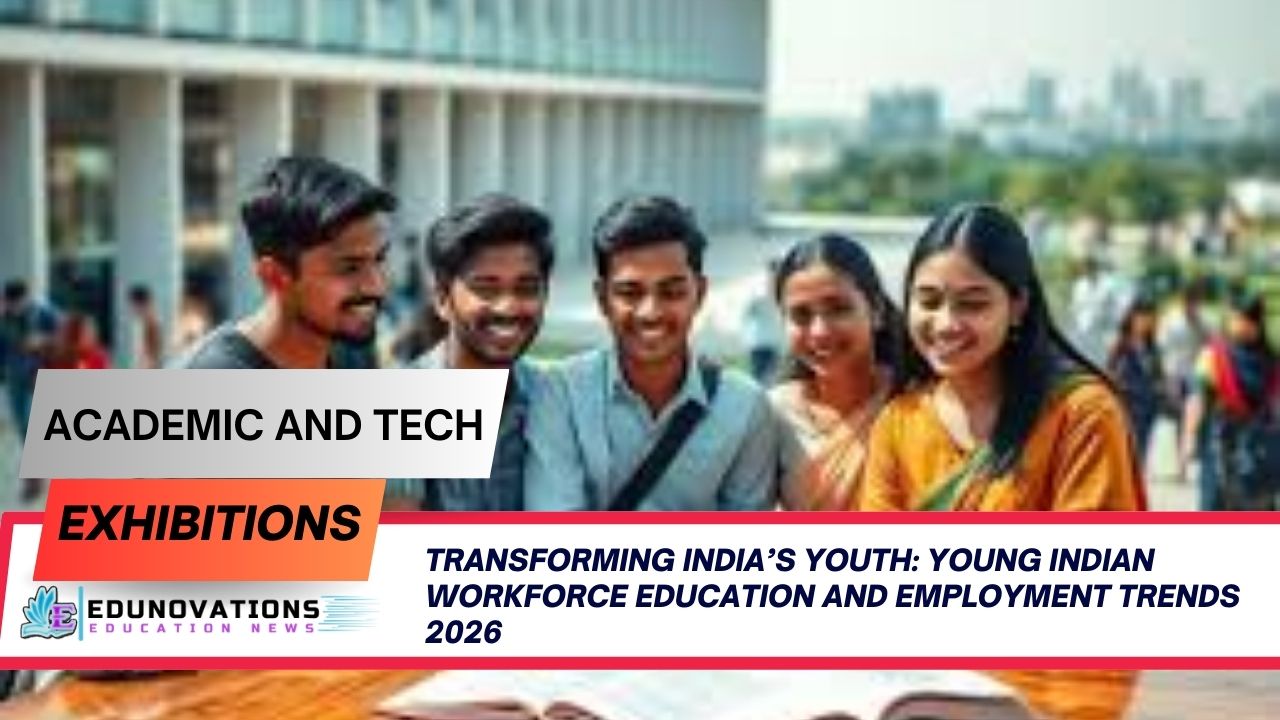
Explore young Indian workforce education and employment trends 2026, highlighting rising education levels, labour market challenges, and opportunities for India’s youth.
India’s labour market is witnessing a profound transformation as the young Indian workforce education and employment trends 2026 reveal remarkable growth in access to higher education. According to the latest State of Working India 2026 report by Azim Premji University, India’s youth, aged 15 to 29, are becoming more educated, informed, and ambitious, positioning themselves to drive the country’s demographic dividend into tangible economic outcomes. However, while progress is notable, significant challenges remain in translating education gains into sustainable employment opportunities.
Expanding Access to Higher Education
Over the past four decades, India has dramatically expanded higher education, particularly benefiting women and marginalized communities. College enrollment has risen from 29 per lakh youth in 2010 to 45 per lakh in 2021, largely driven by private institutions. This surge reflects not only a growing desire for education among youth but also a societal shift towards valuing knowledge-based careers.
- Tertiary enrollment among young people now stands at 28%, comparable with nations of similar per capita income.
- Education expansion has helped reduce gender and caste-based disparities, yet regional differences remain a concern.
- The increase in higher education facilities, including Industrial Training Institutes (ITIs), has created more vocational and professional pathways for young Indians.
Challenges in Education-to-Employment Transition
Despite rising educational attainment, the transition from learning to earning remains complex. Graduate unemployment rates remain high, with nearly 40% of 15-25-year-olds and 20% of 25-29-year-olds unable to secure stable employment within a year of graduation. Factors influencing this include:
- Financial barriers limiting access to high-cost professional courses like engineering and medicine.
- Shortages of qualified teachers in both public and private institutions.
- Quality disparities across vocational and technical institutes.
This challenging environment underscores the importance of creating coordinated policies to ensure that education translates effectively into employment.
Labour Market Dynamics and Demographic Dividend
India’s demographic dividend is nearing its peak, with the working-age population expected to decline post-2030. The country’s ability to leverage this large, young, and increasingly educated workforce will be critical. Key trends observed include:
- Shift away from agriculture: Young workers are increasingly moving into manufacturing, IT, automobile production, and business services.
- Wage premium for graduates: Graduates earn nearly double the entry-level income of non-graduates, though male graduate earnings have stagnated since 2011.
- Migration patterns: Youth migration is balancing regional employment disparities, with poorer states supplying labor to more industrialized regions.
These dynamics highlight the need for strategic interventions that align workforce skills with industry demand.
Policy Recommendations and Expert Insights
Experts emphasize that harnessing India’s youth potential requires a multi-pronged approach:
- Strengthening vocational and technical education to meet industry needs.
- Bridging gender and caste disparities by promoting equitable access to professional courses.
- Increasing teacher recruitment and training to maintain high-quality education outcomes.
- Promoting regional employment policies to reduce migration pressures and local unemployment.
Indu Prasad, President of Azim Premji University, notes, “More young people today are educated, informed, and ambitious than ever before. Supporting their transition into meaningful employment will determine whether India’s demographic dividend becomes an economic dividend.”
Future Prospects
The trajectory of young Indian workforce education and employment trends 2026 suggests that India stands at a critical juncture. If policymakers, educators, and industries collaborate effectively, the next decade could see unprecedented growth in skilled employment, higher wages, and a thriving economy. Programs supporting financial inclusion, vocational training, and equitable access to education will play pivotal roles in shaping India’s labour market.
Enhancing Skills for a Competitive Economy
To meet global competition, India’s youth must be equipped with both technical and soft skills. Collaboration between higher education institutions and industry leaders can ensure curriculum relevance, while continuous learning programs can keep graduates employable in evolving sectors.
Internal & External Resources
For students preparing for competitive exams or seeking skill development:
- NCERT Courses: edunovations.com/courses
- Current Affairs Updates: edunovations.com/currentaffairs
- Notes & MCQs: edunovations.com/notes | edunovations.com/mcq/
- Educational Videos & Syllabus: edunovations.com/videos/ | edunovations.com/syllabus/
- NCERT PDFs & Mind Maps: courses.edunovations.com/shop-2/
- School Website Services: Mart India Infotech
Toppers Use Mind Maps to score more than 95%
NCERT Class 11th Commerce Mind Maps
Add to cartOriginal price was: ₹999.00.₹199.00Current price is: ₹199.00.NCERT Class 12th Chemistry Mind Maps
Add to cartOriginal price was: ₹199.00.₹75.00Current price is: ₹75.00.NCERT Class 12th Commerce Mind Maps
Add to cartOriginal price was: ₹999.00.₹199.00Current price is: ₹199.00.NCERT Class 12th Science Mind Maps
Add to cartOriginal price was: ₹999.00.₹199.00Current price is: ₹199.00.NCERT Mind Maps For Class 10th
Add to cartOriginal price was: ₹999.00.₹199.00Current price is: ₹199.00.




Purchase Today
FAQs
- What are the young Indian workforce education and employment trends 2026?
- How has higher education expanded for India’s youth?
- What challenges do graduates face in transitioning to employment?
- How is India’s demographic dividend influencing labour markets?
- Which sectors are young workers moving into?
- How do financial barriers affect professional course enrollment?
- What policies can improve education-to-employment outcomes?
- How does migration affect regional employment disparities?
- What role do vocational institutes play in workforce readiness?
- How can collaboration between industry and education enhance employability?