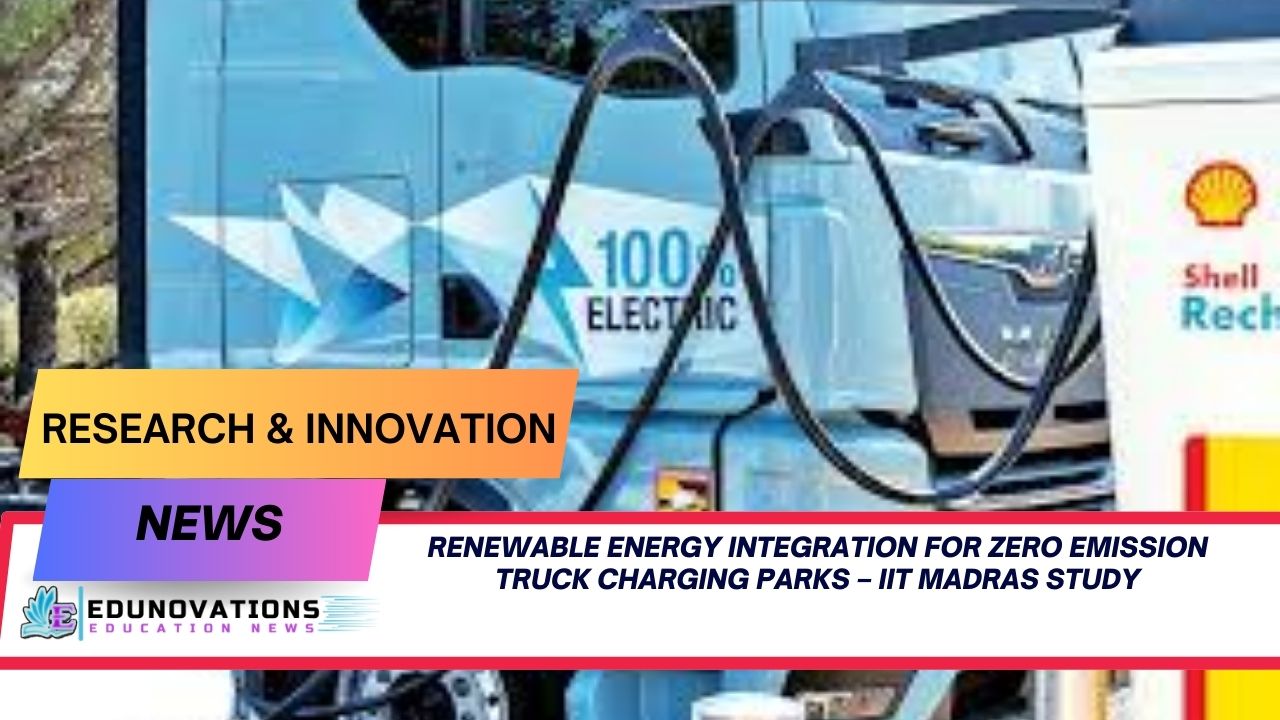
A groundbreaking study on renewable energy integration for zero emission truck charging parks outlines India’s roadmap for sustainable freight, grid stability, and clean logistics transformation.
India’s transition toward clean mobility has received a major boost with a path-breaking study by the Indian Institute of Technology Madras. The research outlines a structured and scalable model for renewable energy integration for zero emission truck charging parks, offering a practical solution to decarbonize the country’s rapidly expanding freight sector.
The freight transport industry contributes significantly to India’s greenhouse gas emissions. Heavy-duty diesel trucks dominate highways, logistics corridors, and industrial supply chains. With India committing to ambitious climate targets, experts argue that decarbonizing freight is no longer optional — it is an economic and environmental necessity.
The IIT Madras study provides a techno-economic roadmap for renewable powered ZET charge parks India, demonstrating how renewable energy systems, battery storage, and smart grid planning can support zero-emission trucking at scale.
Why India Needs a Freight Energy Revolution
India’s logistics demand is expected to grow threefold by 2050. Without intervention, emissions from heavy-duty vehicles could undermine national climate goals. While electric passenger vehicles are gaining momentum, the shift toward electric freight remains complex due to:
- High energy demand of heavy trucks
- Grid capacity constraints
- Charging infrastructure gaps
- Cost concerns for fleet operators
The concept of renewable energy integration for zero emission truck charging parks directly addresses these challenges by creating dedicated hubs powered by clean energy sources like solar and wind.
Industry analysts say that combining renewable generation with battery storage at freight hubs reduces dependence on fossil fuels while stabilizing electricity supply. This aligns with global trends in solar wind battery storage solutions for electric freight corridors, where integrated systems are being deployed to ensure reliability.
Study Highlights: Data-Driven Solutions for Clean Logistics
The IIT Madras research proposes a phased approach toward building renewable energy integration for zero emission truck charging parks along major freight corridors. Key components include:
1. Dedicated Charging Hubs
Strategically located parks along national highways to serve electric heavy-duty trucks.
2. Hybrid Renewable Energy Systems
On-site solar and wind installations paired with advanced battery storage.
3. Smart Grid Coordination
Digital monitoring to balance demand peaks and grid stability.
4. Financial Modeling
A detailed techno-economic roadmap for renewable powered ZET charge parks India that evaluates long-term cost savings and investment feasibility.
The study estimates that combining renewable sources with energy storage can reduce operational costs over time, especially as fossil fuel prices fluctuate.
Energy economists suggest that India’s renewable capacity — already among the largest globally — positions the country well to deploy India renewable energy pathways for heavy-duty electric logistics.
Economic Implications for Industry
The logistics industry accounts for nearly 14% of India’s GDP. Transitioning to electric freight supported by renewable energy integration for zero emission truck charging parks could:
- Lower fuel import dependence
- Reduce air pollution in urban clusters
- Create green jobs in energy and infrastructure
- Improve supply chain efficiency
According to transport policy experts, the shift toward a zero emission trucking renewable grid integration policy handbook is essential for aligning regulatory frameworks with infrastructure investments.
Public-private partnerships will likely play a major role in scaling projects under this framework.
Global Context and India’s Leadership Potential
Countries in Europe and North America are experimenting with renewable freight corridors. However, India’s scale and renewable growth give it unique advantages.
The structured plan for renewable energy integration for zero emission truck charging parks positions India as a leader among developing nations seeking sustainable freight models.
Energy policy observers note that India’s ability to integrate solar and wind at competitive costs strengthens the case for expanding solar wind battery storage solutions for electric freight corridors nationwide.
Policy Alignment and Government Support
The proposed techno-economic roadmap for renewable powered ZET charge parks India aligns with national missions promoting clean energy and electric mobility.
Key enabling factors include:
- Renewable energy expansion targets
- National electric mobility policies
- Infrastructure modernization plans
- State-level incentives for EV adoption
Experts recommend creating a standardized zero emission trucking renewable grid integration policy handbook to guide state governments and private developers.
Such policy clarity would accelerate adoption and de-risk investment in renewable energy integration for zero emission truck charging parks.
Technology Backbone: Storage, Smart Systems & Scalability
One of the biggest challenges in heavy-duty electric transport is peak energy demand. The IIT Madras framework integrates solar wind battery storage solutions for electric freight corridors to:
- Manage high-load charging
- Prevent grid overload
- Enable off-peak energy usage
- Store surplus renewable generation
Battery technology improvements and falling storage costs make India renewable energy pathways for heavy-duty electric logistics increasingly viable.
Engineers involved in the project emphasize scalability — parks can expand as freight electrification accelerates.
Environmental and Social Impact
Deploying renewable energy integration for zero emission truck charging parks could drastically reduce particulate matter emissions from diesel trucks, improving air quality in logistics hubs and industrial belts.
Environmental scientists highlight three major benefits:
- Carbon reduction
- Lower urban smog levels
- Reduced noise pollution
India’s commitment to sustainable development strengthens the relevance of India renewable energy pathways for heavy-duty electric logistics.
Challenges Ahead
Despite optimism, challenges remain:
- High upfront capital investment
- Land acquisition hurdles
- Grid modernization needs
- Fleet transition timelines
The techno-economic roadmap for renewable powered ZET charge parks India attempts to address these through phased deployment models and cost projections.
Experts argue that stakeholder coordination — between utilities, policymakers, truck manufacturers, and logistics firms — is critical.
Education and Awareness: Preparing the Next Generation
The clean freight transition also opens academic and career opportunities. Students preparing for competitive exams can explore sustainability modules through:
- NCERT Courses
- Current Affairs updates
- Subject Notes
- Practice MCQs
- Video lectures
- Updated Syllabus resources
- Free NCERT PDF downloads
- Mind Maps for concept clarity
Digital learning platforms are increasingly covering India renewable energy pathways for heavy-duty electric logistics to prepare aspirants for green economy roles.
Schools and institutions seeking to modernize digital infrastructure can collaborate with Mart Ind Infotech for professional web solutions.
Expert Insights
Energy transition experts say that the integration model proposed by IIT Madras reflects global best practices.
A senior renewable energy consultant commented that structured renewable energy integration for zero emission truck charging parks can act as anchor projects for green industrial corridors.
Logistics analysts add that electric heavy-duty fleets powered through solar wind battery storage solutions for electric freight corridors will eventually become cost-competitive with diesel.
The Road Ahead
The transition to renewable energy integration for zero emission truck charging parks is not just an environmental reform — it represents a structural shift in India’s logistics backbone.
The adoption of a zero emission trucking renewable grid integration policy handbook can ensure uniform standards and smoother execution.
As India accelerates renewable expansion, India renewable energy pathways for heavy-duty electric logistics will likely become central to national economic strategy.
The freight sector’s decarbonization journey may be complex, but the blueprint now exists.
Toppers Use Mind Maps to score more than 95%
NCERT Class 11th Commerce Mind Maps
Add to cartOriginal price was: ₹999.00.₹199.00Current price is: ₹199.00.NCERT Class 12th Chemistry Mind Maps
Add to cartOriginal price was: ₹199.00.₹75.00Current price is: ₹75.00.NCERT Class 12th Commerce Mind Maps
Add to cartOriginal price was: ₹999.00.₹199.00Current price is: ₹199.00.NCERT Class 12th Science Mind Maps
Add to cartOriginal price was: ₹999.00.₹199.00Current price is: ₹199.00.NCERT Mind Maps For Class 10th
Add to cartOriginal price was: ₹999.00.₹199.00Current price is: ₹199.00.





Purchase Today
FAQs
1. What is renewable energy integration for zero emission truck charging parks?
It refers to combining solar, wind, and storage systems to power electric heavy-duty truck charging hubs sustainably.
2. How does the techno-economic roadmap for renewable powered ZET charge parks India help investors?
It provides cost analysis, scalability models, and financial projections for long-term viability.
3. Why are solar wind battery storage solutions for electric freight corridors important?
They ensure stable energy supply and prevent grid overload during peak charging hours.
4. What is included in a zero emission trucking renewable grid integration policy handbook?
Policy guidelines, infrastructure standards, financial models, and grid management protocols.
5. How do India renewable energy pathways for heavy-duty electric logistics reduce emissions?
By replacing diesel trucks with electric fleets powered by renewable sources.
6. Are renewable energy powered truck charging parks cost effective?
Studies indicate long-term savings due to reduced fuel costs and stable renewable pricing.
7. Can renewable energy integration for zero emission truck charging parks work in rural areas?
Yes, especially where solar potential is high and land availability is better.
8. What role does battery storage play in freight electrification?
It stores excess renewable power and supplies energy during high demand.
9. How soon can India implement this roadmap?
Phased implementation could begin within a few years with policy backing.
10. What industries benefit most from renewable powered ZET charge parks?
Logistics, manufacturing, e-commerce, and export supply chains benefit significantly.