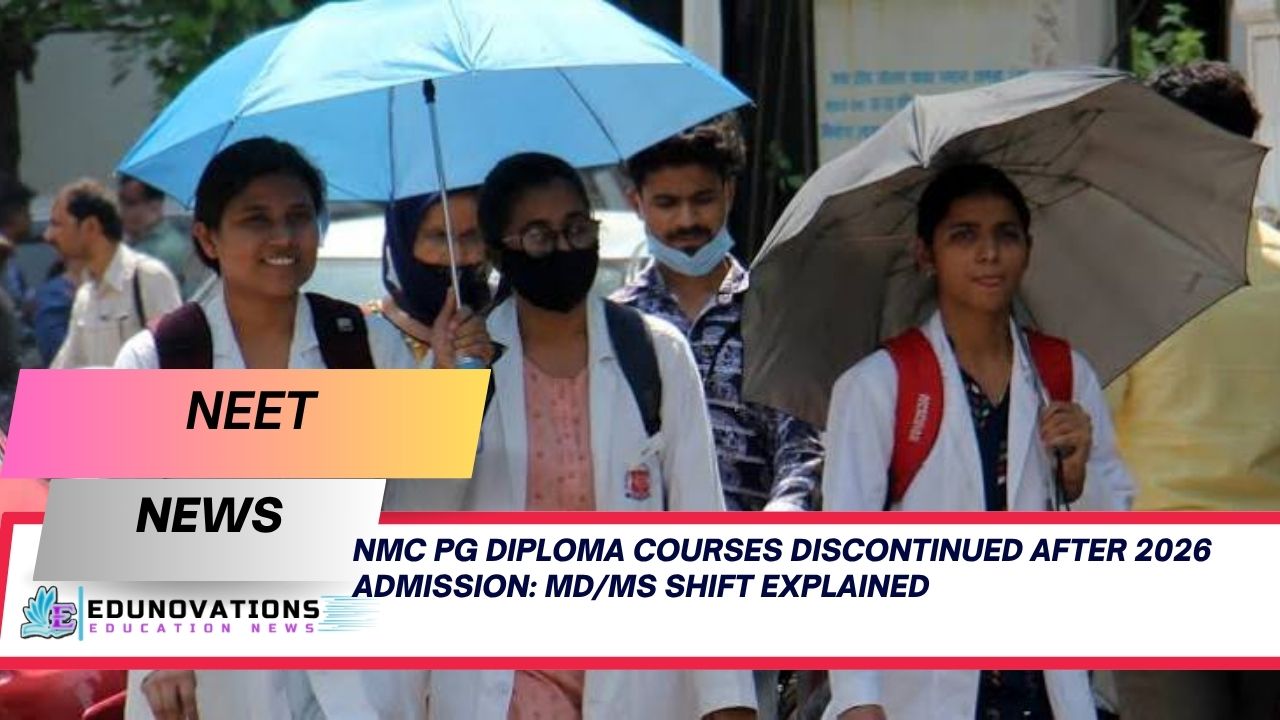
NMC PG diploma courses discontinued after 2026 admission as the National Medical Commission plans to convert diploma seats into MD/MS programmes. Know the impact on NEET PG aspirants, medical colleges, and postgraduate medical education in India.
Introduction
India’s postgraduate medical education system is set for a historic transformation after the National Medical Commission (NMC) announced a major policy decision that will gradually phase out diploma-level postgraduate medical programmes across the country. The move means that nmc pg diploma courses discontinued after 2026 admission will become one of the most significant reforms in medical education in recent years.
The decision is expected to affect thousands of medical graduates, teaching hospitals, and healthcare institutions that have traditionally offered postgraduate diploma courses in various specialties. Instead of diploma programmes, the seats will be converted into degree-based postgraduate courses such as MD (Doctor of Medicine) and MS (Master of Surgery).
The reform aligns with the broader objective of strengthening specialist medical education, improving training quality, and ensuring uniform standards across India’s healthcare system.
Why the NMC Has Taken This Major Decision
The National Medical Commission has been working to modernize medical education and align it with global standards. For decades, postgraduate diploma courses provided a shorter pathway for medical graduates seeking specialization. However, concerns regarding training duration, academic depth, and career progression have frequently been raised.
Medical education experts have argued that degree programmes offer:
- More extensive clinical exposure
- Better research opportunities
- Uniform curriculum standards
- Enhanced career prospects
- Greater international recognition
As a result, the decision regarding nmc pg diploma courses discontinued after 2026 admission is being viewed as part of a larger effort to create a stronger specialist workforce.
According to experts, converting diploma seats into MD and MS seats could improve the quality of postgraduate medical training and increase opportunities for advanced specialization.
What Will Change After the Academic Session Ends?
Under the revised framework, postgraduate diploma courses will no longer admit fresh students after the specified academic cycle.
Medical colleges currently offering diploma programmes will gradually transition their seats into degree programmes.
The process includes:
- Seat conversion approvals
- Infrastructure upgrades
- Faculty strengthening
- Curriculum restructuring
- Compliance with NMC regulations
The transition is expected to happen in a phased manner to avoid disruption for currently enrolled students.
The policy associated with nmc pg diploma courses discontinued after 2026 admission is expected to impact both government and private medical institutions nationwide.
Understanding the Difference Between Diploma and Degree Programmes
Many students often wonder why diploma courses are being replaced.
Key Features of PG Diploma Courses
- Typically shorter duration
- Focus on practical training
- Limited research exposure
- Fewer academic opportunities
Key Features of MD/MS Programmes
- Comprehensive specialist training
- Advanced clinical exposure
- Research-based learning
- Higher academic recognition
- Better opportunities for teaching and super-specialization
The transition from diploma to degree programmes reflects the changing demands of modern healthcare systems.
The concept of md ms seat conversion from pg diploma courses nmc 2026 is therefore expected to strengthen postgraduate education quality while ensuring better patient care outcomes.
Impact on NEET PG Aspirants
One of the most important consequences of this reform will be felt by NEET PG candidates.
Students who previously considered diploma courses as an alternative pathway will now have to compete for degree seats.
This change may influence:
- Admission strategies
- Counselling preferences
- Specialty selection
- Career planning
Many aspirants searching for information about neet pg admission after pg diploma courses closure 2026 are particularly concerned about seat availability and competition levels.
Experts believe that if diploma seats are effectively converted into MD/MS seats, the overall number of postgraduate training opportunities may remain stable or even increase.
What Happens to Existing Students?
Students currently enrolled in postgraduate diploma programmes need not worry.
The NMC’s transition plan is expected to ensure that ongoing batches complete their courses without disruption.
Existing students will continue to receive:
- Clinical training
- Examination opportunities
- Diploma certification
- Academic support
The changes primarily affect future admissions rather than students already pursuing diploma programmes.
Medical Colleges Face New Challenges
Medical colleges across India will need to prepare for significant adjustments.
Institutions converting diploma seats into degree seats may have to invest in:
- Additional faculty recruitment
- Research facilities
- Clinical infrastructure
- Academic resources
- Teaching hospitals
The process involving md ms seat conversion from pg diploma courses nmc 2026 is expected to require substantial planning and regulatory approvals.
However, many institutions view the transition as an opportunity to enhance their academic profile and attract more postgraduate candidates.
How This Reform Supports Healthcare Development
India continues to face a shortage of specialists in several healthcare disciplines.
By expanding MD and MS programmes, policymakers hope to:
- Increase specialist availability
- Improve healthcare quality
- Strengthen medical research
- Enhance patient outcomes
- Support rural healthcare delivery
Healthcare analysts argue that degree-trained specialists often receive broader exposure to complex clinical situations and evidence-based medicine.
As a result, the reform could have long-term benefits beyond medical education itself.
Expert Opinions on the Policy Shift
Several medical education experts have welcomed the decision.
Senior academics have noted that postgraduate degree programmes provide a stronger foundation for specialization and academic growth.
Experts highlight that:
- Global medical systems increasingly emphasize degree-based training.
- Research-oriented education improves clinical decision-making.
- Degree holders often have broader employment opportunities.
- Advanced qualifications support future super-specialization pathways.
Many observers believe the policy represented by nmc new rules for postgraduate medical courses 2026 could become a milestone in India’s medical education history.
Historical Role of Diploma Courses in India
Postgraduate diploma programmes have played an important role in India’s healthcare ecosystem.
For decades, they helped:
- Address specialist shortages
- Train doctors quickly
- Serve district hospitals
- Expand healthcare access
Many experienced doctors currently practicing across India hold diploma qualifications and have made significant contributions to patient care.
However, healthcare requirements have evolved considerably.
Today’s medical environment demands:
- Advanced diagnostics
- Evidence-based treatment
- Research competencies
- Multidisciplinary care approaches
These evolving expectations have strengthened the case for degree-based specialist training.
Potential Benefits for Students
The reform may provide several advantages to future postgraduate candidates.
Academic Benefits
- Greater specialization opportunities
- Enhanced research exposure
- Better teaching prospects
- Improved fellowship eligibility
Career Benefits
- Stronger professional recognition
- Higher competitiveness
- Expanded international opportunities
- Better promotion prospects
Students looking into last year admission for medical pg diploma courses in india should carefully review future career pathways and emerging opportunities in MD/MS programmes.
Challenges That May Arise
While the policy has many supporters, experts also acknowledge possible challenges.
These include:
Increased Competition
Degree seats often attract greater demand, potentially intensifying competition.
Infrastructure Requirements
Some institutions may struggle to meet upgraded standards immediately.
Faculty Availability
Recruiting qualified faculty remains a challenge in several regions.
Transitional Adjustments
Medical colleges and students may require time to adapt to the new framework.
Despite these concerns, policymakers believe the long-term benefits outweigh the short-term difficulties.
Broader Impact on Medical Education Reform
The decision forms part of a broader effort to modernize healthcare education in India.
Recent reforms have focused on:
- Competency-based learning
- Digital medical education
- Standardized assessment systems
- Improved faculty development
- Increased transparency
The policy associated with nmc pg diploma courses discontinued after 2026 admission complements these initiatives by emphasizing advanced specialist training.
Guidance for Future Medical Graduates
Students planning postgraduate studies should consider the following steps:
- Monitor official NMC notifications.
- Follow NEET PG counselling updates.
- Research specialty demand trends.
- Understand MD/MS eligibility requirements.
- Evaluate long-term career goals.
Candidates should stay informed about neet pg admission after pg diploma courses closure 2026 as admission frameworks continue to evolve.
Useful Educational Resources
Medical students preparing for competitive examinations and higher education can strengthen their preparation through educational resources such as:
- NCERT Courses: https://courses.edunovations.com/
- Current Affairs: https://edunovations.com/currentaffairs/
- NCERT Notes: https://edunovations.com/notes/
- MCQ Practice: https://edunovations.com/mcq/
- Educational Videos: https://edunovations.com/videos/
- Syllabus Resources: https://edunovations.com/syllabus/
- Free NCERT PDFs: https://courses.edunovations.com/shop-2/
- NCERT Mind Maps: https://courses.edunovations.com/shop-2/
For educational institutions seeking digital outreach and communication solutions, Mart Ind Infotech provides technology support services for schools and educational organizations.
Looking Ahead
The coming years will be crucial as medical colleges implement the transition and students adapt to the revised postgraduate landscape.
While diploma programmes have served the healthcare sector for decades, policymakers believe that expanding degree-based specialist education will better prepare India’s future doctors.
The transition linked to nmc pg diploma courses discontinued after 2026 admission reflects a broader vision of strengthening medical education quality, enhancing specialist training, and supporting the healthcare needs of a growing population.
As India continues its journey toward becoming a global healthcare leader, the shift from diploma courses to MD/MS programmes may emerge as one of the most influential educational reforms of the decade.
Conclusion
The NMC’s decision to discontinue postgraduate diploma admissions and convert seats into MD/MS programmes marks a defining moment in Indian medical education. The reform aims to improve training standards, increase specialist competencies, and align postgraduate education with global expectations.
Although challenges related to implementation, infrastructure, and competition remain, the long-term objective is clear: create a stronger, better-trained specialist workforce capable of addressing India’s evolving healthcare demands.
For medical graduates, institutions, and policymakers alike, the transition signals the beginning of a new era in postgraduate medical education.
Toppers Use Mind Maps to score more than 95%
NCERT Class 11th Commerce Mind Maps
Add to cartOriginal price was: ₹999.00.₹199.00Current price is: ₹199.00.NCERT Class 12th Chemistry Mind Maps
Add to cartOriginal price was: ₹199.00.₹75.00Current price is: ₹75.00.NCERT Class 12th Commerce Mind Maps
Add to cartOriginal price was: ₹999.00.₹199.00Current price is: ₹199.00.NCERT Class 12th Science Mind Maps
Add to cartOriginal price was: ₹999.00.₹199.00Current price is: ₹199.00.NCERT Mind Maps For Class 10th
Add to cartOriginal price was: ₹999.00.₹199.00Current price is: ₹199.00.


Purchase Today
FAQs
1. What does nmc pg diploma courses discontinued after 2026 admission mean?
It means postgraduate diploma medical programmes will stop admitting new students after the designated academic session, and seats will be converted into MD/MS programmes.
2. Why is NMC ending diploma medical courses?
The move aims to improve specialist training quality, research exposure, and uniform academic standards.
3. What is md ms seat conversion from pg diploma courses nmc 2026?
It refers to the process of converting postgraduate diploma seats into MD and MS degree seats.
4. Will current diploma students be affected?
No. Existing students are expected to complete their courses without disruption.
5. How will neet pg admission after pg diploma courses closure 2026 change?
Students will likely compete directly for MD/MS seats instead of diploma options.
6. What are the benefits of MD/MS programmes over diploma courses?
MD/MS programmes provide deeper clinical training, research exposure, and broader career opportunities.
7. Is this the last year admission for medical pg diploma courses in india?
The announced academic cycle is expected to be among the final opportunities for new diploma admissions.
8. What are the nmc new rules for postgraduate medical courses 2026?
The rules focus on transitioning diploma programmes into degree-based specialist education.
9. Will postgraduate seat numbers decrease?
Experts expect many diploma seats to be converted into MD/MS seats, potentially maintaining overall capacity.
10. How can students prepare for the transition?
Students should monitor official notifications, NEET PG updates, and counselling guidelines regularly.