In the vast, unpredictable expanse of the open ocean, seconds are the difference between a successful rescue and a maritime tragedy.
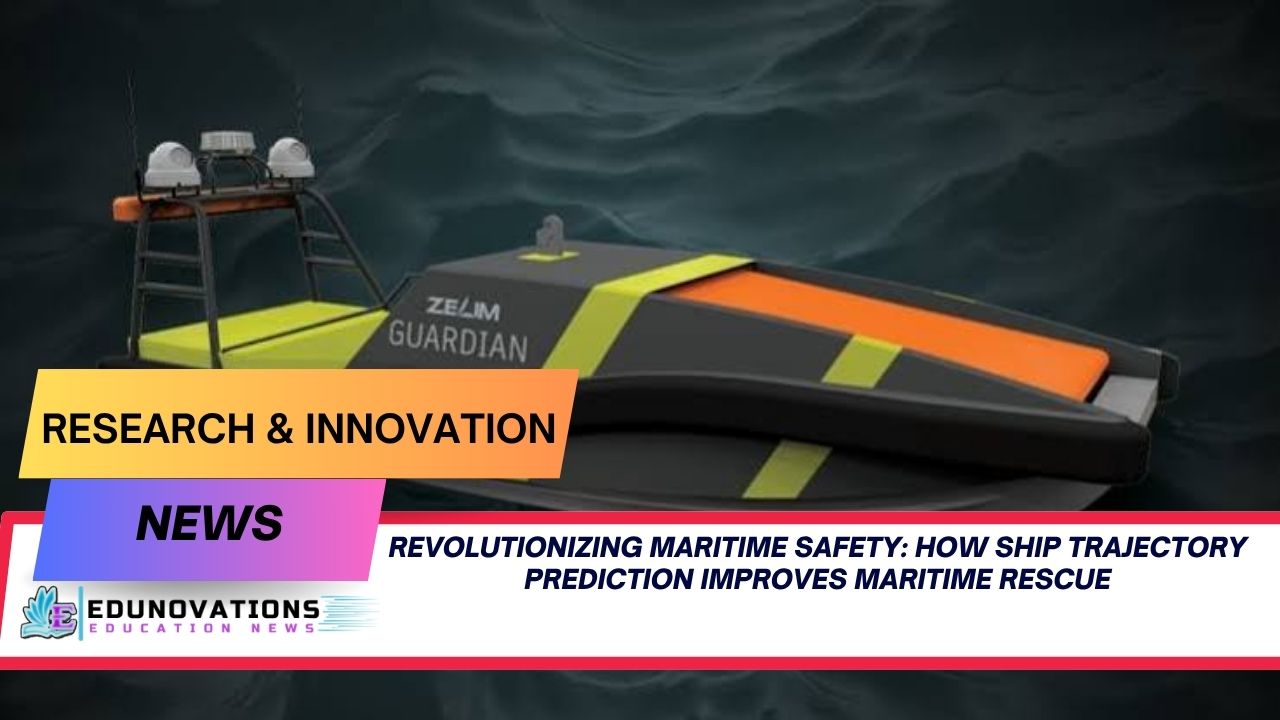
In the vast, unpredictable expanse of the open ocean, seconds are the difference between a successful rescue and a maritime tragedy. When a vessel loses propulsion or a floating object drifts uncontrollably, the primary challenge for emergency teams is calculating exactly where that object will move. Recently, a transformative collaboration between the Indian Institute of Technology (IIT) Bombay and the Indian Register of Shipping (IRS) has set a new global benchmark for marine safety. By developing an advanced, indigenous software tool, this partnership is pioneering a smarter approach to ocean navigation and search-and-rescue (SAR) efficiency.
The Critical Need for Advanced Maritime Safety
Maritime safety is the backbone of global trade and environmental protection. With thousands of vessels traversing the world’s oceans daily, the complexity of managing traffic and responding to emergencies has grown exponentially. As industry experts note, the unpredictability of vessel behaviors and the dynamic nature of marine environments—influenced by wind, currents, and waves—amplify the challenge of real-time monitoring.
Traditionally, emergency response systems relied on static calculations or broad, generalized models. However, these methods often fail to account for the specific hydrodynamics of disabled ships. When a vessel loses power, it doesn’t simply sit still; it becomes a floating hazard, subject to “leeway” and drift patterns. The work being pioneered by IIT Bombay researchers Prof. Manas Behera and Prof. V.K. Srineash, in coordination with IRS Joint Managing Director Mr. P.K. Mishra, focuses on bridging this gap through precise computational modeling.
For schools looking to implement modern STEM education or integrate specialized maritime studies, professional consulting services like Mart Ind Infotech offer the infrastructure support necessary to keep pace with these technological advancements.
Bridging the Gap: The IIT Bombay and IRS Synergy
The Memorandum of Understanding (MOU) between IIT Bombay and the Indian Register of Shipping is more than just a formal agreement; it is a strategic alignment of academic rigor and industrial application. By creating ‘Made in India’ software, the project aims to integrate seamlessly into existing IRS Emergency Response Systems (ERS).
This project isn’t just about software; it is about creating a robust, real-time response framework. For students interested in understanding the intersection of physics, technology, and national development, studying such real-world case studies is essential. You can explore current affairs related to technological breakthroughs or access structured notes to deepen your understanding of how engineering impacts national safety goals.
The Mechanics of Trajectory Prediction
At the heart of this innovation is the ability to model how floating objects move in the ocean. Accurate trajectory prediction is critical for a wide range of maritime applications, including:
- Search and Rescue (SAR): Identifying the exact location of a distressed vessel or survivor.
- Collision Avoidance: Rerouting nearby ships to prevent secondary accidents.
- Environmental Protection: Predicting the path of drifting hazards to prevent oil spills or ship groundings in sensitive coastal areas.
The technology leverages kinematic principles and real-time environmental data to provide a dynamic prediction model. Unlike traditional data-driven models that struggle with the physical constraints of an ocean, these new tools embed physical laws into the algorithm, ensuring that predictions remain consistent even in noisy or low-data environments.
If you are a student preparing for competitive exams in engineering or geography, you can find helpful resources including MCQs and video tutorials that explain the fundamental principles behind such trajectory systems.
Why Industry-Academia Collaboration Matters
The partnership between IIT Bombay and the IRS is a textbook example of successful industry-academia interaction. When academic research is siloed, it rarely reaches the practical implementation phase. Conversely, when industry partners provide real-world data and operational constraints, the resulting technology is far more likely to be field-ready.
This collaborative model reduces the competency gap, ensuring that new maritime software isn’t just a prototype but a functional tool that can be used by the Indian Coast Guard and international shipping entities. For those pursuing NCERT courses, this collaboration serves as a vital lesson in how innovation happens when theory meets practice.
Addressing the Challenges of Open-Sea Tracking
Tracking vessels in the open sea remains one of the most significant challenges in maritime logistics. As highlighted by maritime security analysts, the reliance on the Automatic Identification System (AIS) is not always sufficient, as it can be switched off or experience signal delays. By developing supplementary trajectory prediction tools, IIT Bombay and the IRS are creating a layer of situational awareness that does not depend solely on AIS signals.
This proactive, continuous monitoring approach is vital for ensuring peace of mind for ship owners and operators. Whether it is managing a small fleet or overseeing large-scale maritime movements, the integration of intelligent software into standard operating procedures is the future of the industry.
Transforming Maritime Safety Protocols
The shift toward automated, data-backed maritime safety is redefining the global industry. Automated report generation—a key feature of the new system—will ensure that emergency response teams can make data-driven decisions in minutes rather than hours. This efficiency is crucial when saving lives at sea.
For those looking to build a career in this field, staying updated with the official syllabus for maritime and engineering entrance exams is a great start. Additionally, students can download free NCERT PDFs to build a strong foundation in physics and mathematics, which are the building blocks for such complex computational projects.
The Role of Technology in Emergency Planning
Effective emergency response requires a combination of perception, understanding, and anticipation. Modern trajectory prediction provides the “anticipation” factor—the ability to foresee where a vessel will be under specific weather conditions before it happens. This allows rescue coordinators to deploy assets, such as helicopters or rescue vessels, to the predicted point of interception, drastically reducing search times.
Future Perspectives in Ocean Engineering
As the project continues, the impact of these ‘Made in India’ tools will likely extend far beyond Indian waters. By setting a global benchmark for maritime safety, IIT Bombay is showcasing how indigenous research can solve global challenges.
For learners and professionals alike, these developments are a reminder that the field of maritime engineering is dynamic and ever-evolving. To stay ahead of the curve, utilizing NCERT mind maps can help in visualizing complex concepts and keeping track of the latest technological breakthroughs in the scientific domain.
Conclusion: A Legacy of Innovation
The collaboration between IIT Bombay and the Indian Register of Shipping is a testament to the power of shared goals. By focusing on trajectory prediction, the partners are not just protecting property; they are prioritizing human lives and ocean health. This project marks a significant step forward in maritime technology and serves as an inspiring example of how academic expertise can drive national and global safety.
Toppers Use Mind Maps to score more than 95%
NCERT Class 11th Commerce Mind Maps
Add to cartOriginal price was: ₹999.00.₹199.00Current price is: ₹199.00.NCERT Class 12th Chemistry Mind Maps
Add to cartOriginal price was: ₹199.00.₹75.00Current price is: ₹75.00.NCERT Class 12th Commerce Mind Maps
Add to cartOriginal price was: ₹999.00.₹199.00Current price is: ₹199.00.NCERT Class 12th Science Mind Maps
Add to cartOriginal price was: ₹999.00.₹199.00Current price is: ₹199.00.NCERT Mind Maps For Class 10th
Add to cartOriginal price was: ₹999.00.₹199.00Current price is: ₹199.00.



Purchase Today
10 FAQs on Maritime Safety and Trajectory Prediction
- What is the primary goal of the IIT Bombay and IRS partnership? The partnership aims to develop an indigenous ship trajectory prediction tool to enhance emergency response and maritime safety.
- How ship trajectory prediction improves maritime rescue? It enables authorities to predict the drift path of a disabled vessel accurately, allowing for faster deployment of rescue teams to the exact location.
- Why is drift prediction difficult in the open sea? Factors like complex wind patterns, deep-sea currents, and the loss of power on a vessel make tracking movement highly unpredictable.
- How can students learn more about the science behind maritime engineering? Students can access comprehensive notes and NCERT courses to study the physics and mathematical foundations involved.
- What role does the Indian Register of Shipping (IRS) play in this project? The IRS provides the industry expertise and the Emergency Response System (ERS) platform where the new software will be integrated.
- Are there specific methods for predicting drift of disabled ships? Yes, current research utilizes advanced computational models like Physics-Informed Neural Networks to simulate motion based on physical principles.
- What is the benefit of integrating new software into existing ERS? It allows for automated, real-time reporting, which significantly reduces the decision-making time during maritime emergencies.
- How does this partnership help with national maritime goals? It contributes to the ‘Made in India’ initiative by reducing reliance on foreign-developed maritime software for critical operations.
- Where can I find more information on current maritime technology trends? Check the Edunovations current affairs section for regular updates on major technological and scientific developments.
- Who are the key people involved in this collaboration? The initiative is spearheaded by Prof. Manas Behera and Prof. V.K. Srineash from IIT Bombay, in partnership with Mr. P.K. Mishra from the IRS.