Navigating financial assistance for higher and secondary education can often feel overwhelming, but the Uttar Pradesh government continues to streamline educational support through its flagship welfare programs.
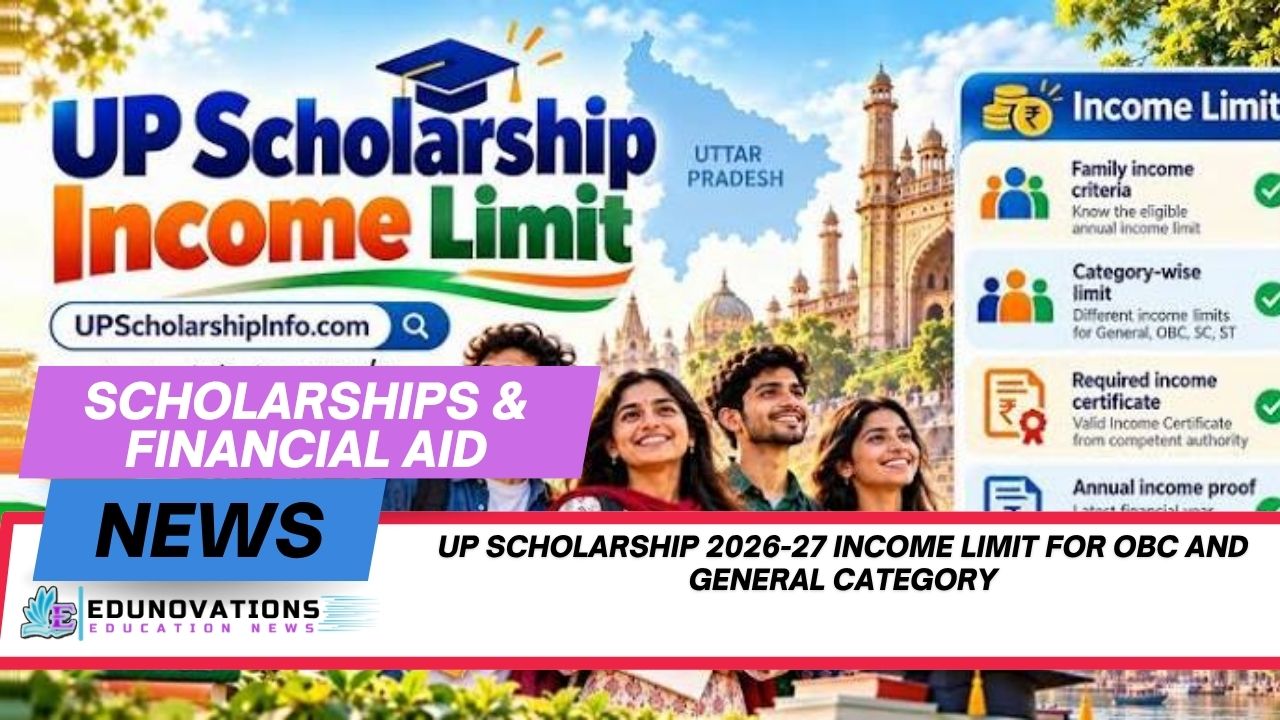
Navigating financial assistance for higher and secondary education can often feel overwhelming, but the Uttar Pradesh government continues to streamline educational support through its flagship welfare programs. For students preparing for the academic session, understanding the framework of UP Scholarship 2026-27 income limit for OBC and General category applicants is crucial for securing financial relief. Whether you are moving from secondary classes to higher education or pursuing professional diplomas, staying informed about the changing financial ceilings, category-wise distributions, and procedural guidelines ensures that eligible candidates do not miss out on vital assistance.
Financial barriers should never halt a deserving student’s academic journey. To bridge this gap, state-run financial aid programs offer tuition fee reimbursements and maintenance allowances. In this comprehensive guide, we unpack everything you need to know about the latest rules, eligibility criteria, documentation mandates, and expert strategies to successfully navigate your application process.
Understanding the UP Scholarship Scheme Landscape
The Uttar Pradesh government’s scholarship framework is one of the largest state-funded student welfare initiatives in India. Millions of students enroll across pre-matric, post-matric, and technical education streams every year. The primary objective is to alleviate the financial burden on low- and middle-income families, ensuring that economic constraints do not become an impediment to academic excellence.
Education experts often stress that financial literacy regarding government schemes is just as important as classroom learning. According to noted education policy analyst Dr. Rameshwar Sharma, “State scholarship initiatives like the ones in Uttar Pradesh act as a critical safety net. However, the key to maximizing their reach lies in simplifying verification procedures and spreading timely awareness about exact category-wise financial caps.”
Students enrolled across recognized schools, colleges, universities, and vocational institutes can benefit from these frameworks. However, meeting the basic entry requirements is only the first step; strict adherence to document verification and portal deadlines dictates the final approval of funds.
Decoding Category-Wise Financial Ceilings and Rules
A thorough understanding of financial parameters is essential before initiating any application. The government categorizes applicants into multiple socio-economic segments, each governed by specific annual family income thresholds.
General, OBC, and Minority Categories
For students belonging to the General, Other Backward Classes (OBC), and Minority communities, the framework dictates specific boundaries. Specifically, under the post-matric scheme, the annual family income limit stands capped at up to Rs 2 lakh. Families earning above this threshold do not qualify for the financial support bracket under these sections.
SC and ST Categories
Recognizing historical socio-economic disparities, the state provisions higher financial tolerance for Scheduled Caste (SC) and Scheduled Tribe (ST) applicants. For these categories, the annual family income limit is extended up to Rs 2.5 lakh, allowing a broader spectrum of households to access tuition waivers and maintenance stipends.
To support your broader academic preparation alongside these financial procedures, you can explore comprehensive study resources such as NCERT Courses or download supplementary materials directly via Free NCERT PDFs. For structured revision, utilizing tools like NCERT Mind Maps can significantly enhance conceptual clarity.
Educational Qualification Stages: From Pre-Matric to Dashmottar
The scholarship mechanism is divided into distinct educational tiers, ensuring that students from high school to postgraduate levels receive targeted support.
- Pre-Matric Level: This tier caters to young learners studying in Classes 9 and 10. It focuses primarily on reducing early school dropout rates by covering basic educational expenses.
- Post-Matric Intermediate: Designed for students enrolled in Classes 11 and 12, bridging the critical transition between secondary education and higher studies.
- Dashmottar (Post-Matric Other Than Intermediate): This is a vast segment covering undergraduate degrees, postgraduate programs, diplomas, Industrial Training Institutes (ITIs), and other recognized professional certifications.
For students tackling competitive exams alongside their regular coursework, staying updated with daily events is essential. You can enhance your general awareness by checking regular Current Affairs and practicing targeted MCQ’s. Furthermore, visual learners can benefit greatly from structured educational Videos and detailed academic Syllabus breakdowns.
Dashmottar UP Scholarship Eligibility Criteria 2026 for Graduation
The term Dashmottar UP scholarship eligibility criteria 2026 for graduation frequently trends among college students seeking fee reimbursements. Higher education involves substantial non-refundable fees, making this scheme a vital lifeline.
To qualify under the Dashmottar category for graduation or postgraduate studies, applicants must satisfy several core mandates:
- Residency Status: The applicant must be a permanent resident of Uttar Pradesh or meet specific interstate guidelines if studying in a recognized institution outside the state.
- Academic Progression: Fresh applicants must have cleared their previous qualifying examination without backlogs, while renewal applicants must maintain satisfactory attendance and academic performance records as mandated by their respective universities.
- Fee Structure Verification: The course must feature government-approved fee structures so that non-refundable fee components are correctly calculated during the scholarship disbursement phase.
Digital infrastructure for schools and educational portals plays a vital role in managing these massive data influxes smoothly. Institutions often collaborate with specialized technology partners like Mart Ind Infotech to streamline their internal administrative and digital portal needs.
Analyzing SC ST Family Income Limit for UP Scholarship 2026-2027 Session
When examining the SC ST family income limit for UP scholarship 2026-2027 session, applicants must ensure that their certified documents accurately reflect their annual household earnings.
The Rs 2.5 lakh threshold requires verification via a legally recognized income certificate issued by competent revenue authorities (such as the Tehsil or District Magistrate’s office). Discrepancies between self-declared income and revenue department records are among the leading causes of application rejections during the district-level screening committee review.
Key compliance steps for SC and ST applicants include:
- Ensuring the income certificate is freshly issued and within its validity period (usually valid for 3 years from the date of issue, though recent portal advisories recommend updated certifications).
- Providing authentic caste certificates containing valid digital verification barcodes.
- Linking active Aadhaar numbers with bank accounts via National Payments Corporation of India (NPCI) mapping to facilitate Direct Benefit Transfer (DBT).
Essential Documentation Checklist
A successful application relies heavily on proper paperwork. Gathering documents in advance prevents last-minute technical glitches on the official portal (scholarship.up.gov.in). Keep the following records ready:
- Identification Proof: Aadhaar card linked with mobile number.
- Domicile Certificate: Uttar Pradesh residence proof.
- Financial Credentials: Income certificate issued by competent authority.
- Category Proof: Valid caste certificate (where applicable).
- Academic Records: Marksheets of previous qualifying examinations.
- Institutional Verification: Current enrollment number, fee receipt, and non-refundable fee details.
- Banking Details: Active bank passbook with IFSC code enabled for DBT transactions.
Toppers Use Mind Maps to score more than 95%
NCERT Class 11th Commerce Mind Maps
Add to cartOriginal price was: ₹999.00.₹199.00Current price is: ₹199.00.NCERT Class 12th Chemistry Mind Maps
Add to cartOriginal price was: ₹199.00.₹75.00Current price is: ₹75.00.NCERT Class 12th Commerce Mind Maps
Add to cartOriginal price was: ₹999.00.₹199.00Current price is: ₹199.00.NCERT Class 12th Science Mind Maps
Add to cartOriginal price was: ₹999.00.₹199.00Current price is: ₹199.00.NCERT Mind Maps For Class 10th
Add to cartOriginal price was: ₹999.00.₹199.00Current price is: ₹199.00.





Purchase Today
Frequently Asked Questions
1. What is the income limit for General category students under the post-matric scheme?
The annual family income limit for General category students under the post-matric scheme is up to Rs 2 lakh.
2. Can students studying outside Uttar Pradesh apply for this scholarship?
Yes, certain provisions apply to Uttar Pradesh residents studying in recognized institutions outside the state, subject to specific scheme rules.
3. What documents are mandatory for submitting the online application form?
Mandatory documents include an Aadhaar card, domicile certificate, income certificate, caste certificate (if applicable), previous marksheets, and an active bank passbook.
4. How does the Dashmottar category differ from Pre-Matric?
Dashmottar covers students pursuing graduation, postgraduation, diplomas, and ITI courses, whereas Pre-Matric covers students in Classes 9 and 10.
5. What is the income ceiling for SC and ST category applicants?
The annual family income ceiling for SC and ST category students is up to Rs 2.5 lakh.
6. Why was my scholarship application rejected during district verification?
Common reasons for rejection include mismatched income certificate details, invalid bank account seeding with NPCI, or incomplete fee receipt data.
7. Is Aadhaar linking mandatory for receiving scholarship funds?
Yes, linking your Aadhaar card with your bank account is mandatory to receive funds via Direct Benefit Transfer (DBT).
8. Are renewal applicants required to submit new income certificates?
Renewal applicants must follow the specific guidelines issued on the portal regarding the validity of previously submitted income certificates.
9. Which official portal handles these scholarship applications?
All applications are processed exclusively through the official UP Scholarship portal at scholarship.up.gov.in.
10. What role do non-refundable fees play in the scholarship calculation?
Scholarship reimbursements specifically account for the approved non-refundable fee components charged by recognized educational institutions.