Securing a stable government career in Gujarat has just reached an exciting new milestone. The Gujarat Subordinate Service Selection Board (GSSSB)
Securing a stable government career in Gujarat has just reached an exciting new milestone. The Gujarat Subordinate Service Selection Board (GSSSB) has officially published its notification for the GSSSB CCE 2.0 online application last date 2026, opening up a golden pathway for thousands of aspirants. With a total of 1,237 Class-3 vacancies distributed across prestigious administrative desks, this recruitment drive serves as a monumental opportunity for young graduates aiming for secure public sector employment.
Whether you are beginning your preparation journey or looking to streamline your study resources with structured materials like NCERT Courses, understanding the core details of this notification is your first step toward success. Let us break down everything you need to know about navigating the application window, eligibility requirements, post distributions, and exam patterns.
Comprehensive Overview of GSSSB CCE 2.0 Recruitment
The rolling out of Advertisement Number 468/2026-27 by the board marks a massive administrative push to fill essential Group A and Group B positions within various state government departments. For aspirants striving to crack competitive examinations, staying ahead with daily updates, mock tests, and foundational modules from resources like Current Affairs is essential.
The GSSSB CCE 2.0 framework is divided fundamentally into two distinct categories:
- Group-A Posts: Comprises administrative, supervisory, and specialized roles totaling 243 vacancies.
- Group-B Posts: Entirely dedicated to Junior Clerk positions across various state departments, offering a massive volume of 994 openings.
Experts in public administration note that structured preparation combined with consistent practice using reliable MCQ’s can drastically elevate an aspirant’s clearance probability during the preliminary screening stage.
Understanding GSSSB CCE Group A and B eligibility criteria 2026
Before heading over to fill out forms, candidates must meticulously evaluate the GSSSB CCE Group A and B eligibility criteria 2026. Meeting these requirements is mandatory; failing to satisfy any single criterion can result in direct disqualification during document verification.
1. Educational Qualifications
Applicants must hold a Bachelor’s degree from any university established by an Act of Parliament or State Legislature, or an equivalent qualification recognized by the government. Additionally, candidates must possess basic computer application knowledge as per state norms and adequate proficiency in Gujarati or Hindi (or both).
If you need help gathering foundational concepts or organizing your study notes, exploring curated reference collections like Notes can save valuable preparation time.
2. Age Limits and Relaxations
- Minimum Age: 20 Years
- Maximum Age: 35 Years
- Key Date for Age Calculation: Age will be computed strictly as of November 30, 2026. Upper-age relaxations apply to reserved categories (SC, ST, SEBC, EWS, and Women candidates) in accordance with Gujarat government rules.
Step-by-Step Guide: How to apply for GSSSB CCE 2.0 on OJAS portal
Navigating the official portal efficiently ensures your application is successfully registered without last-minute technical glitches. Knowing How to apply for GSSSB CCE 2.0 on OJAS portal saves applicants from common submission errors.
- One Time Registration (OTR): Visit the official OJAS website. If you haven’t registered previously, complete your OTR profile with valid personal and educational details.
- Select Advertisement: Navigate to the “Online Application” section, select GSSSB, and locate Advertisement Number 468/2026-27.
- Fill Application Form: Click on “Apply Now”, enter your credentials accurately, and cross-verify all inputted data.
- Document Upload: Upload scanned copies of your recent passport-size photograph and signature according to the specified dimensions.
- Fee Payment: Pay the required examination fee online through net banking, UPI, or credit/debit cards before the deadline.
- Final Confirmation: Save your unique confirmation number and print out a physical copy of the application form and fee receipt.
For candidates seeking visual aids, conceptual diagrams, or downloadable study charts to support their daily schedule, checking out NCERT Mind Maps and Downloads of Free NCERT PDFs can provide exceptional academic support. Furthermore, institutions or study groups looking to set up digital learning infrastructure can explore professional solutions offered by tech partners like Mart Ind Infotech for web and digital support.
Detailed Breakdown: GSSSB CCE 2.0 post wise vacancy details and salary
The 2026 recruitment cycle offers diverse designations across multiple departments. Analyzing GSSSB CCE 2.0 post wise vacancy details and salary structures helps candidates target specific roles matching their career ambitions.
Group-A Post Breakdown & Remuneration
- Sub Registrar (Grade-2): 15 Vacancies | Fixed Monthly Salary: ₹40,800
- Assistant Tribal Development Officer: 50 Vacancies | Fixed Monthly Salary: ₹49,600
- Social Welfare Inspector: 89 Vacancies | Fixed Monthly Salary: ₹40,800
- Office Superintendent: 7 Vacancies | Fixed Monthly Salary: ₹49,600
Group-B Post Breakdown (Junior Clerk Cadre)
- Directorate of Food and Civil Supplies: 50 Vacancies
- Forest Department: 100 Vacancies
- Medical Education and Research Division: 100 Vacancies
- Other State Departments & Collectorates: Cumulative balance fulfilling the total 994 Junior Clerk slots.
To thoroughly review structural topics, subject breakdowns, and blueprint frameworks, candidates should regularly consult the official Syllabus page.
Cracking the Exam: GSSSB CCE preliminary exam syllabus and pattern 2026
Success in this competitive examination depends heavily on understanding the GSSSB CCE preliminary exam syllabus and pattern 2026. The selection process is bifurcated into multiple stages:
- Preliminary Examination (Screening Test): An objective-type computer-based or offline MCQ test designed to shortlist candidates (typically 7 times the category-wise vacancy count). Marks obtained here are only for screening and do not count toward the final merit list.
- Main Examination: Conducted separately for Group-A and Group-B posts. Group-A features descriptive papers focusing on English Language Skills and General Studies, while Group-B tests core competencies in Indian State System, Constitution, Indian Economy, and NITI Aayog.
- Document Verification: Final appointment is granted based on performance in the Main Examination and verification of credentials.
For dynamic learning experiences, video lectures, and expert topic breakdowns, aspirants can refer to comprehensive video modules on Videos.
Expert Insights and Strategic Preparation Tips
Eminent career counselor and public service examination expert Dr. Ramesh Trivedi highlights:
“A competitive exam like GSSSB CCE 2.0 is not merely a test of memory, but an evaluation of consistency, time management, and clarity of fundamentals. Aspirants targeting Group A and B positions must prioritize mock practice under timed conditions and keep a close track of state-level socio-economic developments.”
To align with such expert recommendations, candidates should maintain a strict daily timetable, solve previous years’ papers, and clear conceptual doubts early in their preparation cycle.
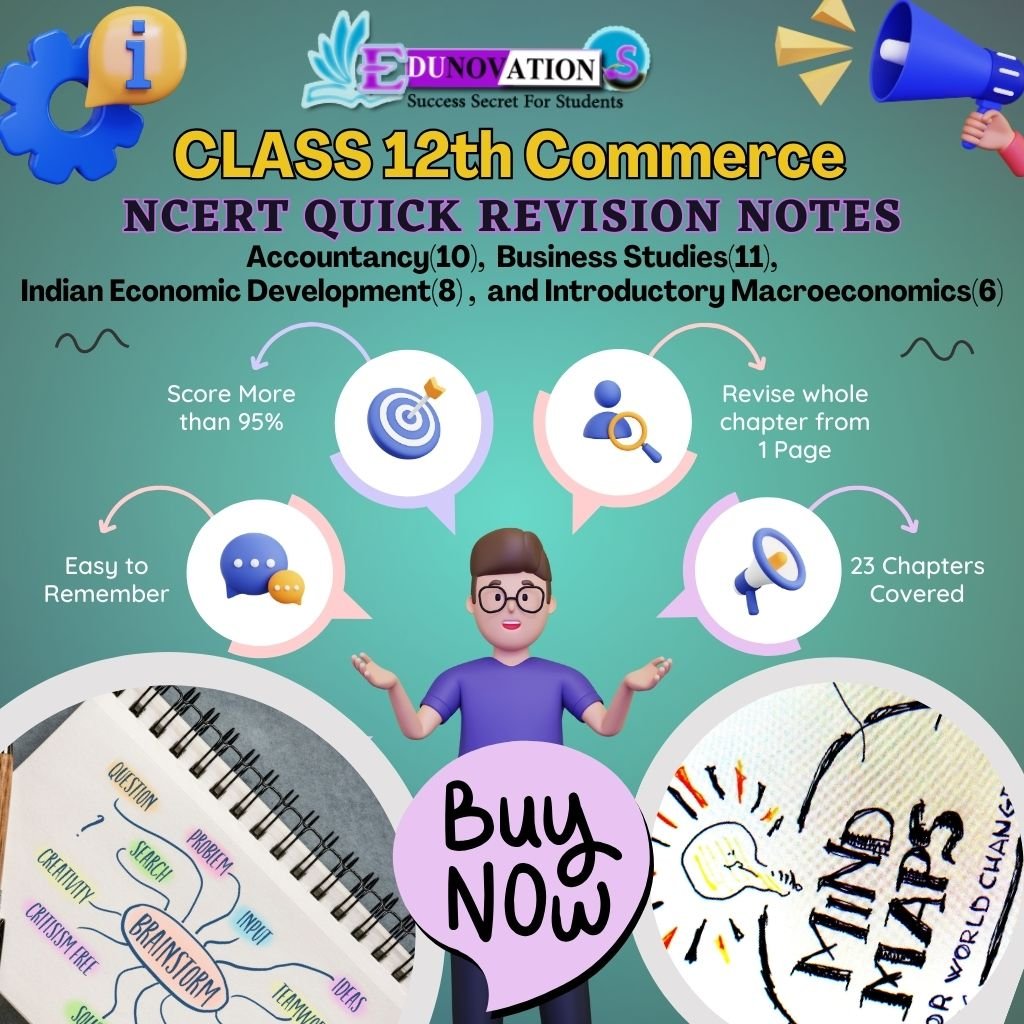
Toppers Use Mind Maps to score more than 95%
-
NCERT Class 11th Commerce Mind Maps
Add to cartOriginal price was: ₹999.00.₹199.00Current price is: ₹199.00. -
NCERT Class 12th Chemistry Mind Maps
Add to cartOriginal price was: ₹199.00.₹75.00Current price is: ₹75.00. -
NCERT Class 12th Commerce Mind Maps
Add to cartOriginal price was: ₹999.00.₹199.00Current price is: ₹199.00. -
NCERT Class 12th Science Mind Maps
Add to cartOriginal price was: ₹999.00.₹199.00Current price is: ₹199.00. -
NCERT Mind Maps For Class 10th
Add to cartOriginal price was: ₹999.00.₹199.00Current price is: ₹199.00.




Purchase Today
Frequently Asked Questions (FAQs)
- What is the official schedule for the GSSSB CCE 2.0 online application last date 2026?The online application window closes on November 30, 2026, at 11:59 PM, and the final fee payment deadline is December 2, 2026.
- Who is eligible under the GSSSB CCE Group A and B eligibility criteria 2026?Any graduate holding a recognized Bachelor’s degree, basic computer knowledge, and proficiency in Gujarati or Hindi within the age group of 20 to 35 years is eligible.
- Where can I find a step-by-step tutorial on How to apply for GSSSB CCE 2.0 on OJAS portal? You can register and apply directly through the official OJAS portal (ojas.gujarat.gov.in) by completing your One Time Registration (OTR) and selecting Advt. No. 468/2026-27.
- What are the GSSSB CCE 2.0 post wise vacancy details and salary structures?The notification includes 1,237 total vacancies (243 for Group A and 994 for Group B Junior Clerks) with initial monthly fixed salaries ranging from ₹26,000 to ₹49,600 depending on the post.
- What subjects are covered in the GSSSB CCE preliminary exam syllabus and pattern 2026? The preliminary exam is an objective screening test covering quantitative aptitude, reasoning, general awareness, and language proficiency.
- How many total vacancies are announced under GSSSB CCE 2.0 Recruitment 2026?A total of 1,237 Class-3 vacancies have been officially announced.
- Are candidates without a computer certificate eligible to apply?Yes, candidates can apply without an immediate certificate, but they must submit valid proof of basic computer knowledge before final appointment.
- Are preliminary exam marks added to the final merit list? No, the preliminary examination serves purely as a screening test to shortlist candidates for the Main Examination.
- What is the application fee for GSSSB CCE 2.0?The examination and processing fee is structured as ₹400 for eligible categories as per the official notification guidelines.
- Where can I check post-wise merit lists and results?All official updates, notifications, and merit lists are published directly on the official GSSSB website (gsssb.gujarat.gov.in).