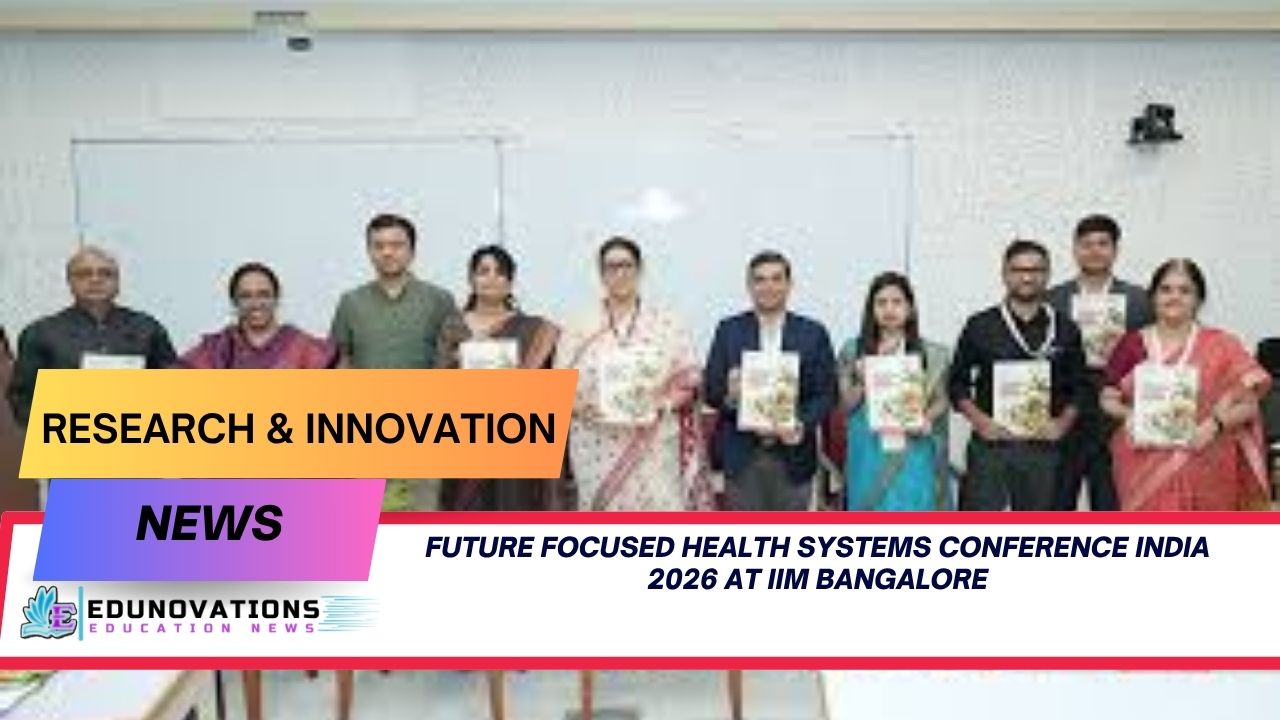
Future focused health systems conference India 2026 brings together policymakers, researchers, and healthcare experts to discuss resilient health systems, digital health innovation, and evidence-based public health strategies.
Introduction
India’s healthcare ecosystem is undergoing a remarkable transformation as policymakers, researchers, public health professionals, and academic institutions increasingly collaborate to address emerging healthcare challenges. Against this backdrop, the future focused health systems conference India 2026 has emerged as a significant platform for advancing discussions on healthcare governance, evidence-based policymaking, digital transformation, and sustainable health system development.
Hosted by the Indian Institute of Management Bangalore (IIM Bangalore), the EPHP Conference 2026 serves as a premier gathering of experts dedicated to exploring innovative approaches that can strengthen healthcare delivery and improve population health outcomes. The conference reflects the growing importance of interdisciplinary collaboration in tackling complex healthcare issues that affect millions of people across India and beyond.
The event highlights how research, policy, technology, and governance can converge to create more resilient healthcare systems capable of addressing current and future public health challenges. As healthcare systems worldwide continue adapting to evolving demographic, technological, and epidemiological trends, discussions at the conference offer valuable insights into shaping the future of healthcare.
Students interested in public policy and healthcare studies can also explore educational resources through NCERT Courses, Current Affairs updates, Notes, MCQs, Videos, Syllabus materials, and NCERT Mind Maps available on leading educational platforms.
A Platform for Collaborative Healthcare Innovation
The healthcare sector today faces unprecedented opportunities and challenges. Rapid technological advancements, changing disease patterns, aging populations, climate-related health risks, and increasing healthcare expectations require innovative solutions supported by robust evidence.
The future focused health systems conference India 2026 has been designed to facilitate meaningful discussions among stakeholders from multiple sectors, including:
- Public health researchers
- Healthcare administrators
- Government policymakers
- Academic institutions
- Development organizations
- Technology innovators
- Medical professionals
- International health experts
By bringing together diverse perspectives, the conference encourages the exchange of ideas that can contribute to stronger healthcare systems and more effective policy interventions.
The conference also reflects India’s growing role as a global leader in health innovation and policy development. With initiatives such as Ayushman Bharat, Digital Health Mission, and expanded healthcare infrastructure investments, the country is increasingly recognized as an important contributor to global health discussions.
The Growing Need for Evidence-Based Policy Development
One of the central themes discussed at the conference is the importance of the evidence to public health policy conference Bengaluru 2026 approach, which emphasizes the use of scientific research and reliable data in shaping healthcare decisions.
Evidence-based policymaking has become increasingly important because healthcare resources are often limited while public expectations continue to rise. Policymakers must ensure that interventions deliver measurable benefits and address actual healthcare needs.
Research-driven policies help governments:
- Improve healthcare outcomes
- Reduce healthcare inequalities
- Optimize resource allocation
- Enhance system efficiency
- Increase accountability
- Support long-term sustainability
Experts participating in the conference stress that robust evidence serves as the foundation for effective healthcare governance and public trust. By integrating research findings into policy frameworks, healthcare systems can respond more effectively to emerging challenges.
The future focused health systems conference India 2026 places significant emphasis on translating academic research into actionable policy recommendations that can generate real-world impact.
Digital Transformation and Healthcare Innovation
Digital technologies continue to reshape healthcare delivery worldwide. Discussions around the public health governance and digital health conference 2026 theme highlight how emerging technologies are improving patient care, data management, disease surveillance, and healthcare accessibility.
Several digital innovations are transforming modern healthcare systems:
Electronic Health Records
Electronic health records enable healthcare providers to access comprehensive patient information, improving diagnosis, treatment coordination, and continuity of care.
Artificial Intelligence Applications
Artificial intelligence is increasingly being used for:
- Disease prediction
- Medical imaging analysis
- Healthcare resource planning
- Clinical decision support
- Public health surveillance
Telemedicine Expansion
Telemedicine has dramatically improved healthcare access, particularly in rural and underserved regions where specialist services may be limited.
Digital Health Platforms
Integrated digital platforms facilitate healthcare delivery, patient engagement, appointment scheduling, and health monitoring.
Experts at the future focused health systems conference India 2026 note that digital transformation must be accompanied by strong governance frameworks, data protection measures, and equitable access strategies to ensure inclusive healthcare benefits.
Strengthening Healthcare Governance
Effective governance remains one of the most important determinants of healthcare system performance. Discussions related to the healthcare policy research conference at IIM Bangalore 2026 focus on governance mechanisms that promote transparency, accountability, and efficiency.
Strong healthcare governance contributes to:
- Better service delivery
- Improved financial management
- Enhanced patient safety
- Greater public trust
- Effective crisis response
- Sustainable healthcare development
Healthcare leaders emphasize that governance reforms should align institutional incentives with public health goals. This approach ensures that healthcare systems prioritize patient outcomes while maintaining operational efficiency.
The future focused health systems conference India 2026 highlights several governance models that have demonstrated success in improving healthcare outcomes across different regions and contexts.
Building Resilient Healthcare Systems
Recent global health crises have underscored the importance of resilient healthcare systems capable of responding effectively to emergencies while maintaining essential services.
The conference explores strategies for strengthening resilience through:
- Workforce development
- Infrastructure investments
- Supply chain improvements
- Emergency preparedness
- Health information systems
- Community engagement
Experts argue that resilience should be viewed as an ongoing process rather than a static achievement. Healthcare systems must continuously adapt to evolving challenges and emerging risks.
The universal health coverage and health systems conference discussions emphasize that resilience is closely linked to equity. Healthcare systems can only be truly resilient when they ensure access to quality care for all population groups.
Advancing Universal Health Coverage
Universal Health Coverage (UHC) remains a major priority for healthcare policymakers worldwide. Conference participants discuss practical strategies for expanding access while maintaining quality and financial sustainability.
Key components of universal health coverage include:
Accessibility
Healthcare services should be geographically and financially accessible to all individuals.
Quality
Access alone is insufficient without high-quality healthcare services capable of delivering positive outcomes.
Financial Protection
Individuals should not experience financial hardship due to healthcare expenses.
Equity
Healthcare services must reach vulnerable and marginalized populations.
The future focused health systems conference India 2026 examines innovative financing models and policy interventions that can accelerate progress toward universal health coverage goals.
India’s Emerging Leadership in Global Health
India has increasingly positioned itself as a significant player in global health policy and innovation. The country’s experiences offer valuable lessons for other nations seeking to strengthen healthcare systems.
Several factors contribute to India’s growing influence:
- Large-scale healthcare programs
- Digital health initiatives
- Pharmaceutical manufacturing capabilities
- Public health research expertise
- Health technology innovation
- Community-based healthcare models
The healthcare policy research conference at IIM Bangalore 2026 showcases examples of successful Indian healthcare innovations that have attracted international attention.
Experts note that India’s diverse healthcare landscape provides a unique environment for testing and scaling innovative solutions that can benefit other countries facing similar challenges.
Expert Perspectives on Healthcare Transformation
Healthcare thought leaders participating in the conference emphasize the importance of collaboration across sectors.
According to public health experts, future healthcare systems must balance technological innovation with human-centered care. While digital tools offer tremendous opportunities, successful implementation depends on understanding patient needs and social contexts.
Researchers participating in the evidence to public health policy conference Bengaluru 2026 discussions highlight the need for stronger connections between academia and policymaking institutions.
Many experts advocate for:
- Increased investment in health research
- Cross-sector partnerships
- Data-driven decision-making
- Community participation
- Workforce capacity building
- Continuous policy evaluation
These recommendations align closely with the objectives of the future focused health systems conference India 2026.
Public Health Challenges Shaping Future Discussions
Several emerging issues are expected to influence healthcare policy discussions in the coming years:
Climate Change and Health
Climate-related health risks are becoming increasingly significant, requiring integrated policy responses.
Non-Communicable Diseases
Chronic diseases such as diabetes, cardiovascular conditions, and cancer continue to impose substantial healthcare burdens.
Mental Health
Mental health awareness and service accessibility have become critical public health priorities.
Aging Populations
Population aging creates new demands for healthcare systems, including long-term care and geriatric services.
Health Equity
Addressing healthcare disparities remains essential for achieving inclusive and sustainable development.
The public health governance and digital health conference 2026 discussions examine how these challenges can be addressed through coordinated policy and governance approaches.
Academic Institutions Driving Policy Innovation
Universities and research institutions play a critical role in generating evidence that informs public policy.
IIM Bangalore’s involvement in the conference demonstrates the growing importance of interdisciplinary research in addressing healthcare challenges. Business schools, public policy programs, medical institutions, and technology departments increasingly collaborate to develop innovative solutions.
Academic institutions contribute through:
- Policy research
- Leadership development
- Data analysis
- Capacity building
- Knowledge dissemination
- Stakeholder engagement
The future focused health systems conference India 2026 serves as an example of how academic institutions can facilitate dialogue between researchers and decision-makers.
Opportunities for Students and Emerging Researchers
The conference also provides valuable learning opportunities for students and early-career professionals interested in public health, healthcare management, and policy research.
Participants can gain exposure to:
- Current healthcare challenges
- Policy development processes
- Research methodologies
- International best practices
- Professional networking opportunities
- Emerging healthcare technologies
Students preparing for competitive examinations and academic careers can strengthen their knowledge through current affairs resources, notes, MCQs, educational videos, and syllabus-based study materials available through dedicated learning platforms.
Additionally, educational institutions seeking advanced technology and communication solutions often collaborate with industry leaders such as Mart Ind Infotech to enhance digital outreach and institutional management capabilities.
Looking Ahead
As healthcare systems continue evolving, conferences such as the EPHP Conference 2026 provide valuable platforms for knowledge exchange and collaborative problem-solving.
The discussions taking place at the future focused health systems conference India 2026 are expected to contribute significantly to ongoing efforts aimed at strengthening healthcare systems, improving governance, and advancing evidence-based policymaking.
By fostering dialogue among researchers, policymakers, practitioners, and innovators, the conference supports the development of healthcare solutions that are resilient, equitable, and sustainable.
The event ultimately reinforces the importance of collaboration, innovation, and evidence in shaping the future of healthcare. As nations work toward achieving universal health coverage and addressing emerging health challenges, the insights generated through such conferences will continue influencing policy decisions and healthcare reforms across the globe.
Conclusion
The EPHP Conference 2026 at IIM Bangalore represents more than an academic gathering; it is a strategic platform for advancing healthcare transformation through research, innovation, and policy dialogue. The conference highlights the critical role of evidence-based decision-making, digital health innovation, healthcare governance, and universal health coverage in building resilient healthcare systems.
As healthcare challenges become increasingly complex, the need for collaborative solutions grows stronger. Through its focus on interdisciplinary engagement and practical policy applications, the future focused health systems conference India 2026 contributes meaningfully to the global conversation on improving public health outcomes and creating sustainable healthcare systems for future generations.
Toppers Use Mind Maps to score more than 95%
NCERT Class 11th Commerce Mind Maps
Add to cartOriginal price was: ₹999.00.₹199.00Current price is: ₹199.00.NCERT Class 12th Chemistry Mind Maps
Add to cartOriginal price was: ₹199.00.₹75.00Current price is: ₹75.00.NCERT Class 12th Commerce Mind Maps
Add to cartOriginal price was: ₹999.00.₹199.00Current price is: ₹199.00.NCERT Class 12th Science Mind Maps
Add to cartOriginal price was: ₹999.00.₹199.00Current price is: ₹199.00.NCERT Mind Maps For Class 10th
Add to cartOriginal price was: ₹999.00.₹199.00Current price is: ₹199.00.





Purchase Today
Frequently Asked Questions (FAQs)
1. What is the future focused health systems conference India 2026?
It is a major healthcare policy and public health conference that brings together researchers, policymakers, and healthcare professionals to discuss future health system challenges and innovations.
2. Where is the evidence to public health policy conference Bengaluru 2026 being organized?
The conference is being organized at IIM Bangalore and focuses on evidence-based healthcare policymaking.
3. What are the major themes of the public health governance and digital health conference 2026?
Key themes include digital health, healthcare governance, health systems strengthening, policy innovation, and universal health coverage.
4. Why is the healthcare policy research conference at IIM Bangalore 2026 important?
It provides a platform for translating academic research into actionable healthcare policy recommendations.
5. Who can participate in the future focused health systems conference India 2026?
Researchers, policymakers, healthcare administrators, students, public health professionals, and development sector experts can participate.
6. How does the universal health coverage and health systems conference support healthcare reforms?
The conference promotes discussions on equitable access, healthcare financing, quality improvement, and sustainable health systems.
7. What role does digital health play in healthcare governance discussions?
Digital health improves healthcare access, data management, disease surveillance, and decision-making capabilities.
8. Why is evidence-based policymaking important in public health?
It helps ensure that healthcare interventions are effective, efficient, and supported by scientific research.
9. How can students benefit from attending healthcare policy conferences?
Students gain exposure to policy debates, research methodologies, networking opportunities, and emerging healthcare trends.
10. What makes future focused health systems conference India 2026 relevant globally?
The conference addresses universal healthcare challenges and promotes solutions that can be adapted across different countries and healthcare systems.