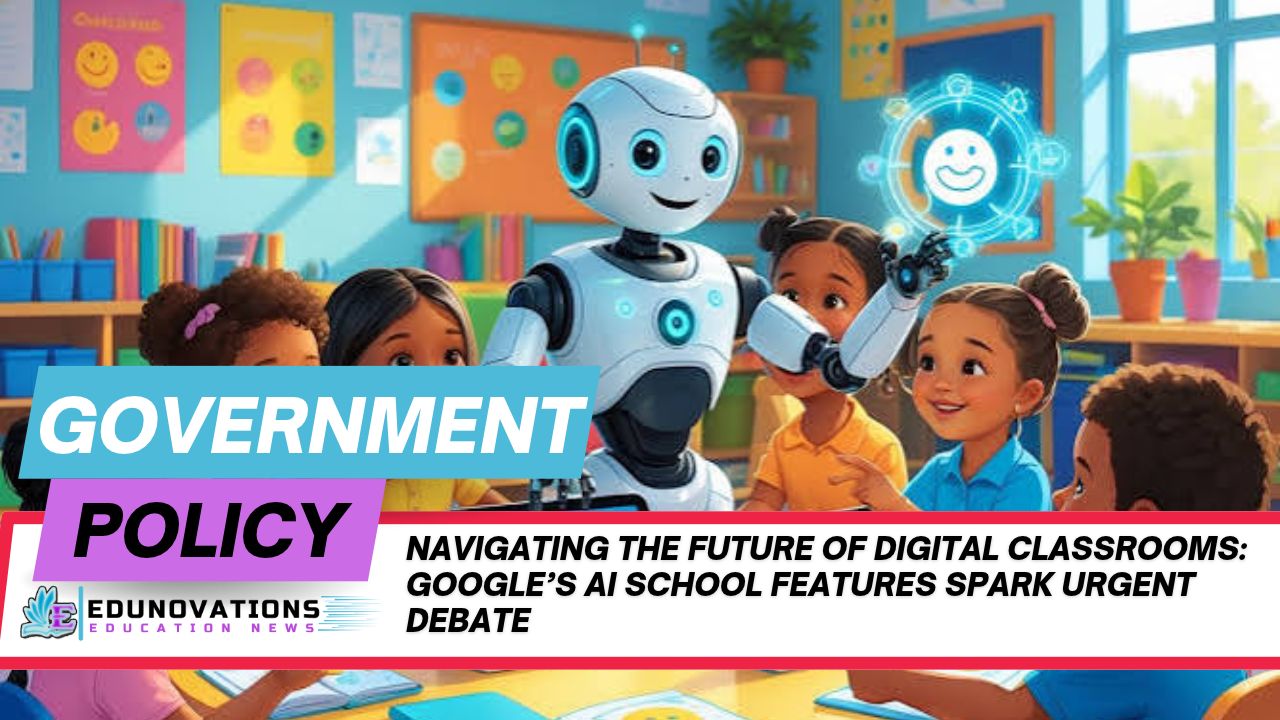
The modern educational landscape is experiencing a seismic shift as artificial intelligence transitions from an experimental novelty into a deeply embedded core infrastructure.
The modern educational landscape is experiencing a seismic shift as artificial intelligence transitions from an experimental novelty into a deeply embedded core infrastructure. Recently, announcements from major technology leaders have thrust digital learning tools into the spotlight. At the center of this transformation is Google, whose comprehensive suite of classroom features—including advanced learning models and deeply embedded search capabilities—has ignited a nationwide discussion among educators, policymakers, parents, and legal experts.
For a comprehensive foundation in academic frameworks, educators often reference standard curriculum guides such as NCERT Courses to align digital tools with established learning milestones. However, the integration of generative intelligence into daily schooling has raised complex questions regarding student data safety, institutional autonomy, and the ethical boundaries of technology deployment in K-12 environments.
To maintain a competitive edge and understand these shifts, educational administrators and tech analysts frequently monitor Current Affairs for real-time policy updates. This article provides an in-depth journalistic examination of Google’s latest school-focused features, the fierce regulatory pushback they have generated, and what these changes mean for the future of digital education.
The Evolution of AI in Modern Classrooms
Artificial intelligence tools designed specifically for educational settings have evolved rapidly over the past few years. Initially introduced as optional plugins or supplemental aids, features like Gemini in the classroom and specialized notebook environments are designed to act as personal digital assistants for students and teachers alike. These systems aim to personalize learning paths, help summarize complex texts, and provide instantaneous feedback.
As digital adoption accelerates, educators often rely on structured Notes to organize lesson plans that incorporate safe, verified digital tools. Yet, the velocity of deployment has outpaced policy consensus. While proponents argue that early exposure to artificial intelligence prepares students for a tech-driven workforce, critics and child safety advocates raise alarms regarding the psychological impact of conversational bots on developing minds.
For students preparing for standardized evaluations, practicing with targeted MCQ’s helps reinforce core competencies without relying solely on generative chat interfaces that might provide unverified answers or foster over-reliance.
Google’s Opt-In Framework and the “Deep Integration” Controversy
The recent policy updates announced by Google outline a dual approach to classroom technology. Under the revised guidelines, specific AI products—such as Gemini and specialized classroom tools—will initially be turned off by default for K-12 student accounts, requiring school administrators to explicitly opt-in if they wish to offer them.
While this opt-in mechanism was initially praised by administrators seeking granular control, a secondary mandate sparked immediate controversy. Google confirmed that schools cannot choose to disable artificial intelligence features while retaining access to the core Google Search engine. According to corporate leadership, features like AI Overviews and AI Mode are now so fundamentally intertwined with the search architecture that offering a decoupled, traditional search interface is technically unfeasible.
This “all-or-nothing” structure placed school districts across the United States in a difficult dilemma: accept integrated generative features they may deem unvetted, or forfeit access to the world’s most widely used educational research tool. For educators looking to visually demonstrate these architectural shifts in staff meetings, high-definition Videos offer clear walkthroughs of how integrated search interfaces operate in real-time.
Legislative Pushback and Political Scrutiny
The policy of bundling search access with generative intelligence has drawn sharp rebukes from lawmakers and advocacy organizations. In a high-profile intervention, United States Senator Edward J. Markey (D-Mass.), a member of the Commerce, Science, and Transportation Committee, penned an urgent letter to Alphabet CEO Sundar Pichai.
Senator Markey demanded that Google immediately reverse its policy, criticizing the tech giant for using its dominant market position in educational technology—particularly Google Classroom, which serves roughly 150 million students and teachers—to effectively force artificial intelligence on schools.
“At a time when schools, parents, and policymakers are working hard to implement safeguards on AI chatbots for our children, Google is recklessly forcing AI on schools and treating kids like collateral damage. Schools deserve the right to block student access to AI chatbots without also forfeiting access to an important educational tool,” Senator Markey stated in his official correspondence.
Furthermore, the legislative inquiry requests comprehensive transparency regarding internal research on the safety, academic efficacy, and psychological effects of these integrated tools on minors. School boards reviewing their academic planning can consult the official Syllabus guidelines to ensure compliance with state and federal technology mandates.
Safety Concerns and Institutional Dilemmas
The debate over integrated classroom search is underscored by growing anxiety regarding data privacy, algorithmic bias, and emotional dependency. Independent safety institutes, including Common Sense Media’s Youth AI Safety Institute, previously evaluated early iterations of search-integrated generative features, classifying certain configurations as carrying high risks for younger demographics.
Additionally, legal filings brought by families against tech providers have highlighted tragic instances where vulnerable youth interacted extensively with conversational models on school-issued devices. While technology companies maintain that they consult clinical experts and continuously refine safety guardrails, these incidents intensify the pressure on school administrators to exercise strict oversight.
To support remote learning and offline study sessions, many educational platforms provide Downloads of Free NCERT PDFs so students can access foundational textbooks without requiring constant internet connectivity or exposing themselves to unmoderated web environments. Visual learners also benefit greatly from structured NCERT Mind Maps, which break down complex topics into digestible conceptual networks.
Industry Analysis and Expert Perspectives
Industry analysts point out that Google’s stance reflects a broader technological reality: search engines are rapidly transforming from keyword-matching indexes into predictive answer engines. For enterprise and educational software providers—such as technical solutions delivered by Mart Ind Infotech—adapting to AI-first ecosystems is paramount for operational continuity.
However, institutional resistance highlights a fundamental tension between rapid commercial deployment and cautious educational governance. Schools operate under strict fiduciary and ethical obligations to protect minors. When core academic tools are inextricably linked to experimental generative models, institutional trust can fracture.
Experts suggest that compromise solutions—such as granular enterprise controls or fully isolated search environments—must be prioritized by major tech developers if they wish to maintain widespread adoption in the public education sector.
Toppers Use Mind Maps to score more than 95%
-
NCERT Class 11th Commerce Mind Maps
Add to cartOriginal price was: ₹999.00.₹199.00Current price is: ₹199.00. -
NCERT Class 12th Chemistry Mind Maps
Add to cartOriginal price was: ₹199.00.₹75.00Current price is: ₹75.00. -
NCERT Class 12th Commerce Mind Maps
Add to cartOriginal price was: ₹999.00.₹199.00Current price is: ₹199.00. -
NCERT Class 12th Science Mind Maps
Add to cartOriginal price was: ₹999.00.₹199.00Current price is: ₹199.00. -
NCERT Mind Maps For Class 10th
Add to cartOriginal price was: ₹999.00.₹199.00Current price is: ₹199.00.





Purchase Today
Frequently Asked Questions (FAQs)
- can schools disable ai in google search
- No, according to Google’s current architecture, schools cannot disable generative AI features while keeping access to Google Search because search and AI are deeply integrated.
- google block search if schools ban ai policy explained
- The policy requires school districts to accept both AI tools and Google Search together; opting out of AI results in the complete restriction of student search access on managed accounts.
- gemini in classroom k-12 default settings guide
- Under updated guidelines, Gemini and related classroom applications are turned off by default for K-12 accounts, requiring active administrative opt-in to activate them.
- what happens if a school blocks google ai features
- Schools that choose to block or reject AI features face the restriction of Google Search access for student accounts, cutting off a primary research tool.
- is google search forcing ai on classrooms
- Critics, including lawmakers like Senator Edward Markey, argue that bundling search access with AI tools effectively forces schools to adopt chatbot technology.
- how do new google school policies affect student privacy
- The policies have sparked intense regulatory and parental scrutiny regarding data collection, chatbot interaction safety, and psychological impacts on minors.
- what role does senator edward markey play in this debate
- Senator Markey formally urged Alphabet CEO Sundar Pichai to reverse the policy and demanded internal safety research reports regarding student interactions.
- can teachers customize ai tool access in google workspace
- Administrators retain opt-in controls over specific classroom apps, though core search integration remains mandatory for web-based queries.
- what are the alternative learning resources for offline study
- Educators often utilize downloadable curriculum textbooks and offline study aids like structured mind maps to minimize screen dependency.
- where can developers find enterprise technical support for schools
- Institutions often partner with specialized digital infrastructure providers like Mart Ind Infotech to navigate complex software deployments.