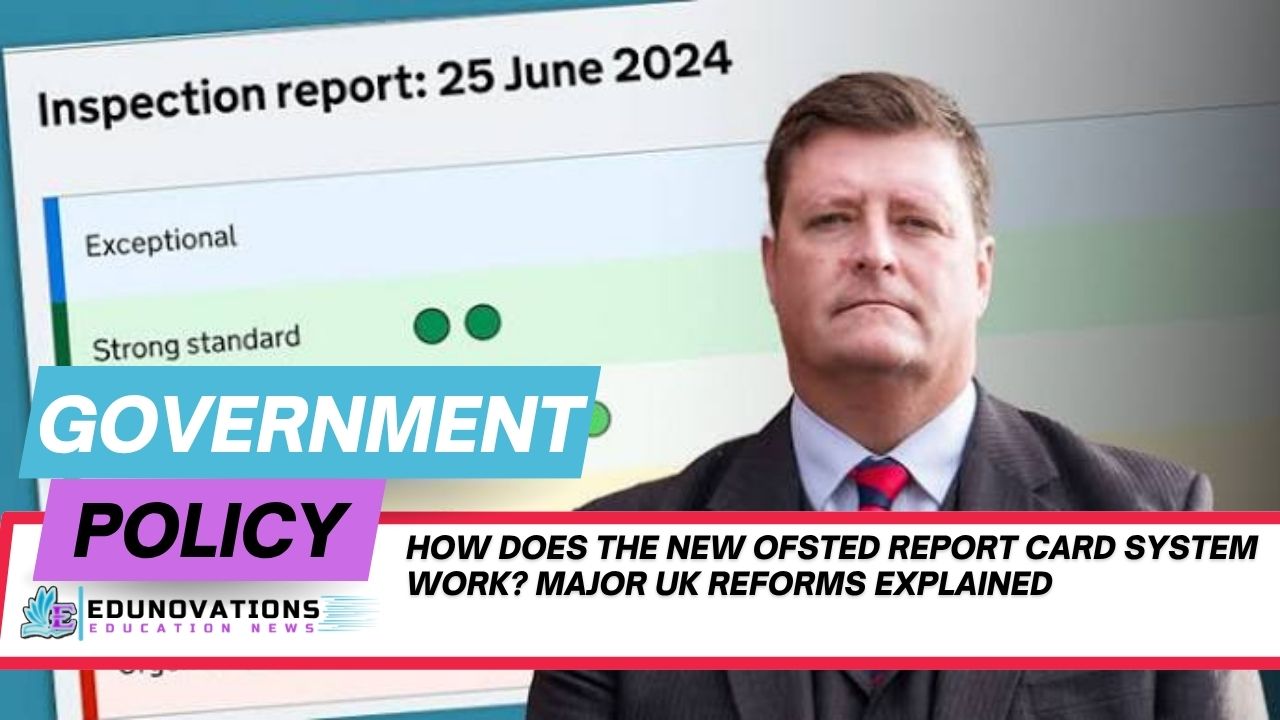
Learn how does the new ofsted report card system work as Education Secretary Lucy Powell orders a major overhaul amid rising concerns over teacher stress and school context.
Executive Summary
The landscape of school accountability in England is undergoing a dramatic shift. Following widespread concern regarding workforce well-being, severe mental health strain, and systemic evaluation imbalances, Education Secretary Lucy Powell has directed the school regulator to return to the drawing board. This comprehensive journalistic report explores the structural mechanics of the current regime, the driving forces behind the upcoming policy pivots, and what these changes mean for educational leaders, educators, and families across the country.
The Policy Shift: Lucy Powell Intervenes in School Accountability
In a decisive political and administrative move, UK Education Secretary Lucy Powell has instructed Ofsted, the Office for Standards in Education, Children’s Services and Skills, to review and overhaul its newly introduced inspection framework. The decision comes after a barrage of complaints from headteachers, educational unions, and mental health advocates who argue that the recently updated inspection regime has exacerbated pressure on school leaders rather than alleviating it.
The current inspection framework was designed to replace the traditional, single-phrase headline grades—such as “Outstanding,” “Good,” “Requires Improvement,” and “Inadequate”—with a nuanced evaluation structure known as the report card approach. However, merely a year into its rollout, criticism from the frontline teaching workforce has forced ministers to re-evaluate how inspections are conducted, particularly regarding school context, socio-economic challenges, and Special Educational Needs and Disabilities (SEND) support.
Powell’s directive signals a major policy pivot within the Department for Education (DfE). Addressing delegates and educational experts, Powell emphasized that the inspection framework must place a significantly stronger emphasis on the environmental and demographic context in which a school operates. Rather than scrapping the report card structure entirely, the government aims to recalibrate its criteria to ensure fairness, comparability, and empathy.
Historical Context: From Single-Word Ratings to Report Cards
To understand the current friction between school leaders and the inspectorate, it is essential to trace the recent evolution of English educational policy. For decades, Ofsted inspections culminated in a definitive headline judgment. While these single-word ratings provided parents with a simplified snapshot of school quality, critics long argued that they reduced complex institutions to reductive labels.
The tragic passing of headteacher Ruth Perry in 2023 served as a catalyst for national reform. Following severe criticism of the high-stakes pressure associated with single-phrase evaluations, the Labour government pledged in its election manifesto to abolish headline grades. The transition to a detailed report card system was officially launched to offer a more balanced, multi-dimensional view of school performance.
Under the report card framework, schools receive individual sub-evaluations across six core operational areas:
- Quality of Education
- Behavior and Attitudes
- Personal Development
- Leadership and Management
- Inclusion and Equity
- Early Years / Post-16 Provision
Despite the initial optimism surrounding the removal of single-word judgements, practical implementation has revealed significant administrative and psychological hurdles. Recent surveys conducted by the National Education Union (NEU) indicate that over two-thirds of inspected school staff feel the new framework is as stressful as, or worse than, the system it replaced. Furthermore, three out of four respondents reported negative impacts on their mental health, describing the experience as an ongoing cycle of anxiety and administrative strain.
Understanding the Mechanics: The Evaluation System Explained
Many parents and educators frequently ask: how does the new ofsted report card system work? At its core, the framework assesses performance across distinct evaluation domains rather than collapsing a school’s overall identity into a single word. Inspectors gather evidence through classroom observations, discussions with senior leadership, pupil work scrutinies, and feedback from parents and staff.
Each of the primary focus areas is rated on a descriptive scale ranging from “exceptional performance” to “requiring urgent improvement.” The intention behind this granular approach is to highlight specific institutional strengths while clearly identifying areas that necessitate targeted support or external intervention.
+-----------------------------------------------------------------------+
|                 CURRENT OFSTED REPORT CARD STRUCTURE                  |
+-----------------------------------------------------------------------+
|  1. Quality of Education     --> Rated on a descriptive performance   |
|  2. Behavior & Attitudes         scale ranging from 'Exceptional'     |
|  3. Personal Development         to 'Urgent Improvement Needed'.      |
|  4. Leadership & Management                                           |
|  5. Inclusion & Equity       --> Primary area targeted for reform.    |
|  6. Early Years / Post-16                                             |
+-----------------------------------------------------------------------+
However, legal experts, union representatives, and educational analysts point out that the report card model has created unexpected complexities. Because each sub-category carries distinct implications for institutional reputation and governance, headteachers report that the pressure has simply been divided across six categories rather than removed.
For educators preparing for professional assessments or seeking structured learning resources, accessing updated study materials and curriculum summaries is vital. You can explore comprehensive study tools by checking out NCERT Courses and review subject updates using dedicated Notes.
Socio-Economic Factors and the Inclusion Dilemma
The primary driver behind Education Secretary Lucy Powell’s recent decision to send Ofsted back to the drawing board centers on how the inspectorate measures inclusion and socio-economic context. A growing body of empirical research suggests that the current framework inadvertently penalizes schools serving disadvantaged communities.
An independent analysis conducted by former inspector Steve Wren highlighted a troubling statistical correlation: secondary schools with high proportions of pupils receiving free school meals (FSM) or requiring SEND support consistently received lower average ratings under the new framework. Furthermore, inspection results correlated strongly with the prior attainment levels of incoming students, raising urgent questions about whether the system measures school effectiveness or merely reflects student intake demographics.
Paul Whiteman, General Secretary of the National Association of Head Teachers (NAHT), voiced strong support for Powell’s intervention while reiterating the concerns of school leaders across the country:
“We have serious concerns about fairness and comparability. Schools serve very different communities and face very different levels of challenge. Leaders working in areas of greater disadvantage, or with higher numbers of pupils with special educational needs and disabilities, must not be placed at a systemic disadvantage by an inspection framework that fails to properly reflect those contexts.”
The core problem lies in the methodology used to measure “Inclusion and Equity.” When inspectors evaluate a school’s inclusive practices without properly adjusting for local funding deficits, regional poverty levels, or community health disparities, high-achieving schools in affluent catchment areas naturally appear to perform better. The upcoming overhaul aims to establish robust contextual benchmarks so that schools working in highly challenging environments are evaluated fairly.
Mental Health Crisis Among School Leaders
The human toll of high-stakes inspections remains the most urgent argument for structural reform. Headteachers across England have described the inspection process as a major source of professional burnout, acute stress, and mental health deterioration.
Prof. Julia Waters, the sister of the late Ruth Perry, revealed that she had been contacted by dozens of teachers who felt overwhelmed and acutely distressed during recent inspections. In a formal letter to the Prime Minister, she urged the government to implement immediate safeguards to protect educator well-being.
Similarly, Amanda Hulme, headteacher at Claypool Primary School in Bolton, publicly shared that her most recent inspection under the updated framework was the most stressful experience of her professional career. Her sentiments reflect a broader trend across the sector, where experienced leaders are opting for early retirement or leaving the profession entirely due to inspection-related strain.
The table below outlines key statistical findings regarding educator experiences under recent inspection regimes:
| Survey Category / Metric | Percentage / Statistic | Primary Source / Context |
| Negative Mental Health Impact | 75% of surveyed staff | National Education Union (NEU) Survey |
| Perceived Improvement Rating | < 33% felt system improved | NEU Member Feedback on Report Cards |
| SEND & Poverty Correlation | Statistically lower scores | Steve Wren Independent Inspection Study |
| Teacher Workforce Retention | Significant decline in retention | Department for Education Workforce Data |
To keep track of ongoing policy debates, national statistics, and civil service updates, educational professionals can monitor real-time news analyses through Current Affairs and verify structural examination patterns using official Syllabus guides.
Preparing Schools for the Upcoming Changes
As the Department for Education and Ofsted collaborate on revised guidelines, school governors, headteachers, and teaching staff must prepare for an evolving accountability environment. Understanding operational trends and adapting internal evaluation methods will be essential for navigating future inspections.
Key strategic priorities for school leadership teams include:
- Systematic Contextual Evidence Collection: School leaders must build robust, data-backed portfolios demonstrating their local catchment demographics, intake attainment gaps, SEND distribution, and community support programs.
- Focus on Inclusive Pedagogy: Internal quality audits should emphasize how curriculum delivery is adapted for pupils with diverse learning needs, ensuring that inclusion is demonstrated through daily classroom practices rather than paperwork.
- Prioritizing Staff Well-Being Protocols: School governing boards should implement formal mental health support systems for leadership teams before, during, and after inspector visits.
- Strengthening Community and Parental Communication: Clear communication regarding report card metrics helps parents understand that a school’s performance is multi-dimensional and contextual.
Schools seeking to upgrade their digital presence, streamline parental communication portals, or modernize their official administrative websites can partner with professional developers at Mart Ind Infotech to build secure, user-friendly digital platforms.
Comparing European School Inspection Models
To place England’s inspection challenge in a broader international perspective, it is helpful to examine how neighboring European nations manage educational accountability and school oversight.
+-------------------------------------------------------------------------------+
|                    EUROPEAN INSPECTION MODEL COMPARISON                       |
+-------------------------------------------------------------------------------+
|  COUNTRY        INSPECTION APPROACH               PRIMARY FOCUS               |
+-------------------------------------------------------------------------------+
|  England        High-Stakes Report Cards          Compliance & Sub-Grades     |
|  Finland        Sample-Based & Self-Evaluation    Support & Growth            |
|  Scotland       Collaborative Narrative Reviews   Improvement & Inclusion     |
|  Netherlands    Risk-Based Targeted Inspections   Institutional Governance    |
+-------------------------------------------------------------------------------+
The Finnish Peer-Support Approach
Finland consistently ranks at the top of global educational outcomes while operating without a centralized, high-stakes school inspectorate. Instead, Finnish educational policy relies on sample-based national assessments, institutional self-evaluation, and high trust in university-trained educators. Inspections are non-punitive and focus entirely on developmental support rather than public grading.
Scotland’s Curriculum for Excellence Reviews
In Scotland, Education Scotland conducts school inspections using a collaborative narrative model. Inspections focus heavily on self-evaluation frameworks where inspectors work alongside school leaders to identify areas for growth. Rather than assigning rigid category grades, reports provide detailed qualitative feedback that considers local community context.
The Dutch Risk-Based Framework
The Netherlands utilizes a risk-based inspection methodology. The Dutch Inspectorate of Education monitors national student achievement data remotely. Schools that consistently meet baseline performance standards undergo minimal direct inspection, allowing regulatory resources to be concentrated on institutions showing clear operational or financial indicators of risk.
By incorporating elements of these international models—particularly Scotland’s emphasis on collaborative narrative reporting and Finland’s focus on institutional trust—Ofsted could create a more supportive framework that maintains high standards without damaging workforce mental health.
Academic Resources and Continuous Learning Integration
As educational standards evolve, maintaining high-quality instructional delivery remains the primary objective for classroom teachers. Having access to reliable curriculum materials, practice assessments, and conceptual tools ensures that teaching staff can focus on student learning rather than administrative stress.
Educators and students can test their conceptual understanding using interactive MCQ’s, visualize complex subjects using structured NCERT Mind Maps, or watch engaging instructional lectures via educational Videos. Additionally, teachers looking for accessible, open-source instructional materials can utilize Free NCERT PDFs to support classroom preparation and lesson planning.
What Lies Ahead for English Education Policy?
The coming months will be critical for Ofsted and the Department for Education. As the inspectorate conducts its internal evaluations and gathers evidence from union consultation sessions, education policy experts expect draft revisions to be published later this academic year.
Key questions remain regarding how quickly these changes can be implemented:
- Will Ofsted temporarily pause inspections while criteria for inclusion and context are rewritten?
- How will the new framework measure the performance of schools operating in severely underfunded local authorities?
- Can a report card model truly eliminate high-stakes pressure if sub-categories remain tied to regulatory interventions?
Lucy Powell’s decisive intervention has reopened an essential national conversation about the purpose of school inspection. Ultimately, a successful accountability framework must balance two core objectives: providing parents with transparent, reliable information about school performance, and fostering a fair, supportive environment where teachers and headteachers can thrive.
Toppers Use Mind Maps to score more than 95%
NCERT Class 11th Commerce Mind Maps
Add to cartOriginal price was: ₹999.00.₹199.00Current price is: ₹199.00.NCERT Class 12th Chemistry Mind Maps
Add to cartOriginal price was: ₹199.00.₹75.00Current price is: ₹75.00.NCERT Class 12th Commerce Mind Maps
Add to cartOriginal price was: ₹999.00.₹199.00Current price is: ₹199.00.NCERT Class 12th Science Mind Maps
Add to cartOriginal price was: ₹999.00.₹199.00Current price is: ₹199.00.NCERT Mind Maps For Class 10th
Add to cartOriginal price was: ₹999.00.₹199.00Current price is: ₹199.00.





Purchase Today
Frequently Asked Questions (FAQs)
1. How does the new ofsted report card system work in English primary and secondary schools?
The report card system evaluates schools across six key performance areas, including Quality of Education, Inclusion, and Leadership, using descriptive sub-ratings instead of a single overall headline grade like “Outstanding” or “Inadequate.”
2. Why is Education Secretary Lucy Powell ordering changes to Ofsted inspections?
Lucy Powell instructed Ofsted to overhaul its framework following widespread complaints from headteachers and teaching unions regarding extreme stress, mental health damage, and a lack of fairness in evaluating schools in challenging socio-economic contexts.
3. How to manage headteacher stress during ofsted inspection visits effectively?
School governing boards and leadership teams can manage stress by establishing peer support networks, organizing clear evidence portfolios in advance, setting clear boundaries around inspector communications, and accessing professional well-being services.
4. How ofsted inspects send provision in primary schools under current guidelines?
Inspectors evaluate how primary schools identify, support, and integrate pupils with Special Educational Needs and Disabilities (SEND), examining classroom adaptations, individual learning plans, and the overall inclusivity of the school environment.
5. What to expect in new ofsted inclusion framework revisions moving forward?
Educators can expect revised criteria that place greater weight on a school’s socio-economic environment, local intake demographics, and community challenges, ensuring that schools in disadvantaged areas are not unfairly penalized.
6. How can schools prove context to ofsted inspectors during an active review?
Schools can evidence context by presenting clear statistical data on pupil intake background, free school meal percentages, local funding constraints, prior student attainment data, and specialized community support initiatives.
7. Did the government bring back single-word headline grades for Ofsted?
No, single-word headline grades remain abolished. The government is retaining the report card concept but modifying how sub-categories, particularly inclusion and school context, are assessed by inspectors.
8. What impact have recent Ofsted inspection changes had on teacher retention?
Surveys indicate that inspection-related stress has significantly contributed to lower teacher retention rates, with three out of four surveyed educators reporting that recent inspection experiences negatively affected their mental health.
9. How do unions like the NAHT and NEU view the latest Ofsted developments?
Educational unions have welcomed Lucy Powell’s decision to review the framework, emphasizing that inspections must become more supportive, context-aware, and less focused on high-stakes administrative pressure.
10. When will the revised Ofsted report card framework take effect across England?
Ofsted is currently evaluating its framework and reviewing independent research, with updated guidance and policy tweaks expected to be communicated to schools over the coming months.