Discover insights from the IIMA Accelerating India’s Development Aid Conference 2025, exploring CSR, rural entrepreneurship, AI for Good, and development strategies in India.
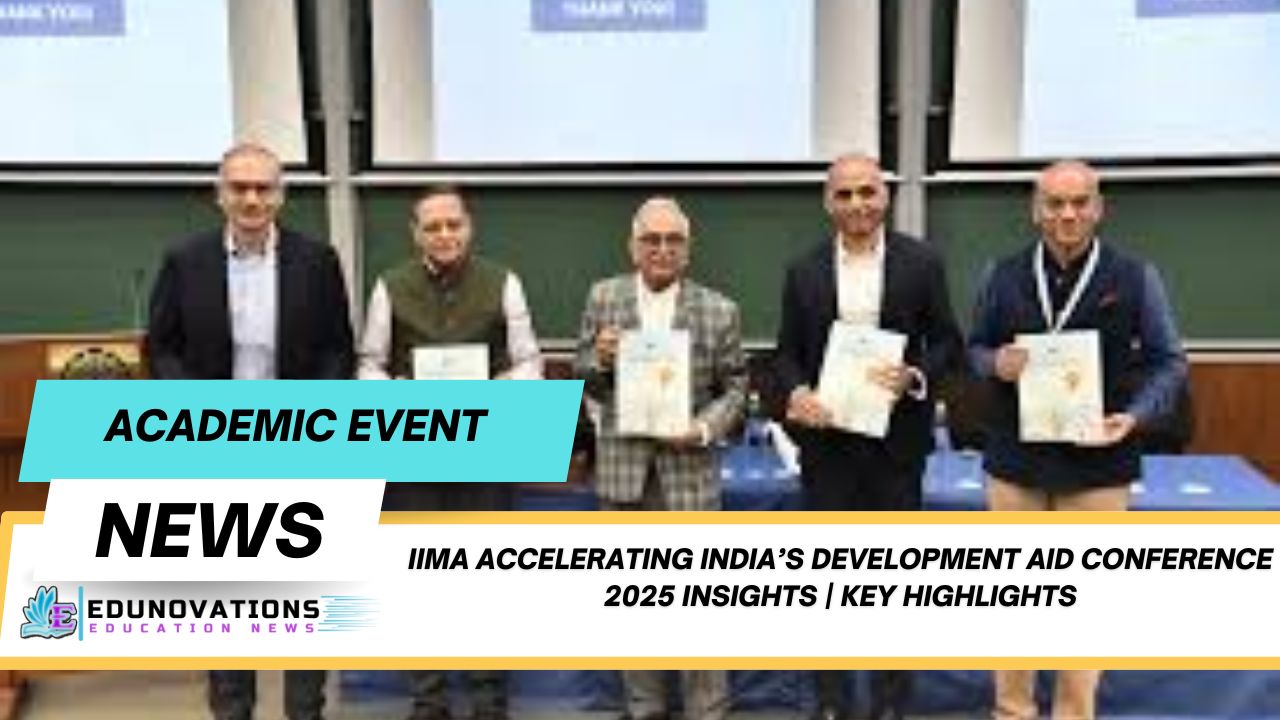
In a groundbreaking initiative, the IIMA Accelerating India’s Development Aid Conference 2025 insights emerged as a key platform for stakeholders from diverse sectors to converge on strategies for inclusive development. Hosted by the IIM Ahmedabad Endowment Fund, this first-ever conference aimed at bridging the gap between public policy, corporate social responsibility (CSR), and grassroots innovation, highlighted the growing role of collaborative efforts in India’s socio-economic growth.
IIMA Endowment Fund: Driving Transformational Change
The IIMA Endowment Fund development conference highlights India provided a unique opportunity for academic experts, policymakers, corporate leaders, and social innovators to engage in thought-provoking discussions. The event reflected the Endowment Fund’s commitment to leveraging knowledge and resources for development initiatives that have a sustainable impact.
The conference featured an array of sessions that addressed pressing societal challenges, ranging from education and health to rural entrepreneurship and AI for Good technologies. The sessions underscored the necessity of multi-sector collaboration to achieve scalable social solutions.
For students seeking to understand the evolving landscape of development strategies, related NCERT Courses and Current Affairs resources provide foundational knowledge.
Key Themes and Highlights
Collaborative Social Responsibility and Development
The India collaborative social responsibility development platforms 2025 theme was at the forefront of discussions. Industry leaders emphasized the importance of integrating CSR initiatives with government development schemes to optimize resource utilization. Experts shared case studies showcasing how joint efforts between corporates and NGOs can generate measurable social impact, particularly in underserved regions.
Rural Entrepreneurship and AI for Good
A significant focus was placed on fostering rural entrepreneurship and AI for Good sessions at AID IIMA. Panelists discussed how technology-driven solutions, such as AI-powered predictive analytics, can transform rural livelihoods. By equipping rural entrepreneurs with digital tools, India can accelerate development outcomes and enhance economic self-reliance.
Attendees learned about successful interventions that combined AI, community engagement, and market access. Such initiatives not only provide income-generating opportunities but also encourage sustainable practices that preserve local ecosystems.
Policy and Governance Perspectives
The conference also addressed policy frameworks crucial for effective development initiatives. Academics and policymakers highlighted evidence-based approaches to governance, emphasizing transparency, accountability, and community participation. These discussions aligned with global development goals and underscored India’s commitment to inclusive growth.
Experts from the Mart India Infotech platform were invited to provide external insights on technological integration and data-driven policy solutions for social development projects.
Impactful Development Discussions on India’s Growth and CSR Strategies
Sessions dedicated to impactful development discussions on India’s growth and CSR strategies explored emerging trends in social impact investing, sustainable finance, and sectoral collaboration. Thought leaders examined models where private sector investment could catalyze public good, stressing measurable outcomes and scalability.
The discussions highlighted that successful development initiatives often require multi-dimensional strategies combining education, healthcare, entrepreneurship, and technology.
Expert Insights and Recommendations
Several experts shared actionable insights during the conference:
- Dr. Ashok Sharma, an AI policy expert, emphasized integrating AI for Good in government projects to optimize resource allocation.
- Ms. Ritu Malhotra, a CSR strategist, highlighted successful corporate-NGO partnerships that enhanced rural livelihoods.
- Academic leaders from IIMA suggested leveraging the Endowment Fund to support pilot programs that can later be scaled across India.
The combination of academic research, corporate experience, and grassroots insights provided a comprehensive blueprint for stakeholders aiming to make meaningful contributions to development initiatives.
Conference Sessions and Workshops
The conference featured several high-impact sessions:
- AI for Rural Development Workshop: Demonstrated AI tools enabling predictive analytics for agricultural yield and market linkages.
- CSR Best Practices Panel: Focused on collaboration between corporates and NGOs in education and health sectors.
- Policy Roundtable: Discussed evidence-based approaches to social development and the role of governance in scaling initiatives.
- Innovation Showcase: Highlighted startups and social enterprises using technology to address rural challenges.
- Networking Forums: Enabled cross-sector engagement, fostering partnerships between corporates, NGOs, and academia.
Attendees also had access to NCERT Notes and MCQ resources for supplementary learning and exam preparation.
Role of Education and Academic Institutions
A key takeaway was the pivotal role of education in development. Institutions like IIMA provide not only research and analysis but also platforms for practical implementation of development strategies. Students and faculty engaged in project-based learning that addressed real-world social issues, demonstrating the power of academic contributions to society.
For additional academic resources, students can explore Videos, Syllabus, and NCERT Mind Maps for comprehensive study support.
Future Directions for Development Initiatives
The IIMA Accelerating India’s Development Aid Conference 2025 insights emphasized future priorities:
- Scaling AI-driven solutions for rural development.
- Expanding CSR initiatives in collaboration with government schemes.
- Promoting social innovation through academic-industry partnerships.
- Enhancing data-driven policy implementation to maximize impact.
- Encouraging inclusive growth through multi-sector collaboration.
The conference underscored that a coordinated approach, informed by research and enriched with technology, can significantly accelerate India’s development trajectory.
Conclusion
The inaugural IIMA Accelerating India’s Development Aid Conference 2025 insights marked a milestone in India’s development discourse. By bringing together policymakers, corporate leaders, academics, and social innovators, the event catalyzed actionable strategies for inclusive growth. The conference’s focus on collaborative CSR, rural entrepreneurship, and AI for Good represents a model for future development initiatives in India.
For students and practitioners, staying informed through NCERT Downloads and Current Affairs ensures continued engagement with the evolving development landscape.
Toppers Use Mind Maps to score more than 95%
NCERT Class 11th Commerce Mind Maps
Add to cartOriginal price was: ₹999.00.₹199.00Current price is: ₹199.00.NCERT Class 12th Chemistry Mind Maps
Add to cartOriginal price was: ₹199.00.₹75.00Current price is: ₹75.00.NCERT Class 12th Commerce Mind Maps
Add to cartOriginal price was: ₹999.00.₹199.00Current price is: ₹199.00.NCERT Class 12th Science Mind Maps
Add to cartOriginal price was: ₹999.00.₹199.00Current price is: ₹199.00.NCERT Mind Maps For Class 10th
Add to cartOriginal price was: ₹999.00.₹199.00Current price is: ₹199.00.



Purchase Today
10 FAQs on IIMA Development Aid Conference
- What was the focus of the IIMA Accelerating India’s Development Aid Conference 2025?
The conference focused on collaborative social responsibility, rural entrepreneurship, and AI for Good initiatives. - Who organized the AID Conference at IIMA?
The IIM Ahmedabad Endowment Fund hosted the first-ever Accelerating India’s Development Aid Conference. - Which sectors were discussed at the IIMA development conference?
Sectors included education, health, rural entrepreneurship, CSR, and technology-driven social innovation. - What is AI for Good in the context of the IIMA conference?
AI for Good refers to leveraging artificial intelligence to improve rural development, education, and health outcomes. - How does CSR contribute to India’s development goals?
CSR initiatives create social impact through collaboration with NGOs, government schemes, and community engagement. - Were there any workshops on rural entrepreneurship?
Yes, the conference included workshops showcasing AI tools and digital solutions for rural entrepreneurs. - How can students learn more about development strategies discussed at the conference?
Students can access NCERT Courses, Notes, and Videos for related content. - What are the future priorities identified at the AID conference?
Scaling AI solutions, enhancing CSR collaboration, promoting social innovation, and data-driven policymaking. - Can corporates participate in future development initiatives?
Yes, corporate participation is encouraged through CSR programs and public-private partnerships. - Where can I find more resources related to India’s development and CSR strategies?
Resources are available through Current Affairs, MCQs, and NCERT Mind Maps.