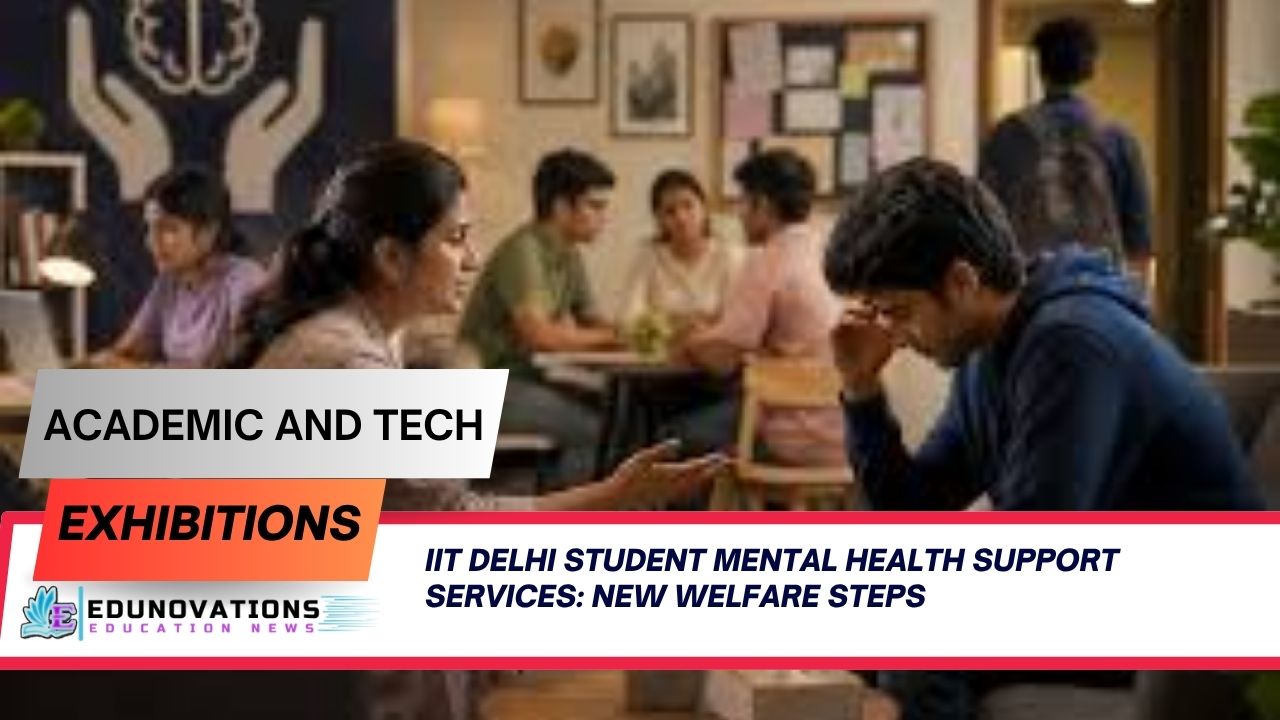
Discover how IIT Delhi student mental health support services and flexible academic policies are reshaping campus wellness and reducing student stress.
A Critical Turning Point in Higher Education
In an era where rigorous academic standards often collide with youth mental health challenges, higher education institutions across India are facing an unprecedented call for institutional accountability and reform. The Indian Institute of Technology Delhi (IIT Delhi), recognized globally as a premier center of academic excellence, has stepped forward with an extensive, multi-layered framework designed to safeguard student well-being. Asserting that student wellness is an absolute prerequisite for a thriving educational ecosystem, the administration has unveiled a series of systemic changes, curriculum adjustments, and mental healthcare infrastructure expansions.
This proactive push addresses longstanding concerns surrounding academic pressure, social isolation, and institutional transition stress experienced by students in elite engineering environments. By combining structural academic relaxation with 24/7 psychiatric and peer-led counseling support, the institute aims to cultivate a holistic educational environment where mental health is prioritized alongside academic achievement.
+-----------------------------------------------------------------------+
|                 IIT DELHI STUDENT WELL-BEING FRAMEWORK                |
+-----------------------------------------------------------------------+
|                                                                       |
|   [Academic Relief]           [Mentorship]         [Mental Healthcare]|
|    • Lightened 1st Sem         • STIC Get-Togethers • 24/7 Counselors |
|    • Life Skills Courses       • Open Office Hours  • AIIMS/VIMHANS    |
|    • Class Size Capped (30-60) • Buddy Programs     • Full Care        |
|    • Minimum CGPA Removed        (UG/PG/Intl)         Reimbursement   |
|                                                                       |
|   [Grievance Redressal]       [Targeted Support]   [Diversity & Inclusion]|
|    • Central ERP Tracking      • SAC & CAIC         • Office of Diversity |
|    • Hostel Wardens            • APG Evening          & Inclusion (ODI) |
|    • SC/ST & OBC Cells           Tutoring           • Bias Training   |
|                                                       (IGES / ICE)    |
+-----------------------------------------------------------------------+
Reimagining Academics: Stress Reduction and Curricular Flexibility
Academic pressure has historically been identified as one of the primary stressors affecting engineering students in top-tier technical universities. To mitigate this intense burden, the institute introduced a modernized curriculum that restructures the foundational undergraduate experience.
Lightening the First-Year Transition
The initial transition from competitive entrance examination preparation to university-level academics often presents severe psychological hurdles. Under the updated curriculum, first-semester credit loads have been reduced significantly. This deliberate structural change allows incoming students adequate time to acclimate to campus life without immediate academic overload. Furthermore, first-year departmental class sizes have been capped at 30 to 60 students, moving away from massive lecture-hall environments. This smaller setting fosters direct teacher-student engagement, encourages collaborative peer learning, and ensures that struggling students are identified early.
Integrative Life Skills and Examination Relief
In tandem with lighter credit loads, compulsory life skills courses have been woven into the academic matrix. These modules equip young scholars with essential emotional regulation tools, time-management strategies, and resilience-building techniques. Additionally, the institute has minimized weekend examinations, preserving critical rest periods for physical and mental recovery.
A historic highlight of these academic reforms is the formal removal of the minimum Cumulative Grade Point Average (CGPA) requirement for obtaining a B.Tech degree. Previously, students who completed their coursework but fell below a rigid CGPA threshold faced severe delays in degree completion, creating immense psychological trauma. By eliminating this restrictive barrier, the institute has decoupled educational completion from extreme grade anxiety.
Students preparing for various academic levels can explore comprehensive study materials through NCERT Courses to build strong foundational knowledge.
Building a Robust Mental Health Infrastructure
Recognizing that structural academic changes must be complemented by professional psychological care, the institute has deployed a comprehensive 24/7 mental healthcare ecosystem on campus.
                          +------------------------+
                          |   IIT Delhi Campus     |
                          |  Well-Being Gateway    |
                          +-----------+------------+
                                      |
         +----------------------------+----------------------------+
         |                                                         |
+--------v-------+                                       +---------v------+
| Institutional  |                                       | Professional   |
| Peer Networks  |                                       | Medical Care   |
+--------+-------+                                       +---------+------+
         |                                                         |
         |-- UG Buddy Program                                      |-- 24/7 In-House Counselors
         |-- PG Buddy Program                                      |-- Visiting Psychiatrists
         |-- International Buddy Program                           |-- Emergency Response Protocol
         |-- Academic Unit Wellness Committees                     |-- Reimbursed AIIMS/VIMHANS Care
Round-the-Clock Professional Medical Support
Students experiencing acute stress, clinical anxiety, or depression have continuous access to a dedicated team of on-campus counselors and clinical psychiatrists. The institute has established formal arrangements with leading medical facilities, including experts from the All India Institute of Medical Sciences (AIIMS) and the Institute of Human Behaviour and Allied Sciences (IHBAS/VIMHANS). Crucially, external specialized psychiatric care and therapeutic sessions are fully reimbursed by the administration, removing all financial barriers to mental healthcare access.
Peer Mentorship and Wellness Committees
Beyond medical interventions, peer-to-peer connection forms the bedrock of early distress detection. The institute’s long-standing UG Buddy Program has been expanded to include specialized PG Buddy and International Buddy initiatives, pairing senior scholars with incoming students to offer social guidance and emotional support.
Complementing these peer networks are the Academic Unit Wellness Committees (AUWCs) established across departments. These specialized units act as localized safety nets, monitoring academic workloads, identifying isolated students, and connecting distressed individuals with professional medical help before crises escalate.
For holistic personal development and long-term wellness, historical initiatives like the National Resource Centre for Value Education in Engineering (NRCVEE) continue to offer structured yoga and meditation modules integrated into campus life.
Strengthening Faculty Engagement and Governance
A healthy institutional environment relies heavily on open channels of communication between faculty members and the student community. Through the Student-Teacher Interaction Council (STIC), regular semester-wise get-togethers are conducted to break down hierarchical barriers.
- Open-Door Policy: Faculty members maintain active office hours specifically dedicated to non-academic discussions, personal mentorship, and emotional check-ins.
- Hostel and Project Involvement: Faculty advisors participate in hostel activities and informal campus gatherings, creating touchpoints outside traditional classroom settings.
- Class Committee Feedback Loops: Real-time feedback mechanisms allow students to raise concerns regarding assignment deadlines, teaching pace, or evaluation stress directly to course instructors.
- Academic Support Groups: The Academic Progress Group (APG) offers dedicated evening tutoring sessions and credit-backlog assistance, ensuring students falling behind academically receive constructive aid without fear of stigmatization.
To stay updated on educational news and national policy shifts, scholars can follow daily updates on Current Affairs.
Multi-Channel Grievance Redressal and Targeted Equity
Addressing student grievances promptly and impartially is central to building campus trust. The institute has instituted a multi-channel grievance redressal system backed by advanced digital tracking technology.
+---------------------------------------------------------------------------+
|                   MULTI-CHANNEL GRIEVANCE REDRESSAL SYSTEM                |
+---------------------------------------------------------------------------+
|  1. Centralized ERP Portal  --> Reference-tracked automated complaint     |
|                                 logging & mandatory resolution windows.   |
|  2. Specialized Support     --> Dedicated SC/ST & OBC Welfare Cells       |
|                                 handling systemic discrimination issues.  |
|  3. Campus Welfare Bodies   --> Board for Student Welfare (BSW) & Hostel  |
|                                 Wardens providing local intervention.    |
|  4. Gender & Access Equity  --> Internal Complaints Committee (ICC) &     |
|                                 Office of Accessible Education (OAE).     |
+---------------------------------------------------------------------------+
Students can submit grievances through a centralized, reference-tracked ERP portal that enforces strict accountability and mandatory resolution timelines. Additionally, dedicated bodies such as the Board for Student Welfare (BSW), hostel wardens, and specialized SC/ST and OBC cells address specific social and administrative concerns.
To foster an inclusive campus environment, the Office of Diversity and Inclusion (ODI), alongside the Initiative for Gender Equity and Sensitisation (IGES), Initiative for Caste Equity (ICE), and the Office of Accessible Education (OAE), conducts comprehensive orientation sessions for freshers. These workshops target both implicit and explicit biases related to gender, caste, language, region, and ethnicity.
School administrators looking to enhance their digital infrastructure and communication channels can consult Mart India Infotech for custom website development solutions.
Expert Analysis: The Evolving Landscape of Higher Education Wellness
To gain deeper context on these reform measures, educational experts and mental health advocates emphasize that physical infrastructure alone cannot solve student distress without a parallel cultural shift.
Expert Commentary on Institutional Stress
“In elite technical education, academic rigour must be balanced with compassionate pedagogy. The removal of rigid grading benchmarks and the expansion of peer mentorship networks represent a vital shift from punitive academic structures toward supportive learning ecosystems.”
— Prof. Pratap Sharan, Head of the Department of Psychiatry, AIIMS New Delhi
National data highlights the urgency of these interventions. Educational researchers point out that higher education institutions across India face significant challenges concerning student adjustment, competitive burnout, and social integration. Systemic policy adjustments—such as lighter credit loads during initial semesters—help bridge the gap between high school learning environments and rigorous university standards.
Students preparing for competitive examinations can access structured study resources through Notes, practice knowledge with MCQs, watch conceptual explanations via Videos, verify curriculum frameworks through Syllabus, and access free learning resources including Free NCERT PDFs and visual learning aids like NCERT Mind Maps.
Comparative View: Evolution of Student Welfare Policies
| Policy Area | Previous Institutional Framework | Updated Student Welfare Model |
| B.Tech Graduation Criteria | Strict minimum CGPA threshold required for degree award | Minimum CGPA criteria removed for B.Tech degree completion |
| First-Semester Academic Load | Full academic credit load with large lecture classes | Lightened credit load; departmental classes capped at 30–60 |
| Mentorship Reach | Primarily focused on undergraduate mentorship | Expanded to UG, PG, and International Buddy Programs |
| Mental Healthcare Access | Basic on-campus health center consultations | 24/7 access to AIIMS/VIMHANS care with full fee reimbursement |
| Academic Backlog Support | Individual remediation without structured frameworks | Evening tutoring through the Academic Progress Group (APG) |
Toppers Use Mind Maps to score more than 95%
NCERT Class 11th Commerce Mind Maps
Add to cartOriginal price was: ₹999.00.₹199.00Current price is: ₹199.00.NCERT Class 12th Chemistry Mind Maps
Add to cartOriginal price was: ₹199.00.₹75.00Current price is: ₹75.00.NCERT Class 12th Commerce Mind Maps
Add to cartOriginal price was: ₹999.00.₹199.00Current price is: ₹199.00.NCERT Class 12th Science Mind Maps
Add to cartOriginal price was: ₹999.00.₹199.00Current price is: ₹199.00.NCERT Mind Maps For Class 10th
Add to cartOriginal price was: ₹999.00.₹199.00Current price is: ₹199.00.


Purchase Today
Frequently Asked Questions (FAQs)
1. What primary features define the iit delhi student mental health support services?
The support services include 24/7 access to qualified counselors and external clinical psychiatrists from top medical centers like AIIMS and VIMHANS. The institute fully reimburses all external psychiatric treatments, maintains emergency response teams, and runs specialized departmental wellness committees.
2. How does the minimum cgpa criteria removed for btech degree iit delhi benefit students?
By eliminating the rigid minimum CGPA threshold for B.Tech degree completion, the institute eliminates extreme graduation anxiety. Students who complete their required credits can graduate without facing delays due to numerical grade benchmarks, reducing long-term stress.
3. In what ways do peer mentorship networks show how does buddy program help freshers at iits?
The Buddy Program pairs incoming students with experienced senior mentors who assist with academic adjustment, campus navigation, and social integration. This peer network ensures early identification of isolation or distress among freshers.
4. What broader academic relief steps taken by top engineering colleges are included in this initiative?
Key steps include reducing first-semester credit loads, capping class sizes to 30–60 students, introducing compulsory life skills courses, minimizing weekend examinations, and providing evening tutoring for backlog subjects.
5. How is the grievance redressal mechanism for engineering students in india operationalized on campus?
The mechanism operates through a centralized ERP portal that assigns unique tracking numbers to every complaint. It is reinforced by specialized SC/ST and OBC welfare cells, the Internal Complaints Committee (ICC), and the Board for Student Welfare (BSW).
6. Are mental healthcare expenses covered for students seeking external therapy?
Yes, external clinical consultations and psychiatric care arranged through recognized institutions are fully reimbursed by the administration, ensuring financial constraints do not hinder mental healthcare.
7. What role do faculty members play under the Student-Teacher Interaction Council (STIC)?
Faculty members hold open-door office hours, host semester get-togethers, participate in hostel activities, and gather real-time academic feedback to maintain direct communication with students.
8. How does the Academic Progress Group (APG) assist struggling students?
The APG offers targeted evening tutoring and structured credit-backlog assistance, helping students master complex subjects without fear of academic stigma.
9. What measures address campus diversity and bias prevention?
The Office of Diversity and Inclusion (ODI), along with IGES and ICE, conducts mandatory sensitisation programs during fresher orientation to address explicit and implicit biases related to gender, caste, region, and language.
10. How are postgraduate and international students integrated into wellness programs?
Mentorship coverage has been extended beyond undergraduate scholars to include dedicated PG Buddy and International Buddy Programs, ensuring all student demographics receive peer support.