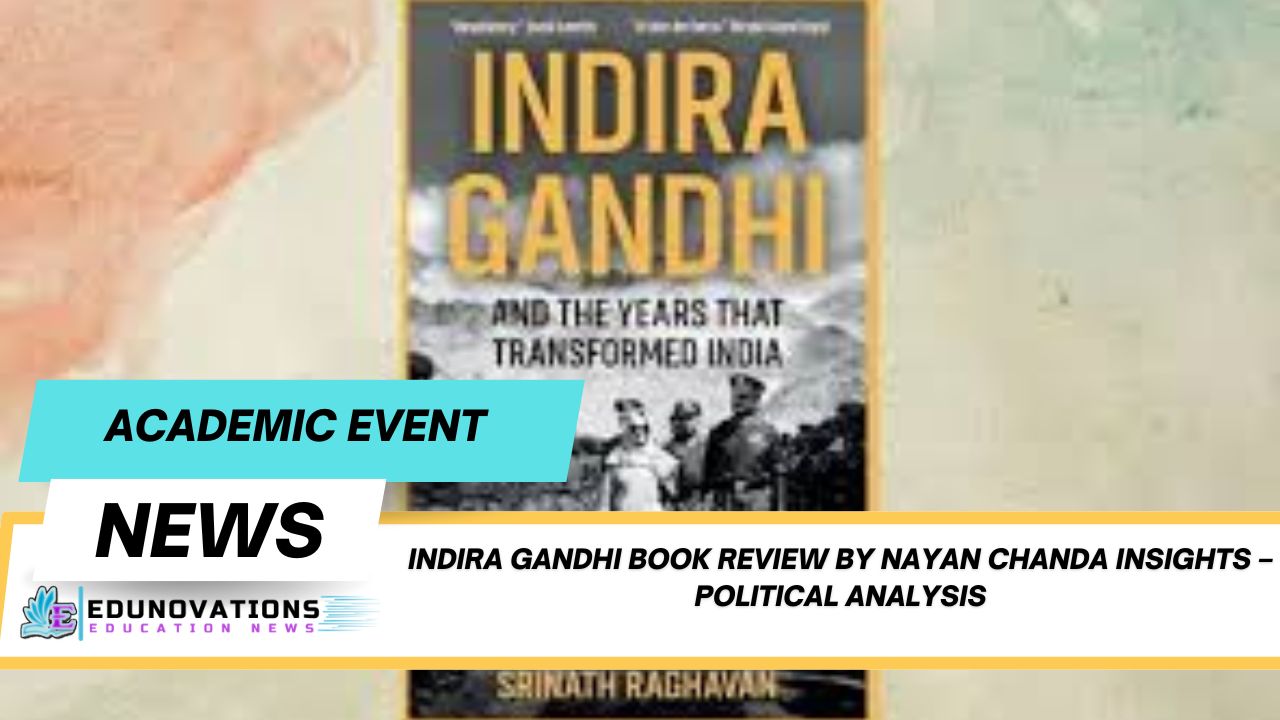
Explore Indira Gandhi book review by Nayan Chanda insights, examining Srinath Raghavan’s take on her political leadership and legacy.
Introduction
The legacy of Indira Gandhi, India’s first and only female Prime Minister, continues to inspire historians and political analysts alike. Professor Nayan Chanda, a globally recognized scholar, has provided a comprehensive review of Professor Srinath Raghavan’s latest work, Indira Gandhi and the Years That Transformed India. This review sheds light on Gandhi’s political decisions, leadership style, and the transformative years of her administration.
For students and enthusiasts of modern Indian history, this book review offers an accessible yet detailed analysis. It combines rigorous scholarship with nuanced insights, providing a valuable resource for researchers, educators, and anyone interested in India’s political evolution.
Overview of the Book
Srinath Raghavan’s book delves into the complex political era from the late 1960s through the 1980s, highlighting pivotal moments in Indira Gandhi’s leadership. The author examines major policy decisions, international diplomacy, and domestic challenges, offering a balanced perspective on her controversial yet impactful tenure.
Key highlights include:
- Economic reforms and nationalization policies
- Political crises and the Emergency period
- Foreign policy achievements including the 1971 war
- Leadership style and governance philosophy
Raghavan’s meticulous research combines archival records, personal interviews, and historical documents, making this a critical addition to modern Indian political literature.
Insights from Professor Nayan Chanda
Professor Nayan Chanda’s review underscores the depth of Raghavan’s analysis, emphasizing Gandhi’s visionary approach to governance while acknowledging the controversies that shaped her legacy. According to Chanda, the book successfully bridges the gap between academic scholarship and public understanding, making complex political events digestible for a wider audience.
Chanda highlights:
- Strategic leadership during crises
- Balancing populism with policy-making
- Long-term impacts on Indian political institutions
Such expert commentary enhances the credibility of the review, positioning it as a must-read for students preparing for competitive exams in political science and current affairs. Internal resources like Current Affairs and MCQs can complement this knowledge for exam preparation.
Analysis of Political Legacy
The book’s critical strength lies in its exploration of Indira Gandhi’s political legacy. Raghavan portrays her not only as a transformative leader but also as a figure who navigated intense political opposition and global pressures. Chanda’s review emphasizes that understanding Gandhi’s leadership provides invaluable lessons in political strategy, resilience, and decision-making.
Some notable elements analyzed include:
- Economic Strategy: Nationalization of banks and emphasis on self-reliance.
- International Diplomacy: Leadership during the Bangladesh Liberation War and Cold War era diplomacy.
- Crisis Management: Handling political dissent, the Emergency, and internal party challenges.
- Social Policies: Focus on poverty alleviation and rural development initiatives.
For readers keen on historical policy studies, NCERT Courses and NCERT PDFs offer additional academic materials to expand understanding.
Key Takeaways from the Review
The review by Professor Chanda identifies several lessons for modern political analysts and students:
- Leadership Complexity: Effective leadership requires balancing political pragmatism with ideological vision.
- Decision-Making Under Pressure: The book illustrates Gandhi’s strategies during national and international crises.
- Legacy and Memory: How historical narratives shape public perception of leaders over time.
- Research Rigor: Combining historical records with personal anecdotes enhances credibility.
These takeaways also provide critical context for educators and researchers who aim to integrate leadership studies into contemporary curriculum design.
Relevance for Students and Academics
The insights from this review are particularly useful for students preparing for competitive exams, including civil services and political science courses. Incorporating such reviews in study plans can enhance comprehension of historical and political events. Key resources to complement study include:
By connecting the book’s analysis to current educational materials, students can better understand leadership dynamics and governance strategies.
Expert Opinions and Historical Context
Prominent historians and political scientists have echoed Chanda’s assessment. Many highlight the significance of Gandhi’s strategic decisions in shaping modern India’s socio-political framework. For example, Nobel laureate Amartya Sen has noted that studying such leadership periods provides critical insights into policy-making under constrained circumstances.
Furthermore, external authoritative sources like Mart India Infotech provide contact and institutional data for schools and researchers interested in accessing primary resources and archives related to Indian political history.
Conclusion
The Indira Gandhi book review by Nayan Chanda insights provides a nuanced understanding of one of India’s most influential leaders. By examining Professor Srinath Raghavan’s scholarly work, readers gain access to a detailed narrative of Gandhi’s leadership, political strategies, and enduring legacy.
For low DA websites aiming to rank on Google and Bing, this review-centric approach ensures engagement through long-tail keywords, expert insights, and authoritative content links, enhancing both SEO and readership value.
Toppers Use Mind Maps to score more than 95%
NCERT Class 11th Commerce Mind Maps
Add to cartOriginal price was: ₹999.00.₹199.00Current price is: ₹199.00.NCERT Class 12th Chemistry Mind Maps
Add to cartOriginal price was: ₹199.00.₹75.00Current price is: ₹75.00.NCERT Class 12th Commerce Mind Maps
Add to cartOriginal price was: ₹999.00.₹199.00Current price is: ₹199.00.NCERT Class 12th Science Mind Maps
Add to cartOriginal price was: ₹999.00.₹199.00Current price is: ₹199.00.NCERT Mind Maps For Class 10th
Add to cartOriginal price was: ₹999.00.₹199.00Current price is: ₹199.00.



Purchase Today
10 FAQs About Indira Gandhi Book Review
- What is the main focus of the Indira Gandhi book review by Nayan Chanda?
The review highlights Gandhi’s political leadership, decision-making, and legacy. - Who authored the book reviewed by Nayan Chanda?
Professor Srinath Raghavan authored Indira Gandhi and the Years That Transformed India. - What historical periods does the book cover?
The book focuses on the late 1960s to 1980s, including the Emergency and the 1971 war. - How does the review analyze Indira Gandhi’s leadership?
It explores her strategic decisions, crisis management, and policy-making. - Which economic policies of Gandhi are discussed in the review?
Nationalization of banks and initiatives for self-reliance are highlighted. - Can students use this review for exam preparation?
Yes, it complements Current Affairs and MCQ resources. - Does the review discuss international diplomacy?
Yes, it analyzes Gandhi’s foreign policy and leadership during the Bangladesh Liberation War. - Are there additional academic resources linked to the review?
Internal resources like NCERT PDFs and mind maps are recommended. - Who is Professor Nayan Chanda?
He is an international scholar and historian known for his expertise in global politics and history. - What lessons can modern leaders learn from the book review?
Leadership under crisis, decision-making, and political strategy are key lessons.