Access the rrb group d 2026 official mock test direct link now. Check exam schedules, CBT guidelines, and expert tips to boost your score.
The anticipation surrounding one of India’s largest public sector recruitment examinations has reached a fever pitch. The Railway Recruitment Board (RRB) has officially activated the practice gateways for the upcoming Computer-Based Test under Centralized Employment Notice CEN 09/2025. With more than 22,195 Level-1 vacancies—ranging from Track Maintainer Grade IV and Pointsman-B to various technical assistant posts—attracting millions of hopeful applicants, securing a government job requires absolute precision, speed, and familiarity with the digital testing interface.
For candidates preparing to appear across the 16 designated examination days spanning from August 3 to August 25, leveraging digital practice platforms is no longer optional; it is a vital survival strategy. Senior railway recruitment officials have frequently stressed that computer literacy and time management dictate success rates in modern examinations. Reflecting on the integration of technology, former Railway Board Chairperson VK Tripathi once noted during a digital governance media briefing, “The transition toward fully digitized, transparent computer-based testing modules ensures equitable opportunities for every candidate, irrespective of their geographical backgrounds, bringing transparency right to the grassroots.”
To help aspirants navigate this technological shift smoothly, comprehensive preparation resources such as structured MCQ’s and up-to-date Current Affairs modules play an instrumental role in sharpening everyday problem-solving skills.
Understanding the 2026 Recruitment Framework
The RRB Group D Level-1 recruitment cycle for 2026 has introduced structured updates to optimize the testing process. Millions of candidates have registered to compete for positions that form the absolute backbone of Indian Railways infrastructure operations. Because the examination is hosted online through standardized assessment centers nationwide, understanding the software environment is just as important as mastering textbooks.
Before diving headfirst into intensive study schedules, candidates should thoroughly review the official Syllabus to align their preparation with the latest weightage distribution across sections like Mathematics, General Intelligence & Reasoning, General Science, and General Awareness.
Furthermore, foundation building can be effectively supplemented using structured NCERT Courses and visual aids like NCERT Mind Maps to retain core scientific and mathematical concepts effortlessly. For aspirants looking to build an extensive offline library, downloading Free NCERT PDFs provides reliable reference material without heavy expenses.
Navigating the Digital Assessment Portal
A major hurdle for first-time digital test-takers is navigating the remote assessment interface managed by technical testing partners like TCS iON. The activation of practice links allows students to simulate real exam environments right from their desktops or laptops.
To make the most of these simulated portals, candidates should focus on several operational areas:
- Interface Familiarization: Understanding how question palettes display answered, unvisited, marked-for-review, and answered-and-marked questions.
- Palette Color Coding: Green indicates answered questions, red means unvisited, orange denotes visited but unanswered, and purple signifies marked-for-review states.
- On-Screen Virtual Calculator: Practicing fast calculations using the provided digital tool instead of physical scratchpads alone.
- Section Switching: Mastering the psychological shift required when moving abruptly from logical reasoning blocks to numerical problem-solving.
For deeper conceptual clarity, candidates can explore curated Notes or watch conceptual breakdown Videos designed to clear complex doubts in minimal time. Additionally, institutional setups looking to upgrade their internal examination infrastructure or digital classrooms can explore solutions provided by technological partners like Mart Ind Infotech to streamline digital learning frameworks.
Strategic Breakdown of the CBT Examination Pattern
Success in the Level-1 Computer-Based Test depends heavily on a clear grasp of the exam structure. The layout comprises 100 objective-type multiple-choice questions carrying a maximum weight of 100 marks, to be completed within a strict duration of 90 minutes (120 minutes for eligible PwD candidates with scribes).
| Section Name | Number of Questions | Allocated Marks |
| Mathematics | 25 | 25 |
| General Intelligence & Reasoning | 30 | 30 |
| General Science | 25 | 25 |
| General Awareness & Current Affairs | 20 | 20 |
A critical element that catches many aspirants off guard is the negative marking scheme. For every incorrect response, one-third (1/3rd) of the marks assigned to that question will be deducted. Therefore, blind guesswork can drastically pull down normalized scores. Practicing via official mock exercises helps candidates develop a calculated risk-taking appetite, teaching them precisely when to leave a tricky question blank.
Expert Tips to Maximize Scores Using Practice Portals
- Replicate Real Exam Timings: Sit down for a continuous 90-minute block without mobile phones or distractions, matching the exact time slot allocated for your shift.
- Analyze Performance Metrics: Do not just check the final score; deep-dive into the time spent per question. If a mathematics problem eats up more than two minutes, flag it as an area for improvement.
- Prioritize Accuracy Over Volume: Given the negative marking penalty, focus on maximizing high-accuracy domains like General Science and Reasoning before tackling tricky numerical calculations.
- Build Stamina: Sitting in front of a computer monitor under examination pressure induces physical fatigue. Regular screen-based testing builds ocular and mental endurance.
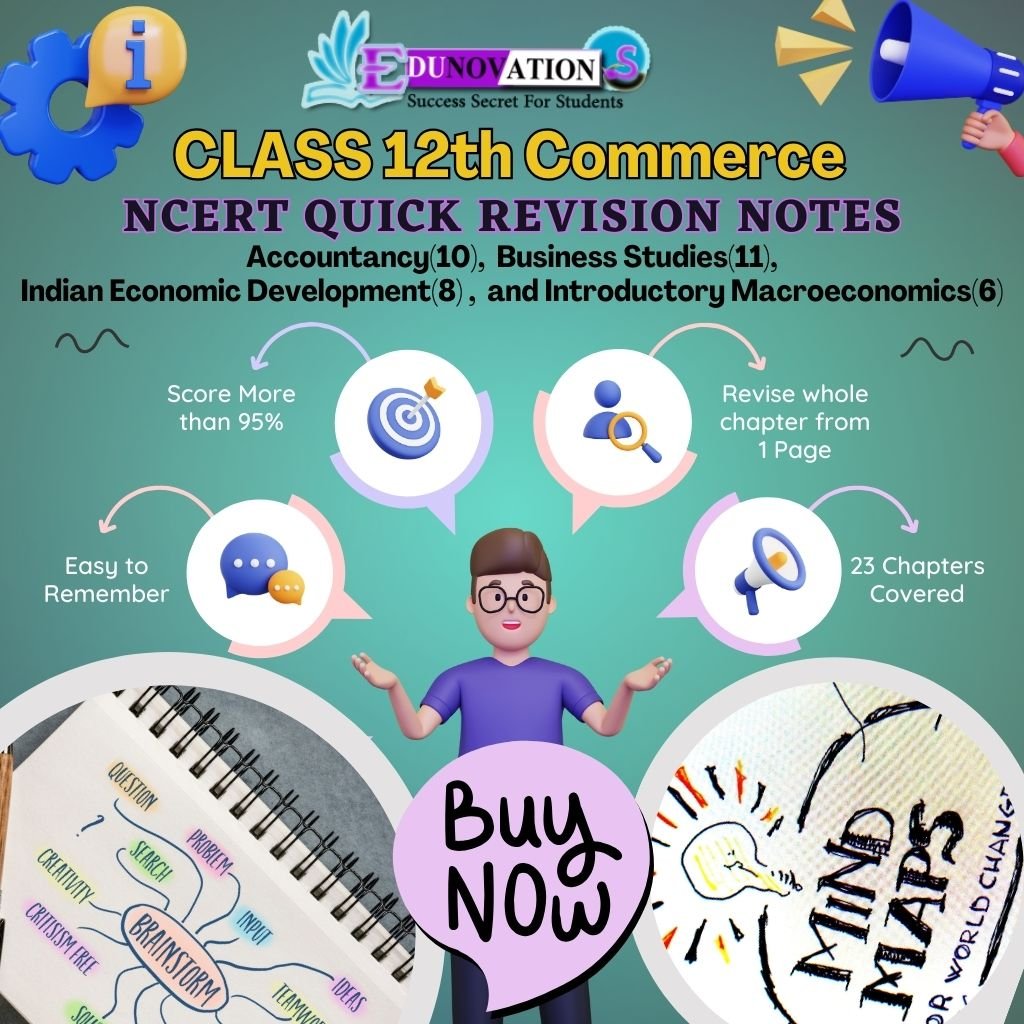
Toppers Use Mind Maps to score more than 95%
NCERT Class 11th Commerce Mind Maps
Add to cartOriginal price was: ₹999.00.₹199.00Current price is: ₹199.00.NCERT Class 12th Chemistry Mind Maps
Add to cartOriginal price was: ₹199.00.₹75.00Current price is: ₹75.00.NCERT Class 12th Commerce Mind Maps
Add to cartOriginal price was: ₹999.00.₹199.00Current price is: ₹199.00.NCERT Class 12th Science Mind Maps
Add to cartOriginal price was: ₹999.00.₹199.00Current price is: ₹199.00.NCERT Mind Maps For Class 10th
Add to cartOriginal price was: ₹999.00.₹199.00Current price is: ₹199.00.




Purchase Today
Frequently Asked Questions (FAQs)
1. What is the primary purpose of the active testing link?
The active portal allows candidates to familiarize themselves with the computer-based test interface, navigation panels, and question palette behavior prior to the actual exam date.
2. Are the login credentials used for practice links the actual exam credentials?
No, practice portals generally feature pre-loaded dummy credentials or guest logins, whereas the actual examination requires a unique registration number and date of birth.
3. Does practicing online help clear negative marking habits?
Yes, attempting timed tests trains aspirants to avoid blind guessing, thereby reducing penalties from the 1/3rd negative marking rule.
4. Can candidates access these practice tests on mobile phones?
While basic links open on mobile browsers, it is strongly recommended to practice on a desktop or laptop to replicate real TCS iON computer lab conditions.
5. How many total questions appear in the Railway Level-1 computer-based test?
The test features a total of 100 multiple-choice questions distributed across four primary sections.
6. What is the total duration allotted to complete the exam?
Standard candidates receive 90 minutes, while PwD candidates eligible for scribes receive 120 minutes.
7. Where can candidates check their individual shift timings and reporting details?
Reporting times, gate closure policies, and exam center venues are explicitly printed on the official hall tickets downloaded via regional portals.
8. Is it mandatory to complete biometric verification at the center?
Yes, biometric validation and Aadhaar-linked authentication are mandatory security procedures enforced at all designated test venues.
9. What documents must be brought alongside the hall ticket?
Candidates must carry a clear printed copy of their admit card and an original, valid photo identity proof such as an Aadhaar card, Voter ID, or PAN card.
10. How do section weightages impact overall normalization scores?
Scores across multi-shift exams undergo normalization based on difficulty parameters, making consistent accuracy across all four sections vital for merit listing.